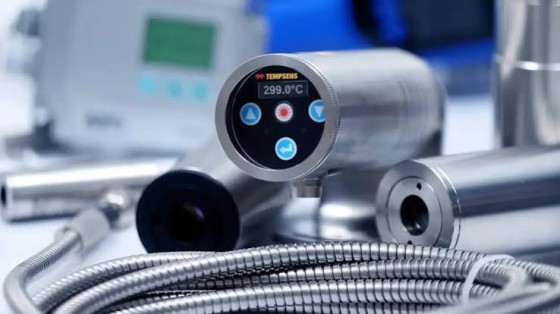
Thermal-Engineering Manufacturer Tempsens Instruments Taps Public Markets to Fund Expansion
Tempsens Instruments (India) has entered the public markets with a ₹650 crore initial public offering, giving investors exposure to a specialised Indian manufacturer operating across temperature measurement, electrical heating systems and specialised cables used in critical industrial applications.
The mainboard IPO opened for subscription on August 20, 2026, and is scheduled to close on August 24. The company has fixed a price band of ₹285 to ₹300 per equity share, with investors able to bid for a minimum of 50 shares and multiples thereafter.
At the upper end of the price band, the offering consists of a ₹95 crore fresh issue and an offer for sale of approximately ₹555 crore by existing shareholders.
The relatively small fresh-capital component is important for investors because only that portion flows directly into Tempsens. The company intends to deploy fresh proceeds primarily toward expanding manufacturing capabilities in electrical heating and specialised cable solutions, repaying certain borrowings and general corporate purposes.
Tempsens Seeks ₹650 Crore Through Mainboard IPO

The offering comprises approximately 2.17 crore shares at the upper end of the price band.
The ₹650 crore issue is substantially larger than the amount of new capital being raised by the company itself.
Fresh Issue Stands at ₹95 Crore
Tempsens will receive up to ₹95 crore through the fresh issue.
The remaining approximately ₹555 crore represents an offer for sale by existing shareholders.
This distinction matters because OFS proceeds go to selling shareholders rather than financing the company's operations.
IPO Price Band Fixed at ₹285 to ₹300
Tempsens has priced the issue between ₹285 and ₹300 per share.
At ₹300, the company is seeking a post-issue market capitalisation of approximately ₹2,500 crore.
Retail investors can apply for a minimum lot of 50 shares, translating into an investment of ₹15,000 at the upper end of the price band.
IPO Opened on August 20
The subscription window opened on Thursday, August 20, and is scheduled to remain open through Monday, August 24.
After allotment and settlement, the company's shares are expected to begin trading on the BSE and NSE.
The listing will transition Tempsens from a privately held industrial manufacturer into a publicly traded engineering business subject to quarterly reporting and broader shareholder scrutiny.
Tempsens Operates in Thermal Engineering
Tempsens is not a conventional consumer-electronics sensor manufacturer.
Its products operate inside industrial environments where accurate temperature measurement and thermal management can be critical to production quality, equipment performance and safety.
The company operates across three principal solution areas:
temperature sensing,
electrical heating,
and specialised cables.
These products are used across several industrial sectors.
Temperature Sensors Form Core Business
Temperature measurement is essential across industrial processes.
A steel furnace needs precise heat control.
A chemical plant needs continuous process monitoring.
A power facility needs reliable equipment-temperature data.
Tempsens manufactures contact and non-contact temperature sensors for these types of applications.
Industrial Sensors Can Be Mission Critical
A sensor may represent only a small fraction of the cost of an industrial facility.
But incorrect temperature measurement can create disproportionately large consequences.
These can include:
product defects,
energy waste,
equipment damage,
and production disruption.
This gives reliable industrial sensors greater strategic importance than their physical size might suggest.
Tempsens Holds Strong Position in Indian Sensor Market
Industry estimates cited in connection with the offering identify Tempsens as India's largest manufacturer of contact and non-contact temperature sensors by revenue as of March 31, 2026.
Its estimated FY26 market share was approximately 10.5%.
This provides the company with an established position from which to expand into adjacent thermal-engineering categories.
Electrical Heating Is Major Expansion Area
Part of the fresh IPO proceeds will fund capital expenditure related to electrical heating solutions.
Industrial heating equipment is used across manufacturing processes requiring controlled thermal energy.
Applications can extend across:
chemicals,
oil and gas,
metals,
pharmaceuticals,
food processing,
and advanced manufacturing.
Electrification Creates Long-Term Opportunity
Industrial companies globally are attempting to reduce dependence on fossil-fuel-based processes where technically and economically feasible.
Electric heating can form part of that transition.
The opportunity varies significantly by industrial process, but increased electrification could expand demand for specialised heating technologies over the longer term.
Specialised Cable Capacity Will Also Expand
Tempsens intends to deploy IPO proceeds toward specialised cable solutions.
Industrial cables can operate under conditions very different from ordinary electrical wiring.
They may need to tolerate:
extreme temperatures,
chemicals,
mechanical stress,
or demanding environmental conditions.
This creates a more technically specialised market.
Specialised Products Can Support Better Margins
Industrial customers are generally less concerned with purchasing the cheapest component when failure could interrupt a high-value production process.
Reliability becomes more important.
That can provide established engineering suppliers with stronger pricing power than commodity manufacturers.
The opportunity is particularly attractive when products are customised to specific technical requirements.
Tempsens Serves Diverse Industrial Sectors
The company's products are used across industries including:
power,
steel,
oil and gas,
petrochemicals,
pharmaceuticals,
automotive,
aerospace,
defence,
nuclear,
and food processing.
Diversification across end markets can reduce dependence on one industry's investment cycle.
However, revenue concentration within certain industrial categories remains an issue investors need to monitor.
Metals and Petrochemicals Represent Significant Exposure
More than 40% of Tempsens' revenue is linked to metals and petrochemical customers.
That creates cyclical exposure.
Industrial Capital Expenditure Can Fluctuate
Steel and petrochemical companies increase investment when capacity utilisation, commodity prices and demand are favourable.
During weaker cycles, new projects can be postponed.
Tempsens therefore benefits from industrial expansion but can also experience slower demand when customer capital expenditure declines.
Exports Account for Meaningful Revenue
Approximately 29% of the company's revenue comes from exports.
This gives Tempsens exposure to international industrial demand rather than relying exclusively on India.
Export Diversification Creates Opportunity
International sales can provide:
larger addressable markets,
foreign-currency revenue,
and customer diversification.
But exports also create additional risks involving currency movements, trade conditions, logistics and international competition.
The balance between domestic and export growth will be important after listing.
Tempsens Is Sole Domestic Producer of Fibre-Optic Temperature Sensors
One of the company's more specialised capabilities is fibre-optic temperature sensing.
Tempsens has been identified as the only domestic manufacturer of these sensors.
Fibre-Optic Sensors Serve Challenging Environments
Traditional electrical sensors may not be suitable for every application.
Fibre-optic temperature sensors can operate in environments where electromagnetic interference creates problems.
Potential applications can include:
power systems,
specialised industrial equipment,
and other technically demanding environments.
Domestic manufacturing capability can become strategically valuable as Indian industries seek more local alternatives for specialised components.
Revenue Has Expanded Strongly
Tempsens reported FY26 revenue from operations of approximately ₹456 crore, compared with roughly ₹382 crore in FY25 and ₹278 crore in FY24.
That represents substantial growth over two years.
FY26 Revenue Growth Was About 19%
The company therefore entered the IPO with an established growth trajectory rather than attempting to raise capital before reaching meaningful commercial scale.
For public-market investors, the central question is whether the company can sustain that growth as its revenue base becomes larger.
Profitability Has Also Improved
Profit after tax reached approximately ₹71 crore in FY26.
That compares with roughly ₹63 crore in FY25 and ₹41 crore in FY24.
EBITDA stood at approximately ₹113 crore in FY26.
These numbers indicate a business generating meaningful operating profitability before entering public markets.
EBITDA Margin Remains Healthy
An EBITDA of approximately ₹113 crore against revenue of roughly ₹456 crore implies an EBITDA margin close to 25%.
That is an important characteristic.
Specialisation Supports Economics
Engineering businesses producing customised, technically critical components can often command better margins than commodity manufacturers.
Customers may prioritise:
reliability,
certification,
engineering support,
and product life
over the lowest possible price.
Tempsens' ability to preserve this margin profile as it expands will be central to its investment case.
IPO Proceeds Will Support Capital Expenditure
The company plans to invest fresh capital in manufacturing equipment and facilities related to electrical heating and specialised cable solutions.
This means the IPO is partly designed to increase productive capacity.
New Capacity Needs Customer Demand
Manufacturing expansion can create substantial shareholder value when demand is strong.
But factories and machinery create fixed costs.
If capacity remains underutilised, returns decline.
Investors therefore need to monitor how quickly new capacity generates incremental revenue.
Debt Repayment Is Another IPO Objective
Part of the fresh proceeds will be used for prepayment or scheduled repayment of certain outstanding borrowings.
Tempsens reported total borrowings of approximately ₹78 crore at the end of FY26.
Lower Debt Can Strengthen Balance Sheet
Reducing borrowings can lower interest costs and improve financial flexibility.
This can become useful if the company later wants to invest in:
additional manufacturing,
acquisitions,
research,
or international expansion.
A stronger balance sheet also provides greater resilience during industrial downturns.
Majority of IPO Is Offer for Sale
The OFS structure deserves particular attention.
Approximately ₹555 crore of the ₹650 crore issue represents existing shareholders selling shares.
That means most of the capital raised from public investors will not remain inside Tempsens.
Investors Should Separate Liquidity From Growth Capital
An IPO can serve two functions.
It can raise new money for the business.
It can also provide liquidity to existing shareholders.
Tempsens is doing both, but the latter represents the larger component.
Investors therefore need to assess the company's future growth using the ₹95 crore fresh issue rather than the full ₹650 crore headline amount.
Promoter Holding Will Decline After IPO
The promoter group's ownership is expected to decline from approximately 80.5% before the offering to about 65.7% after the issue.
Promoters will therefore retain clear majority control.
Public Float Will Increase
A larger public shareholding can improve market liquidity.
Institutional and retail investors will gain direct exposure to the company.
However, concentrated promoter ownership means strategic control will remain firmly with the existing promoter group.
IPO Brings Greater Governance Requirements
Listing changes how a company operates.
Tempsens will need to disclose financial performance regularly and comply with listed-company governance standards.
This increases transparency.
Public Markets Create Performance Discipline
Quarterly earnings become visible.
Capital allocation receives greater scrutiny.
Related-party transactions and executive decisions face closer investor attention.
For a manufacturing company entering a new expansion phase, this external discipline can be beneficial when governance remains strong.
R&D Is Important Competitive Capability
Industrial sensor and heating products require engineering expertise.
Customers frequently need customised solutions rather than standard catalogue products.
Tempsens therefore depends on technical development as well as manufacturing scale.
Innovation Can Protect Pricing
A company selling only commodity components competes heavily on price.
A company capable of solving difficult engineering problems can differentiate itself.
Research and development can therefore support:
new products,
customer retention,
and higher margins.
The company's ability to maintain technical leadership will become increasingly important as competition grows.
Customer Qualification Creates Entry Barriers
Industrial customers do not necessarily switch suppliers quickly.
Critical components may need to undergo testing and approval before being installed in production systems.
Reliability Creates Switching Costs
Once a supplier has demonstrated reliable performance, customers may prefer continuity.
Changing suppliers introduces technical and operational risk.
This can create long-duration relationships for established manufacturers.
However, the same dynamic means winning new customers can require long qualification periods.
Make in India Supports Domestic Industrial Suppliers
India is attempting to deepen domestic manufacturing across multiple industries.
That creates opportunities for companies supplying specialised industrial components.
Localisation Can Reduce Import Dependence
Domestic customers may prefer local suppliers because they can offer:
shorter lead times,
technical support,
and lower logistics risk.
Government localisation policies can strengthen this advantage in strategic sectors.
Tempsens' presence in defence, aerospace and nuclear-related applications could benefit from this broader manufacturing trend.
Defence and Aerospace Offer Long-Term Potential
These industries require components capable of operating under demanding conditions.
Qualification standards are typically strict.
Once approved, suppliers can potentially build long relationships.
Entry Barriers Can Be High
Certification and technical validation can take considerable time.
That makes these markets difficult to enter.
But successful participation can create defensible revenue.
Tempsens' specialised sensor and cable capabilities provide a potential pathway into higher-value applications.
Nuclear Industry Requires Extreme Reliability
Temperature monitoring is critical in nuclear applications.
Equipment needs to meet demanding technical and safety standards.
Companies capable of serving this sector can develop specialised engineering knowledge that is difficult to replicate.
This reinforces the importance of quality systems within Tempsens' broader business.
Industrial Automation Expands Sensor Demand
Factories are becoming increasingly automated.
Automated systems depend on continuous measurement.
Temperature is one of the most fundamental variables.
More Data Requires More Sensors
Modern industrial systems collect information in real time.
Sensors feed data into:
control systems,
analytics platforms,
and predictive-maintenance software.
This creates a structural tailwind for industrial instrumentation.
The opportunity extends beyond simply replacing existing sensors.
More sophisticated factories can require greater sensing density.
AI Could Increase Value of Industrial Measurement
Artificial intelligence in manufacturing depends on reliable operational data.
An AI system cannot optimise a furnace if temperature information is inaccurate.
Physical Sensors Feed Digital Intelligence
This illustrates an important relationship between traditional industrial hardware and modern software.
AI receives much of the attention.
But industrial AI ultimately depends on physical devices measuring the real world.
Companies such as Tempsens therefore participate indirectly in the broader digital-manufacturing transition.
Predictive Maintenance Creates Additional Demand
Sensors can help companies detect equipment problems before failure.
Temperature changes may indicate:
friction,
electrical faults,
or mechanical deterioration.
Monitoring these patterns can allow maintenance teams to intervene earlier.
Avoiding Downtime Has High Economic Value
A sensor costing a relatively small amount can help prevent hours of lost factory production.
This creates a strong economic argument for industrial monitoring.
As factories become more automated, predictive maintenance could become a larger source of sensor demand.
Energy Efficiency Creates Another Growth Driver
Temperature control directly influences industrial energy consumption.
Heating a process beyond what is necessary wastes energy.
Poor insulation or inefficient heating equipment increases operating costs.
Better Thermal Management Can Reduce Costs
Companies facing higher electricity and fuel prices have financial incentives to improve process efficiency.
This can support demand for more precise sensing and heating systems.
Environmental targets provide another motivation.
Thermal engineering therefore intersects increasingly with industrial sustainability.
Acquisition Expands Measurement Portfolio
Tempsens has also expanded through acquisition.
In 2026, it acquired a majority stake in Techin Gauges India, subsequently renamed Tempsens Measurement and Control.
The transaction strengthened its capabilities in temperature and pressure gauges.
Broader Portfolio Can Increase Customer Value
A customer purchasing one industrial measurement product may need several related products.
Expanding the portfolio allows Tempsens to sell more solutions into existing relationships.
This can increase revenue without requiring entirely new customer acquisition.
Cross-Selling Can Improve Growth Economics
Industrial customers often prefer working with suppliers they already trust.
Once Tempsens qualifies with a plant for temperature sensors, it may have opportunities to offer:
heating systems,
cables,
or gauges.
This creates cross-selling potential.
The company can therefore grow not only by acquiring customers but by increasing the number of products sold to each customer.
Global Expansion Creates Larger Addressable Market
Tempsens already generates close to one-third of revenue internationally.
Expanding exports could significantly increase its addressable market.
Industrial thermal-engineering demand exists across manufacturing regions worldwide.
International Growth Requires Strong Distribution
Engineering products often need local technical support.
Tempsens may therefore need:
sales offices,
distributors,
or service partners
in important markets.
International expansion can increase revenue but also raise operating complexity.
Currency Movements Create Both Opportunity and Risk
Exporters can benefit when the rupee weakens because foreign revenue translates into more domestic currency.
But imported raw materials can become more expensive.
The net impact depends on the company's cost structure.
Managing currency exposure becomes more important as international revenue expands.
Raw-Material Prices Can Affect Margins
Industrial manufacturing depends on metals, electronic components and specialised materials.
Price volatility can influence profitability.
Passing Costs to Customers Can Take Time
Custom industrial contracts may have negotiated prices.
If input costs rise suddenly, manufacturers cannot always increase prices immediately.
Strong customer relationships and differentiated products can provide greater pricing flexibility.
Investors should monitor whether Tempsens can preserve margins through commodity cycles.
Customer Concentration Remains Risk
A meaningful portion of revenue comes from particular industrial sectors.
Even with a broad customer base, exposure to metals and petrochemicals creates cyclical sensitivity.
Diversification into pharmaceuticals, aerospace, defence and other industries can help reduce this risk over time.
Valuation Will Be Closely Watched
At the upper price band, investors are being asked to value Tempsens at approximately ₹2,500 crore.
Against FY26 profit of roughly ₹71 crore, the offering implies a significant earnings multiple.
Growth Expectations Are Already Embedded
Higher valuations require stronger future growth.
If revenue and earnings continue expanding rapidly, the premium can be justified.
If growth slows, valuation compression can affect shareholder returns.
Investors therefore need to evaluate the business beyond short-term IPO demand.
Grey-Market Premium Is Not Fundamental Value
Unofficial grey-market trading attracted substantial attention before the IPO.
Such premiums can indicate market sentiment.
They do not determine the company's long-term value.
Listing Gains and Investment Returns Are Different
A share can list strongly and later perform poorly.
It can also list modestly and compound value over many years.
Long-term investors need to focus on:
earnings,
cash flow,
competitive advantages,
and return on capital.
The grey market provides none of those guarantees.
Cash Flow Will Matter After Listing
Accounting profit is important, but manufacturing businesses also need working capital.
Inventory needs to be purchased.
Customers may receive credit.
Capital equipment requires investment.
Growth Can Consume Cash
A company can report rising profit while operating cash flow remains weak if receivables and inventory expand too quickly.
Tempsens' post-IPO financial performance should therefore be evaluated through cash conversion as well as earnings growth.
Public Capital Can Accelerate Industrial Expansion
The broader significance of the Tempsens offering extends beyond one manufacturer.
India's capital markets are increasingly financing specialised industrial businesses.
Public investors historically associated IPOs heavily with consumer, financial and technology companies.
Engineering manufacturers are also gaining access to growth capital.
This can help deepen India's industrial ecosystem.
Specialist Manufacturers Can Become Global Suppliers
India's manufacturing opportunity is not limited to enormous factories producing mass-market products.
Niche engineering businesses can also become globally competitive.
These companies may manufacture components with relatively modest volumes but high technical value.
Tempsens represents this model.
Its future will depend less on becoming the largest factory and more on becoming an indispensable supplier in specialised thermal-engineering applications.
Conclusion
Tempsens Instruments' ₹650 crore IPO brings a specialised Indian thermal-engineering manufacturer into the public markets at a time when industrial automation, manufacturing localisation and infrastructure investment are creating new opportunities for component suppliers.
The issue opened on August 20 with a price band of ₹285 to ₹300 per share. Of the total offering, ₹95 crore represents fresh capital that Tempsens plans to use primarily for expanding electrical heating and specialised cable manufacturing, reducing certain borrowings and supporting general corporate requirements.
The company's financial foundation is meaningful. FY26 revenue from operations reached approximately ₹456 crore, while profit after tax stood at around ₹71 crore and EBITDA was approximately ₹113 crore.
Its strongest advantages include an established temperature-sensor business, specialised engineering capabilities, export exposure and participation across critical industries ranging from steel and petrochemicals to defence, aerospace and nuclear applications.
The risks are equally important. Most of the IPO is an offer for sale rather than fresh capital, industrial demand can be cyclical, customer-sector concentration remains meaningful and the IPO valuation assumes continued growth.
For Tempsens, entering the stock market is therefore not the end of its expansion story.
It is the beginning of a new test: whether a niche Indian thermal-engineering manufacturer can use public capital, technical expertise and manufacturing expansion to build a larger global industrial-technology business.