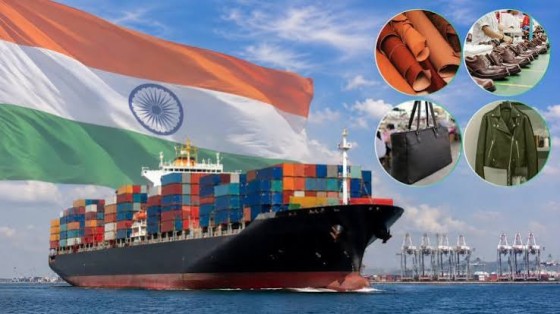
India’s Footwear Manufacturers Assess Fresh Export Opportunities Following New Trade Developments
Indian footwear manufacturers are reassessing their overseas growth strategies as new trade arrangements improve access to major international markets and encourage exporters to diversify beyond traditional destinations. The India-European Union trade agreement is particularly significant for the sector because tariffs that previously reached as high as 17% on some leather and footwear categories are being eliminated, improving the relative competitiveness of Indian suppliers. The opportunity comes as policymakers urge the broader leather and footwear industry to target at least $15 billion in annual exports over the next five to six years while manufacturers expand capacity, improve design capabilities and pursue new international buyers. (Leather Exports Council)
Trade Agreements Reshape India’s Footwear Export Opportunity

Preferential access to large consumer markets could become one of the most important growth drivers for Indian footwear manufacturers.
India-EU Agreement Removes Important Tariff Disadvantage
The European Union is a particularly important market because Indian leather and footwear products previously faced tariffs that reduced their competitiveness against suppliers with preferential market access.
Under the India-EU trade agreement, footwear and leather products are set to benefit from zero-duty access, according to the Council for Leather Exports. (Leather Exports Council)
Removing tariffs can materially change sourcing economics for European brands.
A manufacturer that previously needed to overcome an 8%-17% duty disadvantage can compete more effectively on landed cost once preferential treatment applies.
This gives Indian suppliers additional room to compete across footwear, finished leather and related components while potentially protecting margins.
Exporters Can Compete for Larger European Orders
Europe represents one of the world's largest footwear and fashion markets.
International brands source large quantities from manufacturing centres across Asia and other regions.
Indian manufacturers have historically competed with suppliers from China, Vietnam, Indonesia and other major production locations.
Tariff reductions can strengthen India's position when buyers allocate sourcing volumes.
The opportunity is not limited to existing customers.
Brands reassessing global supply chains can evaluate Indian manufacturers for new programmes, particularly where suppliers demonstrate quality, compliance, scale and reliable delivery.
Recent trends in other Indian export industries also show companies directing more attention toward Europe as changing trade arrangements improve market access. (Reuters)
Industry Targets Major Increase in Exports
The government is encouraging footwear and leather manufacturers to use new trade agreements as the foundation for a much larger export industry.
Government Sets $15 Billion Export Ambition
Commerce and Industry Minister Piyush Goyal has called on India's leather and footwear industry to target at least $15 billion in exports over the next five to six years.
The strategy centres on using free trade agreements, diversifying markets and improving quality, design, branding, sustainability and manufacturing scale. (Press Information Bureau)
Achieving that target would require more than incremental growth.
Manufacturers would need to secure larger international customers, expand capacity and move into higher-value products.
The industry would also need to strengthen its position in non-leather footwear, sports shoes and other rapidly growing categories.
Sector Already Has Significant Export Base
India's leather and footwear exports have expanded considerably in recent years.
Industry estimates cited by India Brand Equity Foundation put leather, leather products and footwear exports at approximately $5.7 billion in FY25, with the Council for Leather Exports having projected further growth thereafter. (IBEF)
The existing export base gives manufacturers relationships and production experience that can support further international expansion.
However, reaching the government's longer-term target will require a substantially faster pace of growth.
That places greater importance on trade agreements capable of improving competitiveness in major consumer markets.
Manufacturers Seek Diversification Beyond the United States
Changing US trade conditions have reinforced the importance of developing multiple export destinations.
Dependence on One Market Creates Risk
Export manufacturers can become vulnerable when a large percentage of sales depends on a single destination.
Tariffs can suddenly alter pricing.
Currency movements can affect margins.
Economic weakness can reduce customer orders.
Diversification reduces this concentration risk.
Indian companies across consumer manufacturing industries are increasingly evaluating Europe and other regions as alternative growth markets following shifts in US trade policy. (Reuters)
Footwear exporters face the same strategic calculation.
European, Middle Eastern, African and Asian markets can provide additional demand while reducing dependence on one major buyer region.
US Market Remains Commercially Important
Diversification does not mean abandoning the United States.
The country remains one of the world's largest consumer markets and an important destination for Indian goods.
However, recent US tariff measures have increased pressure on several Indian export categories, making alternative markets more strategically important. (Reuters)
Manufacturers can respond by maintaining relationships with American customers while allocating additional capacity toward markets where tariff conditions are more favourable.
European Buyers Could Increase Indian Sourcing
The impact of tariff reductions ultimately depends on whether global buyers translate improved market access into actual purchase orders.
Footwear Brands Compare Total Landed Cost
International buyers evaluate much more than factory pricing.
Import duties, shipping, insurance and logistics all contribute to the final landed cost of a product.
Tariff elimination can therefore improve competitiveness even when the manufacturing price itself remains unchanged.
A European retailer comparing identical products from multiple countries may find Indian sourcing significantly more attractive once the tariff disadvantage disappears.
This can support both new contracts and larger allocations from existing buyers.
Buyers Also Require Quality and Reliability
Tariff advantages alone cannot build a successful export industry.
Footwear brands need suppliers capable of meeting exact product specifications.
Manufacturers must deliver consistent quality across large production volumes.
Lead times need to remain predictable.
Social and environmental compliance is increasingly important.
Suppliers unable to meet these requirements may struggle to benefit even when tariffs become favourable.
Indian manufacturers therefore need to combine improved market access with stronger operating capabilities.
Non-Leather Footwear Offers Large Growth Potential
India's export opportunity extends considerably beyond its traditional leather strength.
Global Footwear Market Is Diversifying
Sports shoes, casual footwear and synthetic products represent enormous global categories.
Many of these products depend more heavily on engineered textiles, synthetic materials, soles and specialised components than conventional leather.
Expanding in these segments can significantly increase India's addressable export market.
It also allows manufacturers to participate in global athletic and lifestyle footwear supply chains.
Scale Will Be Essential
Mass-market footwear manufacturing operates at enormous volumes.
Large international brands can order millions of pairs across product cycles.
Suppliers need factories capable of handling this scale while maintaining consistent quality.
Automation and specialised machinery can improve productivity.
Integrated supply chains can also reduce lead times.
India's ability to build large non-leather footwear clusters will therefore influence how much global market share it can capture.
Domestic Manufacturing Ecosystem Needs Deeper Supply Chains
Footwear exports depend on much more than the final assembly factory.
Components Determine Competitiveness
Manufacturers need soles, moulds, synthetic materials, adhesives, textiles, buckles, packaging and specialised machinery.
When these inputs need to be imported, production can become more expensive and slower.
India has identified footwear-related imports among areas where domestic manufacturing capabilities need strengthening as part of a broader import-substitution initiative. (Reuters)
Developing local component suppliers could improve competitiveness.
It can also shorten the time required to produce new designs.
Footwear Moulds Are Strategic Input
Moulds are particularly important for many categories of modern footwear.
Developing a new sole design often requires specialised tooling.
Dependence on overseas mould suppliers can lengthen development cycles.
Domestic capability would allow manufacturers to respond more rapidly to buyers requesting new styles.
Faster development can be a major advantage in fashion-driven businesses where product cycles are short.
MSMEs Could Gain From Export Expansion
India's footwear industry contains a large number of small and medium-sized manufacturers.
Export Orders Can Create Employment
Footwear manufacturing remains labour intensive across several stages of production.
Cutting, stitching, finishing, inspection and packaging all create employment.
Expanding exports can therefore generate jobs across manufacturing clusters.
This is one reason policymakers view the sector as strategically important.
Government statements around new trade agreements have specifically highlighted the employment potential of expanded leather and footwear exports. (Press Information Bureau)
Smaller Suppliers Need Export Readiness
MSMEs may struggle to access large international buyers independently.
Certification requirements can be expensive.
Export documentation can be complex.
Working-capital requirements increase when customers pay weeks or months after shipment.
Smaller manufacturers may therefore benefit from export clusters, common testing facilities and trade-promotion organisations capable of connecting them with overseas buyers.
Footwear Clusters Could Receive New Investment
Export growth can encourage both domestic and foreign manufacturers to expand capacity in India.
Existing Clusters Provide Industrial Foundation
India has established footwear and leather manufacturing clusters across several states.
Tamil Nadu, Uttar Pradesh, West Bengal and other regions possess significant production capabilities.
These clusters offer skilled workers, suppliers and supporting services.
Expanding existing ecosystems can often be easier than building entirely new manufacturing locations.
Global Brands May Explore Local Partnerships
Improved market access can make India more attractive as a manufacturing base for international footwear companies.
Brands can source from existing Indian suppliers.
They can establish joint ventures.
They can also encourage strategic manufacturing partners to expand Indian capacity.
The Council for Leather Exports has indicated that improved trade access could increase cooperation between India and Europe not only in sourcing but also in investment. (Leather Exports Council)
Sustainability Will Influence International Orders
Environmental and social compliance is becoming increasingly important in global fashion supply chains.
European Buyers Have Strict Requirements
European brands and retailers face growing regulatory and consumer expectations around sustainability.
Suppliers may need to demonstrate responsible sourcing, chemical management and environmental compliance.
Carbon footprints are also receiving greater attention.
Footwear manufacturing can involve leather processing, synthetic chemicals, adhesives and significant energy use.
Companies seeking long-term European contracts will therefore need robust compliance systems.
Traceability Could Become Competitive Advantage
Brands increasingly want information about where materials originate and how products are manufactured.
Digital traceability systems can provide documentation throughout the supply chain.
Manufacturers capable of providing reliable data may gain an advantage with premium customers.
This can also help India move from competing primarily on cost toward competing on quality and manufacturing credibility.
Design and Branding Could Increase Export Value
India's long-term opportunity is not restricted to contract manufacturing.
Design-Led Manufacturing Can Improve Margins
Factories producing footwear entirely according to a customer's design compete largely on manufacturing cost and quality.
Companies capable of contributing product development and design can capture more value.
Technical design expertise also helps manufacturers develop products faster.
This matters particularly in fashion and sports footwear, where styles change frequently.
Government strategy for the sector has explicitly highlighted design and branding as areas needed to support significantly higher exports. (Press Information Bureau)
Indian Brands Could Expand Internationally
A larger manufacturing base can eventually support homegrown consumer brands.
Selling branded products creates different economics from contract manufacturing.
The company captures not only manufacturing margin but also part of the value associated with design, marketing and retail.
Building an international brand is significantly more difficult than manufacturing for established global companies.
However, digital commerce can lower some market-entry barriers.
Logistics Remains Important to Export Competitiveness
Trade agreements improve tariffs, but shipping costs remain part of the final price.
Global Freight Disruptions Create Pressure
Indian exporters are currently dealing with higher freight costs and shipping disruption linked to tensions in the Middle East. India's July trade data showed exporters facing container shortages and rising logistics costs even as overall merchandise exports reached record levels. (Reuters)
Footwear has relatively lower value per shipping volume than products such as electronics.
Freight therefore matters significantly to competitiveness.
Higher logistics costs can offset part of the advantage created by tariff reductions.
Faster Ports Can Improve Delivery Reliability
International footwear buyers frequently operate seasonal sales calendars.
Late delivery can substantially reduce product value.
Efficient ports and reliable shipping connections therefore matter alongside manufacturing costs.
India's continuing investment in ports, freight corridors and logistics infrastructure can support export competitiveness if it reduces transit time and uncertainty.
Trade Agreements Could Help India Challenge Established Exporters
Global footwear manufacturing remains concentrated in a relatively small number of Asian countries.
India Has Labour and Market Advantages
India combines a large workforce with an enormous domestic footwear market.
This creates an unusual advantage.
Factories can serve both Indian and export customers.
Domestic demand can provide manufacturing scale while international orders create additional growth.
The country also possesses long-established capabilities in leather processing and footwear manufacturing.
Productivity Gap Still Needs Attention
India's challenge is converting these structural advantages into globally competitive manufacturing economics.
Factories need higher worker productivity.
Supply chains need faster turnaround.
Automation needs to be introduced where economically appropriate.
Infrastructure and compliance costs also influence competitiveness.
Trade agreements can remove external tariff disadvantages, but manufacturers still need to address internal cost and productivity gaps.
Africa Could Become Another Future Export Market
India is simultaneously expanding trade engagement beyond Europe.
SACU Trade Talks Reopen African Opportunity
India and the Southern African Customs Union have revived preferential trade agreement negotiations involving South Africa, Botswana, Namibia, Lesotho and Eswatini. (Reuters)
The negotiations currently focus broadly on improving market access across several sectors.
A wider network of preferential trade agreements could eventually create opportunities for Indian consumer manufacturers beyond established Western markets.
Africa's growing population and urban consumer base make it a potentially important long-term destination for affordable footwear.
Market Diversification Supports Resilience
Exporters operating across Europe, North America, Africa and Asia are less vulnerable to policy changes in any one destination.
This diversification can reduce earnings volatility.
It can also allow companies to shift production allocations when demand differs between markets.
Developing several major export destinations should therefore remain an important part of India's footwear strategy.
Manufacturers Need Greater Scale to Win Global Contracts
International sourcing operates at a scale that can challenge smaller producers.
Large Buyers Demand Consistent Volume
Global footwear companies need suppliers capable of producing very large quantities across multiple seasons.
Factories must handle demand peaks without sacrificing quality.
This requires capital investment.
Companies need machinery, production facilities and skilled employees.
Working capital is equally important because manufacturers often need to purchase materials and pay workers before customers settle invoices.
Financing Could Influence Expansion
Smaller exporters may need bank credit or equity financing to expand.
Trade finance can support orders once contracts are secured.
Financial institutions also need confidence that exporters can deliver products reliably.
As Indian footwear exports expand, access to affordable working capital could therefore become an important competitive factor.
New Trade Access Could Accelerate Sector Formalisation
Export customers generally demand higher levels of documentation than informal domestic distribution.
Compliance Encourages Professionalisation
International contracts require audited systems, product testing and documented manufacturing processes.
Factories may need social-compliance certifications.
Employment practices can also come under customer scrutiny.
These requirements can encourage greater formalisation within the industry.
While compliance creates additional costs, it can also improve access to larger and more stable customers.
Export Experience Can Improve Domestic Businesses
Capabilities developed for overseas customers can strengthen domestic competitiveness.
Better quality control can reduce defects.
Faster production systems improve inventory management.
Advanced designs can support premium Indian products.
The benefits of export expansion can therefore extend back into the domestic footwear market.
Conclusion
India's footwear manufacturers are entering a potentially important period as new trade developments improve access to major international markets while policy efforts encourage much stronger export growth.
The India-EU agreement represents a particularly significant opportunity because the removal of footwear and leather tariffs can eliminate a longstanding competitive disadvantage for Indian suppliers. Meanwhile, wider market diversification and trade negotiations can create additional opportunities across other regions.
The sector already possesses a sizeable manufacturing and export base, but reaching the government's ambition of at least $15 billion in exports will require substantial investment in scale, non-leather footwear, design, components, sustainability and supply-chain efficiency.
Trade agreements can open the door, but manufacturers will still need to win orders through competitive pricing, consistent quality and reliable delivery. If the industry successfully combines improved market access with stronger domestic manufacturing capabilities, footwear could emerge as a larger contributor to India's labour-intensive manufacturing and export growth.