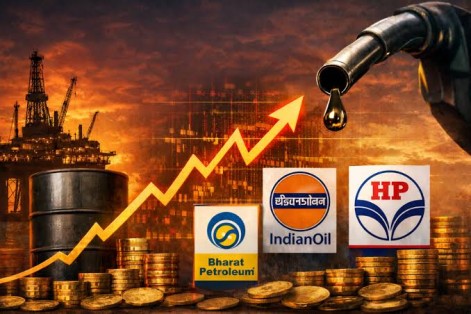
Indian Oil Marketing Companies Face Margin Pressure From Middle East Oil Disruptions
India's oil marketing companies (OMCs) are facing renewed margin pressure as geopolitical tensions and supply disruptions in the Middle East continue to drive volatility in global crude oil markets. Rising uncertainty over crude supplies has increased procurement costs and complicated inventory management, prompting investors to closely monitor the financial outlook for India's major fuel retailers and refiners.
As one of the world's largest crude oil importers, India remains highly sensitive to fluctuations in international energy prices. Sustained volatility in crude markets can affect refining margins, fuel marketing profitability and overall earnings across the energy sector.
Crude Oil Volatility Increases Cost Pressure

Middle East developments continue to influence global oil markets.
Key challenges include:
-
Higher crude procurement costs
-
Supply uncertainty
-
Shipping disruptions
-
Freight cost increases
-
Inventory management
-
Price volatility
-
Import planning
-
Working capital requirements
Volatile oil prices make cost planning more difficult for oil marketing companies.
Fuel Marketing Margins Come Under Pressure
OMCs continue balancing procurement costs with domestic fuel pricing.
Key operational areas include:
-
Petrol marketing
-
Diesel marketing
-
Retail fuel sales
-
Inventory valuation
-
Distribution efficiency
-
Supply chain management
-
Margin optimisation
-
Cash flow management
Profitability depends on the relationship between international crude prices and domestic fuel realisations.
Refining Operations Remain a Key Earnings Driver
Refining performance continues to play an important role in financial results.
Key indicators include:
-
Gross refining margins (GRMs)
-
Refinery utilisation
-
Product demand
-
Export opportunities
-
Feedstock sourcing
-
Operational efficiency
-
Product mix
-
Maintenance schedules
Strong refining performance can help offset pressure in fuel marketing operations.
Domestic Fuel Demand Remains Resilient
Despite global volatility, domestic energy consumption continues to support business activity.
Major demand segments include:
-
Transportation
-
Industrial consumption
-
Aviation fuel
-
Commercial vehicles
-
Passenger vehicles
-
Manufacturing
-
Agriculture
-
Infrastructure projects
Steady domestic demand provides an important foundation for revenue growth.
Global Energy Markets Remain Uncertain
International developments continue influencing crude oil prices.
Investors are monitoring:
-
Middle East geopolitical developments
-
OPEC+ production decisions
-
Global crude supply
-
Oil inventories
-
Shipping routes
-
Energy demand
-
Commodity markets
-
Global economic growth
These factors will continue shaping energy market sentiment.
Inventory and Procurement Strategies Gain Importance
Oil marketing companies are strengthening procurement and risk management practices.
Strategic priorities include:
-
Diversified crude sourcing
-
Inventory optimisation
-
Supply chain resilience
-
Import scheduling
-
Cost control
-
Operational flexibility
-
Storage management
-
Procurement efficiency
Effective procurement strategies can help reduce the impact of market volatility.
Government Policy and Fuel Pricing Remain Important
Policy decisions continue to influence the operating environment for OMCs.
Areas under observation include:
-
Fuel pricing framework
-
Energy security initiatives
-
Strategic petroleum reserves
-
Import diversification
-
Taxation policies
-
Infrastructure investment
-
Renewable energy transition
-
Regulatory developments
Government initiatives remain important for maintaining long-term energy security.
Investors Monitor Earnings and Margins
Market participants are assessing how sustained oil price volatility could affect financial performance.
Key financial indicators include:
-
Revenue growth
-
Marketing margins
-
Gross refining margins
-
EBITDA
-
Net profit
-
Inventory gains or losses
-
Capital expenditure
-
Free cash flow
Quarterly earnings will provide further insight into the sector's resilience.
Risks to Monitor
Investors should continue monitoring:
-
Crude oil price movements
-
Middle East geopolitical developments
-
OPEC+ policy decisions
-
Refining margins
-
Fuel demand
-
Shipping costs
-
Exchange-rate fluctuations
-
Government policy
-
Inflation trends
-
Global economic conditions
These variables will determine the outlook for India's oil marketing companies.
What Investors Should Watch
Key indicators include:
-
International crude oil prices
-
Gross refining margins
-
Fuel marketing margins
-
Quarterly earnings
-
Inventory levels
-
Domestic fuel demand
-
Import costs
-
Capital expenditure
-
Management guidance
-
Government policy announcements
These metrics will provide valuable insight into the financial performance of India's energy sector.
Outlook
Indian oil marketing companies are expected to remain focused on managing procurement costs, maintaining refining efficiency and optimising fuel marketing operations as global oil markets remain volatile.
While resilient domestic fuel demand provides long-term support, sustained geopolitical uncertainty and crude oil price fluctuations could continue influencing margins over the coming quarters. Companies with diversified sourcing strategies, efficient refining operations and disciplined cost management are likely to be better positioned to navigate the challenging environment.
Conclusion
Indian oil marketing companies are facing increasing margin pressure as Middle East supply disruptions contribute to higher crude oil volatility and procurement costs.
Although strong domestic demand and refining operations continue to support the sector, profitability will depend on the evolution of global energy markets, fuel pricing dynamics and operational efficiency.
Investors will closely monitor crude oil prices, refining margins, quarterly earnings, government policy and geopolitical developments as key indicators of the sector's future performance.