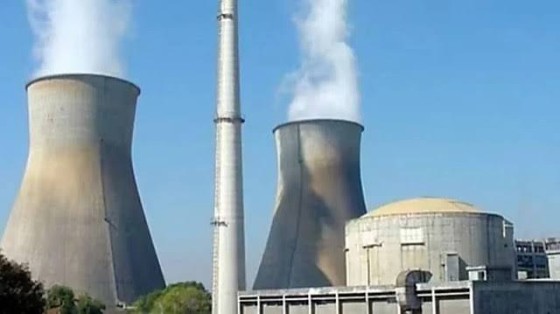
NPCIL Plans New Nuclear Design Unit to Support Private-Sector Entry Into Atomic Power Projects
India's state-owned nuclear power operator, Nuclear Power Corporation of India Limited, is planning to establish a new design vertical to provide technology and engineering support to private companies and state governments seeking to build nuclear power projects using India's indigenous reactor technology.
The proposal is currently under process and represents one of the first major institutional changes following India's decision to open its historically state-controlled nuclear power sector to private participation under the Sustainable Harnessing and Advancement of Nuclear Energy for Transforming India Act, or SHANTI Act, enacted in December 2025. (The Indian Express)
The planned NPCIL vertical would act as a gateway for companies seeking access to India's Pressurised Heavy Water Reactor, or PHWR, technology.
Its proposed responsibilities include:
technology support,
design and engineering,
design reviews,
quality assurance,
operations and management assistance,
and regulatory support. (The Indian Express)
The initiative could become an important part of India's attempt to expand nuclear generation capacity from today's relatively small base toward the government's ambitious target of 100 GW by 2047.
NPCIL Is Preparing for a Different Nuclear Industry

For decades, India's nuclear power industry operated primarily through government-controlled organisations.
NPCIL has been responsible for the:
design,
construction,
commissioning,
operation,
and upgrading
of commercial nuclear power reactors. (Nuclear Power Corporation of India)
Private companies already participated extensively as suppliers and contractors.
But operating and developing nuclear generation projects remained overwhelmingly a government function.
The new framework changes that structure.
SHANTI Act Opened the Door to Private Participation
The SHANTI Act enacted in December 2025 liberalised India's nuclear-energy framework and created a pathway for private companies to participate more directly in nuclear power generation. (The Indian Express)
That represents a significant break from India's earlier policy.
As recently as 2017, the government explicitly stated that it did not propose allowing private-sector companies to enter nuclear power generation. (Press Information Bureau)
The policy direction has now changed as India attempts to expand nuclear capacity much more rapidly.
New Rules Are Expected to Clarify Licensing
Draft rules under the SHANTI Act have now been released.
Once finalised, they are expected to provide greater clarity around the licensing framework for new nuclear projects. (The Indian Express)
This is critical.
Opening an industry legally does not automatically create investable projects.
Companies need to understand:
licensing,
technology standards,
safety obligations,
regulatory approvals,
liability,
and project-development requirements.
The proposed NPCIL design unit could help bridge that knowledge gap.
NPCIL Could Become Technology Partner to New Entrants
NPCIL's traditional role has been to build and operate nuclear plants itself.
The new vertical introduces another potential function:
technology and engineering partner.
Private companies could develop nuclear projects while relying on NPCIL's accumulated expertise in indigenous reactor design and nuclear project implementation.
That would allow India to expand the number of organisations capable of developing nuclear capacity without requiring every entrant to build decades of nuclear expertise from scratch.
PHWR Technology Will Be Central
The planned vertical is expected to focus particularly on India's indigenous:
Pressurised Heavy Water Reactor technology.
PHWRs form the backbone of NPCIL's domestic reactor fleet.
NPCIL currently operates 20 PHWRs, excluding the long-shutdown Rajasthan Atomic Power Station Unit 1, alongside two boiling-water reactors and two 1,000 MW VVER units. (Nuclear Power Corporation of India)
India has accumulated decades of experience designing, constructing and operating PHWRs.
Why PHWRs Are Attractive to New Entrants
Prospective public and private nuclear developers are showing interest in PHWR technology because India already has an established domestic ecosystem around it. (The Indian Express)
That ecosystem includes:
engineering expertise,
component suppliers,
construction experience,
operating knowledge,
and regulatory familiarity.
Using an established domestic reactor design can reduce some of the technological uncertainty facing a new nuclear developer.
India Has Developed Multiple PHWR Sizes
India's PHWR programme has evolved through several generations.
NPCIL operates:
220 MW units,
540 MW units,
and newer 700 MW units.
The 700 MW design has become particularly important to India's current nuclear expansion programme.
The government has already approved a fleet of ten additional 700 MW PHWRs at multiple sites. (Nuclear Power Corporation of India)
Fleet-Mode Construction Can Lower Costs
Building multiple reactors based on the same standardised design offers potential advantages.
Equipment can be ordered in larger volumes.
Suppliers gain production experience.
Engineering does not need to begin from scratch for every reactor.
Construction teams can repeat processes.
This is why fleet-mode development is important to India's nuclear strategy.
Private Developers Could Expand That Model
If private companies adopt established PHWR technology, India could potentially create a much larger pipeline of standardised reactor projects.
NPCIL would no longer need to finance and execute every project itself.
Instead, multiple developers could deploy similar reactor technology across different sites.
That could significantly increase the industry's construction capacity.
NPCIL’s Design Unit Would Provide Technical Support
According to reports on the proposal, the new vertical could provide private and state-sector developers with services including:
design support,
engineering,
technology assistance,
design reviews,
quality assurance,
operations support,
and regulatory guidance. (The Indian Express)
These are precisely the areas where new nuclear entrants lack institutional experience.
Nuclear Design Is Highly Specialised
A nuclear plant is fundamentally different from an ordinary thermal power station.
Its design needs to account for:
reactor physics,
radiation protection,
cooling,
containment,
emergency systems,
seismic conditions,
and multiple layers of redundancy.
Safety requirements influence virtually every major engineering decision.
A new entrant therefore cannot simply hire a conventional engineering contractor and begin building a reactor.
Design Reviews Are Critical
Nuclear projects require extensive independent review.
Engineers need to demonstrate that systems can operate safely not only under normal conditions but during:
equipment failures,
loss of power,
cooling problems,
and other abnormal events.
Design reviews therefore become a central part of licensing and construction.
NPCIL has decades of institutional experience in these processes.
Quality Assurance Is Equally Important
Nuclear components operate under unusually demanding standards.
Materials, manufacturing processes, welding and testing may all require extensive documentation.
A seemingly minor manufacturing defect can have major safety implications.
Quality assurance therefore needs to extend throughout the supply chain.
The proposed NPCIL unit could help private developers understand and implement these standards.
Regulatory Navigation Will Be Major Challenge
Private companies entering nuclear generation will need to interact with India's nuclear regulatory framework.
The process can involve approvals covering:
site selection,
reactor design,
construction,
commissioning,
and operation.
Each stage requires technical documentation and regulatory review.
NPCIL's accumulated experience could substantially reduce the learning curve.
A Consulting Subsidiary Has Also Been Proposed
Separately, the Department of Atomic Energy has prepared a Cabinet note proposing a fully NPCIL-owned consulting subsidiary to guide companies entering the newly opened nuclear sector. (The Economic Times)
The proposed subsidiary would offer design, engineering, operations-management and regulatory assistance for companies seeking to build PHWR units.
Taken together with the reported design vertical, the initiatives suggest NPCIL is being positioned as an institutional enabler of private nuclear development rather than simply a competing state-owned generator.
India Needs More Developers to Reach 100 GW
The strategic reason is scale.
India wants nuclear generation capacity to reach:
100 GW by 2047. (Press Information Bureau)
NPCIL currently operates approximately:
8.78 GW. (Nuclear Power Corporation of India)
Reaching 100 GW therefore requires an enormous acceleration in reactor construction over the next two decades.
NPCIL alone would face substantial financial, engineering and execution challenges delivering that expansion.
Nuclear Capacity Must Increase More Than Tenfold
The scale of the target is easy to underestimate.
India needs to add roughly:
90 GW of additional nuclear capacity
to approach the 2047 objective.
Depending on reactor size, that could require dozens of new reactors.
It also requires:
new sites,
financing,
suppliers,
engineers,
construction workers,
and regulatory capacity.
Private-sector participation could provide additional capital and execution capability.
Private Capital Could Reduce Pressure on Government Funding
Nuclear plants are extremely capital intensive.
Projects require large upfront investment and can take years before generating revenue.
If private developers finance part of India's nuclear expansion, the government does not need to fund every reactor directly through state-controlled entities.
That could allow nuclear construction to proceed on several fronts simultaneously.
Large Indian Companies Are Showing Interest
Several major Indian corporate groups have begun evaluating nuclear power opportunities following the sector's liberalisation.
The Indian Express reported that Adani Group is planning around 10 GWe of nuclear capacity, while Jindal Steel is considering approximately 18 GWe over the coming years. (The Indian Express)
Interest from companies with large balance sheets is significant because nuclear projects require substantial capital and long investment horizons.
Energy-Intensive Industries Have Strong Incentives
Large industrial companies consume enormous quantities of electricity.
These include businesses in:
steel,
aluminium,
chemicals,
data centres,
and advanced manufacturing.
Reliable low-carbon electricity can become strategically valuable as companies attempt to reduce emissions.
Nuclear power offers continuous generation without the intermittency associated with solar and wind.
Nuclear Can Complement Renewable Energy
India is rapidly expanding renewable generation.
But solar and wind output depends on:
sunlight,
weather,
and time of day.
Nuclear reactors can provide continuous electricity.
A power system containing both renewables and nuclear generation can therefore combine:
low-carbon electricity
with
firm generation capacity.
Bharat Small Reactors Create Another Private-Sector Route
India is also developing the Bharat Small Reactor programme, based on proven 220 MW PHWR technology.
NPCIL's 2024-25 annual report confirms that it issued a Request for Proposal inviting energy-intensive industries from the public and private sectors to establish 220 MWe Bharat Small Reactors. (Nuclear Power Corporation of India)
This provides another mechanism for industrial companies to participate in nuclear generation.
Smaller Reactors Could Suit Industrial Users
A 220 MW reactor is significantly smaller than a conventional gigawatt-scale nuclear unit.
That can make it more suitable for:
large industrial facilities,
industrial clusters,
and captive energy requirements.
Companies could potentially use nuclear generation to decarbonise electricity-intensive manufacturing.
NPCIL Is Already Seeking Engineering Support for BSRs
NPCIL has also invited bids for engineering and 3D design work connected with Bharat Small Reactors based on its established 220 MW PHWR technology. (Businessworld)
That demonstrates that the programme is moving beyond broad policy discussion toward practical engineering preparation.
NTPC Is Building a Major Nuclear Strategy
Private companies are not the only new entrants.
NTPC plans to develop 30 GW of nuclear capacity by 2047. (Press Information Bureau)
It is pursuing nuclear development through multiple structures.
One is its joint venture with NPCIL.
Another is its wholly owned nuclear subsidiary.
This demonstrates how India's nuclear industry is already becoming institutionally more diverse.
ASHVINI Is Developing Mahi Banswara Project
NPCIL and NTPC jointly own Anu Shakti Vidyut Nigam Limited, or ASHVINI.
The joint venture is developing the:
Mahi Banswara Rajasthan Atomic Power Project.
The project comprises:
four 700 MW PHWR units
for a combined:
2.8 GW. (Press Information Bureau)
This provides an early model of how NPCIL's technology expertise can be combined with another major power company's financial and project capabilities.
NPCIL Is Already Managing a Large Construction Pipeline
NPCIL currently has seven reactors under construction with combined capacity of:
6,100 MW. (Nuclear Power Corporation of India)
These include projects at:
Rajasthan,
Gorakhpur,
and Kudankulam.
In addition, preparations are progressing for the ten approved 700 MW PHWR units being developed in fleet mode.
NPCIL expects its own installed capacity to reach approximately 21,980 MW by 2031-32 as these projects are progressively completed. (Nuclear Power Corporation of India)
Private Projects Would Create Parallel Capacity
If private developers begin building reactors while NPCIL continues its own programme, India could create multiple parallel construction pipelines.
That is essential for reaching 100 GW.
One organisation cannot easily manage dozens of simultaneous nuclear projects across the country.
A broader developer ecosystem distributes execution capacity.
Supply Chains Will Need to Expand Dramatically
More developers will create much greater demand for nuclear-grade:
forgings,
pumps,
valves,
heat exchangers,
instrumentation,
control systems,
and construction services.
Indian manufacturers could benefit substantially.
But suppliers will also need to expand capacity without compromising nuclear quality standards.
Standardisation Could Help Indian Suppliers
If multiple developers use similar PHWR designs, suppliers can manufacture components repeatedly rather than designing new equipment for every plant.
That creates:
economies of scale,
greater manufacturing experience,
and potentially lower costs.
Standardisation is therefore important not only for developers but for the entire nuclear supply chain.
Nuclear Engineering Talent Will Become Scarce
Rapid nuclear expansion will require thousands of specialised professionals.
India will need:
reactor engineers,
nuclear physicists,
safety specialists,
quality engineers,
construction managers,
and trained operators.
NPCIL currently contains much of the country's operating expertise.
Private companies will need access to that knowledge while building their own teams.
The proposed design vertical could facilitate this transition.
NPCIL Could Become India’s Nuclear Technology Platform
The emerging structure suggests a potentially important transformation.
NPCIL may continue to:
own reactors,
build reactors,
and operate reactors.
But it could simultaneously provide:
technology,
design,
consulting,
engineering,
and regulatory support
to other developers.
That would effectively make NPCIL a national nuclear technology platform.
Technology Access Could Become a Revenue Stream
Providing reactor design and engineering services could eventually create a new commercial business for NPCIL.
Instead of generating revenue only through electricity sales, the company could potentially earn from:
technology services,
engineering,
consulting,
and operational support.
The final commercial model will depend on how the proposed vertical and consulting subsidiary are structured.
Safety Cannot Be Diluted by Competition
Opening nuclear power to private participation introduces an important policy challenge.
Competition can improve:
capital availability,
execution,
and efficiency.
But nuclear safety standards cannot be relaxed to accelerate investment.
Every developer must meet the same rigorous safety requirements regardless of ownership.
Nuclear Regulation Must Remain Independent
The organisation supplying technology cannot be the final judge of its own safety.
Independent regulation therefore remains essential.
India needs clear separation between:
developers,
technology providers,
operators,
and safety oversight.
This becomes even more important as the number of nuclear companies expands.
Draft Rules Still Matter to Investors
Despite growing corporate interest, significant regulatory questions remain.
Reuters reported on August 27 that major domestic and international companies are still waiting for greater clarity around India's emerging nuclear framework, including approval processes and commercial issues. (Reuters)
The final rules will therefore be critical to determining how quickly investment commitments translate into actual projects.
Foreign Reactor Technology Faces Additional Questions
India's nuclear expansion will not depend entirely on domestic PHWRs.
The country is also considering:
large imported light-water reactors
and
advanced small modular reactor technologies.
NPCIL says techno-commercial discussions remain underway for large imported LWR projects at Jaitapur in Maharashtra and Kovvada in Andhra Pradesh. (Nuclear Power Corporation of India)
Foreign technologies, however, may face additional regulatory approval requirements.
Indigenous PHWRs Could Move Faster Initially
This could strengthen the near-term case for PHWR deployment.
India already understands the technology.
Domestic suppliers already manufacture many components.
Regulators have experience evaluating the design.
Operators understand its characteristics.
That established ecosystem can reduce some barriers facing first-time private developers.
Private Nuclear Entry Could Transform India’s Power Market
If large industrial and power companies begin developing nuclear plants, the sector could eventually resemble other parts of India's electricity industry.
India already has a mix of:
central government generators,
state utilities,
and private power producers.
Nuclear generation could gradually develop a similarly diverse ownership structure, although under much stricter safety and security controls.
Nuclear Projects Require Long-Term Capital
Private participation will still face financial challenges.
A nuclear plant can require:
large upfront capital,
long construction periods,
and decades of operation.
Investors therefore need confidence around:
tariffs,
financing,
regulation,
and project timelines.
Technology support from NPCIL solves only part of that equation.
Cost Discipline Will Be Crucial
Nuclear projects globally have experienced both successful standardised programmes and major cost overruns.
India's ability to standardise PHWR designs could provide an advantage.
But private-sector participation will be sustainable only if projects can deliver electricity at commercially viable costs.
Repeated designs and a mature domestic supply chain could help.
Nuclear Power Supports Energy Security
India's electricity demand is expected to increase substantially as the economy expands.
Demand will be driven by:
manufacturing,
urbanisation,
electric mobility,
air conditioning,
digital infrastructure,
and data centres.
A diversified power system reduces dependence on any single energy source.
Nuclear provides another source of large-scale domestic electricity generation.
It Also Supports Decarbonisation
India needs to expand electricity supply while reducing the carbon intensity of economic growth.
Nuclear plants generate electricity without direct carbon emissions from fossil-fuel combustion during operation.
This makes nuclear particularly relevant for a power system still heavily dependent on coal.
The 2047 Target Changes the Scale of the Industry
A 100 GW nuclear fleet would be fundamentally different from India's present 8.78 GW system.
It would require:
many more operators,
more reactor sites,
larger manufacturing capacity,
and significantly greater investment.
The industry's institutional architecture therefore needs to change before the physical capacity can.
The proposed NPCIL design unit is part of that transformation.
Conclusion
NPCIL's plan to establish a new nuclear design vertical to support private companies and state governments represents an important institutional step in India's effort to transform its nuclear power sector.
The proposed unit would provide access to indigenous PHWR technology and expertise spanning design, engineering, design review, quality assurance and regulatory support, helping new developers navigate an industry that has historically been dominated by specialised government institutions. (The Indian Express)
The move follows the opening of nuclear generation to private participation under the SHANTI Act and comes as India pursues an ambitious target of 100 GW of nuclear capacity by 2047.
With NPCIL currently operating about 8.78 GW, achieving that goal will require far more capital, engineering capacity and project execution than the existing institutional structure can provide. (Nuclear Power Corporation of India)
Private companies, state utilities, NTPC and other developers could provide that additional capacity.
But they will need access to the technological expertise that NPCIL has accumulated over decades of designing, constructing and operating India's PHWR fleet.
The proposed design vertical could therefore change NPCIL's role in a fundamental way.
Instead of remaining primarily the country's dominant nuclear plant owner and operator, NPCIL could increasingly become the technology backbone supporting a much broader Indian nuclear industry.
If that model succeeds, India's nuclear expansion would no longer depend on one state-owned developer building every reactor.
It could instead emerge from an ecosystem in which NPCIL provides indigenous nuclear technology and expertise while multiple public and private developers provide the capital and execution capacity required to scale atomic power across the country.