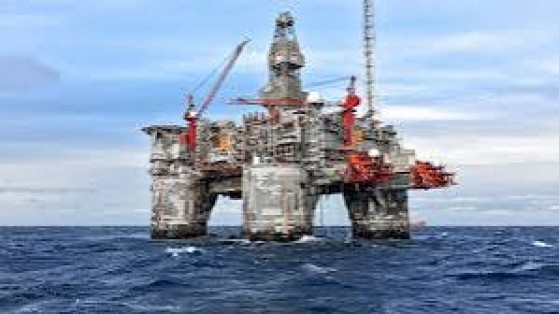
India’s ₹84,084 Crore Samudra Manthan Mission Enters Deep-Sea Technology Testing Phase
India’s ₹84,084 crore Samudra Manthan National Offshore Exploration Scheme has entered an early technology-development and testing phase, with state-owned energy companies working to establish the technical capabilities required for large-scale deepwater and ultra-deepwater oil and gas exploration.
The development marks an important operational step for one of India's most ambitious attempts to unlock hydrocarbon resources beneath its offshore basins.
Deepwater exploration requires considerably more sophisticated technology than conventional oil and gas development.
Companies must operate in environments involving:
extreme water depths,
high subsurface pressures,
complex geology,
remote drilling locations,
specialised subsea equipment,
and difficult production infrastructure.
Government officials have indicated that the technology required for the mission is still being developed and tested, meaning commercial-scale production remains a longer-term objective.
The immediate priority is to establish whether the required technologies and operating systems can be deployed successfully at the scale envisioned under Samudra Manthan.
Samudra Manthan Moves Into Technology Testing

The Samudra Manthan mission is currently focused on:
technology development and validation.
Public-sector companies are working on technologies required for deep-sea hydrocarbon exploration and attempting to demonstrate their effectiveness.
This is a critical stage because offshore exploration becomes progressively more complex as operations move from:
shallow water
to:
deepwater
and eventually:
ultra-deepwater environments.
Exploration companies need to understand the geology beneath thousands of metres of water before determining whether commercially recoverable hydrocarbons exist.
Even after a discovery, converting an offshore resource into commercial production requires an entirely different level of infrastructure.
The current testing phase is therefore intended to establish the technological foundation before much larger deployment begins.
Cabinet Approved ₹84,084 Crore for the Mission
The Union Cabinet approved the Samudra Manthan – National Offshore Exploration Scheme with an overall Phase-I outlay of:
₹84,084 crore.
The programme is scheduled to run through:
FY 2030–31.
It represents a major national intervention aimed at reducing the financial and technological risks associated with offshore hydrocarbon exploration.
The programme combines several elements that would normally operate separately, including:
seismic-data acquisition,
deepwater drilling,
shared offshore infrastructure,
technology development,
digital exploration tools,
and domestic equipment manufacturing.
This integrated structure is intended to move India's offshore exploration strategy from incremental development toward:
mission-mode execution.
₹28,534 Crore Allocated for Offshore Data Acquisition
A major component of Samudra Manthan involves improving India's understanding of its offshore geology.
Approximately:
₹28,534 crore
has been allocated for offshore data acquisition and processing.
This includes large-scale acquisition of:
2D seismic data,
3D seismic data,
advanced geological information,
and reprocessing of existing exploration data.
Seismic surveys allow exploration companies to create images of geological formations beneath the seabed.
Those images help geoscientists identify structures that could potentially contain:
oil
or:
natural gas.
Better geological data reduces uncertainty before companies commit hundreds or thousands of crores to drilling individual offshore wells.
AI Will Be Used to Reprocess Exploration Data
Samudra Manthan also includes approximately:
₹4,000 crore
for reprocessing National Data Repository information and implementing:
artificial-intelligence tools.
AI can potentially help geoscientists analyse enormous volumes of:
seismic information,
well data,
geological models,
and historical exploration records.
Machine-learning systems can identify patterns that might be difficult or time-consuming to detect manually.
The objective isn't to replace geological expertise.
Instead, AI can potentially improve the speed and accuracy with which exploration teams identify promising areas for further investigation.
For a programme involving thousands of kilometres of offshore geological information, improved data processing could significantly influence where expensive drilling resources are deployed.
₹43,200 Crore Allocated for Deepwater Exploration Wells
The largest single operational allocation within the programme is for:
offshore exploration acceleration.
Approximately:
₹43,200 crore
has been allocated for this component.
The government framework provides for drilling:
60 deepwater exploration wells
with financial support designed to reduce the enormous risk associated with frontier drilling.
Government support can cover up to:
50% of eligible drilling costs
or:
₹675 crore per well,
whichever is lower.
This risk-sharing structure is important because deepwater exploration wells can be extraordinarily expensive.
An exploration company can spend hundreds of crores drilling a well without making a commercially viable discovery.
Government participation therefore helps reduce some of the financial risk involved in testing unexplored or underexplored offshore basins.
Why Deepwater Exploration Is Technologically Difficult
Drilling beneath the ocean is fundamentally different from drilling a conventional onshore well.
The drilling rig may first have to operate through:
hundreds
or even:
thousands of metres of seawater
before reaching the seabed.
The well must then penetrate geological formations potentially several kilometres below the ocean floor.
Equipment must operate under:
extreme pressure,
low temperatures,
corrosive saltwater conditions,
and limited physical accessibility.
If something fails thousands of metres underwater, repairing it can be substantially more difficult than servicing equipment on land.
Deepwater development therefore requires specialised technologies including:
floating drilling systems,
subsea wellheads,
blowout preventers,
remotely operated vehicles,
underwater production equipment,
subsea pipelines,
and advanced monitoring systems.
Ultra-Deepwater Exploration Raises the Challenge Further
India's offshore opportunity extends into waters reaching depths of around:
3,000 metres.
Operating at these depths creates another level of engineering complexity.
Pressure increases substantially with water depth.
Equipment must remain reliable despite being inaccessible to conventional human intervention.
Production systems may need to transport hydrocarbons across significant underwater distances before reaching:
processing facilities,
pipelines,
floating production systems,
or mainland infrastructure.
The technical challenge explains why the current technology-testing phase is important.
Before India can expand deepwater production significantly, operators need to demonstrate that exploration and production systems can operate:
safely,
reliably,
and economically.
India’s Offshore Basins Hold Large Hydrocarbon Potential
The strategic motivation behind Samudra Manthan is the scale of India's potential offshore resource base.
Government estimates indicate that India's deepwater and ultra-deepwater regions could contain more than:
5,600 MMTOE
of hydrocarbon potential.
MMTOE refers to:
million metric tonnes of oil equivalent.
Promising areas include offshore regions associated with the:
Cauvery Basin,
Mahanadi Basin,
and Andaman region.
These areas remain comparatively underexplored partly because offshore exploration has historically faced:
regulatory restrictions,
technological limitations,
high drilling costs,
and geological uncertainty.
Samudra Manthan is designed to address several of those constraints simultaneously.
Previously Restricted Offshore Areas Have Been Opened
India's offshore exploration strategy has changed significantly over recent years.
Around:
1 million square kilometres
of offshore acreage previously classified as restricted or "no-go" has been released for exploration.
Opening these areas dramatically expands the territory available for geological assessment and potential drilling.
However, opening acreage doesn't automatically produce oil and gas.
Companies must still:
collect seismic data,
identify geological prospects,
drill exploratory wells,
confirm discoveries,
appraise reservoirs,
and establish commercial viability.
Samudra Manthan provides a financial and infrastructure framework intended to accelerate this process.
ONGC Is Expanding Deepwater Exploration
State-owned Oil and Natural Gas Corporation is expected to play an important role in India's offshore expansion.
ONGC has outlined substantial investment plans for deepwater exploration as the country accelerates activity under Samudra Manthan.
The company's deepwater programme involves:
new exploration wells,
advanced seismic analysis,
technology deployment,
and evaluation of frontier offshore basins.
As India's largest upstream oil and gas producer, ONGC already possesses considerable experience operating offshore.
However, the scale and complexity of the next phase require additional capabilities, particularly in:
ultra-deepwater exploration
and:
frontier geological environments.
Commercial Production Will Take Time
Despite the scale of the investment, Samudra Manthan shouldn't be interpreted as an immediate solution to India's energy-import dependence.
Deepwater exploration follows a long development cycle.
A typical project may progress through:
geological surveys,
exploratory drilling,
discovery,
confirmation drilling,
reservoir appraisal,
development planning,
regulatory approvals,
engineering,
infrastructure construction,
and finally:
commercial production.
In particularly challenging ultra-deepwater environments, moving from a confirmed commercial discovery to production can take:
six to ten years.
That means the current programme is fundamentally an investment in India's:
long-term energy security.
Discoveries Need Infrastructure Before Production Can Begin
Finding hydrocarbons is only the first challenge.
Once a commercially viable offshore field has been identified, companies need infrastructure capable of bringing those resources to market.
Depending on the location and type of discovery, this can include:
subsea production systems,
offshore platforms,
floating production facilities,
pipelines,
gas-processing infrastructure,
liquefaction facilities,
and mainland evacuation networks.
Remote offshore discoveries can become uneconomic if the cost of transporting oil or gas is too high.
Samudra Manthan therefore includes:
₹10,000 crore
for common offshore infrastructure hubs.
Shared infrastructure can potentially allow multiple fields or operators to use common production and evacuation systems, reducing development costs.
Oil and Gas Manufacturing Zones Planned
Another:
₹2,000 crore
has been allocated for developing:
Oil and Gas Manufacturing and Services Zones.
These zones are intended to strengthen India's domestic supply chain for offshore exploration and production.
Deepwater projects require specialised equipment and services that can otherwise depend heavily on international suppliers.
Developing domestic capability could support manufacturing across areas such as:
subsea equipment,
drilling components,
specialised engineering,
offshore fabrication,
maintenance,
and technical services.
The strategy therefore connects energy security with:
industrial localisation.
Samudra Manthan Could Support Make in India
The industrial implications of the programme extend beyond additional oil and gas production.
A sustained offshore exploration cycle could create demand for:
engineering companies,
shipyards,
equipment manufacturers,
oilfield-service providers,
digital technology companies,
geological services,
and specialised logistics businesses.
Building these capabilities domestically would allow a larger share of offshore exploration spending to remain within India's industrial ecosystem.
It could also eventually create export opportunities if Indian companies develop internationally competitive offshore technologies and services.
Mission Targets More Than 600 MMTOE of Additional Reserves
Subject to successful exploration, the programme aims to add more than:
600 MMTOE
to India's hydrocarbon reserves.
The government also aims to increase domestic oil and gas production from approximately:
62 MMTOE annually
to around:
80 MMTOE annually.
These targets depend heavily on exploration success.
Seismic surveys can identify promising geological structures, but only drilling can ultimately establish whether commercially recoverable hydrocarbons are present.
Even a successful discovery must then satisfy technical and economic requirements before production begins.
The programme therefore carries substantial geological and execution risk despite its large financial allocation.
India Wants to Reduce Its Energy Import Dependence
Energy security is the central strategic argument behind Samudra Manthan.
India remains heavily dependent on imported hydrocarbons, particularly:
crude oil
and:
natural gas.
That dependence exposes the economy to:
international oil prices,
currency movements,
shipping disruptions,
geopolitical conflicts,
and supply shocks.
When global oil prices rise sharply, India's import bill can increase substantially.
Higher energy costs can then influence:
inflation,
transport costs,
industrial expenses,
the trade deficit,
and household spending.
Increasing domestic production would therefore provide benefits extending well beyond the upstream oil and gas industry.
Additional Production Could Reduce Import Costs
The government estimates that achieving the programme's production objectives could potentially reduce crude-oil imports by nearly:
₹1 lakh crore annually.
That figure remains dependent on:
exploration success,
actual production volumes,
international energy prices,
and project economics.
Nevertheless, it demonstrates the economic rationale behind accepting substantial upfront exploration expenditure.
A successful offshore discovery can continue producing hydrocarbons for many years.
Large discoveries could therefore generate economic value far beyond the initial exploration phase.
Private Investment Is an Important Part of the Strategy
Samudra Manthan isn't designed solely as a government exploration programme.
One of its broader objectives is to:
de-risk offshore exploration and encourage private investment.
Deepwater exploration requires enormous capital while offering no guarantee of discovery.
That risk can discourage private companies from entering frontier basins.
Government-funded geological data, drilling support and common infrastructure can improve the commercial economics for potential investors.
The strategy could eventually attract:
Indian private-sector energy companies,
international oil companies,
oilfield-service providers,
technology specialists,
and institutional capital.
Global Technology Partnerships Could Become Important
India's domestic capabilities will be important, but the technical complexity of deepwater exploration means international collaboration is also likely to play a role.
Global energy companies have decades of experience operating in deepwater regions including:
the Gulf of Mexico,
Brazil,
West Africa,
the North Sea,
and other offshore basins.
Partnerships could provide access to:
advanced drilling systems,
subsea engineering,
reservoir modelling,
deepwater safety expertise,
and project-management capabilities.
Combining international expertise with domestic manufacturing could accelerate India's learning curve while gradually building indigenous technological capability.
Technology Testing Will Determine the Mission’s Next Phase
The current technology-testing stage is therefore more important than its relatively early position in the development cycle might suggest.
Samudra Manthan's long-term success depends on whether operators can demonstrate that India's frontier offshore resources can be:
identified accurately,
drilled safely,
developed economically,
and connected to domestic markets.
Successful testing would allow exploration activity to expand.
Technical difficulties or disappointing geological results could extend timelines and increase costs.
The mission therefore represents both:
a major opportunity
and:
a significant technological challenge.
Conclusion
India's ₹84,084 crore Samudra Manthan National Offshore Exploration Scheme has moved into a crucial technology-development and testing phase as public-sector companies work to establish capabilities for deepwater and ultra-deepwater hydrocarbon exploration.
The programme combines ₹28,534 crore for offshore data acquisition, ₹43,200 crore for accelerated exploration drilling, ₹10,000 crore for shared offshore infrastructure and ₹2,000 crore for oil and gas manufacturing and services zones, alongside monitoring and support expenditure.
Its ambitions are substantial.
The government wants to add more than 600 MMTOE of hydrocarbon reserves, raise domestic oil and gas production and reduce India's exposure to imported energy.
But deepwater exploration is inherently complex, expensive and slow.
The immediate challenge isn't commercial production. It is proving that the technology, geology and infrastructure can support exploration at the required scale.
If those capabilities are successfully established, Samudra Manthan could become a foundation for a much larger Indian offshore energy industry—linking energy security, advanced engineering, domestic manufacturing and long-term reduction in import dependence.