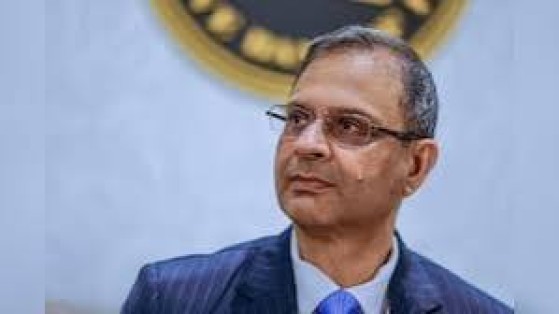
Government Reappoints Anand Mahindra to RBI Central Board for Four-Year Term
The central government has reappointed Mahindra Group Chairman Anand Mahindra as a part-time non-official director on the Central Board of the Reserve Bank of India, extending his involvement in the governance of India's central bank for another four-year term.
The renewed appointment takes effect from August 20, 2026, and will run for four years or until further orders, whichever is earlier.
Mahindra was first nominated to the RBI Central Board in June 2022 alongside industrialist Venu Srinivasan, Zydus Lifesciences Chairman Pankaj Patel and economist Ravindra Dholakia.
His reappointment comes as the Reserve Bank oversees an increasingly complex financial system shaped by rapid digitalisation, fintech expansion, artificial intelligence, global financial volatility and continued changes in India's banking and credit markets.
Anand Mahindra Begins Another Four-Year RBI Board Term

The government has retained Anand Mahindra as a part-time non-official director rather than appointing him to a full-time executive position within the central bank.
His new four-year term begins on August 20, 2026.
The appointment extends his participation in the RBI's wider governance framework after his original nomination in 2022.
Mahindra Was First Appointed in June 2022
Anand Mahindra originally joined the Central Board on June 14, 2022.
At the time, the government nominated four new part-time non-official directors:
Anand Mahindra,
Venu Srinivasan,
Pankaj Patel,
and Ravindra Dholakia.
Their appointments were made for four-year terms or until further orders.
The latest decision effectively gives Mahindra a further period of service on the board.
RBI Central Board Oversees Central Bank Affairs
The Reserve Bank of India's affairs are governed by its Central Board of Directors under the RBI Act, 1934.
The board includes the RBI Governor, Deputy Governors and directors nominated by the central government.
Its responsibilities extend across the broader administration, governance and direction of the central bank.
Central Board Is Different From Monetary Policy Committee
Mahindra's board position should not be confused with membership of the Monetary Policy Committee.
The MPC is the statutory body responsible for setting India's policy repo rate and making monetary-policy decisions.
The Central Board has a broader governance role.
Reappointment Does Not Give Mahindra an Interest-Rate Vote
Mahindra does not automatically participate in MPC voting because of his position on the Central Board.
The six-member Monetary Policy Committee has its own legally defined composition.
This distinction is important when assessing the significance of the appointment.
Non-Official Directors Bring External Expertise
The RBI Central Board includes non-official directors nominated from different professional backgrounds.
This allows the central bank to benefit from perspectives outside traditional central banking.
Anand Mahindra contributes experience across:
manufacturing,
automobiles,
technology,
financial services,
agriculture,
and international business.
His business career provides exposure to many sectors directly influenced by monetary, credit and financial policy.
Anand Mahindra Chairs One of India’s Largest Business Groups
Mahindra serves as Chairman of the Mahindra Group, one of India's major diversified business organisations.
The group operates across sectors including:
automobiles,
farm equipment,
financial services,
technology,
real estate,
hospitality,
and logistics.
This broad industrial exposure gives Mahindra insight into how financial conditions affect businesses across different parts of the economy.
Automotive Industry Is Highly Sensitive to Interest Rates
Mahindra's core business background is particularly relevant to financial conditions because automobile demand is closely connected to credit availability.
Consumers frequently finance:
cars,
SUVs,
tractors,
and commercial vehicles.
When interest rates rise, monthly loan payments can become more expensive.
That can influence demand.
When financing conditions ease, vehicle affordability can improve.
Mahindra Group Has Major Financial-Services Exposure
The Mahindra Group also operates in financial services through Mahindra & Mahindra Financial Services.
That business provides lending across rural and semi-urban India.
It gives the group direct exposure to issues involving:
credit demand,
asset quality,
interest rates,
and financial inclusion.
This financial-services experience adds another dimension to Mahindra's contribution to central-bank governance.
Rural Finance Is Important Part of Indian Economy
A significant portion of India's economic activity occurs outside major cities.
Rural borrowers frequently require finance for:
tractors,
vehicles,
small businesses,
and agricultural activity.
Financial institutions operating in these markets encounter different customer characteristics from urban corporate banks.
Mahindra's experience across agriculture and rural finance can therefore provide useful industry perspective.
RBI Is Managing Rapid Credit Expansion
India's banking and non-banking financial sectors have expanded substantially.
Credit growth creates economic opportunities.
But excessively rapid lending can also increase risk.
The RBI therefore needs to balance:
financial inclusion,
economic growth,
and prudential regulation.
Board members with direct business experience can contribute perspectives on how regulations affect borrowers and financial institutions.
NBFC Regulation Is Increasingly Important
Non-banking financial companies play a major role in India's credit system.
They lend across:
vehicles,
housing,
consumer finance,
MSMEs,
and infrastructure.
The RBI has steadily strengthened regulation of NBFCs as their systemic importance has increased.
Given the Mahindra Group's financial-services operations, the regulatory environment for NBFCs is commercially relevant to Mahindra's wider business ecosystem.
Governance Requires Managing Potential Conflicts Carefully
Business leaders serving on public institutional boards can bring valuable private-sector knowledge.
At the same time, governance frameworks need clear safeguards where matters could intersect with business interests.
Strong disclosure and recusal mechanisms are therefore important whenever applicable.
These practices help preserve institutional independence and public confidence.
Banking System Is Becoming More Technology-Driven
Mahindra's reappointment also comes as Indian finance becomes increasingly digital.
UPI, mobile banking and digital lending have changed how consumers interact with financial institutions.
Banks now operate as technology platforms as much as traditional branch networks.
This creates new governance challenges for the RBI.
Fintech Expansion Requires Regulatory Balance
India has developed one of the world's most active fintech ecosystems.
Digital platforms have expanded access to:
payments,
loans,
investments,
and insurance.
Innovation creates benefits.
It can also create risks involving:
consumer protection,
data,
fraud,
and lending standards.
The RBI therefore needs to encourage useful innovation while maintaining stability.
Artificial Intelligence Adds New Financial Risks and Opportunities
Banks are increasingly using AI for:
fraud detection,
customer service,
credit assessment,
and operations.
The technology could improve efficiency significantly.
But automated systems can also create new forms of model and operational risk.
Central-bank governance needs to keep pace with this technological transition.
Cybersecurity Has Become Financial-Stability Issue
The growing dependence on digital banking makes cybersecurity crucial.
A major cyberattack against a large bank or payment system could disrupt millions of transactions.
That means financial stability now depends partly on technological resilience.
The RBI increasingly needs to consider cybersecurity alongside traditional capital and liquidity risks.
Digital Payments Continue Transforming India
India's payments infrastructure has expanded rapidly through UPI and other digital systems.
Consumers increasingly use smartphones for routine transactions.
The shift has reduced dependence on cash in many areas of daily commerce.
At the same time, the scale of digital payments makes system uptime and security increasingly important.
RBI Board Needs Broad Institutional Perspective
The complexity of modern central banking extends well beyond monetary policy.
The RBI must oversee:
banks,
NBFCs,
payments,
currency,
foreign-exchange reserves,
and financial stability.
External directors can provide insights into how regulatory decisions affect businesses and consumers.
Mahindra's cross-sector experience makes him relevant to this broader mandate.
Manufacturing Policy and Finance Are Closely Connected
India is attempting to deepen domestic manufacturing.
Businesses need finance for:
factories,
equipment,
research,
and working capital.
High borrowing costs can slow investment.
Weak credit discipline can create financial instability.
Central-bank policy therefore interacts directly with the country's manufacturing ambitions.
Mahindra Group Has Large Manufacturing Footprint
The Mahindra Group is particularly exposed to India's industrial economy.
Its businesses include automobiles and farm machinery produced through extensive manufacturing operations.
This provides Mahindra with practical understanding of:
capital expenditure,
supply chains,
and industrial financing.
Such experience can add useful perspective to wider economic discussions.
Electric-Vehicle Transition Adds New Financing Needs
India's automotive industry is moving toward electric mobility.
Manufacturers need large amounts of capital for:
battery technology,
new platforms,
factories,
and charging ecosystems.
Consumers also need financing to purchase electric vehicles.
The transition therefore connects industrial policy with credit conditions.
Agriculture Remains Another Major Mahindra Exposure
Mahindra is one of the world's leading tractor manufacturers.
Agriculture remains central to India's economy.
Rural income conditions affect:
tractor demand,
vehicle sales,
and financial-services performance.
This gives Mahindra direct exposure to economic conditions outside India's major urban centres.
Rural Demand Is Key Economic Indicator
Strong rural incomes can support consumption across multiple categories.
Weak agricultural conditions can reduce discretionary spending.
Policymakers therefore watch factors such as:
monsoons,
crop production,
and rural wages.
Board members with exposure to rural markets can contribute practical economic insights.
Global Business Experience Adds International Perspective
The Mahindra Group operates internationally across multiple industries.
Global operations expose companies to:
exchange rates,
interest rates,
trade policy,
and international demand.
These issues are highly relevant to the RBI because global financial conditions influence Indian capital markets and the rupee.
Currency Volatility Affects Indian Businesses
Companies importing components or exporting products are exposed to exchange-rate movements.
A weaker rupee can raise imported input costs.
Exporters can benefit from higher rupee revenue.
Currency volatility therefore has different effects across industries.
The RBI closely monitors foreign-exchange markets as part of its broader financial-stability mandate.
Global Bond Markets Influence India
India's financial conditions are affected by developments in US and other international bond markets.
Higher global yields can influence:
foreign capital flows,
the rupee,
and domestic borrowing costs.
Business leaders operating internationally encounter these effects directly.
This gives external board directors additional context when considering financial-system developments.
Inflation Affects Both Consumers and Companies
Inflation is one of the most important economic variables monitored by the RBI.
Businesses experience inflation through:
raw materials,
wages,
energy,
and logistics.
Consumers experience it through higher prices.
Managing inflation while supporting sustainable economic activity remains a central policy challenge.
Price Stability Supports Long-Term Investment
Businesses need predictable economic conditions when making investments lasting many years.
High or unstable inflation creates uncertainty.
It can also produce higher borrowing costs.
A credible central bank therefore creates value for the corporate sector even when individual regulatory decisions may sometimes appear restrictive.
Strong Financial Institutions Support Economic Growth
Companies need healthy banks.
Consumers need confidence in deposits and payment systems.
Investors need stable financial markets.
The RBI therefore plays an essential role in India's wider economic development.
Governance of the central bank has consequences extending far beyond financial institutions themselves.
Anand Mahindra Is Widely Known for Technology Advocacy
Beyond his industrial role, Mahindra has frequently highlighted technological innovation and entrepreneurship.
The Mahindra Group has invested in areas involving:
electric mobility,
technology services,
and digital transformation.
This gives his board role an additional technology dimension as financial services become increasingly software-driven.
Innovation Must Be Balanced With Stability
Businesses generally want faster innovation and fewer barriers.
Central banks need to prioritise stability and customer protection.
These objectives can sometimes conflict.
Effective financial regulation requires finding a workable balance.
External directors can contribute industry insight while the RBI retains its regulatory mandate.
Board Diversity Can Improve Decision Quality
Large institutions benefit when leadership teams include different professional backgrounds.
Economists may focus on macroeconomic dynamics.
Bankers may focus on financial-system operations.
Industrial leaders can provide perspectives from businesses that use finance.
Such diversity can help boards evaluate consequences across the wider economy.
Reappointment Signals Continuity
The government's decision to give Mahindra another four-year term provides continuity within the Central Board.
Institutional knowledge becomes more valuable over time.
A returning board member already understands:
RBI governance,
board processes,
and institutional priorities.
This can allow greater contribution than a completely new appointee beginning from zero.
S Somanath Joins Board Alongside Mahindra Reappointment
The latest round of appointments also includes former ISRO Chairman S Somanath as a new non-official director.
That creates an interesting combination of industrial and engineering expertise.
Mahindra brings extensive private-sector and business experience.
Somanath brings experience in advanced technology and large national engineering programmes.
Together, the appointments broaden the expertise represented on the Central Board.
Central Banking Is Becoming More Multidisciplinary
The appointments reflect a broader reality.
Modern central banks need expertise extending beyond economics.
Financial systems increasingly depend on:
technology,
industrial growth,
digital infrastructure,
and cybersecurity.
Central-bank boards therefore benefit from exposure to a wider range of disciplines.
Reappointment Does Not Change Mahindra Group Management
Anand Mahindra's RBI board role remains separate from his position as Chairman of the Mahindra Group.
The central-bank appointment does not give the RBI operational responsibility over Mahindra Group companies beyond the regulatory powers it already possesses over relevant financial entities.
Likewise, Mahindra's board membership does not place him inside day-to-day RBI executive management.
RBI Executives Continue Running Daily Operations
The Governor and Deputy Governors manage the Reserve Bank's executive responsibilities.
Non-official directors serve within the broader governance structure.
This separation maintains clarity between institutional oversight and daily central-bank administration.
Businesses Will Watch RBI Policy Environment
Indian companies continue paying close attention to:
interest rates,
credit conditions,
liquidity,
and financial regulation.
The RBI's decisions influence borrowing and investment across the economy.
Mahindra's reappointment places one of India's most prominent business leaders within the institution's broader governance framework during an important period for growth and financial transformation.
Conclusion
The government's reappointment of Anand Mahindra as a part-time non-official director on the Reserve Bank of India's Central Board extends his involvement in central-bank governance for another four years beginning August 20, 2026.
Mahindra originally joined the board in June 2022 and brings extensive experience across automobiles, manufacturing, agriculture, technology and financial services through his leadership of the Mahindra Group.
His renewed term comes as the RBI navigates an increasingly complex financial environment shaped by digital payments, fintech growth, artificial intelligence, cybersecurity, NBFC regulation and global financial-market volatility.
The appointment does not make Mahindra a member of the Monetary Policy Committee and does not give him a direct vote on India's policy interest rate.
Its significance instead lies in broader institutional governance.
Modern central banking increasingly intersects with the real economy, technology and industrial development. Bringing experienced leaders from these areas into the RBI's Central Board can broaden the perspectives available to the institution.
Mahindra's reappointment therefore represents both continuity and a recognition that central-bank governance increasingly requires expertise reaching well beyond traditional banking alone.