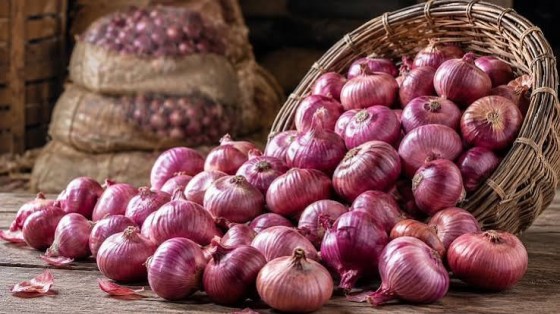
Centre Begins Onion Sales at ₹35 Per Kg in Delhi From August 27 to Curb Price Surge
The Centre is beginning retail sales of onions at ₹35 per kilogram in Delhi from August 27, 2026, stepping up market intervention after retail prices climbed sharply across several major Indian cities.
Union Minister for Consumer Affairs, Food and Public Distribution Pralhad Joshi is scheduled to launch the subsidised retail programme as the government releases onions from its Price Stabilisation Buffer through NCCF, NAFED, Kendriya Bhandar, Safal outlets and mobile vans.
The intervention comes after Delhi retail onion prices rose to around ₹55 per kg, while prices in some other metropolitan markets reached approximately ₹60 per kg.
The government is simultaneously using dedicated railway rakes under the “Kanda Express” programme to move large quantities of onions from producing regions such as Nashik to major consumption centres.
The objective is straightforward: increase physical availability in high-price markets before seasonal pressures translate into a broader and more persistent increase in food inflation.
Onion Sales Begin at ₹35 Per Kg

Consumers in Delhi will be able to purchase government-supported onions at:
₹35 per kilogram.
This represents a substantial discount to prevailing market prices.
With onions trading around ₹55 per kg in Delhi, the intervention price is approximately ₹20 lower.
For households purchasing onions regularly, that difference can provide meaningful short-term relief.
Delhi Retail Prices Have Climbed Sharply
Onion prices have risen significantly over the past month.
The all-India average retail price reached approximately:
₹44.72 per kg on August 25.
That compares with around:
₹34.80 per kg on July 25.
The increase represents more than 28% in one month.
Compared with approximately ₹28.67 per kg a year earlier, average prices were around 56% higher.
Delhi Onion Price Reaches Around ₹55 Per Kg
The pressure is particularly visible in major cities.
Delhi retail onion prices reached approximately:
₹55 per kg.
A year earlier, the corresponding price was around:
₹33 per kg.
Other metropolitan markets have also reported substantial increases.
Chennai and Kolkata have seen onion prices around ₹60 per kg, while Mumbai prices have moved toward the high-₹40 range.
Wholesale Prices Have Also Increased
The price increase is not limited to retail markets.
Average wholesale onion prices reached approximately:
₹36.73 per kg on August 25.
That was around 33.5% higher than a month earlier and roughly 63% above the year-ago level.
Higher wholesale prices eventually influence retail markets because distributors and retailers need to recover increased procurement costs.
Government Is Releasing Buffer Stock
The subsidised onions come from the government's Price Stabilisation Buffer.
For 2026, the Centre has accumulated approximately:
1.21 lakh tonnes of onions
across producing states.
Buffer stocks allow the government to purchase agricultural commodities when supplies are relatively abundant and release them when prices become unusually high.
The strategy attempts to reduce extreme price swings without permanently replacing normal market supply.
NCCF Holds Around 62,000 Tonnes
The National Cooperative Consumers' Federation of India, or NCCF, holds approximately:
62,000 tonnes
of onions under the buffer arrangement.
The agency will participate directly in retail distribution.
It will use both permanent outlets and mobile vans to move onions into consumer markets.
This gives the government the ability to target areas experiencing particularly high prices.
NAFED Holds Nearly 55,000 Tonnes
The National Agricultural Cooperative Marketing Federation of India, or NAFED, is holding slightly less than:
55,000 tonnes
of onions.
NAFED will also distribute onions in Delhi and other consumption centres.
The combination of NAFED and NCCF provides the government with an established procurement and distribution network for agricultural commodities.
Around 100 Kendriya Bhandar Outlets Will Participate
The Delhi intervention includes approximately:
100 Kendriya Bhandar outlets.
This substantially expands physical access compared with relying only on a few government sale centres.
Consumers will therefore be able to purchase subsidised onions through multiple neighbourhood locations.
The broader the distribution network, the greater the potential influence on prevailing retail prices.
NCCF Will Deploy 40 Mobile Vans
NCCF's distribution plan includes:
9 outlets
and as many as:
40 mobile vans.
Mobile vans provide flexibility because they can be directed toward locations where onion prices are particularly high or retail access is limited.
They can also reach residential areas without requiring permanent stores.
NAFED Will Use 50 Mobile Vans
NAFED is expected to distribute onions through:
13 outlets
and approximately:
50 mobile vans.
Together with NCCF and Kendriya Bhandar, this creates a substantial government-backed retail network across Delhi.
Safal outlets are also part of the wider distribution framework.
NCR Rollout Is Expected to Follow
The intervention begins in Delhi before expanding further across the National Capital Region.
NCCF has indicated that subsidised onion sales should extend into the NCR by the weekend.
That could bring the programme to additional consumers in areas surrounding Delhi.
The timing will depend partly on supply availability and logistics.
Mother Dairy Outlets Could Expand Distribution Further
NCCF has also been discussing the possibility of using Mother Dairy's retail network.
Mother Dairy operates hundreds of outlets across Delhi-NCR.
If incorporated into the programme, those stores could significantly increase consumer access.
Established retail infrastructure allows government intervention to scale much more quickly than creating temporary outlets from scratch.
First Kanda Express Is Heading to Delhi
A major part of the supply strategy involves railway transportation.
The government has begun moving bulk onion consignments through dedicated trains known as:
Kanda Express.
The first rake carrying approximately:
800 tonnes of onions
has departed Nashik for Delhi.
The train is expected to strengthen supply in the capital.
NCCF Is Moving Around 400 Tonnes From Nashik
NCCF is transporting approximately:
400 tonnes
from Nashik as part of the current intervention.
Nashik and surrounding areas in Maharashtra represent one of India's most important onion-producing regions.
Moving stocks directly from major production centres toward high-price consumption markets can reduce logistical bottlenecks.
Rail Transport Can Move Large Volumes Quickly
Trucks remain essential for agricultural logistics.
But individual trucks carry relatively limited quantities.
Railway rakes can move hundreds of tonnes simultaneously.
For a commodity experiencing sudden price pressure, this can improve the speed and scale of market intervention.
The government is therefore combining rail and road transport rather than relying exclusively on one mode.
Hybrid Transportation Model Gives Greater Flexibility
Bulk supplies can move between major regions by rail.
After reaching destination terminals, smaller quantities can be distributed by road to:
warehouses,
retail outlets,
and mobile vans.
This creates a hybrid logistics system.
Rail provides scale.
Road transport provides last-mile flexibility.
Other Cities Will Also Receive Kanda Express Supplies
Delhi is not the only market targeted.
Dedicated onion rakes are also being planned for major consumption centres including:
Chennai,
Ernakulam,
Madurai,
and Guwahati.
Government agencies can additionally redirect supplies toward other locations depending on prices.
The strategy is designed to respond dynamically to regional market conditions.
Supplies Could Reach Chandigarh and Ludhiana
Onions arriving through railway movements can also be redistributed to nearby markets.
NCCF has indicated that supplies can support centres including:
Chandigarh,
Ludhiana,
and Varanasi.
This gives each large consignment a wider geographic impact.
The government does not necessarily need a dedicated train for every city.
Seasonal Price Pressure Is Common in August and September
Onion prices frequently become volatile during the period between major crop arrivals.
August and September can be particularly sensitive.
The market is influenced by:
stored rabi onions,
weather,
festival demand,
and expectations for the next crop.
Even when annual production is adequate, temporary supply mismatches can produce rapid price increases.
Weather Can Affect Supply Movement
Heavy monsoon rainfall can disrupt the movement of agricultural commodities.
Roads can be affected.
Storage conditions can deteriorate.
Harvesting schedules may also change.
Onions are particularly sensitive because poor storage or excessive moisture can lead to spoilage.
Weather therefore influences both quantity and quality available in markets.
Festive Demand Can Increase Consumption
Seasonal consumption patterns also influence prices.
Demand can increase around festivals and periods of higher food-service activity.
If demand rises while stored supplies are declining, prices can move quickly.
Government officials have identified seasonal and logistical factors as important contributors to the current increase.
India Still Has Adequate Overall Onion Supply
Despite the price surge, the government says there is no fundamental shortage of onions.
India's onion production for 2025-26 is estimated at approximately:
307.37 lakh tonnes.
That is almost unchanged from approximately:
307.67 lakh tonnes in 2024-25.
The intervention is therefore aimed primarily at correcting temporary regional and seasonal supply pressures.
Stable Production Does Not Guarantee Stable Prices
Agricultural prices depend on more than annual production.
A country can produce enough onions over an entire year and still experience sharp short-term price increases.
The reason is timing.
Onions need to be:
stored,
transported,
and distributed
throughout the year.
Problems anywhere in that chain can create temporary shortages in individual markets.
Storage Is Critical for Onion Supply
Unlike crops consumed immediately after harvest, onions can be stored for extended periods.
This allows one harvest to supply markets for several months.
But storage losses can be significant.
Temperature, humidity and ventilation affect quality.
Improved storage infrastructure can therefore reduce price volatility over the long term.
Buffer Stocks Add Another Layer of Protection
Government buffers operate alongside normal commercial storage.
The purpose is not to supply the entire market.
Instead, the government holds enough stocks to intervene when prices rise excessively.
The presence of buffer stocks can also influence market expectations.
Traders know additional supplies may enter the market if prices become unusually high.
Government Raised Procurement Price Earlier in 2026
The Centre increased the procurement price for its onion buffer in July 2026.
The procurement price was raised by approximately 13%, from:
₹1,875 per quintal
to:
₹2,125 per quintal.
The higher price was intended to provide better returns to farmers while helping agencies build adequate buffer stocks.
Price Stabilisation Must Balance Farmers and Consumers
Agricultural-price management involves competing objectives.
Consumers want affordable onions.
Farmers need prices high enough to cover production costs and generate income.
If prices fall too sharply, growers suffer.
If prices rise too much, household budgets are affected.
Government buffer policy attempts to reduce the most extreme movements in both directions.
Onion Is Politically Sensitive Commodity
Few vegetables attract as much policy attention in India as onions.
They are consumed widely across households and restaurants.
Price increases are therefore highly visible.
Unlike some food commodities purchased occasionally, onions form part of everyday cooking for millions of families.
Even relatively small price increases can quickly become a public concern.
Onion Prices Influence Household Food Budgets
A household may purchase only a few kilograms of onions each month.
But onions are one component of a larger food basket.
When onion prices rise alongside:
tomatoes,
vegetable oils,
or pulses,
the cumulative impact becomes more significant.
Food inflation therefore depends on the interaction of multiple everyday commodities.
Government Intervention Can Affect Market Prices Beyond Subsidised Sales
The direct beneficiaries are consumers who purchase ₹35 onions through government channels.
But the policy can influence the wider market too.
Private retailers may reduce prices if they begin losing customers to subsidised outlets.
Wholesale traders may also become less willing to hold inventory when they expect additional government stocks to arrive.
This can amplify the impact beyond the quantity directly sold.
More Supply Can Reduce Speculative Hoarding
Rapidly rising prices sometimes encourage traders to hold stocks in expectation of further increases.
Government releases can change those expectations.
If market participants believe substantial additional supply is coming, holding inventory becomes riskier.
That can encourage stocks to return to the market sooner.
Quantity Released Will Determine Effectiveness
The ₹35 price attracts attention, but the amount of onion actually supplied is equally important.
If subsidised volumes are too small relative to consumer demand, the programme may have limited impact on broader market prices.
A larger and sustained release can exert stronger pressure.
This is why the government has said coverage and quantities can be increased depending on market conditions.
Distribution Needs to Prevent Long Queues
Deep discounts can create strong demand.
If ₹35 onions are available while nearby stores charge ₹50 or more, consumers have a clear incentive to use government outlets.
Distribution therefore needs enough:
stock,
sale points,
and mobile vans
to avoid severe shortages or queues.
Operational execution is central to the intervention's effectiveness.
Price Quality Needs Monitoring
Consumers also care about the quality of subsidised produce.
Onions released from storage need to remain suitable for household use.
Poor-quality products could reduce participation even at lower prices.
Government agencies therefore need to manage both quantity and quality during buffer-stock release.
Delhi Is Often First Market for Price Intervention
Delhi is one of India's largest consumption centres and is closely monitored by policymakers.
The capital has frequently been among the first markets targeted during government vegetable-price interventions.
Its large population creates substantial daily demand.
Successful implementation in Delhi can then provide a template for expansion elsewhere.
Earlier ₹35 Onion Sales Have Been Used Before
The government has previously sold onions at ₹35 per kilogram during periods of elevated prices.
In 2024, NAFED and NCCF deployed subsidised onion sales across multiple cities.
Those interventions were subsequently expanded when consumer demand remained strong.
The 2026 programme therefore builds on an existing price-stabilisation mechanism rather than introducing an entirely new policy.
Digital Price Monitoring Helps Target Supplies
The Department of Consumer Affairs monitors retail and wholesale prices across a large number of centres.
This gives policymakers information on:
where prices are rising,
how quickly they are changing,
and where intervention may be most effective.
Buffer-stock releases can therefore be targeted toward markets experiencing the greatest pressure.
Targeted Intervention Can Reduce Fiscal Cost
Selling subsidised onions everywhere would require enormous quantities.
A targeted strategy can concentrate stocks in areas where consumer prices are unusually high.
This potentially increases the impact of each tonne released.
Government officials have described the current approach as calibrated and targeted rather than universal.
Onion Inflation Can Affect Headline Food Inflation
Vegetable prices are volatile components of India's inflation basket.
Sharp increases can influence food inflation even if they later reverse.
Central banks generally recognise that temporary vegetable shocks behave differently from persistent inflation.
However, large increases can still affect household expectations and consumer sentiment.
Price Stabilisation Supports Inflation Management
The RBI determines monetary policy based on broader inflation trends.
Government measures addressing temporary food-price shocks can complement monetary policy.
Increasing vegetable supply directly targets the source of the price increase.
Interest rates cannot produce more onions.
Supply interventions therefore play a different but important role.
Onion Prices Can Reverse Quickly
Agricultural commodity prices can change rapidly when new supplies reach the market.
A few weeks of strong arrivals can reverse earlier shortages.
This volatility makes short-term forecasting difficult.
Consumers may experience very high prices followed by rapid declines.
Government intervention attempts to smooth these extremes.
Upcoming Crop Arrivals Will Be Important
The longer-term price trajectory depends on future market arrivals.
If the next crop reaches markets on schedule and in good condition, pressure could ease naturally.
If weather disrupts production or logistics, high prices could persist longer.
The government will therefore continue monitoring crop and arrival data.
Exports Have Continued Despite Domestic Availability Concerns
India remains an important onion exporter.
Government data indicates exports continue to multiple international destinations.
Export policy can become politically sensitive when domestic prices rise.
However, authorities currently maintain that overall production and availability remain adequate.
The focus is therefore on targeted domestic releases rather than signalling a nationwide physical shortage.
Farmers Also Need Predictable Export Markets
Abrupt restrictions on agricultural exports can harm farmers by reducing potential selling prices.
Stable export policy provides growers with better planning visibility.
The challenge for government is managing consumer affordability without repeatedly disrupting farmer access to international markets.
Buffer stocks provide one alternative tool.
Better Supply Chains Could Reduce Future Volatility
India's onion-price cycles highlight the importance of agricultural infrastructure.
Long-term improvements could include:
modern storage,
efficient rail logistics,
better market information,
and stronger processing capacity.
These measures would reduce dependence on emergency interventions.
The Kanda Express demonstrates how transportation infrastructure can play a direct role in food-price management.
Railways Can Become Important Agricultural Logistics Tool
Dedicated agricultural freight movement can reduce transit costs over long distances.
India's producing regions are often hundreds or thousands of kilometres from major consumption centres.
Rail can move large quantities efficiently.
Integrating rail with warehouses and road distribution could improve agricultural supply chains beyond onions alone.
Consumers Will Watch Whether Market Prices Fall
The success of the ₹35 intervention will ultimately be measured not only by how much onion government agencies sell.
The larger objective is to reduce prevailing market prices.
If commercial retail prices begin moving closer to the subsidised rate, the intervention will have achieved a broader stabilising effect.
If prices remain elevated despite buffer releases, authorities may need to increase supply further.
Conclusion
The Centre's decision to begin selling onions at ₹35 per kilogram in Delhi from August 27, 2026 represents a direct response to a rapid increase in retail prices that has pushed onions to around ₹55 per kg in the national capital and as high as ₹60 in some other major cities.
The government is drawing supplies from its approximately 1.21 lakh tonne Price Stabilisation Buffer and distributing them through NCCF, NAFED, Kendriya Bhandar, Safal outlets and mobile vans.
The scale of the retail network is significant. NCCF is deploying outlets and up to 40 mobile vans, NAFED is using outlets and around 50 vans, while approximately 100 Kendriya Bhandar stores are participating.
At the same time, the government has launched the Kanda Express logistics initiative to move onions in bulk from producing regions to major consumption markets. The first railway rake carrying approximately 800 tonnes has left Nashik for Delhi.
The intervention does not reflect a collapse in overall onion production. India's 2025-26 output is estimated at approximately 307.37 lakh tonnes, broadly unchanged from the previous year.
Instead, the current price surge appears to reflect seasonal demand, weather, storage and supply-chain pressures.
The government's strategy is therefore to use buffer stocks and large-scale logistics to close the temporary gap between where onions are available and where prices have risen most sharply.
If supplies reach consumers quickly and at sufficient scale, the ₹35-per-kg programme could do more than provide discounted onions through government outlets. It could also force broader retail prices lower by increasing market supply and changing trader expectations during one of the most price-sensitive periods of India's annual onion cycle.