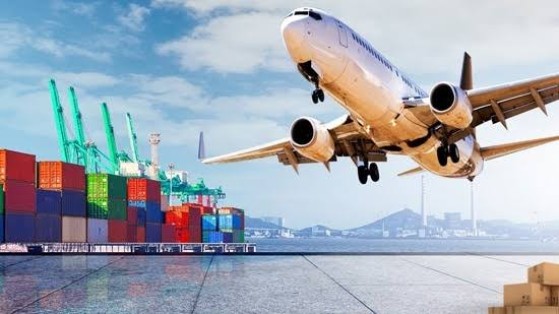
Skyways Air Services Opens ₹582.8 Crore IPO for Subscription on August 24
Skyways Air Services has opened its ₹582.8 crore initial public offering for subscription on August 24, 2026, bringing another logistics company to India's primary market as investors continue to assess a busy pipeline of public issues.
The IPO has a price band of ₹124 to ₹130 per equity share and combines a fresh issue with an offer for sale by existing shareholders.
The offering is scheduled to remain open until August 26, after which the company is expected to finalise share allotments ahead of its proposed stock-market debut.
Skyways operates across air freight, ocean freight, road transportation, express cargo, warehousing and other supply-chain services, giving IPO investors exposure to India's expanding logistics and international trade ecosystem.
Skyways Air Services IPO Opens on August 24

The public issue opened for bidding on Monday, August 24.
Investors can submit applications within the company's announced price band during the subscription window.
The IPO comes at a time when India's primary market continues to attract companies from a wide range of sectors seeking growth capital and liquidity for existing shareholders.
For Skyways, the listing represents an important transition from a privately held logistics business to a publicly traded company.
IPO Size Stands at ₹582.8 Crore
The total issue size is approximately ₹582.8 crore at the upper end of the price band.
The offering contains two components:
a fresh issue of shares by Skyways Air Services,
and an offer for sale by existing shareholders.
These components have different financial implications.
Money raised through the fresh issue goes to the company, while proceeds from the offer-for-sale portion go to the shareholders selling their existing shares.
Price Band Fixed at ₹124 to ₹130 Per Share
Skyways has set the IPO price band at ₹124 to ₹130 per share.
The final issue price will be determined through the book-building process.
Institutional and non-institutional investors submit bids according to the applicable IPO framework, while retail investors can apply within the announced price range.
At the upper end, the offering determines the valuation at which new public shareholders enter the company.
IPO Will Close on August 26
The subscription period is scheduled to run from August 24 through August 26, 2026.
Once bidding closes, the company and its advisers will proceed with the allotment process.
Successful applicants will receive shares before listing, while money blocked for unsuccessful applications will be released according to the applicable process.
The shares are expected to list on the mainboard exchanges following completion of allotment and other formalities.
Mainboard Listing Expands Investor Access
A mainboard listing gives Skyways access to a significantly broader investor base than private ownership.
Potential shareholders include:
retail investors,
mutual funds,
insurance companies,
foreign portfolio investors,
and other institutions.
Public-market access can also make future fundraising easier if the company requires additional capital for expansion.
Fresh Capital Can Strengthen Growth Platform
The fresh-issue component gives Skyways additional financial resources.
Logistics businesses require capital for:
technology,
working capital,
warehousing,
transportation networks,
and acquisitions.
Access to public capital can help a company expand more rapidly than relying entirely on internal cash generation.
The effectiveness of the IPO will ultimately depend on how efficiently Skyways deploys the capital it receives.
Offer for Sale Provides Shareholder Liquidity
The IPO's offer-for-sale component does not create new capital for Skyways.
Instead, existing shareholders sell part of their holdings to public investors.
This provides liquidity while creating a wider shareholder base.
The distinction between fresh issue and OFS is important when analysing any IPO because only fresh-issue proceeds directly strengthen the company's balance sheet.
Skyways Operates an Integrated Logistics Business
Skyways Air Services has developed a logistics platform spanning multiple transportation modes.
Its services include:
air freight,
ocean freight,
road transportation,
express cargo,
warehousing,
and supply-chain solutions.
This diversified model allows the company to serve customers requiring more than a single transportation service.
Air Freight Is Core Business Area
Air cargo is particularly important for goods where speed matters.
Typical categories can include:
electronics,
pharmaceuticals,
fashion,
automotive components,
and time-sensitive industrial products.
Air freight is substantially more expensive than ocean shipping.
Customers therefore use it when speed or product value justifies the additional cost.
India’s Air-Cargo Market Has Long-Term Growth Potential
India's expanding manufacturing and international trade base creates significant opportunity for air freight.
As the country exports more:
electronics,
pharmaceuticals,
engineering goods,
and high-value products,
demand for reliable cargo transportation can increase.
Airport capacity expansion across India also provides additional infrastructure supporting air-cargo growth.
Electronics Manufacturing Can Increase Cargo Demand
Electronics represents one of India's fastest-growing manufacturing opportunities.
Smartphones and electronic components have relatively high value compared with their physical weight.
This makes air freight economically viable for many shipments.
India's growing electronics export ecosystem could therefore provide structural demand for logistics companies with strong air-cargo capabilities.
Pharmaceuticals Are Another Important Segment
India is one of the world's major pharmaceutical producers.
Medicines can require:
temperature control,
rapid delivery,
and specialised handling.
International pharmaceutical logistics can therefore generate attractive opportunities for experienced freight companies.
Compliance and reliability become particularly important when transporting healthcare products.
Ocean Freight Provides Different Economics
Not every product requires air transportation.
Large, heavy or less time-sensitive shipments generally move by sea because ocean freight is substantially cheaper.
A logistics provider capable of managing both air and ocean shipments can help customers choose the most appropriate mode.
This broadens the addressable market.
Multimodal Logistics Can Improve Customer Retention
Large businesses rarely use only one form of transportation.
A manufacturer may import components by sea, move them to a factory by road and export finished products by air.
A logistics provider capable of coordinating all three stages can become deeply integrated into the customer's supply chain.
This can create longer-lasting commercial relationships.
Road Transportation Connects the Network
Even air and ocean shipments ultimately require ground transportation.
Cargo arriving at an airport or port needs to reach:
factories,
warehouses,
or customers.
Road transportation therefore connects the different components of the logistics network.
Integrated providers can manage this journey through a single platform.
Warehousing Adds Another Revenue Stream
Warehousing allows logistics companies to move beyond transportation.
Customers may need inventory stored before:
production,
distribution,
or export.
Modern warehouses increasingly include:
inventory-management software,
automation,
and tracking systems.
This creates a more technology-intensive service than conventional storage.
Logistics Companies Are Becoming Supply-Chain Managers
The industry's role is evolving.
Customers increasingly want providers to manage entire supply chains rather than simply transport individual shipments.
That can involve:
inventory planning,
freight booking,
customs coordination,
warehousing,
and final distribution.
Integrated contracts can create higher customer stickiness.
India’s Logistics Market Is Formalising
India historically had a highly fragmented logistics industry.
Thousands of small operators managed individual routes or services.
The sector is gradually becoming more organised.
Large customers increasingly prefer providers capable of offering:
technology,
national coverage,
and compliance.
This trend can benefit scaled logistics companies.
GST Changed Distribution Networks
The Goods and Services Tax significantly changed Indian warehousing economics.
Companies previously maintained warehouses in multiple states partly because of tax structures.
GST allowed businesses to redesign networks around operational efficiency.
This encouraged larger and more strategically located distribution centres.
Organised logistics providers benefited from that transition.
Highway Development Supports Road Logistics
India has invested heavily in national highways and expressways.
Better roads can reduce:
travel times,
fuel consumption,
and vehicle wear.
They can also improve delivery predictability.
For logistics companies, infrastructure improvements can increase asset productivity.
Dedicated Freight Corridors Improve Supply Chains
Rail freight is another important component of India's logistics transformation.
Dedicated freight corridors increase cargo capacity and can reduce transit times on major industrial routes.
Even companies focused heavily on air and road freight can benefit because improved national logistics infrastructure increases overall trade efficiency.
Port Modernisation Supports Ocean Freight
India's ports are expanding capacity and adopting more digital processes.
Faster cargo handling reduces delays.
For freight forwarders, efficient ports make it easier to coordinate international shipments.
India's manufacturing ambitions therefore depend partly on continued improvement in port infrastructure.
Global Supply Chains Are Being Reconfigured
Multinational companies are diversifying manufacturing across multiple countries.
India is one of the markets attempting to capture this investment.
New factories create logistics demand before production even begins.
Companies need to import:
machinery,
equipment,
and components.
Once production starts, recurring inbound and outbound freight creates longer-term opportunities.
China-Plus-One Can Support Indian Logistics
Supply-chain diversification strategies have encouraged companies to consider additional manufacturing locations outside China.
India has emerged as one potential beneficiary.
If more manufacturing shifts to India, logistics volumes could expand significantly.
Freight companies positioned across international and domestic networks could benefit.
Logistics Is Critical to Export Competitiveness
Manufacturing costs alone do not determine whether Indian products are competitive internationally.
Transportation costs matter too.
A product that is inexpensive to manufacture but expensive or unreliable to ship may struggle in global markets.
Efficient logistics therefore becomes part of India's industrial competitiveness.
Digital Freight Platforms Are Changing Industry
Technology is becoming increasingly important in freight forwarding.
Digital systems can allow customers to:
book shipments,
track cargo,
manage documents,
and monitor costs.
Automation can reduce manual processing.
For publicly listed logistics companies, technology investment can become an important differentiator.
AI Can Improve Logistics Planning
Artificial intelligence can potentially improve:
route planning,
demand forecasting,
and capacity allocation.
For example, predictive systems can estimate shipment delays before they occur.
This gives logistics providers time to reroute cargo or communicate with customers.
At scale, small efficiency gains can materially improve margins.
Shipment Visibility Is Increasingly Expected
Corporate customers want to know where their cargo is at every stage.
Real-time or near-real-time tracking has become an important service requirement.
This is particularly valuable for high-value and time-sensitive goods.
Companies investing in digital visibility can strengthen customer relationships.
Working Capital Is Important in Freight Forwarding
Logistics businesses often pay:
airlines,
shipping lines,
and transport partners
before collecting money from customers.
This creates working-capital requirements.
Rapid revenue growth can therefore consume cash.
IPO investors need to examine whether a logistics company can manage receivables efficiently while expanding.
Receivable Days Matter
A company can report strong revenue while still experiencing cash-flow pressure if customers take too long to pay.
This makes receivable management particularly important.
Investors should compare:
revenue growth,
operating profit,
and cash flow.
The quality of earnings matters as much as reported growth.
Freight Rates Can Be Volatile
International freight prices can change rapidly.
Rates are influenced by:
fuel prices,
shipping capacity,
airline capacity,
and geopolitical disruptions.
A logistics provider may benefit from some periods of volatility but face pressure during others.
Risk management therefore matters.
Red Sea and Other Disruptions Show Supply-Chain Risk
Recent global events have demonstrated how geopolitical disruptions can change freight routes.
Ships may need to travel longer distances.
Air cargo demand can rise when ocean shipping becomes unreliable.
Logistics companies must adapt quickly to these changes.
Diversified transport capabilities can provide an advantage.
Fuel Prices Affect Transportation Economics
Fuel is a major cost across logistics.
Higher:
aviation fuel,
diesel,
and marine fuel
can raise transportation expenses.
Freight companies may pass some increases to customers through surcharges.
However, timing differences can still affect margins.
Rupee Movements Can Affect International Freight
Global freight transactions frequently involve foreign currencies.
A weaker rupee can increase the local cost of international transportation and related services.
Companies therefore need to manage currency exposure.
This makes foreign-exchange risk relevant to logistics investors.
Customer Concentration Is Important IPO Metric
Investors should examine how much revenue comes from the company's largest customers.
High concentration can create risk.
If one major customer leaves, revenue may decline sharply.
A diversified customer base generally provides greater stability.
Industry Diversification Also Matters
A logistics company serving only one industry may be vulnerable to sector downturns.
Serving customers across:
automotive,
pharmaceuticals,
electronics,
consumer goods,
and industrial manufacturing
can reduce that risk.
Investors should evaluate the breadth of Skyways' customer exposure when assessing the IPO.
Network Scale Can Create Competitive Advantage
Logistics networks become more valuable as they grow.
More customers generate more shipments.
More shipments improve utilisation.
Higher utilisation can lower unit costs.
This can create a scale advantage over smaller competitors.
However, scale only creates value if the company maintains operational discipline.
Asset-Light Models Can Improve Returns
Many freight-forwarding businesses do not own every aircraft, ship or truck used to move cargo.
Instead, they purchase capacity from carriers.
This reduces capital requirements.
An asset-light structure can generate attractive returns on capital when managed effectively.
But it also creates dependence on third-party capacity providers.
Relationships With Airlines Are Important
Air-freight companies need access to cargo capacity.
Strong relationships with airlines can improve:
availability,
pricing,
and reliability.
This becomes especially valuable during periods when cargo space is constrained.
A freight forwarder's network can therefore represent a significant intangible asset.
Shipping-Line Relationships Matter Too
The same principle applies to ocean freight.
Large logistics providers negotiate with shipping lines for container capacity.
Scale can improve bargaining power.
During periods of disruption, access to capacity can become more valuable than price alone.
IPO Gives Skyways Greater Public Visibility
Listing on the stock exchanges can increase recognition among:
customers,
suppliers,
and international partners.
Public companies also operate under more extensive disclosure requirements.
This can improve transparency and potentially strengthen credibility with large corporate customers.
Public Listing Also Increases Scrutiny
The benefits come with additional responsibilities.
Skyways will need to report financial performance regularly.
Investors will scrutinise:
growth,
margins,
cash flow,
and capital allocation.
Short-term performance will become much more visible.
Management will need to balance quarterly expectations with long-term strategy.
IPO Valuation Needs to Be Viewed Against Earnings
The ₹124–₹130 price band alone does not indicate whether the IPO is expensive or attractive.
Investors need to consider valuation metrics relative to:
earnings,
cash flow,
growth,
and comparable listed companies.
A rapidly growing company may justify a higher multiple.
But high valuations leave less room for execution errors.
Grey-Market Premium Is Not Fundamental Valuation
IPO investors often monitor the unofficial grey market for indications of listing sentiment.
These premiums can change rapidly.
They are not regulated exchange prices and do not determine the company's underlying value.
Long-term investors should therefore focus more heavily on business fundamentals.
Subscription Levels Can Show Demand
The final subscription figures will provide information about investor appetite.
IPO demand is usually analysed across:
qualified institutional buyers,
non-institutional investors,
and retail investors.
Strong institutional demand can be an important signal, though oversubscription alone does not guarantee positive post-listing performance.
Anchor Investor Participation Can Be Watched
Mainboard IPOs often allocate shares to anchor investors before public bidding begins.
The quality of institutional participation can influence market sentiment.
Investors should nevertheless avoid assuming that institutional involvement eliminates valuation or business risk.
Listing Gains Are Not Guaranteed
India's strong IPO market has produced significant listing gains for several companies.
Others have listed below their issue prices.
IPO performance depends on:
valuation,
market conditions,
investor demand,
and company fundamentals.
Applicants should therefore distinguish between short-term listing speculation and long-term investment decisions.
Logistics Sector Has Listed Comparables
India's public markets already include several logistics and supply-chain businesses.
This gives investors benchmarks for assessing Skyways.
Comparisons can include:
revenue growth,
operating margins,
return ratios,
and valuation multiples.
However, different logistics companies may have substantially different business mixes, so simple comparisons can be misleading.
Scale After Listing Will Be Key
The IPO provides capital.
The next challenge is converting that capital into sustainable business growth.
Investors will watch whether Skyways can:
win larger contracts,
increase freight volumes,
expand internationally,
and improve profitability.
The strongest evidence will come from post-listing financial performance.
India’s Export Ambitions Support Long-Term Opportunity
India wants to expand its role in global manufacturing and merchandise exports.
Achieving that objective requires world-class logistics.
Companies capable of connecting Indian manufacturers with international customers can become important infrastructure providers.
Skyways is positioning itself within that long-term opportunity.
Conclusion
Skyways Air Services' ₹582.8 crore IPO, opening for subscription on August 24, 2026, gives public-market investors an opportunity to participate in a logistics business exposed to India's expanding manufacturing, trade and air-cargo ecosystem.
The company has set a ₹124–₹130 per share price band, with bidding scheduled to continue through August 26.
Skyways operates across air freight, ocean freight, road transportation, express cargo, warehousing and integrated supply-chain services, providing exposure to several parts of the logistics value chain.
The structural opportunity is substantial.
India's growth in electronics manufacturing, pharmaceuticals, exports, ecommerce and organised retail is increasing demand for faster and more sophisticated logistics networks.
At the same time, improved highways, airports, ports and freight corridors are creating the infrastructure required for scaled operators to expand.
For investors, however, the IPO should be evaluated on more than the size of India's logistics opportunity.
Key considerations include valuation, profitability, cash generation, working-capital efficiency, customer concentration and the company's ability to convert fresh capital into sustainable returns.
The IPO marks an important milestone for Skyways Air Services, but its performance as a listed company will ultimately depend on whether it can translate India's logistics growth into consistently improving earnings and cash flow.