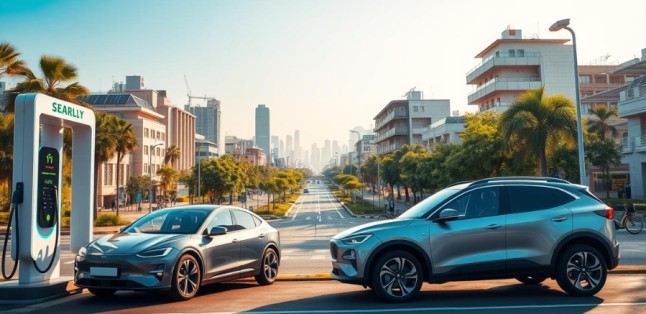
The Indian automotive landscape is on the brink of a significant transformation as the country shifts towards more sustainable and environmentally friendly transportation options. The year 2026 is poised to be a landmark year for electric vehicles (EVs) in India, with numerous models slated for launch.
With around 39 new electric cars expected to hit the market between 2025 and 2027, the variety is set to cater to a wide range of consumer preferences. This includes 29 SUVs, 6 sedans, 3 hatchbacks, and 1 coupe, offering something for every kind of buyer. As EV trends in India continue to evolve, so does the infrastructure supporting them, including an expanding network of charging stations.
Key Takeaways
- A total of 39 new electric cars are expected to be launched in India between 2025-2027.
- The lineup includes 29 SUVs, 6 sedans, 3 hatchbacks, and 1 coupe, catering to diverse consumer needs.
- The electric car market in India is witnessing significant growth, driven by government initiatives and consumer demand.
- Charging infrastructure is expanding to support the growing number of EVs on the road.
- Consumers can expect a range of options in terms of models, prices, and features.
The Evolution of India's EV Market
The Indian electric vehicle (EV) market is witnessing a significant transformation, driven by government incentives, declining battery costs, and increasing consumer awareness.
Electric cars are gaining popularity due to their lower operating expenses, reduced maintenance needs, and silent operation. The growing charging infrastructure has also alleviated range anxiety, making EVs a more viable option for consumers.
Market Growth from 2023-2025
The Indian EV market has experienced substantial growth between 2023 and 2025. The electric vehicle adoption rate has seen a significant uptick, with a notable increase in sales across various segments.
| Year | EV Sales | Growth Rate |
|---|---|---|
| 2023 | 100,000 | - |
| 2024 | 150,000 | 50% |
| 2025 | 225,000 | 50% |
This growth can be attributed to the increasing awareness about the benefits of EVs, including their environmental benefits and lower operating costs.
Key Players Transforming the Landscape
Several key players are transforming the Indian EV landscape. Companies like Tata Motors and Mahindra & Mahindra are leading the charge with their innovative EV models.
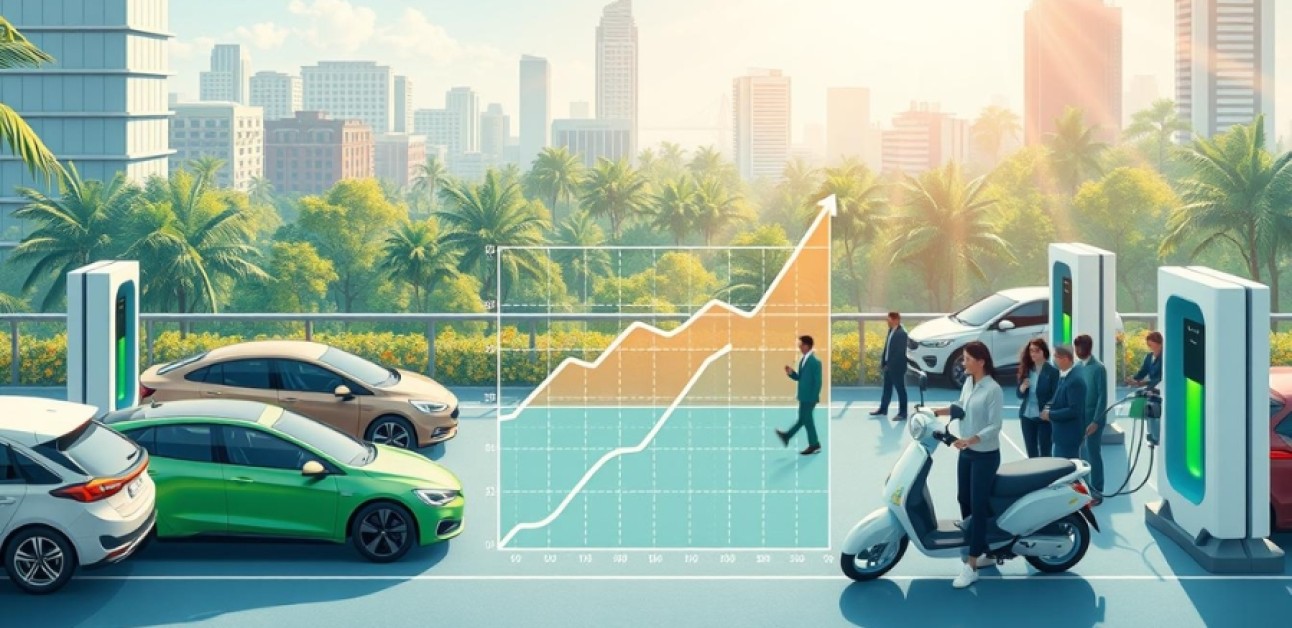
New entrants like VinFast are also making a significant impact with their advanced EV technology and competitive pricing.
The combined efforts of these players are driving the growth of the EV market in India, making it more competitive and diverse.
Electric Vehicles India 2026: Market Projections and Trends
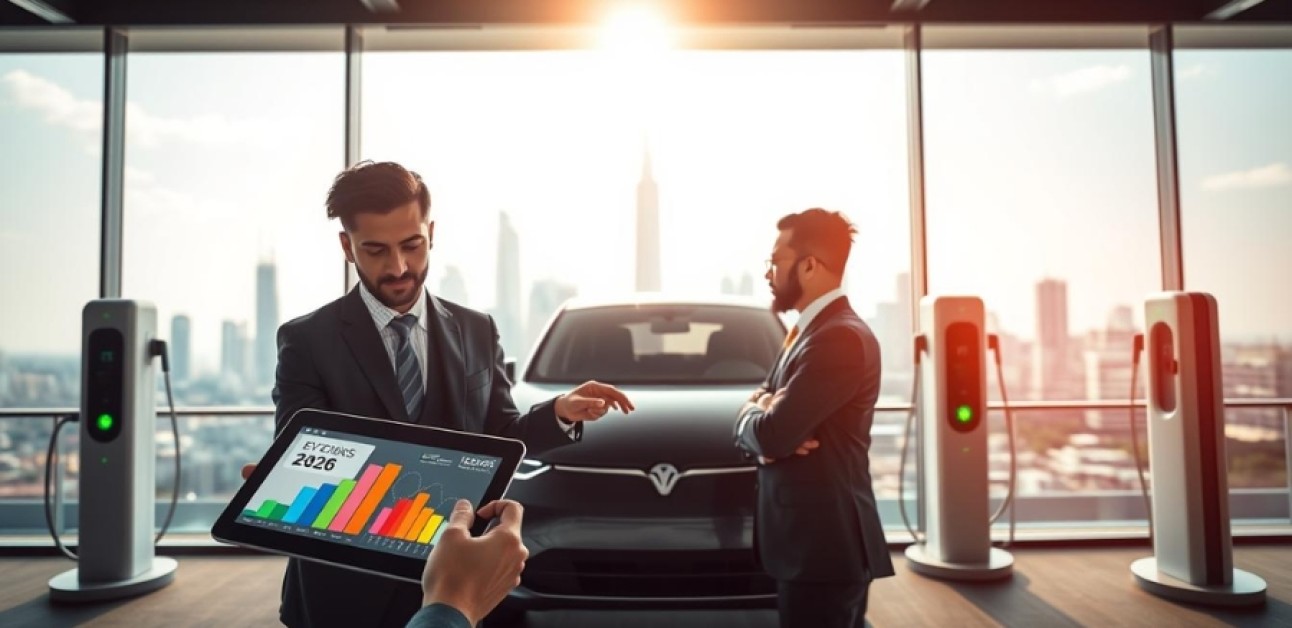
As India accelerates towards a greener future, the electric vehicle (EV) market is poised for significant growth by 2026. The country's shift towards sustainable transportation is driven by technological innovations, government policies, and changing consumer preferences.
Sales Forecast and Growth Trajectory
The Indian EV market is expected to witness a substantial surge in sales by 2026. Key factors driving this growth include:
- Increasing availability of EV models catering to diverse consumer needs
- Advancements in battery technology, enhancing vehicle range and performance
- Expansion of charging infrastructure, reducing range anxiety
Industry projections indicate a compound annual growth rate (CAGR) of over 20% from 2023 to 2026, with EVs becoming increasingly mainstream.
Consumer Preference Shifts
Consumer preferences are shifting towards electric vehicles due to:
- Growing environmental awareness and the desire for sustainable mobility
- Lower operating costs compared to traditional internal combustion engine vehicles
- Increasing model variety, offering consumers more choices
This shift is supported by government incentives and awareness campaigns promoting the benefits of EVs.
Technological Innovations Driving Adoption
Technological advancements are crucial in driving EV adoption. Key innovations include:
- Improved battery technologies, such as solid-state batteries, enhancing range and safety
- Advances in charging technology, enabling faster charging times
- Integration of smart technologies, enhancing the overall user experience
These innovations are expected to play a pivotal role in making EVs more appealing to a wider audience.
Top Affordable Electric Cars in India for 2026
As India continues its shift towards eco-friendly automotive solutions, 2026 is set to be a landmark year for electric vehicles. The market is witnessing a surge in affordable electric cars that are not only budget-friendly but also packed with features. Two models that are gaining significant attention are the Tata Nexon EV 2026 Edition and the Mahindra XUV400 Electric 2026.
Tata Nexon EV 2026 Edition
The Tata Nexon EV is one of the most popular electric cars in India, known for its performance, safety features, and affordability. The 2026 edition is expected to build on this success with several enhancements.
Performance Specifications
The Tata Nexon EV 2026 Edition is anticipated to deliver impressive performance with its electric motor producing 129 horsepower and 245 Nm of torque.
Price Range and Value Proposition
Priced competitively, the Nexon EV 2026 Edition is expected to be in the range of ₹14 lakh to ₹17 lakh, offering great value for its features and performance.
New Features for 2026
The 2026 edition is likely to come with upgraded features such as an enhanced infotainment system, improved safety features, and a more sophisticated design.
Mahindra XUV400 Electric 2026
The Mahindra XUV400 Electric is another highly anticipated model in the affordable electric car segment. It promises to deliver a compelling blend of range, performance, and features.
Range and Battery Capacity
The Mahindra XUV400 Electric 2026 is expected to offer a competitive range of up to 450 km on a single charge, thanks to its advanced battery technology.
Pricing Structure
Mahindra is expected to price the XUV400 Electric aggressively, likely between ₹15 lakh to ₹18 lakh, making it an attractive option for buyers.
Technology Upgrades
The XUV400 Electric will feature cutting-edge technology, including an advanced driver assistance system and a modern infotainment system, enhancing the overall driving experience.
Both the Tata Nexon EV 2026 Edition and the Mahindra XUV400 Electric 2026 are poised to make a significant impact in the Indian electric vehicle market, offering consumers eco-friendly and feature-rich mobility solutions.
Premium Electric Sedans Coming to India in 2026
Luxury electric sedans, led by models like the Tesla Model 3 and BYD Seal, are poised to make a significant impact in India's EV market in 2026. As the country continues to embrace electric mobility, these premium vehicles are expected to drive growth in the luxury segment.
Tesla Model 3 Indian Edition
The Tesla Model 3 is one of the most anticipated electric vehicles set to launch in India in 2026. With its advanced technology and performance, it is expected to be a game-changer in the premium electric sedan segment.
India-Specific Adaptations
The Tesla Model 3 will undergo India-specific adaptations to suit local driving conditions, including adjustments for terrain and climate.
Expected Price Point
With an expected price point competitive with other premium sedans in India, the Tesla Model 3 is likely to attract buyers looking for luxury and sustainability.
Performance Metrics
The Tesla Model 3 will offer impressive performance metrics, including rapid acceleration and a long electric range, making it a compelling choice for driving enthusiasts.
BYD Seal
The BYD Seal is another premium electric sedan expected to make a significant impact in the Indian market in 2026. With its advanced battery technology and sleek design, it is poised to attract a new generation of EV buyers.
Blade Battery Technology
The BYD Seal features Blade Battery technology, known for its safety, energy density, and longevity, providing a reliable and efficient driving experience.
Competitive Pricing Strategy
BYD is expected to adopt a competitive pricing strategy for the Seal in India, making it an attractive option for buyers seeking premium electric vehicles.
Interior and Exterior Design
The BYD Seal boasts a sleek and modern design, both inside and out, offering a luxurious driving environment that is both comfortable and technologically advanced.
As India's EV market continues to grow, the introduction of premium electric sedans like the Tesla Model 3 and BYD Seal is set to drive electric car market growth and shape ev trends in India for years to come.
Luxury Electric SUVs in the Indian Market for 2026
India's automotive market is on the cusp of a revolution with the introduction of luxury electric SUVs in 2026. This segment is expected to witness significant growth, driven by increasing consumer demand for premium electric vehicles.
Audi e-tron 2026 Model
The Audi e-tron is one of the most anticipated luxury electric SUVs in India for 2026. It promises to deliver a blend of luxury, performance, and advanced technology.
Premium Features and Comfort
The Audi e-tron will feature a spacious interior, premium materials, and advanced comfort features, making it a top choice for luxury SUV buyers.
Luxury Pricing Tiers
The pricing for the Audi e-tron is expected to be competitive within the luxury electric SUV segment, potentially ranging between ₹1.5 crore to ₹2 crore.
Performance Specifications
The Audi e-tron will be equipped with a powerful electric motor, delivering impressive acceleration and a range of over 400 km on a single charge.
Mercedes-Benz EQC 2026
Another luxury electric SUV expected to make a mark in India in 2026 is the Mercedes-Benz EQC. It embodies the perfect blend of luxury, sustainability, and performance.
Luxury Amenities
The Mercedes-Benz EQC will offer an array of luxury amenities, including a sophisticated infotainment system and premium interior finishes.
Price Positioning
The Mercedes-Benz EQC is anticipated to be priced around ₹1.2 crore to ₹1.8 crore, making it a strong contender in the luxury electric SUV market.
Range and Efficiency
The EQC is expected to offer a range of approximately 450 km on a single charge, with advanced battery technology ensuring optimal efficiency.
The introduction of these luxury electric SUVs is set to accelerate India's transition towards green mobility, offering consumers more choices and driving the growth of the EV market.
Electric Two-Wheelers Dominating India in 2026
As India shifts towards sustainable transportation, electric two-wheelers are poised to dominate the market in 2026. The growing demand for eco-friendly vehicles, coupled with advancements in technology, is driving this trend. Electric two-wheelers offer a cost-effective and environmentally friendly alternative to traditional petrol-powered vehicles.
Ola Electric S1 Pro 2026
The Ola Electric S1 Pro is expected to be a major player in the electric two-wheeler market in 2026. With its advanced features and sleek design, it is likely to appeal to a wide range of consumers.
Urban Mobility Features
The Ola Electric S1 Pro will come equipped with features tailored for urban mobility, including regenerative braking and advanced battery management.
Battery and Range
With its high-capacity battery, the Ola Electric S1 Pro is expected to offer a range of over 150 kilometers on a single charge, making it suitable for daily commutes.
Smart Connectivity
The Ola Electric S1 Pro will feature smart connectivity options, allowing users to track their vehicle's location, monitor battery health, and receive notifications.
Ather 450X 2026 Edition
The Ather 450X 2026 Edition is another highly anticipated electric two-wheeler. With its advanced technology and high-performance capabilities, it is set to be a strong contender in the market.
Performance Upgrades
The Ather 450X 2026 Edition will feature upgraded performance, including faster acceleration and improved handling.
Pricing Strategy
Ather Energy is expected to adopt a competitive pricing strategy for the 450X 2026 Edition, making it an attractive option for consumers.
Technology Integration
The Ather 450X 2026 Edition will come with advanced technology integration, including a large touchscreen display and over-the-air updates.
In conclusion, electric two-wheelers like the Ola Electric S1 Pro and Ather 450X are set to revolutionize the Indian market in 2026. With their advanced features, eco-friendly design, and cost-effective operation, they offer a compelling alternative to traditional vehicles.
Commercial Electric Vehicles for Indian Businesses
The shift towards eco-friendly automotive solutions is gaining momentum among Indian businesses, with commercial electric vehicles leading the charge. As companies look to reduce their carbon footprint and operational costs, models like the Tata Ace EV 2026 and Ashok Leyland Electric Buses are becoming increasingly popular.
Tata Ace EV 2026
The Tata Ace EV 2026 is a game-changer for last-mile delivery services, offering a sustainable and cost-effective solution. Its features include:
Last-Mile Delivery Capabilities
The Tata Ace EV 2026 is designed to handle the demands of last-mile delivery, with a robust build and efficient electric powertrain.
Total Cost of Ownership
With lower operating costs and reduced maintenance needs, the Tata Ace EV 2026 offers a compelling total cost of ownership for businesses.
Business Integration Features
The vehicle comes equipped with features that facilitate easy integration into business operations, enhancing logistics and supply chain management.
Ashok Leyland Electric Buses
Ashok Leyland Electric Buses are transforming public transport solutions across India, providing a cleaner and more efficient alternative to traditional diesel buses.
Public Transport Solutions
These electric buses are designed to meet the needs of public transport systems, offering a reliable and sustainable solution for urban mobility.
Fleet Management Technology
Ashok Leyland Electric Buses come with advanced fleet management technology, enabling operators to monitor and manage their fleets more effectively.
Operational Efficiency
The electric buses are designed to optimize operational efficiency, with features that reduce energy consumption and maintenance downtime.
| Model | Key Features | Benefits |
|---|---|---|
| Tata Ace EV 2026 | Last-mile delivery capabilities, lower operating costs | Sustainable logistics, cost savings |
| Ashok Leyland Electric Buses | Public transport solutions, fleet management technology | Efficient public transport, reduced emissions |
As Indian businesses continue to adopt commercial electric vehicles, the benefits of eco-friendly automotive solutions become increasingly evident. With models like the Tata Ace EV 2026 and Ashok Leyland Electric Buses, companies can achieve a sustainable and cost-effective transportation solution.
EV Pricing Trends in India for 2026
The electric vehicle (EV) market in India is on the cusp of a significant transformation in 2026, driven by changing pricing trends. As battery costs continue to decline, EVs are becoming more competitive with conventional vehicles, thereby driving adoption in India.
Price Parity with Conventional Vehicles
One of the most significant factors influencing EV adoption is the achievement of price parity with conventional vehicles. By 2026, several EV models are expected to be priced comparably to their gasoline counterparts, making them more attractive to a wider audience. Government incentives and declining battery costs are key drivers of this trend.
Battery Cost Reductions Impact
The cost of batteries is a crucial component of EV pricing. As technology improves and economies of scale are achieved through mass production, battery costs are expected to decrease further. This reduction will have a direct impact on the overall pricing of EVs, making them more competitive in the market.
Total Cost of Ownership Analysis
When considering the total cost of ownership, EVs already offer significant savings compared to conventional vehicles, primarily due to lower operating and maintenance costs. By 2026, as the upfront costs of EVs continue to decrease, the total cost of ownership will become even more favorable, further accelerating EV adoption in India.
In conclusion, the EV pricing trends in India for 2026 are expected to be characterized by increased competitiveness with conventional vehicles, driven by declining battery costs and government incentives. As the market continues to evolve, consumers can expect more affordable and attractive EV options.
Comprehensive Charging Infrastructure Across India
As India accelerates its green mobility revolution, comprehensive charging infrastructure is becoming increasingly vital. The expansion of charging networks is crucial for supporting the growing number of electric vehicles (EVs) on Indian roads.
Tata Power Charging Network Expansion
Tata Power is at the forefront of developing an extensive charging infrastructure across India. Their efforts are focused on providing widespread coverage, fast-charging capabilities, and seamless integration with Tata EVs.
Urban Coverage
Tata Power's charging network is expanding rapidly in urban areas, ensuring that EV owners have easy access to charging points in cities.
Fast Charging Capabilities
The company is also investing heavily in fast-charging technology, enabling EVs to charge quickly and reducing downtime.
Integration with Tata EVs
Tata Power's charging infrastructure is designed to integrate seamlessly with Tata's range of electric vehicles, providing a convenient and hassle-free ownership experience.
EESL and NTPC Charging Corridors
Energy Efficiency Services Limited (EESL) and NTPC Limited are also playing a significant role in developing charging infrastructure across India. Their focus is on creating charging corridors along highways and providing government-backed support.
Highway Infrastructure
EESL and NTPC are developing charging stations along major highways, facilitating long-distance travel in EVs.
Government Backing
These initiatives have received significant government backing, underscoring the importance of charging infrastructure in India's EV strategy.
Accessibility Features
The charging corridors developed by EESL and NTPC are designed with accessibility in mind, ensuring that EV owners can easily locate and use charging stations.
| Company | Focus Area | Key Features |
|---|---|---|
| Tata Power | Urban Coverage, Fast Charging | Seamless integration with Tata EVs, rapid expansion |
| EESL and NTPC | Highway Infrastructure, Government Initiatives | Charging corridors, accessibility features |
The development of comprehensive charging infrastructure is a critical step towards achieving India's EV ambitions. With companies like Tata Power, EESL, and NTPC leading the charge, the country is well on its way to creating a robust and accessible charging network.
Government Policies Accelerating EV Adoption in 2026
Government initiatives are playing a pivotal role in accelerating the electric vehicle revolution in India. As the country moves towards a more sustainable future, these policies are crucial in driving the adoption of electric vehicles.
FAME III Scheme Implementation
The FAME III scheme is a significant government initiative aimed at promoting the adoption of electric vehicles in India. By providing subsidies and incentives, the scheme makes electric vehicles more affordable for consumers. The implementation of FAME III is expected to give a substantial boost to the EV market in 2026.
Key Highlights of FAME III:
- Increased subsidy allocation for electric two-wheelers and three-wheelers
- Expansion of charging infrastructure across major cities
- Support for the manufacturing of EV components locally
State-Level EV Policies and Incentives
Several states in India are implementing their own EV policies to encourage adoption. These state-level policies offer additional incentives such as tax exemptions, registration fee waivers, and subsidies for setting up charging infrastructure.
| State | Key Incentives |
|---|---|
| Delhi | Exemption from road tax and registration fees for EVs |
| Maharashtra | Subsidy on purchase of electric vehicles, support for charging infrastructure |
| Karnataka | Tax exemptions for EVs, incentives for EV manufacturing units |
Tax Benefits and Financial Incentives
The government is also offering various tax benefits and financial incentives to promote the adoption of electric vehicles. These include income tax deductions for interest paid on loans taken for purchasing EVs and reduced GST rates on electric vehicles.
By combining these policies and incentives, the government aims to create a conducive environment for the growth of the EV market in India. As a result, electric vehicle adoption is expected to increase significantly in 2026.
India's EV Market Compared to Global Leaders
India's electric vehicle (EV) market is rapidly evolving, drawing valuable insights from global leaders like China and Europe. As the country accelerates its transition to sustainable transportation technology, understanding the strengths and weaknesses of international EV ecosystems becomes crucial.
Comparison with China's EV Ecosystem
China leads the global EV market, with a comprehensive ecosystem that includes robust manufacturing capabilities, extensive charging infrastructure, and supportive government policies. India's EV market can draw lessons from China's experience, particularly in scaling up charging networks and incentivizing domestic manufacturing.
| Aspect | China's EV Ecosystem | India's EV Ecosystem |
|---|---|---|
| Manufacturing Capability | Highly developed with global leadership | Growing with government support |
| Charging Infrastructure | Extensive network across the country | Developing rapidly with public-private partnerships |
| Government Policies | Strong subsidies and incentives for EV adoption | Incentives under FAME scheme and state-level policies |
European Market Parallels and Differences
Europe's EV market is characterized by high adoption rates in countries like Norway and the Netherlands, driven by stringent emission norms and generous incentives. While India can learn from Europe's regulatory push and consumer incentives, the Indian market has unique challenges, such as diverse geography and varying consumer preferences.
Unique Advantages of India's Approach
Despite drawing lessons from global leaders, India's EV market is carving out its own path. The country's focus on affordable EVs, integration of EVs with public transportation, and innovative charging solutions tailored to local needs are some of the unique advantages that could define the future of sustainable transportation technology in India.
By leveraging these strengths and learning from international best practices, India is poised to make a significant impact in the global EV market, contributing to a more sustainable and environmentally friendly transportation ecosystem.
Overcoming Adoption Challenges in the Indian Context
As India accelerates towards electric mobility, addressing the challenges that hinder widespread adoption becomes increasingly crucial. The Indian electric vehicle (EV) market is poised for significant growth, but several barriers need to be overcome to ensure a seamless transition.
Range Anxiety Solutions for Indian Conditions
One of the primary concerns for potential EV buyers in India is range anxiety. To alleviate this, manufacturers are focusing on developing vehicles with optimized battery performance for Indian road conditions. For instance, companies are working on enhancing battery cooling systems to mitigate the impact of high temperatures.
"Range anxiety is a significant deterrent for many potential buyers," says a leading EV manufacturer. "We're working on improving our battery technology to provide longer ranges and faster charging capabilities."
Battery Technology Adaptations for Climate Variations
India's diverse climate, ranging from extreme heat to heavy monsoon rains, poses a challenge for EV battery performance. To address this, manufacturers are adapting battery technologies to be more resilient. Advances in battery management systems and thermal management are crucial for maintaining battery health across different climates.
- Enhanced thermal management systems
- Improved battery chemistry for better durability
- Advanced battery management systems for optimized performance
Building Consumer Confidence Through Education
Educating consumers about the benefits and capabilities of EVs is vital for increasing adoption rates. Initiatives such as workshops, test drives, and awareness campaigns can help demystify EVs and build confidence among potential buyers. By highlighting the long-term cost savings and environmental benefits, consumers can make more informed decisions.
"Consumer education is key to driving EV adoption," notes an industry expert. "By providing accurate information and hands-on experience, we can help consumers feel more comfortable with the idea of switching to electric vehicles."
Conclusion: The Future of Electric Mobility in India
The future of electric mobility in India is gaining momentum, driven by a growing market, expanding charging infrastructure, and supportive government policies. As the country continues to adopt electric vehicles, it is poised to become a significant player in the global EV landscape, contributing to the green mobility revolution.
With technological advancements and changing consumer preferences, India's EV market is expected to witness significant growth. The government's initiatives, such as the FAME III scheme and state-level EV policies, are accelerating the adoption of electric vehicles. Moreover, the expansion of charging infrastructure by companies like Tata Power is addressing range anxiety concerns.
As India moves towards a more sustainable transportation system, the future of electric mobility looks promising. The green mobility revolution is not just about reducing emissions; it's also about creating a more efficient and environmentally friendly transportation ecosystem. With the right policies and technological innovations in place, India is well on its way to achieving its EV adoption goals and becoming a leader in the future of electric mobility.