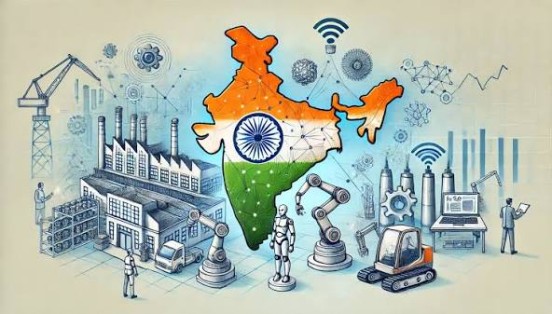
Manufacturing Expansion Plans Across India Drive Industrial Growth and Investment Opportunities
Manufacturing companies across India are accelerating expansion plans as businesses invest in new production facilities, increase manufacturing capacity, and strengthen supply chains to meet rising domestic and global demand. The expansion reflects growing confidence in India's industrial sector, supported by government initiatives, infrastructure development, and increasing private investment.
From automobiles and electronics to pharmaceuticals, renewable energy, chemicals, and engineering, companies are expanding operations to improve efficiency, enhance competitiveness, and capture new market opportunities.
Why Manufacturing Expansion Matters

Manufacturing is a key contributor to economic growth, employment generation, exports, and industrial development.
Capacity expansion helps businesses to:
- Increase production output
- Meet growing consumer demand
- Improve operational efficiency
- Expand export capabilities
- Strengthen supply chains
- Adopt advanced manufacturing technologies
- Support long-term business growth
A stronger manufacturing base also contributes to higher investment and increased economic activity.
Key Drivers Behind Expansion Plans
Several factors are encouraging companies to increase manufacturing investments.
Major growth drivers include:
- Rising domestic demand
- Government infrastructure spending
- Production-linked incentive (PLI) schemes
- Supply chain diversification
- Technology adoption
- Export opportunities
- Improving logistics infrastructure
- Growing private capital expenditure
These structural factors continue to improve India's attractiveness as a global manufacturing destination.
Industries Leading the Expansion
Manufacturing investment is expected across a wide range of sectors.
Automobile and Electric Vehicles
Companies are expanding production capacity for passenger vehicles, commercial vehicles, electric vehicles, batteries, and automotive components.
Electronics
Investment continues in smartphones, semiconductors, consumer electronics, electronic components, and precision manufacturing.
Pharmaceuticals
Drug manufacturers are increasing production facilities to serve domestic healthcare needs and export markets.
Renewable Energy
Solar modules, wind equipment, battery storage systems, and clean energy infrastructure continue to attract investment.
Engineering and Industrial Equipment
Manufacturers are expanding facilities to meet demand from infrastructure, construction, and industrial projects.
Chemicals and Specialty Materials
Chemical manufacturers are investing in capacity upgrades to support domestic industries and international exports.
Role of Infrastructure Development
Improving infrastructure is supporting manufacturing growth across the country.
Important developments include:
- Industrial corridors
- Logistics parks
- Freight corridors
- Highway expansion
- Port modernization
- Airport connectivity
- Power infrastructure
- Warehousing facilities
Better infrastructure reduces logistics costs and improves supply chain efficiency.
Technology and Automation
Manufacturers are increasingly investing in modern technologies to improve productivity and competitiveness.
Key technologies include:
- Industrial automation
- Robotics
- Artificial intelligence
- Internet of Things (IoT)
- Data analytics
- Smart factories
- Cloud-based manufacturing systems
- Predictive maintenance
Technology adoption is helping businesses improve quality, reduce downtime, and optimize production.
Employment and Skill Development
Manufacturing expansion is expected to generate employment opportunities across multiple industries.
Potential benefits include:
- Direct factory employment
- Supply chain jobs
- Logistics and warehousing opportunities
- Engineering and technical roles
- Research and development positions
- Skilled workforce development
Growing industrial activity also supports local businesses and regional economic development.
Challenges Facing Manufacturers
Despite strong growth prospects, manufacturers continue to face several challenges.
These include:
- Raw material price volatility
- Global economic uncertainty
- Energy costs
- Skilled labor shortages
- Supply chain disruptions
- Regulatory compliance
- Financing costs
- International competition
Managing these risks will remain important for sustainable long-term growth.
Opportunities for Investors
Investors are closely monitoring manufacturing companies as industrial investment accelerates.
Areas of interest include:
- Capacity expansion
- Capital expenditure plans
- Revenue growth
- Export opportunities
- Margin improvement
- Technology investments
- Operational efficiency
- Long-term competitiveness
Companies with strong balance sheets and diversified operations may be better positioned to benefit from the manufacturing cycle.
Outlook
India's manufacturing sector is expected to maintain its growth momentum as companies continue investing in new facilities, automation, and capacity expansion. Government policy support, infrastructure development, and increasing domestic demand are likely to remain key drivers of industrial growth during FY27 and beyond.
Continued investment in technology, supply chain resilience, and skilled workforce development will further strengthen India's position as a global manufacturing hub.
Conclusion
Manufacturing expansion plans across India reflect growing confidence in the country's industrial and economic outlook. Investments in production capacity, infrastructure, and advanced technologies are expected to improve productivity, create employment, and support long-term economic growth. While challenges such as input costs and global uncertainty remain, sustained industrial investment positions India's manufacturing sector for continued expansion and greater global competitiveness.