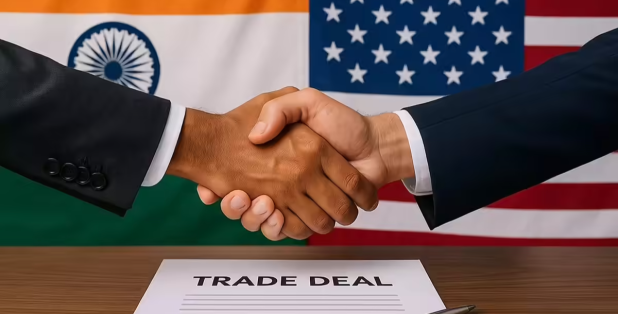
India-US Trade Deal Discussions Gain Momentum Ahead of Tariff Deadline
With a temporary US tariff set to expire on July 24, Commerce Minister Goyal and USTR Greer met in New Delhi to push an interim pact over the line after a Modi-Trump meeting added urgency.
By Naina, 24th June 2026
India-US trade deal discussions have gained fresh momentum, with high-level talks opening in New Delhi this week as both sides race to seal an interim pact before a key tariff deadline. Commerce and Industry Minister Piyush Goyal met US Trade Representative Jamieson Greer for two days of negotiations, just days after Prime Minister Narendra Modi and US President Donald Trump met on the sidelines of the G7 summit in France. The urgency comes from a temporary 10 percent US tariff on imports from all countries, set to expire on 24 July, which both governments want to replace with a durable agreement.
The negotiations aim to lock in the first phase of a broader Bilateral Trade Agreement, a process the two countries launched in early 2025. A framework agreed in February was upended by shifting US tariff policy, forcing negotiators to rework key terms. Now, with leaders directing officials to move quickly and Trump saying the two sides are "very close," the talks have entered their decisive stretch. Here is what is on the table, what each side wants, and why the July deadline matters.
The Talks This Week
The latest round saw Goyal host Greer and US Ambassador Sergio Gor in New Delhi for ministerial-level discussions, supported by Commerce Secretary Rajesh Agrawal and chief negotiator Darpan Jain. The meeting followed chief-negotiator-level talks held in the capital earlier in June and built on a Modi-Trump meeting on 17 June, their first in more than a year, where both leaders directed officials to expedite the long-pending deal. Officials have described the discussions as focused on giving final touches to the framework, signalling that a conclusion may be near.
The July 24 Deadline
The looming deadline is what gives the talks their urgency. After the US Supreme Court struck down sweeping tariffs earlier this year, Washington imposed a temporary 10 percent tariff on imports from all countries for 150 days, a window that closes on 24 July. Both sides want an interim agreement in place before then to avoid a cliff-edge and to provide certainty for exporters. Goyal has stressed that India will not be rushed into a bad deal by the deadline, but the timing has clearly concentrated minds on both sides.
The February Framework
The current push builds on a framework announced in February. Under that arrangement, the United States had agreed to cut tariffs on Indian goods to 18 percent, lower than the duties facing several competing exporters, a meaningful edge for Indian industry. But the framework was built around an earlier 50 percent tariff regime that the courts later overturned, and the subsequent temporary tariff forced negotiators back to the table. Reworking the deal to fit the new tariff landscape is now the central task.
What India Wants
For New Delhi, the prize is preferential tariff treatment. Changes in US trade policy eroded the advantage India had expected to enjoy over regional rivals such as Vietnam and other ASEAN economies, and restoring that edge is a priority. India is seeking lower, predictable duties on its exports to its largest market, covering labour-intensive and manufactured goods. It is also balancing openness with caution on sensitive areas, particularly agriculture and dairy, where domestic political and livelihood concerns make sweeping concessions difficult.
What the US Wants
Washington's asks are equally clear. The US is seeking long-term commitments from India to open up further to American agricultural products, energy exports, defence equipment, and advanced commercial aircraft. Greater market access for US farm goods and energy has been a recurring theme, alongside India's purchases of American defence and aviation hardware. The two agendas overlap in some areas and clash in others, especially agriculture, which is why the final shape of the deal depends on carefully balanced trade-offs.
The Broader BTA Goal
The interim pact is only the first step. If concluded, it would lay the groundwork for a broader and more comprehensive Bilateral Trade Agreement covering tariff reduction, digital trade, investment, and resilient supply chains. The two economies have deep and growing ties, and a structured agreement would give businesses on both sides greater certainty. Officials frame the first phase as a confidence-building down payment, with the harder, more comprehensive negotiations to follow once the immediate tariff question is settled.
The Stakes for Indian Exporters
For Indian businesses, the outcome carries real weight. Sectors from textiles and gems to engineering goods, electronics, and pharmaceuticals depend heavily on the US market, and the difference between a competitive tariff and a punitive one can decide orders and jobs. A deal that secures lower duties than rivals would strengthen India's position in global supply chains at a moment when companies are diversifying away from China. A failure to agree before the deadline, by contrast, would inject uncertainty into one of India's most important trade relationships.
The Risks and Sticking Points
Momentum does not guarantee a deal. Agriculture remains the thorniest issue, with India wary of opening its farm and dairy sectors to US competition, and energy and market-access commitments must be calibrated carefully. The shifting US tariff regime adds unpredictability, since further policy or legal changes could again alter the baseline. Goyal's insistence that India will not bow to deadline pressure signals that New Delhi is prepared to walk away from terms it sees as unbalanced, even with the clock ticking.
The Road Ahead
India-US trade deal discussions have clearly entered their most active phase yet, propelled by leader-level engagement and a hard tariff deadline. Whether the two sides can finalise an interim pact before 24 July will shape not just tariffs but the tone of a strategic economic partnership both governments value. The signals are encouraging, with officials close to a framework and leaders publicly optimistic, but agriculture and the volatile tariff backdrop remain real hurdles. The coming weeks will reveal whether momentum translates into a signed agreement. This is analysis, not investment advice.
Frequently Asked Questions
What is the India-US trade deal about?
It is an effort to conclude the first phase of a Bilateral Trade Agreement covering tariffs, market access, digital trade, investment, and supply chains. The immediate goal is an interim pact to replace a temporary US tariff before it expires.
Why is there a tariff deadline?
After US courts struck down earlier sweeping tariffs, Washington imposed a temporary 10 percent tariff on imports from all countries for 150 days, due to expire on 24 July 2026. Both sides want an agreement in place before then.
What does each side want?
India is seeking preferential, lower tariffs on its exports to regain an edge over rivals like Vietnam. The US wants greater access for its agricultural products, energy, defence equipment, and commercial aircraft.
Why has momentum picked up now?
A meeting between Prime Minister Modi and President Trump at the G7 summit on 17 June added impetus, with both directing officials to expedite the deal, followed by ministerial talks in New Delhi.
What are the main sticking points?
Agriculture and dairy are the most sensitive for India, while calibrating energy and market-access commitments and the unpredictable US tariff regime add complexity to reaching a balanced deal.