Achaemenid Empire: The Persian Rule Over Balochistan’s Ancient Lands
In the vast and multicultural expanse of the Achaemenid Empire—often regarded as one of the most sophisticated empires of the ancient world—lay two lesser-known but historically significant provinces: Gedrosia and Arachosia. These regions, which today correspond to parts of modern-day Balochistan, became satrapies (provinces) under Persian control during the 6th century BCE, firmly embedding Balochistan into the classical Persian imperial narrative.
Expansion of the Achaemenid Empire
Founded by Cyrus the Great in the mid-6th century BCE, the Achaemenid Empire quickly expanded from present-day Iran into Central Asia, the Indus Valley, Mesopotamia, and even parts of Europe and North Africa. By the time of Darius the Great (522–486 BCE), the empire was divided into well-organized administrative regions called satrapies, each governed by a satrap appointed by the king.
Among these, Gedrosia—roughly corresponding to southwestern Balochistan—and Arachosia, located further north and east (covering parts of southern Afghanistan and northeastern Balochistan), were integrated into the empire’s framework. These regions provided strategic connectivity between Persia and the Indian subcontinent.
Gedrosia: The Harsh Coastal Frontier
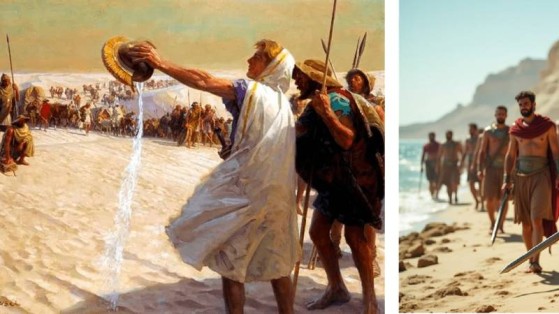
Gedrosia was notorious in ancient records for its harsh desert climate and difficult terrain. The region gained infamy in later years when Alexander the Great marched his army through Gedrosia on their return from India—a journey that caused massive casualties due to the unforgiving environment.
Under Persian rule, Gedrosia was significant for controlling the trade and military routes along the Makran coast, linking the empire’s Persian Gulf ports to the Indus Valley. Though not as agriculturally rich as other provinces, its strategic location made it a valuable part of the imperial map.
Arachosia: The Highland Satrapy
To the northeast, Arachosia (modern Kandahar region and adjacent areas of Balochistan) was more fertile and served as a gateway into the Indian subcontinent. With major cities, river systems, and trade networks, Arachosia was a well-administered satrapy and contributed to the cultural and economic vibrancy of the Achaemenid Empire.
Inscriptions by Darius the Great—including those found at Behistun—mention Arachosia (Harauvatiš) as one of the 23 provinces under Achaemenid control. This not only reflects its administrative importance but also shows the reach of Persian governance deep into South Asia.
Cultural and Political Integration
The Achaemenid rulers were known for their tolerance of local customs, religions, and languages, which helped them manage such a vast and diverse empire. Local leaders were often incorporated into the governance structure, while Persian systems of taxation, communication (via the Royal Road and couriers), and coinage were introduced.
Though archaeological evidence from Balochistan during this period is limited, historical records and inscriptions make it clear that Persian influence penetrated deep into the region, leaving behind administrative and cultural legacies that would shape future governance models.
Legacy of Persian Rule in Balochistan
While the Achaemenid hold over Gedrosia and Arachosia eventually faded after the empire’s fall to Alexander the Great in the 4th century BCE, the foundations laid during their rule continued to influence the region for centuries. From administrative practices to trade routes and cultural exchanges, the Persian connection helped integrate Balochistan into the wider ancient world.
Today, Balochistan’s historical identity as a frontier between Persia and the Indian subcontinent is rooted in this very period. Understanding the Achaemenid impact helps contextualize the region’s ancient heritage beyond the borders of modern nation-states.
Disclaimer: This article is based on public sources and reports. Our aim is not to hurt the sovereignty of any nation but to present information under the values of free and fair journalism.