What Is SaaS? How Software as a Service Works, Benefits and Examples
Software as a Service (SaaS) is a cloud computing model that delivers software applications over the internet instead of requiring users to install and maintain them on their own computers or servers. Users simply access SaaS applications through a web browser or mobile app, while the service provider manages the infrastructure, updates, security, and maintenance. Today, SaaS powers many of the world's most popular business and consumer applications, including email platforms, collaboration tools, customer relationship management (CRM) systems, and productivity software.
What Is SaaS?

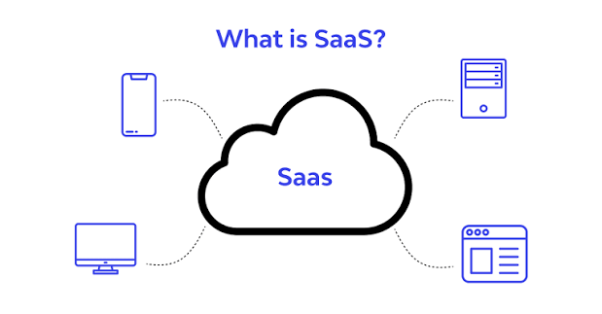
Software as a Service (SaaS) is a cloud-based software delivery model in which applications are hosted by a service provider and accessed online through a subscription or usage-based model.
How SaaS Works
The SaaS provider hosts the application in secure cloud data centers and makes it available over the internet. Users log in through a browser or app, while the provider handles software updates, security patches, backups, performance, and infrastructure management.
Why SaaS Matters
SaaS eliminates the need for organizations to purchase expensive hardware, manually install software, or manage complex IT infrastructure, making software more accessible, scalable, and cost-effective.
Key Characteristics of SaaS
SaaS applications share several defining features.
Cloud-Based Access
Users can access applications from virtually any internet-connected device without installing software locally.
Subscription Pricing
Most SaaS products use monthly or annual subscription plans, although some also offer usage-based pricing.
Automatic Updates
The provider regularly delivers new features, bug fixes, and security updates without requiring user intervention.
Multi-Tenant Architecture
Multiple customers typically share the same underlying infrastructure while their data remains logically separated and secure.
Scalability
Organizations can easily add or remove users and services as business requirements change.
Common Examples of SaaS Applications
SaaS is used across many industries and business functions.
Productivity Software
Document editing, spreadsheets, presentations, email, and collaboration platforms.
Customer Relationship Management (CRM)
Applications that help businesses manage customer interactions, sales, and marketing activities.
Project Management
Cloud-based tools for planning projects, assigning tasks, tracking progress, and team collaboration.
Accounting and Finance
Online accounting, invoicing, payroll, expense management, and financial reporting software.
Human Resources
Cloud platforms for employee management, recruitment, payroll, and performance tracking.
Communication and Collaboration
Video conferencing, instant messaging, file sharing, and team collaboration applications.
Benefits of SaaS
SaaS provides several important advantages.
Lower Costs
Organizations avoid large upfront investments in software licenses and hardware by paying subscription fees.
Easy Deployment
Applications can often be deployed quickly without complex installation or infrastructure setup.
Anywhere Access
Employees can securely access SaaS applications from offices, homes, or while traveling.
Automatic Maintenance
The service provider manages updates, bug fixes, backups, and infrastructure maintenance.
Business Scalability
Organizations can expand or reduce subscriptions as their workforce or business needs change.
Challenges of SaaS
Despite its advantages, SaaS presents several considerations.
Internet Dependency
Most SaaS applications require a reliable internet connection to function effectively.
Data Security and Privacy
Organizations must evaluate provider security measures, data protection practices, and compliance with applicable regulations.
Vendor Dependence
Migrating data or applications to another provider may require careful planning and technical effort.
Subscription Costs
While SaaS reduces upfront expenses, recurring subscription fees can increase over time depending on usage and licensing.
SaaS vs. Other Cloud Service Models
Cloud computing includes three primary service models.
SaaS (Software as a Service)
Provides ready-to-use software applications managed entirely by the provider.
PaaS (Platform as a Service)
Provides development platforms and tools that enable developers to build, test, and deploy applications without managing underlying infrastructure.
IaaS (Infrastructure as a Service)
Provides virtual servers, storage, networking, and computing resources that customers configure and manage themselves.
Best Practices for Using SaaS
Organizations should follow these recommendations.
Enable Multi-Factor Authentication (MFA)
Protect SaaS accounts with MFA to reduce the risk of unauthorized access.
Review User Access Regularly
Grant employees only the permissions necessary for their job responsibilities and remove unused accounts promptly.
Understand Data Backup Policies
Verify how data is backed up, retained, and recovered by the SaaS provider.
Monitor Application Usage
Track user activity and software utilization to improve security and control subscription costs.
Evaluate Vendor Security
Choose providers with strong security controls, encryption, compliance certifications, and transparent privacy policies.
Future of SaaS
SaaS continues to evolve through Artificial Intelligence, automation, low-code and no-code development, industry-specific cloud platforms, and deeper integration with business applications. AI-powered SaaS platforms increasingly provide intelligent recommendations, workflow automation, predictive analytics, and natural language interfaces. As organizations continue their digital transformation, SaaS will remain one of the most widely adopted cloud computing models worldwide.
Conclusion
Software as a Service (SaaS) has transformed how organizations access and use software by delivering cloud-based applications that are easy to deploy, maintain, and scale. With benefits such as lower costs, automatic updates, remote accessibility, and flexible subscriptions, SaaS has become the preferred software delivery model for many businesses. By selecting trusted providers, implementing strong security practices, and managing user access effectively, organizations can maximize the value of SaaS while minimizing operational risks.