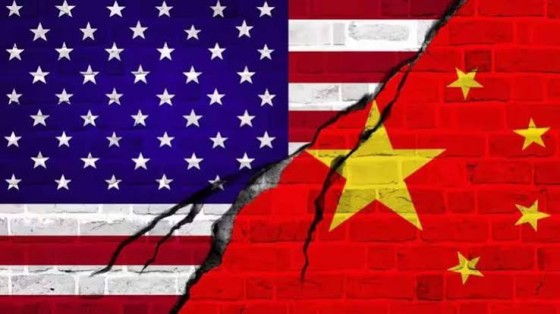
US Prepares to Ask Partner Countries to Choose Sides in Global AI Technology Competition With China
The United States is preparing to intensify its global technology competition with China by asking partner countries to make a clearer choice between rival AI ecosystems. Washington is considering telling participants in its Pax Silica initiative that joining China's competing international AI organisation could be incompatible with participation in the US-led framework. The emerging approach would move competition beyond chips and advanced models into alliances, critical minerals, data centres, supply chains and technology standards, potentially forcing governments and businesses to reconsider how closely they can work with both American and Chinese technology ecosystems.
Washington Prepares Tougher AI Alignment Policy

The proposed approach represents a significant escalation in the geopolitical dimension of the global artificial intelligence race.
Draft Communication Would Ask Countries to Choose
The Trump administration is preparing a formal communication for countries participating in the US-led Pax Silica initiative.
According to the reported draft, Washington intends to make clear that countries cannot simultaneously participate in Pax Silica and China's World Artificial Intelligence Cooperation Organization.
The timing of the communication has not been finalised.
If implemented in its reported form, the policy would create a more explicit dividing line between the two emerging AI ecosystems.
Until now, many countries have attempted to maintain technology and commercial relationships with both Washington and Beijing.
A formal requirement to choose could make that balancing strategy increasingly difficult.
US Sees Overlapping Membership as Strategic Risk
Washington's concern extends beyond diplomatic symbolism.
Artificial intelligence depends on a complex physical and digital supply chain.
Advanced chips require semiconductor fabrication facilities, specialised manufacturing equipment and critical minerals.
AI models depend on data centres, energy, cloud infrastructure and networking systems.
Countries participating deeply in both US- and China-led frameworks could potentially become important nodes connecting rival technology ecosystems.
The US increasingly views these networks through an economic-security lens.
Washington's emerging strategy therefore appears designed to create a more clearly defined group of trusted countries across the AI supply chain.
Pax Silica Becomes Central to US AI Diplomacy
The initiative has developed into one of Washington's principal international mechanisms for coordinating AI and technology policy.
Pax Silica Extends Beyond Artificial Intelligence Models
The US State Department launched Pax Silica in December 2025 as an initiative focused on artificial intelligence and supply-chain security.
Its scope is substantially broader than software.
The framework covers critical minerals, energy inputs, advanced manufacturing, semiconductors, AI infrastructure and related technologies.
This reflects the physical requirements of modern artificial intelligence.
Large AI systems cannot operate without enormous quantities of computing hardware and electricity.
The chips powering those systems depend on highly specialised global manufacturing networks.
Control and security across these layers have consequently become increasingly important elements of technology policy.
Dozens of Economies Have Engaged With the Initiative
Pax Silica has attracted participation from important US partners.
Countries involved include major technology and industrial economies such as Japan, South Korea and Australia, alongside other strategically significant markets.
Close to three dozen economies also signed a Joint Statement on AI Opportunity at the Pax Silica summit in June.
The framework is intended to align participating economies around a US-backed approach to AI innovation and secure technology supply chains.
The growing participation gives Washington a foundation for developing a broader coalition around American technology.
However, requiring countries to avoid competing Chinese initiatives would significantly raise the political and economic stakes of membership.
China Is Building Its Own International AI Framework
Beijing is simultaneously attempting to expand its influence over how artificial intelligence is developed and deployed internationally.
China Launches World AI Cooperation Organisation
China has promoted the World Artificial Intelligence Cooperation Organization as a platform for international collaboration on AI.
The initiative forms part of Beijing's broader effort to increase its influence over emerging technology standards and governance.
China has positioned international AI cooperation as particularly important for developing economies.
Its strategy includes technology infrastructure, model access, talent development and cooperation on AI applications.
The approach gives countries an alternative to relying exclusively on American technology providers.
For Washington, the emergence of a formal Chinese-led organisation creates a more direct competitor to its own international AI diplomacy.
Chinese Open-Weight Models Strengthen Beijing's Position
China's global AI position has also been strengthened by the rapid improvement of domestically developed models.
Chinese companies have increasingly released capable open-weight models that developers can adapt and deploy at relatively low cost.
Affordability can make these systems particularly attractive to emerging economies and businesses without the financial resources required for the most expensive frontier platforms.
This creates a strategic challenge for the United States.
American companies remain powerful across frontier models, cloud infrastructure and advanced semiconductors.
China, however, can compete by offering accessible models and technology infrastructure to countries seeking lower-cost alternatives.
The result is increasingly a competition between complete technology ecosystems rather than individual AI products.
Kazakhstan Highlights the Challenge for Washington
Some countries have already attempted to participate in both American and Chinese initiatives.
Kazakhstan Has Links to Both Frameworks
Kazakhstan is among the countries associated with Pax Silica while also participating in China's AI cooperation initiative.
Its position is strategically significant because the country has substantial mineral resources.
Critical minerals are increasingly important to advanced technology supply chains.
AI infrastructure ultimately depends on physical materials used across semiconductors, electronics, power systems and data centres.
For Washington, ensuring reliable access to these resources is part of reducing dependence on potentially vulnerable supply chains.
Kazakhstan's engagement with both competing initiatives illustrates why the US is considering clearer membership expectations.
Critical Minerals Are Becoming Part of AI Competition
The AI race is frequently described as a contest over algorithms and chips.
In reality, the underlying supply chain begins much earlier.
Mining and processing provide materials required for semiconductor fabrication, energy infrastructure, batteries and electronics.
China has developed substantial influence across several critical-mineral processing industries.
The US and its allies are attempting to diversify these supply chains.
Pax Silica reflects this broader understanding of AI security.
A country rich in strategic minerals can therefore become important to the AI ecosystem even without hosting a major semiconductor manufacturer or frontier AI company.
Semiconductors Remain at the Centre of the Rivalry
Advanced computing hardware remains one of America's strongest strategic advantages.
US Controls Important Parts of Advanced AI Chip Ecosystem
American companies occupy critical positions across AI processors, semiconductor design software and technology infrastructure.
This provides Washington with significant leverage.
Export controls have already been used to restrict China's access to certain advanced chips and semiconductor manufacturing technologies.
The broader objective has been to prevent Chinese companies from acquiring computing capabilities that Washington believes could strengthen military and strategic applications.
China has responded by accelerating investment in domestic semiconductor technologies.
The result is a global race to build more independent chip supply chains.
Partner Countries Control Other Essential Technologies
The United States cannot build the entire semiconductor ecosystem alone.
Japan provides important semiconductor materials and equipment.
South Korea is a global leader in memory manufacturing.
Taiwan remains central to advanced semiconductor fabrication.
European companies also control critical manufacturing technologies.
This interdependence makes alliances essential.
Pax Silica can therefore be understood partly as an attempt to coordinate countries controlling different parts of the technology stack.
The more closely these supply chains are aligned, the harder it becomes for rival ecosystems to access strategically sensitive capabilities.
US Is Promoting a Full American AI Stack Overseas
Washington is pairing restrictions on Chinese technology with efforts to make American systems more attractive internationally.
American AI Exports Programme Targets Partner Countries
The US Commerce Department launched the American AI Exports Program in 2026.
The programme is designed to create full-stack technology packages that can be offered to international partners.
These packages can include AI-optimised computing hardware, data-centre infrastructure, models, cybersecurity tools and sector-specific applications.
This is strategically important because countries building AI infrastructure need much more than access to a model.
They need chips.
They need cloud infrastructure.
They need energy.
They need cybersecurity.
They need software and technical expertise.
Offering these elements together allows American companies to compete with integrated technology packages rather than individual products.
Financing Could Help Emerging Economies Adopt US Technology
Cost is an important factor in global technology competition.
Many developing economies want to build AI infrastructure but lack the capital required for large data centres and advanced computing systems.
The US has therefore incorporated financing institutions into its AI export strategy.
Development finance and export-credit mechanisms can help partner countries acquire American technology.
This could become essential when competing with China, which has extensive experience using infrastructure financing as part of its international economic strategy.
The global AI race is consequently becoming a competition involving technology, financing and diplomacy simultaneously.
Countries May Resist a Binary Choice
Washington's proposed approach could face resistance from governments that want access to both ecosystems.
Strategic Autonomy Remains Attractive
Many countries do not want their technology policies determined entirely by either Washington or Beijing.
Governments increasingly talk about technological or digital sovereignty.
This generally means maintaining greater control over infrastructure, data and technology choices.
Countries can benefit from American advanced chips and cloud services while simultaneously using affordable Chinese models or telecommunications equipment.
A strict alignment requirement could reduce this flexibility.
Governments may therefore attempt to negotiate exceptions or maintain independent national technology strategies.
Emerging Markets Have Strong Incentives to Diversify
Developing economies often prioritise affordability and accessibility.
If Chinese AI systems provide capable performance at lower cost, governments and businesses may find them commercially attractive.
American platforms can offer other advantages, including access to leading semiconductor hardware, major cloud providers and advanced frontier models.
Countries may therefore prefer competition between suppliers rather than exclusive alignment.
That competition can lower costs and improve negotiating leverage.
A requirement to choose one ecosystem could reduce those benefits.
India Faces Important Strategic Considerations
India occupies a particularly significant position in the emerging global AI landscape.
India Has Deep Technology Relationships With the US
India and the United States have expanded cooperation across semiconductors, critical technologies and artificial intelligence.
India is also developing a large domestic AI infrastructure ecosystem.
American semiconductor, cloud and technology companies have significant operations and commercial interests in the country.
India's engineering talent base further strengthens the relationship.
At the India AI Impact Summit in February 2026, Washington actively promoted the adoption of the American AI technology stack among partner countries.
This places India among the strategically important markets in America's global AI expansion strategy.
India Also Prioritises Strategic Autonomy
India traditionally avoids rigid alignment structures that unnecessarily restrict its strategic options.
Its technology strategy includes partnerships with multiple countries while simultaneously building domestic capabilities.
The IndiaAI Mission, semiconductor manufacturing incentives and domestic data-centre investment all reflect a desire to strengthen technological sovereignty.
A more explicitly divided global AI ecosystem could therefore require careful policy management.
India would need to balance access to advanced American technology with its broader economic relationships and preference for strategic autonomy.
Businesses Could Face More Complex Technology Decisions
The consequences of geopolitical AI competition will extend beyond governments.
Companies May Need to Choose Technology Ecosystems
Multinational companies currently combine hardware, cloud platforms, software and models from multiple suppliers.
A more fragmented technology environment could complicate this approach.
Export controls may restrict which chips can be deployed in particular markets.
Data rules can influence where models operate.
Government procurement policies can favour trusted domestic or allied suppliers.
Companies may eventually need separate technology stacks for different regions.
This could increase operating costs and reduce economies of scale.
Supply Chains Could Become More Regional
Semiconductor and technology supply chains were built around global specialisation.
Growing geopolitical restrictions are pushing companies toward greater regionalisation.
Manufacturers are investing in additional production capacity across the United States, Europe, Japan and other markets.
AI infrastructure could follow a similar pattern.
Countries may increasingly prefer data centres and technology suppliers aligned with trusted political partners.
This can create substantial new investment opportunities.
It can also make global technology infrastructure more expensive by duplicating capacity across competing blocs.
Technology Standards Could Become the Next Battleground
The global AI competition extends beyond hardware and commercial products.
Standards Can Shape Future Markets
Technical standards determine how technologies interact.
Countries and companies that influence those standards can gain significant long-term advantages.
AI governance standards could eventually cover model safety, cybersecurity, data management, agent interoperability and infrastructure security.
If American and Chinese ecosystems develop incompatible standards, companies may face additional costs when operating internationally.
This could reinforce the broader technological divide.
Governance Models Are Also Competing
The United States and China promote different approaches to technology governance.
Washington generally emphasises private-sector innovation and commercial deployment alongside national-security restrictions.
China operates within a more state-directed technology environment.
Countries adopting AI infrastructure will therefore be choosing not only technology providers but potentially governance frameworks.
This makes AI diplomacy increasingly relevant to foreign policy.
Global AI Market Could Split Into Competing Ecosystems
The proposed US demand for clearer alignment suggests that the period of unrestricted technological integration may be narrowing.
Two Technology Stacks Could Develop
One possible outcome is the emergence of two increasingly distinct AI ecosystems.
A US-oriented ecosystem could centre on American models, semiconductor technologies and cloud platforms supported by allied supply chains.
A China-oriented ecosystem could combine Chinese models, domestic semiconductor technologies, infrastructure and technical standards.
Countries outside both blocs could attempt to maintain hybrid systems.
However, tighter export controls and alliance requirements could make interoperability increasingly difficult.
Fragmentation Could Increase Costs
Technology fragmentation carries economic consequences.
Companies may need separate infrastructure for different markets.
Developers could need to adapt software to multiple technical standards.
Supply chains could duplicate manufacturing capacity.
These changes can improve resilience but also reduce efficiency.
Global technology markets benefited for decades from highly integrated supply chains.
Reversing part of that integration could require enormous investment.
The companies supplying data centres, chips, networking equipment and power infrastructure could benefit from additional spending, while technology users may face higher costs.
Conclusion
The US plan to ask partner countries to choose more clearly between American and Chinese AI ecosystems marks a potentially significant escalation in global technology competition. Washington's Pax Silica initiative is evolving beyond conventional technology cooperation into a broader framework covering semiconductors, critical minerals, energy, advanced manufacturing and AI infrastructure.
China is simultaneously building its own international AI ecosystem through increasingly capable models, infrastructure partnerships and the World Artificial Intelligence Cooperation Organization.
The resulting competition could make neutrality more difficult for governments that currently work with both sides.
For countries such as India and other major emerging economies, strategic autonomy, affordability and access to advanced technologies will remain central considerations.
The global AI race is therefore moving beyond which country develops the most powerful model. Increasingly, it will determine which technology stack, supply chain, standards and partnerships countries choose to build their digital economies around.