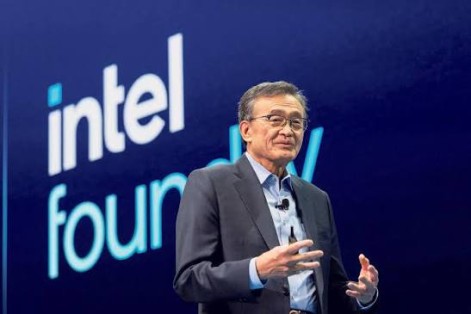
SoftBank Agrees $2 Billion Investment in Intel as Masayoshi Son Deepens Semiconductor Bet
SoftBank Group has agreed to invest $2 billion in Intel, giving the US chipmaker a major capital injection while extending Masayoshi Son's increasingly aggressive push across artificial intelligence, semiconductor design and computing infrastructure. Under the agreement, SoftBank will acquire newly issued Intel common shares at $23 each, creating a stake of just under 2% based on Intel's market value when the transaction was announced. The deal represents a significant vote of confidence in Intel's role within the US semiconductor ecosystem and connects the chipmaker more closely with SoftBank's broader ambition to build an integrated AI infrastructure portfolio.
SoftBank Commits $2 Billion to Intel

The investment gives Intel fresh equity capital while adding another major semiconductor exposure to SoftBank's portfolio.
SoftBank Will Pay $23 Per Intel Share
SoftBank has agreed to purchase $2 billion of newly issued Intel common stock at $23 per share.
The transaction is structured as a primary equity issuance, meaning Intel itself receives the proceeds.
That differs from a secondary-market share purchase, where money would go to an existing shareholder.
The fresh capital can therefore strengthen Intel's balance sheet as the company continues investing in product development, manufacturing and its broader turnaround strategy.
At the announced terms, SoftBank's investment represented an equity interest of just under 2%.
Investment Makes SoftBank a Major Intel Shareholder
The size of the transaction places SoftBank among Intel's significant institutional shareholders.
The investment is notable because SoftBank is not simply taking a passive position in another listed technology company.
Intel occupies a strategically important position across chip design, semiconductor manufacturing and the US technology supply chain.
Masayoshi Son has increasingly focused SoftBank's capital on businesses that he believes will form the foundation of the AI economy.
Intel therefore fits naturally within a portfolio already centred around semiconductors and computing infrastructure.
Masayoshi Son Expands Semiconductor Strategy
The Intel transaction is the latest component of SoftBank's wider effort to gain exposure across the AI hardware stack.
Arm Remains Core Semiconductor Asset
SoftBank's most important semiconductor holding is Arm Holdings.
Arm develops processor architectures used across smartphones, data centres, embedded systems and increasingly AI computing.
SoftBank retains a controlling interest in Arm, making the chip designer one of the largest assets in the Japanese group's portfolio.
Arm's technology does not compete directly with every part of Intel's business.
Instead, the companies occupy overlapping and complementary positions across the broader semiconductor ecosystem.
Owning a major stake in Arm while investing in Intel gives SoftBank exposure to both intellectual property and advanced semiconductor manufacturing.
SoftBank Has Built Wider AI Portfolio
Son's AI strategy extends well beyond chips.
SoftBank has committed substantial capital toward OpenAI and is involved in the Stargate initiative designed to build enormous AI computing infrastructure in the United States.
The company has also pursued investments and acquisitions across data centres, processors and other technologies supporting large-scale computing.
This creates an increasingly interconnected portfolio.
AI models require computing infrastructure.
Computing infrastructure requires chips.
Chips require semiconductor design, manufacturing and packaging.
SoftBank is attempting to participate across several of these layers.
Intel Gains Important Vote of Confidence
The investment arrives during a major transformation of Intel.
Intel Is Working Through Long Turnaround
Intel remains one of the most important names in global semiconductors but has faced significant competitive and financial challenges.
The company lost substantial ground in advanced manufacturing to Taiwan Semiconductor Manufacturing Company.
Nvidia became the dominant supplier of processors used for AI training and inference.
Advanced Micro Devices also increased competitive pressure across processors and data-centre products.
Intel has responded by restructuring operations, investing heavily in new manufacturing technologies and attempting to establish Intel Foundry as a major contract chipmaking business.
Fresh capital from SoftBank provides additional financial support for that transition.
New Leadership Is Reshaping Company
Intel is being led by Chief Executive Lip-Bu Tan, who took over during a particularly demanding period for the company.
Management is attempting to improve execution while reviewing spending and operations.
The challenge is significant because semiconductor manufacturing requires enormous capital expenditure.
Building new fabrication facilities can cost tens of billions of dollars.
New manufacturing processes also require years of development before reaching stable high-volume production.
Intel therefore needs to improve technology competitiveness while carefully managing financial resources.
Investment Reinforces US Semiconductor Strategy
SoftBank's transaction also carries wider geopolitical importance.
US Wants More Advanced Chip Manufacturing
Semiconductors have become a strategic national-security priority.
The United States wants to increase domestic production of advanced chips and reduce reliance on manufacturing concentrated in Asia.
Intel is one of the few US companies attempting to maintain leading-edge semiconductor manufacturing domestically.
This makes the company strategically important even when its commercial performance has been under pressure.
Masayoshi Son said the investment reflects SoftBank's belief that advanced semiconductor manufacturing and supply will expand further in the United States.
Intel Could Benefit From Broader Industrial Policy
Washington has provided significant incentives for domestic semiconductor manufacturing through industrial-policy programmes.
Intel has been one of the major recipients of support tied to factory investment.
Its manufacturing ambitions include new and expanded facilities within the United States.
Private investment from SoftBank complements this public-policy support.
The combination illustrates how governments and major technology investors increasingly view semiconductor capacity as infrastructure rather than simply another commercial industry.
SoftBank Does Not Seek Board Seat
Despite the size of the investment, the structure remains relatively straightforward.
Investment Is Financial Rather Than Governance Deal
SoftBank is not seeking an Intel board seat as part of the transaction.
It has also not committed to buying Intel chips.
This suggests the investment should be viewed primarily as a strategic equity position rather than an immediate operational partnership.
SoftBank gains exposure to Intel's potential recovery without taking direct responsibility for corporate governance.
Intel receives new capital without adding another investor to its board.
The arrangement also leaves both companies free to pursue future commercial cooperation separately if opportunities emerge.
No Chip Purchase Commitment Reduces Immediate Synergy
SoftBank's broader AI infrastructure ambitions create an obvious potential relationship with Intel.
Data centres require enormous numbers of processors.
However, there is no commitment in the current investment agreement requiring SoftBank or its portfolio companies to purchase Intel products.
This distinction matters.
The investment itself does not guarantee additional revenue for Intel.
Intel still needs to compete commercially against Nvidia, AMD and other suppliers for AI and data-centre workloads.
Intel Foundry Could Be Strategic Asset
One of the most important elements of Intel's future is its attempt to manufacture chips for external customers.
Foundry Business Competes With TSMC
Intel historically manufactured primarily its own processors.
The company is now attempting to build a large contract manufacturing operation.
Intel Foundry allows outside companies to potentially manufacture semiconductor designs using Intel factories.
TSMC currently dominates advanced contract chip manufacturing.
Breaking into this market is difficult because customers place enormous importance on manufacturing reliability, yields and technology performance.
Intel needs to demonstrate that its newest processes can compete effectively.
SoftBank Could Benefit From More US Manufacturing Options
SoftBank's investments span companies that require advanced computing hardware.
A stronger Intel foundry business could provide the broader technology ecosystem with another major manufacturing option outside Taiwan.
This would be strategically valuable as governments and companies seek greater supply-chain resilience.
Arm-based processors can theoretically be manufactured by different foundries depending on the chip developer.
SoftBank therefore has a broader strategic interest in a healthy and competitive semiconductor manufacturing ecosystem.
AI Boom Is Driving Semiconductor Investment
The Intel investment needs to be understood within the enormous capital cycle created by artificial intelligence.
AI Requires Increasing Computing Capacity
Large AI models require substantial computing resources for both training and operation.
Technology companies are therefore building data centres containing thousands of advanced processors.
This has produced exceptional demand for AI accelerators, memory, networking equipment and power infrastructure.
Nvidia has been the largest immediate beneficiary.
However, the scale of AI investment creates opportunities across the broader semiconductor industry.
SoftBank appears to be betting that demand for computing capacity will remain structurally high for years.
Semiconductor Capacity Becomes Bottleneck
Advanced chips cannot be produced simply by increasing software development.
They depend on extremely specialised factories and equipment.
Building new manufacturing capacity takes years.
As computing demand increases, manufacturing availability can become a strategic constraint.
This explains why investors and governments are committing large amounts of capital to semiconductor fabrication.
Intel's manufacturing assets therefore possess potential strategic value beyond its current earnings performance.
SoftBank’s Stargate Ambitions Increase Strategic Fit
The Japanese group is simultaneously involved in one of the world's largest proposed AI infrastructure programmes.
Stargate Targets Massive US Data Centre Investment
SoftBank is participating in the Stargate project alongside OpenAI, Oracle and other partners.
The initiative is designed to invest enormous amounts in US-based AI computing infrastructure over time.
Data centres built under this strategy will require processors, memory, networking equipment, electrical systems and cooling technologies.
A semiconductor investment strategy therefore complements SoftBank's infrastructure ambitions.
If AI demand expands as Son expects, computing hardware and manufacturing capacity could become increasingly valuable assets.
Intel Adds Another Layer to AI Portfolio
SoftBank's portfolio can now be viewed across several important layers.
OpenAI provides exposure to frontier AI models.
Arm provides processor architecture.
Stargate provides infrastructure.
Intel provides exposure to semiconductor design and manufacturing.
The businesses are independent and not automatically integrated, but together they create broad exposure to the AI value chain.
This reflects Son's conviction that artificial intelligence will transform the global economy.
Intel Still Faces Major Competitive Risks
The investment does not eliminate the structural challenges facing the company.
Nvidia Dominates AI Accelerators
Intel has struggled to establish a meaningful position in the rapidly expanding AI accelerator market.
Nvidia's GPUs and software ecosystem remain dominant.
Customers developing AI infrastructure value not only chip performance but also mature software tools and developer support.
Building a competitive ecosystem takes years.
Intel therefore needs to demonstrate that its products can win meaningful customer adoption rather than relying primarily on its historical reputation.
TSMC Remains Manufacturing Leader
Intel is also competing against TSMC in semiconductor manufacturing.
TSMC has built deep relationships with many of the world's largest chip designers.
Customers trust its ability to execute advanced manufacturing programmes reliably.
Intel needs to win outside customers while simultaneously manufacturing its own processors.
This creates significant operational complexity.
Improving process technology and manufacturing yields will be critical to Intel Foundry's economics.
Financial Position Makes New Capital Valuable
Intel's turnaround requires considerable financial flexibility.
Semiconductor Investment Consumes Enormous Cash
New fabrication facilities require large upfront expenditure.
Equipment from suppliers such as ASML can cost hundreds of millions of dollars per machine.
Factories also require clean rooms, utilities and extensive supporting infrastructure.
These investments occur years before the full revenue potential is realised.
Intel therefore needs access to multiple sources of capital.
The $2 billion SoftBank investment represents meaningful additional equity funding even though it is small compared with Intel's total long-term manufacturing requirements.
Equity Avoids Additional Debt Burden
Raising new common equity does not create mandatory interest payments.
That can be advantageous for a company already investing heavily.
The trade-off is dilution for existing shareholders because more shares are issued.
However, if the capital helps Intel improve earnings and strategic competitiveness, the long-term value created could outweigh dilution.
The market will ultimately judge the transaction according to how effectively Intel deploys the additional capital.
Deal Also Reflects SoftBank’s Risk Appetite
Masayoshi Son has a long history of making large, concentrated technology bets.
Son Has Returned to Aggressive Investment
SoftBank spent several years strengthening its balance sheet after losses associated with parts of its Vision Fund portfolio.
The company has since returned to aggressive investment as Son focuses on AI.
This includes major commitments to OpenAI and related infrastructure.
Intel adds another large position tied to the same broad thesis.
The strategy can generate enormous returns if AI infrastructure continues expanding rapidly.
It also increases SoftBank's exposure to an industry undergoing intense capital spending and technological competition.
Semiconductor Bets Can Be Volatile
Chip stocks can experience significant cycles.
Demand for processors can change quickly.
Customers build inventories during shortages and reduce orders when supply catches up.
Technology leadership can also shift between competitors.
Intel adds turnaround risk on top of normal semiconductor cyclicality.
SoftBank is therefore making a bet not only on the long-term growth of computing but also on Intel's ability to execute successfully.
Intel Investment Has Already Generated Major Paper Gains
By 2026, the timing of SoftBank's investment has proved financially significant.
Intel Shares Have Risen Sharply
SoftBank agreed to invest at $23 per Intel share.
By August 2026, Intel shares had risen above $100 following a powerful recovery in the stock.
The appreciation generated a multibillion-dollar unrealised gain for SoftBank's position.
SoftBank reported an approximately ¥1.3 trillion, or $8.2 billion, gain related to its Intel investment during the quarter ended June 2026.
This demonstrates how rapidly the investment's value increased after the original agreement.
Gains Strengthen SoftBank’s AI Investment Capacity
Higher valuations across portfolio companies can strengthen SoftBank's balance sheet and provide additional flexibility for future investment.
The company can potentially use valuable listed holdings as collateral when raising financing.
However, unrealised gains can reverse if markets fall.
SoftBank's financial position therefore remains sensitive to technology valuations.
The Intel gain reinforces Son's AI investment narrative but does not eliminate portfolio volatility.
Broader Semiconductor Ecosystem Could Benefit
The transaction highlights the increasing strategic value investors place on chip manufacturing.
Capital Is Flowing Across Semiconductor Chain
Investment is expanding across semiconductor fabrication, chip architecture, packaging and manufacturing equipment.
AI is the immediate catalyst, but other industries also require increasing semiconductor content.
Automobiles use more chips.
Industrial systems are becoming more connected.
Data centres continue expanding.
This creates a broad long-term demand base.
More Manufacturing Capacity Can Improve Resilience
The pandemic demonstrated the economic consequences of semiconductor shortages.
Automotive factories were forced to reduce production because relatively inexpensive chips were unavailable.
Governments and companies are consequently placing greater emphasis on supply-chain resilience.
Supporting manufacturers such as Intel can create additional production options.
The trade-off is cost.
Building redundant capacity across several regions can be less economically efficient than concentrating production in the lowest-cost locations.
India Could See Indirect Opportunities From Semiconductor Investment Cycle
SoftBank's Intel transaction is centred on the United States, but the wider semiconductor expansion has implications for India.
India Is Building Domestic Chip Ecosystem
India is investing in semiconductor manufacturing, assembly and packaging.
Government incentive programmes have attracted new projects.
The country also possesses a large semiconductor design workforce.
As global chip investment increases, India can potentially participate across design, packaging, materials and manufacturing services.
SoftBank Has Long History in India
SoftBank has invested billions of dollars across Indian technology companies.
Its current strategy is more heavily concentrated on AI and infrastructure than during the earlier consumer-internet cycle.
If India's semiconductor and AI infrastructure markets continue expanding, the country could eventually become relevant to SoftBank's newer investment thesis as well.
Large data-centre investment and domestic AI computing initiatives create potential opportunities across the same value chain Son is targeting globally.
Conclusion
SoftBank's $2 billion investment in Intel adds another major semiconductor position to Masayoshi Son's rapidly expanding artificial intelligence strategy.
The deal gives Intel fresh equity capital through newly issued shares priced at $23 each while providing SoftBank with a stake of just under 2% at the time of the agreement. It complements SoftBank's controlling position in Arm, its enormous OpenAI commitment and its participation in the Stargate AI infrastructure programme.
For Intel, the investment represents an important vote of confidence as the company attempts to restore competitiveness in advanced processors and semiconductor manufacturing.
For SoftBank, the transaction strengthens exposure across several layers of the AI technology stack.
The investment's long-term strategic value will depend on whether Intel can translate its manufacturing assets, technological roadmap and fresh capital into sustainable competitive gains as global demand for advanced computing continues to expand.