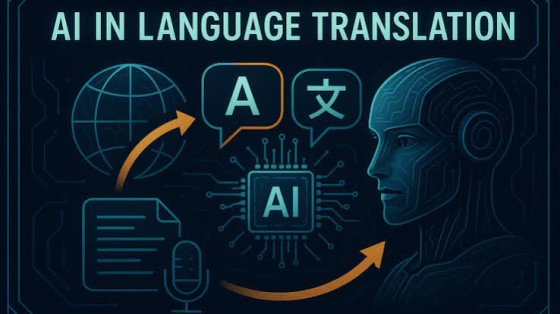
AI for Translators: How Artificial Intelligence Is Transforming Language Translation
Artificial Intelligence (AI) is transforming the translation industry by helping translators work faster, improve consistency, manage terminology, and handle multilingual content more efficiently. Rather than replacing professional translators, AI acts as a language assistant that automates repetitive tasks while allowing human experts to focus on accuracy, cultural context, tone, and localization.
From translating business documents to localizing websites and software, AI is becoming an increasingly valuable tool for language professionals around the world.
What Is AI in Translation?

AI in translation refers to the use of artificial intelligence technologies to assist with language translation, localization, terminology management, quality assurance, and multilingual communication.
AI-powered translation tools use advanced language models and machine translation technologies to translate text, suggest alternative wording, and improve translation workflows.
How AI Helps Translators
AI supports translators throughout the translation process.
1. Machine Translation
AI can rapidly translate:
- Documents
- Emails
- Websites
- Articles
- Product descriptions
- User manuals
Professional translators should review and refine AI-generated translations to ensure accuracy and natural language.
2. Localization Support
AI helps adapt content for different regions by considering:
- Language variations
- Date and time formats
- Currency formats
- Cultural references
- Regional terminology
Human expertise remains essential for culturally appropriate localization.
3. Terminology Management
AI assists by maintaining consistent use of:
- Technical terms
- Brand names
- Industry terminology
- Legal phrases
- Medical vocabulary
This improves consistency across large translation projects.
4. Grammar and Style Checking
AI can identify:
- Grammar mistakes
- Spelling errors
- Inconsistent terminology
- Awkward phrasing
- Readability issues
These suggestions help improve overall translation quality.
5. Translation Memory Support
AI can work alongside translation memory systems by suggesting previously translated phrases and similar content, helping translators maintain consistency and reduce repetitive work.
6. Multilingual Content Creation
AI can assist with producing multilingual versions of:
- Marketing materials
- Blog articles
- Social media posts
- Product catalogs
- Business reports
- Educational resources
All translated content should be reviewed before publication.
7. Research Assistance
AI helps translators understand unfamiliar topics by:
- Explaining technical concepts
- Summarizing reference materials
- Suggesting terminology
- Providing contextual information
This supports more accurate translation in specialized fields.
8. Workflow Automation
AI automates repetitive tasks such as:
- File organization
- Project summaries
- Glossary creation
- Document formatting
- Quality checks
- Progress tracking
This allows translators to focus more on language quality and cultural adaptation.
Benefits of AI for Translators
AI provides several important advantages.
Faster Translation
AI significantly reduces the time required to produce initial translations.
Improved Consistency
Terminology and style can remain consistent across large projects.
Higher Productivity
Automation reduces repetitive editing and administrative tasks.
Better Collaboration
AI supports collaboration between translators, editors, reviewers, and localization teams.
Scalable Multilingual Content
Organizations can translate large volumes of content more efficiently.
Challenges of AI in Translation
Despite its benefits, AI also presents several challenges.
Context and Nuance
AI may struggle with idioms, humor, sarcasm, and culturally specific expressions.
Accuracy
AI-generated translations can contain errors, especially for specialized legal, medical, or technical content.
Cultural Sensitivity
Professional translators remain essential for adapting content to local cultures and audiences.
Confidentiality
Sensitive documents should only be processed using secure AI platforms that comply with organizational and legal privacy requirements.
Best Practices for Translators Using AI
Language professionals should follow these recommendations.
Use AI as a Translation Assistant
Allow AI to generate initial drafts while maintaining human review and editing.
Review Every Translation
Check for accuracy, fluency, terminology, and cultural appropriateness before delivery.
Maintain Glossaries
Use approved terminology databases to ensure consistency across projects.
Protect Confidential Information
Avoid uploading confidential documents to AI systems that do not meet required security standards.
Continue Developing Language Expertise
Strengthen linguistic, cultural, and subject-matter knowledge alongside AI adoption.
Common Applications of AI in Translation
AI is increasingly used for:
- Machine translation
- Website localization
- Software localization
- Technical documentation
- Marketing translation
- Legal document translation
- Medical translation support
- Terminology management
- Subtitle translation
- Quality assurance
- Translation memory enhancement
- Multilingual customer support
Future of AI in Translation
Artificial Intelligence is expected to become even more advanced through real-time multilingual communication, speech-to-speech translation, improved contextual understanding, AI-assisted localization, automated terminology management, and multimodal translation across text, audio, images, and video. As AI technology evolves, professional translators will increasingly focus on cultural adaptation, creative localization, quality assurance, and specialized translation while AI handles more routine language processing tasks.
Conclusion
Artificial Intelligence is transforming the translation industry by helping translators work faster, improve consistency, automate repetitive tasks, and manage multilingual content more efficiently. Rather than replacing human translators, AI serves as a valuable language assistant that enhances productivity while leaving cultural understanding, creativity, and linguistic accuracy in the hands of experienced professionals. When combined with human expertise, AI enables the delivery of high-quality translations for an increasingly connected global audience.