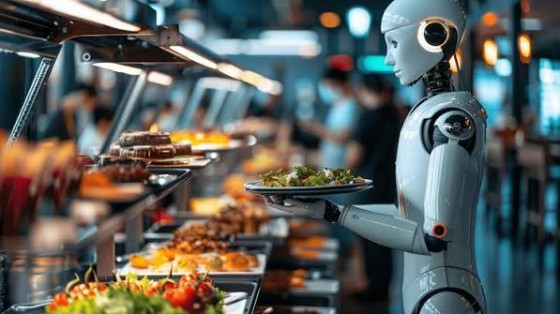
AI for Restaurants: How Artificial Intelligence Is Transforming the Food Service Industry
Artificial Intelligence (AI) is transforming the restaurant industry by helping businesses improve customer service, optimize operations, reduce food waste, and increase efficiency. Rather than replacing restaurant staff, AI serves as an intelligent assistant that automates routine tasks, provides valuable business insights, and enables teams to focus on delivering exceptional dining experiences.
From digital ordering systems and inventory management to demand forecasting and personalized marketing, AI is becoming an essential technology for restaurants, cafés, quick-service chains, and food delivery businesses.
What Is AI in Restaurants?

AI in restaurants refers to the use of artificial intelligence technologies to support order management, inventory control, customer engagement, kitchen operations, marketing, workforce planning, and business analytics.
AI-powered restaurant tools analyze sales data, customer preferences, and operational information to improve decision-making and streamline restaurant management.
How AI Helps Restaurants
AI supports restaurants across many areas of daily operations.
1. Order Management
AI helps streamline order processing by:
- Managing online orders
- Processing self-service kiosk requests
- Organizing delivery orders
- Reducing manual entry
- Improving order accuracy
These capabilities help restaurants serve customers more efficiently.
2. Inventory Management
AI can analyze inventory data to:
- Track ingredient usage
- Predict shortages
- Reduce overstock
- Monitor expiration dates
- Improve purchasing decisions
This helps minimize food waste and control operating costs.
3. Demand Forecasting
AI analyzes historical sales, seasonal patterns, and customer trends to estimate future demand.
These forecasts help restaurants plan staffing, inventory, and menu availability more effectively.
4. Customer Service
AI-powered chatbots and virtual assistants can:
- Answer customer questions
- Accept reservations
- Share menu information
- Track delivery orders
- Handle common service requests
Complex customer concerns should be handled by restaurant staff.
5. Personalized Marketing
AI helps restaurants create personalized:
- Promotional offers
- Loyalty program rewards
- Email campaigns
- SMS notifications
- Product recommendations
These campaigns improve customer engagement and repeat business.
6. Menu Optimization
AI analyzes customer ordering patterns to identify:
- Popular menu items
- Low-performing dishes
- Seasonal preferences
- Pricing opportunities
- Menu trends
Restaurant managers should combine AI insights with culinary expertise and customer feedback.
7. Business Analytics
AI can analyze restaurant performance by reviewing:
- Daily sales
- Customer traffic
- Revenue trends
- Labor costs
- Operational efficiency
These insights support better business planning.
8. Administrative Automation
AI automates routine restaurant tasks such as:
- Staff scheduling
- Report generation
- Supplier communication
- Meeting summaries
- Workflow tracking
- Document management
This allows restaurant managers to focus more on customers and operations.
Benefits of AI for Restaurants
AI offers several significant advantages.
Improved Operational Efficiency
Automation reduces repetitive administrative and operational work.
Better Customer Experience
Faster ordering, personalized recommendations, and quicker service improve customer satisfaction.
Reduced Food Waste
Inventory forecasting helps restaurants better manage ingredients and reduce waste.
Smarter Business Decisions
AI-generated insights support menu planning, staffing, and marketing strategies.
Increased Profitability
Improved efficiency and optimized operations can contribute to stronger financial performance.
Challenges of AI in Restaurants
Despite its benefits, AI also presents important challenges.
Implementation Costs
Some AI systems require investments in software, hardware, and employee training.
Data Privacy
Restaurants must protect customer information collected through loyalty programs, reservations, and online ordering systems.
Human Hospitality
Personal service, hospitality, and customer relationships remain essential aspects of the dining experience.
Data Accuracy
AI recommendations depend on reliable sales, inventory, and operational data.
Best Practices for Restaurants Using AI
Restaurant owners and managers should follow these recommendations.
Use AI as an Operational Assistant
Allow AI to automate routine tasks while maintaining human oversight for customer service and business decisions.
Verify AI Insights
Review forecasts, inventory recommendations, pricing strategies, and marketing campaigns before implementation.
Protect Customer Information
Use secure AI platforms and comply with applicable data privacy regulations.
Maintain Excellent Hospitality
Balance automation with friendly, personalized customer service.
Continue Improving Operations
Regularly evaluate AI performance and adapt to changing customer preferences and market conditions.
Common Applications of AI in Restaurants
AI is increasingly used for:
- Order management
- Inventory management
- Demand forecasting
- Customer service chatbots
- Reservation systems
- Personalized marketing
- Menu optimization
- Business analytics
- Staff scheduling
- Food waste reduction
- Delivery optimization
- Workflow automation
Future of AI in Restaurants
Artificial Intelligence is expected to become even more integrated into the restaurant industry through autonomous ordering systems, predictive inventory management, AI-powered kitchen operations, personalized dining experiences, smart drive-throughs, robotic food preparation support, and real-time operational analytics. As AI technologies continue to evolve, restaurants will increasingly combine intelligent automation with exceptional hospitality to improve efficiency, reduce costs, and deliver memorable customer experiences.
Conclusion
Artificial Intelligence is transforming the restaurant industry by helping businesses streamline operations, manage inventory, forecast demand, personalize marketing, and improve customer service. Rather than replacing restaurant professionals, AI serves as a valuable assistant that enhances efficiency and supports better business decisions. When combined with excellent hospitality, culinary expertise, and customer-focused service, AI enables restaurants to operate more effectively while delivering outstanding dining experiences.