AI for Farmers: How Artificial Intelligence Is Transforming Modern Agriculture
Artificial Intelligence (AI) is transforming agriculture by helping farmers improve crop yields, optimize resource usage, detect plant diseases, and make better farming decisions. Rather than replacing farmers, AI serves as an intelligent farming assistant that automates data analysis, supports precision agriculture, and enables growers to manage their farms more efficiently.
From crop monitoring and weather analysis to irrigation management and yield prediction, AI is becoming an essential technology for modern agriculture.
What Is AI in Agriculture?

AI in agriculture refers to the use of artificial intelligence technologies to support crop production, livestock management, irrigation planning, pest detection, soil analysis, farm management, and agricultural decision-making.
AI-powered farming tools analyze data from sensors, satellites, drones, weather systems, and farm equipment to generate insights that help farmers improve productivity and sustainability.
How AI Helps Farmers
AI supports farmers throughout the agricultural cycle.
1. Crop Monitoring
AI can monitor crops by analyzing:
- Plant health
- Growth stages
- Leaf color
- Disease symptoms
- Nutrient deficiencies
- Field conditions
Early detection helps farmers respond before problems become more severe.
2. Precision Agriculture
AI enables precision farming by helping farmers optimize:
- Fertilizer application
- Seed placement
- Water usage
- Field mapping
- Equipment operations
This improves efficiency while reducing waste.
3. Weather Analysis
AI can analyze weather forecasts and historical climate data to help farmers plan:
- Planting schedules
- Irrigation timing
- Harvest periods
- Crop protection activities
Weather forecasts should be considered alongside local conditions and official meteorological information.
4. Pest and Disease Detection
AI can identify potential pest infestations and crop diseases by analyzing images captured by smartphones, drones, or field cameras.
Farmers should confirm diagnoses before selecting treatment methods.
5. Irrigation Management
AI helps optimize irrigation by considering:
- Soil moisture
- Weather conditions
- Crop requirements
- Water availability
- Seasonal changes
Efficient irrigation supports healthier crops and water conservation.
6. Yield Prediction
AI analyzes historical production, weather patterns, soil conditions, and crop performance to estimate potential yields.
These forecasts help farmers plan harvesting, storage, and marketing activities.
7. Farm Management
AI assists with managing:
- Crop records
- Equipment schedules
- Labor planning
- Financial tracking
- Inventory management
- Farm documentation
Automation improves overall farm operations.
8. Administrative Automation
AI automates routine agricultural tasks such as:
- Report generation
- Farm documentation
- Expense tracking
- Equipment maintenance reminders
- Meeting summaries
- Workflow management
This allows farmers to spend more time in the field and less time on paperwork.
Benefits of AI for Farmers
AI provides several significant advantages.
Higher Productivity
AI helps optimize farming practices and improve operational efficiency.
Better Resource Management
Precision agriculture supports more efficient use of water, fertilizer, fuel, and other inputs.
Early Problem Detection
AI helps identify crop health issues before they significantly affect yields.
Improved Decision-Making
Data-driven insights support planting, irrigation, harvesting, and resource planning.
Sustainable Farming
AI encourages efficient resource use and can help reduce unnecessary waste.
Challenges of AI in Agriculture
Despite its benefits, AI also presents important challenges.
Technology Costs
Advanced AI equipment, sensors, drones, and software may require significant investment.
Internet Connectivity
Some AI-powered farming tools depend on reliable internet access, which may not be available in all rural areas.
Data Quality
AI recommendations depend on accurate farm data, sensor readings, and environmental information.
Human Expertise
Farmers' local knowledge, practical experience, and field observations remain essential for successful agricultural decision-making.
Best Practices for Farmers Using AI
Farmers should follow these recommendations.
Use AI as a Farming Assistant
Allow AI to provide insights while maintaining human oversight for farming decisions.
Verify AI Recommendations
Confirm crop diagnoses, irrigation plans, and yield forecasts through field inspections and professional advice when needed.
Protect Farm Data
Use secure agricultural technology platforms and safeguard operational information.
Combine Technology with Experience
Balance AI-generated insights with practical farming knowledge and local conditions.
Continue Learning
Stay informed about new agricultural technologies, sustainable farming practices, and climate adaptation strategies.
Common Applications of AI in Agriculture
AI is increasingly used for:
- Crop monitoring
- Precision agriculture
- Weather analysis
- Pest detection
- Disease identification
- Irrigation management
- Yield prediction
- Soil analysis
- Farm management
- Livestock monitoring
- Drone-based field analysis
- Workflow automation
Future of AI in Agriculture
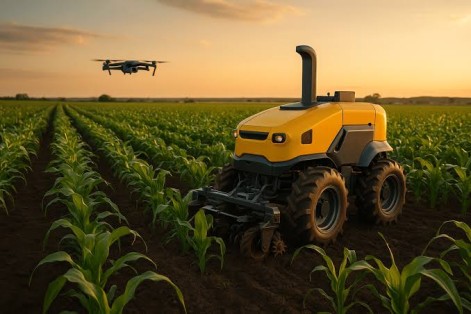
Artificial Intelligence is expected to become even more integrated into agriculture through autonomous farm equipment, AI-powered drones, robotic harvesting, predictive crop management, climate-smart farming, intelligent irrigation systems, and real-time field monitoring. As AI technologies continue to evolve, farmers will increasingly combine intelligent automation with agricultural expertise to improve productivity, strengthen food security, and promote sustainable farming practices.
Conclusion
Artificial Intelligence is transforming agriculture by helping farmers monitor crops, optimize irrigation, detect pests, predict yields, and streamline farm management. Rather than replacing farmers, AI serves as a valuable assistant that enhances productivity and supports data-driven decision-making. When combined with agricultural expertise, local knowledge, and sustainable farming practices, AI enables farmers to produce healthier crops, use resources more efficiently, and build more resilient farming operations.