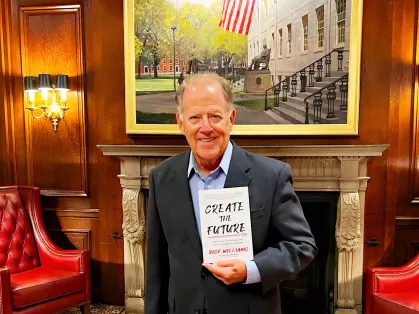
Rick Williams, renowned leadership expert, speaker, and author, believes that one of the most critical responsibilities of a leader is not to have all the answers—but to ask the best questions. In his work with executives and organizations, Williams outlines a clear philosophy: great leadership is rooted in curiosity, insight, and the ability to cultivate thinking teams.
In today’s rapidly changing business environment, the role of a leader has evolved. Command-and-control leadership is being replaced by a more facilitative approach—one that empowers teams to think strategically and act independently. According to Williams, this shift requires leaders to develop the skill of inquiry rather than merely offering directives.
Asking the right questions, he says, unlocks potential within teams. It pushes people to consider alternative perspectives, challenge assumptions, and uncover hidden issues. It also builds a culture of ownership and accountability, where team members feel encouraged to contribute ideas rather than simply follow orders.
But questions alone aren’t enough. Williams emphasizes that leaders must also build an internal team capable of functioning as a group of trusted consultants. These are individuals who can bring honest feedback, fresh thinking, and strategic clarity to the table. By surrounding themselves with a well-equipped advisory team from within the organization, leaders can make better decisions and avoid the common pitfalls of isolated thinking.
Williams offers practical tools and processes to help leaders develop such teams. This includes frameworks for collaborative problem-solving, systems for gathering and analyzing diverse viewpoints, and training methods that teach teams how to engage constructively in high-stakes discussions.
Another key point he makes is that leadership questions should be purpose-driven. Rather than asking questions to test knowledge or assign blame, effective leaders use questions to reveal deeper insights, align the group around a shared vision, and spark innovation. These questions are open-ended, forward-looking, and designed to inspire action.
Ultimately, Rick Williams encourages leaders to see themselves not as the ultimate authority, but as facilitators of excellence. Their true value lies in how they guide others to think more clearly, act more effectively, and grow into leaders themselves.
In a world that demands speed, adaptability, and complex problem-solving, asking the best questions isn’t just a leadership skill—it’s a strategic necessity.