In India, 86 rapes are reported on average each day, or one every 16 minutes. Behind these figures lie innumerable others that remain unreported, kept silent by fear and stigma. It frequently takes too long to call the police or family during such dangerous situations, so getting help right away is crucial.
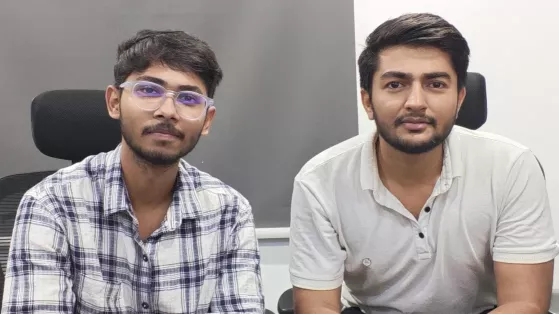
Two young Indians, Debjyoti Mukherjee from Durgapur, West Bengal, and Abhishek Kasana from Delhi, have started Mission Pukaar, a community-driven project for women's safety, in an effort to close this gap.
What the App Does:
The mobile app offers a simple but powerful feature:
-
By pressing and holding an SOS button for 3 seconds, the victim's live location is shared instantly with nearby users, trusted contacts, and emergency services.
-
At the same time, the app begins recording audio and video evidence to aid justice.
-
This transforms a woman's cry for help into a real-time alert that mobilises people around her.
Why It Matters:
Mission Pukaar is not a complete solution to crimes against women, but a step towards faster response and stronger community safety. Even if it reduces cases by just 1%, the impact could be significant.
By turning ordinary citizens into protectors, the initiative aims to build a nationwide safety net where no cry for help goes unheard.
The Bigger Vision:
The team behind Mission Pukaar believes that women's safety cannot rely on laws alone - it requires technology, awareness, and unity. Through collaborations with NGOs, schools, workplaces, and police forces, the initiative hopes to create a safer society where every Indian shares responsibility for women's protection.
Why This Initiative Was Needed:
When a woman is upset, she frequently tries to call her family or the police. But in those situations, time is of the essence. Even a few minute response delay can mean the difference between tragedy and survival.
Additionally, it might take some time for authorities to track down the location or they might not have patrol units in the area. By allowing anyone nearby to serve as the first responder, whether it be a fellow woman, a security guard, a store owner, or a bystander using the app, Pukaar aims to close this response gap. It transforms regular people into a group safety net.
A Step, Not a Solution:
The creators of the app are very clear: this is not a perfect solution. They do not claim to eliminate crimes against women with a mobile app. Mission Pukaar is a small initiative that may not solve the problem entirely - but even if it helps reduce cases by 1%, that 1% could mean thousands of lives touched, saved, or protected.
Their belief is simple: a woman's cry for help should never go unheard. If a single life is saved because a nearby user got the alert and stepped in, then the app has served its purpose.
Community-Driven Safety:
Pukaar's focus on community-driven support is among its most distinctive features. Bystanders can have a significant impact in many places, particularly in crowded urban areas or smaller towns, but only if they are alerted in a timely manner.
Pukaar gives users the ability to react in addition to receiving alerts. By doing this, it reinterprets the citizen's role as a potential protector as well as a witness.
Additionally, the app can be linked to nearby police stations or security networks in the future, and it integrates with current emergency numbers.
Awareness Is the First Step:
The app is free to download and easy to set up, but the real challenge lies in creating awareness.
Debjyoti and Abhishek are currently working with NGOs, youth networks, schools, and women's rights groups to spread awareness about how this app works and how people can use it responsibly.
The focus is on building a culture where people are not afraid to intervene - safely and legally - when someone nearby is in distress.
Scalability and Adoption:
The team behind Mission Pukaar is actively seeking partnerships with local authorities, educational institutions, women's organizations, and civic bodies. They hope to bring the app to Tier 2 and Tier 3 cities, where immediate support is often harder to access.
Through regional language support, community ambassadors, and offline workshops, they plan to scale the initiative beyond urban users and into the heart of India.
The app will also continue to evolve based on user feedback, with upcoming features like integration with wearable devices, discreet activation gestures, and location-specific alerts (e.g., danger zones).
About the Initiative:
Mission Pukaar is a 100% non-profit initiative. The mobile app has been developed without any commercial intent and does not include advertisements, subscriptions, or paid upgrades.
It is designed purely for social good - to give women an accessible, easy-to-use tool that can help them in emergencies, and to build a safety network powered by people, not profit.
The creators of the app are not monetizing user data, and all sensitive information is encrypted and securely stored. The initiative is entirely focused on creating social impact, raising awareness, and encouraging collective responsibility around women's safety in India.
This is not a perfect or final solution - but a step forward, led by citizens, driven by technology, and grounded in empathy.