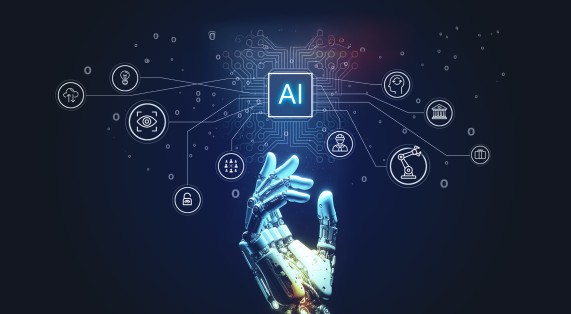
Advantages of Synthetic Intelligence: Transforming
Decision-Making, Innovation, and Industry
Introduction
Synthetic Intelligence (SI) is emerging as one of the most transformative technologies of the 21st century. Moving beyond the capabilities of traditional Artificial Intelligence (AI), SI integrates human-like cognition, reasoning, and adaptability, enabling machines to replicate aspects of human intelligence while operating at unmatched scale and speed.
While AI has already revolutionized sectors such as finance, healthcare, and education by automating routine tasks and analyzing large datasets, SI introduces cognitive decision-making and contextual reasoning, allowing machines to not just process information but also think, learn, and adapt.
This article explores the advantages of Synthetic Intelligence, illustrating how SI enhances decision-making, replicates human reasoning, drives faster innovation, and offers versatility across industries. These attributes make SI a cornerstone of next-generation technological, industrial, and business solutions.
1. Improved Decision-Making Accuracy
One of the most significant advantages of SI is its ability to enhance decision-making through cognitive reasoning and predictive analysis.
1.1 Cognitive Analysis Beyond Data Patterns
-
Traditional AI relies heavily on historical data patterns and statistical models.
-
SI, however, understands context, relationships, and causality, allowing more accurate and nuanced predictions.
-
Example: In finance, SI can simulate market reactions to geopolitical events, policy changes, or sudden disruptions, offering superior guidance for portfolio management.
1.2 Scenario Planning and Risk Assessment
-
SI can analyze multiple scenarios simultaneously, evaluating risks, probabilities, and potential outcomes.
-
In industries like defense, healthcare, and energy, this allows leaders to make informed, proactive decisions rather than relying solely on reactive measures.
-
Predictive maintenance in manufacturing also benefits, as SI identifies potential equipment failures before they occur, reducing downtime and costs.
1.3 Real-Time Adaptive Decisions
-
SI systems continuously learn from new data and evolving circumstances.
-
Enables dynamic decision-making in fast-paced environments such as stock markets, logistics, or emergency response.
-
Reduces human error and ensures that organizations respond accurately to unforeseen challenges.
By enhancing the precision, speed, and contextual understanding of decision-making processes, SI significantly improves operational outcomes across sectors.
2. Ability to Replicate Human Reasoning
Unlike conventional AI, which operates primarily through programmed logic and pattern recognition, SI mimics aspects of human reasoning, including problem-solving, learning from experience, and adapting to new information.
2.1 Cognitive Simulation
-
SI can emulate human thought processes, including deduction, inference, and planning.
-
This capability allows systems to reason beyond rote calculations, considering ethical, strategic, or contextual factors.
2.2 Natural Interaction with Humans
-
Human-like reasoning enables SI to interact with users in intuitive, context-aware ways, improving collaboration and decision support.
-
Applications include virtual assistants, customer service bots, and AI advisors capable of offering sophisticated guidance based on individual circumstances.
2.3 Learning from Experience
-
SI systems can adjust their strategies and reasoning over time, similar to human learning.
-
This is particularly valuable in fields such as education, healthcare, and finance, where situational variability requires adaptive thinking.
By replicating human reasoning, SI enables machines to perform complex, nuanced tasks that were previously the exclusive domain of human intelligence, bridging the gap between human expertise and computational efficiency.
3. Versatility Across Industries
SI’s human-like cognitive abilities make it applicable across a wide range of industries, enhancing efficiency, innovation, and decision-making in diverse contexts.
3.1 Healthcare
-
SI assists in diagnostics, treatment planning, and drug discovery by reasoning about complex biological systems.
-
Enables personalized medicine, where treatments are tailored based on patient genetics, lifestyle, and historical responses.
-
Predictive modeling helps hospitals optimize staffing, supply chains, and resource allocation.
3.2 Finance and Banking
-
SI enhances predictive analytics, risk assessment, and portfolio management.
-
Cognitive systems can anticipate market trends, detect fraud, and optimize trading strategies.
-
Improves customer experience through personalized financial advice and advisory services.
3.3 Manufacturing and Supply Chain
-
SI predicts equipment failure, optimizes production schedules, and manages logistics efficiently.
-
Adaptive systems respond to real-time supply chain disruptions, minimizing downtime and reducing costs.
3.4 Defense and Security
-
SI powers autonomous defense systems, threat analysis, and cybersecurity strategies.
-
Cognitive reasoning allows rapid response to dynamic battlefield conditions and cyber threats.
3.5 Education and Learning
-
SI tailors learning experiences based on student behavior, comprehension, and progress.
-
Enables adaptive learning platforms that adjust difficulty, content, and teaching methods in real-time.
The versatility of SI across industries highlights its transformative potential, enabling organizations to achieve higher efficiency, strategic insight, and innovation.
4. Faster Innovation Cycles
SI accelerates innovation by combining cognitive reasoning with high computational power, reducing time from ideation to implementation.
4.1 Accelerated R&D
-
In healthcare, SI speeds up drug discovery by simulating molecular interactions and predicting efficacy.
-
In manufacturing, SI enables rapid prototyping by optimizing designs and testing virtually before physical production.
4.2 Adaptive Product Development
-
SI analyzes market trends, customer preferences, and competitor activity to guide product strategy and innovation.
-
Supports continuous improvement by learning from performance data and iteratively refining solutions.
4.3 Efficient Problem-Solving
-
Complex challenges, such as optimizing supply chains or energy consumption, can be simulated and solved faster using SI.
-
Reduces trial-and-error cycles, saving time, costs, and resources.
By reducing development timelines and improving the precision of innovation, SI fosters rapid technological advancements and competitive advantage for businesses.
5. Additional Advantages
5.1 Enhanced Data Interpretation
-
SI synthesizes information from multiple sources, including structured and unstructured data.
-
Generates insights that go beyond traditional analytics, incorporating context, patterns, and reasoning.
5.2 Strategic Forecasting
-
Organizations can anticipate future trends, risks, and opportunities with greater confidence.
-
Supports proactive strategy development rather than reactive decision-making.
5.3 Human-Machine Collaboration
-
SI enhances collaboration by providing human-like reasoning support.
-
Empowers professionals to make informed decisions while leveraging machine efficiency and computational power.
5.4 Scalability and Adaptability
-
SI systems adapt to changing business environments, evolving regulations, and emerging technologies.
-
Scales efficiently to manage larger datasets, more complex problems, and expanding operational scope.
6. Challenges and Considerations
While SI offers remarkable advantages, organizations must consider:
-
High Development Costs: Creating and maintaining SI systems requires substantial investment.
-
Data Privacy and Security: SI relies on sensitive data, necessitating robust security measures.
-
Integration Complexity: Combining SI with existing systems can be technically challenging.
-
Ethical Concerns: Decisions made by SI must align with human values, especially in healthcare, finance, and defense.
-
Skill Requirements: Personnel must be trained to interpret, validate, and manage SI outputs effectively.
Despite these challenges, the long-term benefits of SI far outweigh the obstacles, making it a strategic asset for forward-looking organizations.
Conclusion
The advantages of Synthetic Intelligence are profound and far-reaching. By improving decision-making accuracy, replicating human reasoning, enabling cross-industry versatility, and accelerating innovation cycles, SI is set to transform the way organizations operate, compete, and innovate.
From healthcare and finance to defense, manufacturing, and education, SI provides adaptive, context-aware, and cognitive solutions that bridge the gap between human intelligence and computational efficiency.
As organizations continue to integrate SI into their strategies, they will benefit from smarter, faster, and more reliable operations, gaining a competitive edge in a rapidly evolving global landscape.
Synthetic Intelligence represents not just an incremental improvement over AI but a paradigm shift, enabling machines to reason, adapt, and innovate in ways that closely resemble human cognition—ushering in a new era of intelligent, cognitive-driven decision-making and innovation.