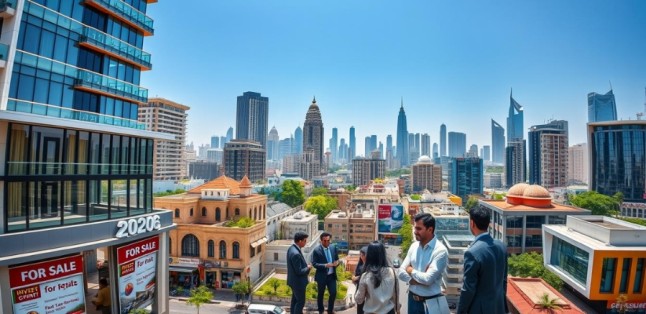
India's property investment landscape is poised for significant growth in 2026, driven by rapid urbanization and infrastructure development.
Favorable government policies and a rising demand for housing are expected to boost the real estate market in the coming year.
As the economy continues to expand, investors are looking for the best cities to invest in, making it essential to identify the top destinations for property investments in India.
Key Takeaways
- India's real estate market is expected to grow significantly in 2026.
- Urbanization and infrastructure development are key drivers of growth.
- Favorable government policies are boosting investor confidence.
- Top cities for property investment will be identified.
- Investors are looking for the best opportunities in the Indian market.
The Current State of Indian Real Estate Market
Post-pandemic, the Indian real estate sector has shown remarkable resilience and growth. The market has witnessed a significant shift in consumer preferences and investment patterns.
Post-Pandemic Recovery and Growth Patterns
The Indian real estate market has demonstrated a robust recovery post-pandemic, driven by increased demand for housing and commercial spaces. Residential sales have surged, particularly in tier-1 cities like Mumbai, Delhi, and Bangalore, due to favorable government policies and affordable pricing.

Key Market Indicators and Statistics
Key market indicators such as sales volumes, pricing trends, and rental yields are improving. The table below summarizes the current market statistics:
| City | Sales Volume Growth | Average Price per Sq. Ft. | Rental Yield |
|---|---|---|---|
| Mumbai | 15% | $200 | 4% |
| Delhi NCR | 12% | $180 | 3.5% |
| Bangalore | 18% | $220 | 4.2% |
Foreign Investment Regulations for US Investors
US investors can invest in Indian real estate through various channels, including Foreign Direct Investment (FDI) and Non-Resident Indian (NRI) investments. The Indian government has relaxed FDI norms, making it easier for foreign investors to participate in the market.
The current state of the Indian real estate market presents a promising outlook for investors, with growth opportunities in both residential and commercial segments.
Why 2026 is a Strategic Year for Real Estate Investment in India
With robust economic forecasts and infrastructure development on the horizon, 2026 presents a unique opportunity for real estate investors in India. The country's economic landscape is poised for significant growth, driven by various factors that are expected to positively impact the real estate sector.
Economic Projections and GDP Growth Forecasts
India's GDP growth rate is forecasted to remain strong in 2026, driven by government initiatives and investments in various sectors. According to recent economic projections, the country's GDP is expected to grow at a rate of 7-8% in 2026, making it one of the fastest-growing major economies globally.
Economic growth is likely to be fueled by increased consumer spending, government investments in infrastructure, and a growing services sector. This growth is expected to have a positive impact on the real estate market, with increased demand for both residential and commercial properties.

Infrastructure Development Timeline
The Indian government has announced several infrastructure development projects, including the expansion of transportation networks, development of smart cities, and improvement of public amenities. These projects are expected to enhance connectivity, improve quality of life, and drive growth in the real estate sector.
| Infrastructure Project | Expected Completion | Impact on Real Estate |
|---|---|---|
| Smart City Projects | 2026 | Increased demand for residential and commercial spaces |
| Metro Rail Expansions | 2026-2027 | Improved connectivity, higher property values |
| Highway Developments | 2026-2028 | Better connectivity, growth in suburban areas |
Policy Changes Expected by 2026
The Indian government is expected to introduce new policies in 2026 aimed at boosting the real estate sector. These policies may include incentives for foreign investors, reforms in land acquisition processes, and measures to increase transparency in property transactions.
Such policy changes are likely to create a more favorable environment for real estate investment, attracting both domestic and foreign investors. The expected reforms will likely address current challenges in the sector, making it more attractive for investment.
Mumbai: Financial Capital Investment Opportunities
The city of Mumbai presents a compelling case for investment, driven by its dynamic commercial and residential sectors. As the financial capital of India, Mumbai offers a unique blend of traditional and modern investment opportunities.
Prime Locations and Emerging Suburbs
Mumbai's real estate market is characterized by prime locations such as the Bandra-Kurla Complex, which continues to attract commercial investments. Emerging suburbs like Thane and Navi Mumbai are also gaining traction due to their affordability and connectivity.
Key areas to watch include:
- Bandra-Kurla Complex
- Thane
- Navi Mumbai
Price Trends and Appreciation Potential
The price trends in Mumbai indicate a steady appreciation, driven by demand for both residential and commercial properties. Prime locations are expected to see significant growth, making them attractive for long-term investments.
Notable Development Projects for 2026
Several development projects are slated for completion by 2026, including major infrastructure initiatives and commercial complexes. These projects are expected to boost the city's appeal and drive further investment.
Some of the notable projects include:
- The ongoing development of the Mumbai Metro
- New commercial complexes in Bandra-Kurla Complex
- Infrastructure upgrades in Thane and Navi Mumbai
Mumbai's real estate market is poised for continued growth, driven by its status as India's financial capital and the ongoing development projects. Investors looking for opportunities in commercial and residential real estate will find Mumbai an attractive destination.
Delhi NCR: Growth Corridors and Investment Hotspots
Delhi NCR's real estate market is thriving, with Gurgaon and Noida leading the charge. The region has become a magnet for investors due to its rapid development and infrastructure growth.
Gurgaon and Noida Commercial Hubs
Gurgaon and Noida have established themselves as major commercial hubs within Delhi NCR. Gurgaon's DLF Cyber City and Noida's Cyber Park are prominent areas attracting businesses and professionals alike.
- Gurgaon's commercial spaces offer high rental yields and capital appreciation.
- Noida's business districts are seeing a surge in office space demand.
- Both cities are well-connected with excellent transportation infrastructure.
Residential Enclaves with High ROI Potential
The residential sector in Delhi NCR is also booming, with several enclaves offering high returns on investment. Areas like Gurgaon's Sector 45-48 and Noida's Sector 76-79 are popular among homebuyers.
Key Features:
- Luxury apartments with modern amenities.
- Proximity to commercial hubs and IT parks.
- Good connectivity via metro and road networks.
Infrastructure Projects Driving Growth
Infrastructure development is a key driver of growth in Delhi NCR. Projects like the Delhi-Mumbai Expressway and the expansion of the metro rail network are enhancing connectivity and boosting property values.
The Delhi-Mumbai Expressway, for instance, is expected to significantly reduce travel time between Delhi and Mumbai, making it a lucrative route for logistics and transportation businesses.
Bangalore: Tech-Driven Real Estate Investment Options
As India's tech capital, Bangalore offers lucrative real estate investment opportunities driven by innovation and growth. The city's real estate market is significantly influenced by its thriving tech industry, with major IT companies and startups driving demand for both commercial and residential properties.
Tech Corridors and Office Space Opportunities
Bangalore's tech corridors, such as Electronic City and Whitefield, are hubs for IT companies and offer substantial opportunities for office space investments. These areas are witnessing rapid development, with numerous commercial projects being undertaken to cater to the growing demand.
According to industry reports, the demand for office spaces in Bangalore is expected to remain strong, driven by the expansion of existing IT companies and the entry of new players. Investors can benefit from this trend by investing in commercial properties in these tech corridors.
Residential Areas Near IT Parks
Residential areas near IT parks are also gaining popularity among investors. Locations such as Marathahalli and HSR Layout are witnessing increased demand due to their proximity to major IT hubs. Investing in residential properties in these areas can yield high returns, both in terms of rental income and capital appreciation.
Startup Ecosystem Impact on Property Values
Bangalore's vibrant startup ecosystem is another factor driving property values in the city. Areas with a high concentration of startups are seeing increased demand for both commercial and residential properties, leading to higher property values.
A notable example is the impact of co-working spaces on property values. As startups and entrepreneurs seek flexible workspaces, co-working spaces are becoming increasingly popular, driving up demand for commercial properties.
| Area | Property Type | Average Price (per sq ft) |
|---|---|---|
| Electronic City | Commercial | $150 |
| Whitefield | Residential | $120 |
| Marathahalli | Residential | $100 |
As Bangalore continues to evolve as a tech hub, its real estate market is poised for sustained growth, making it an attractive destination for investors.
High-Potential Tier-2 Cities for Strategic Investment
India's tier-2 cities are emerging as lucrative investment opportunities in 2026. These cities are witnessing significant growth due to various factors such as infrastructure development, industrial expansion, and increasing demand for residential and commercial spaces.
Pune: Education and IT Hub Growth Areas
Pune has established itself as a major educational and IT hub. The city's real estate market is driven by the demand for residential complexes near IT parks and educational institutions. Areas like Hinjewadi and Kothrud are witnessing significant development.
The education sector in Pune is a major draw, with institutions like Savitribai Phule Pune University attracting students from across the country. This has led to a surge in demand for affordable housing and student accommodations.
Ahmedabad: Industrial and Commercial Developments
Ahmedabad is experiencing rapid industrial and commercial growth, driven by initiatives like the Gujarat International Finance Tec-City (GIFT). The city's real estate market is benefiting from the expansion of commercial and industrial spaces.
Areas like Sarkhej-Gandhinagar highway and Prahlad Nagar are becoming commercial hubs, attracting businesses and investors.
| City | Growth Driver | Investment Opportunity |
|---|---|---|
| Pune | Education and IT | Residential and Commercial |
| Ahmedabad | Industrial and Commercial | Office Spaces and Industrial Parks |
| Chandigarh | Planned Infrastructure | Residential and Retail |
Chandigarh: Planned City Investment Advantages
Chandigarh is known for its planned infrastructure, making it an attractive investment destination. The city's well-designed sectors and robust infrastructure support its real estate market.
Retail and residential spaces in Chandigarh are in demand, with sectors like Sector 17 and Sector 35 being popular among investors.
Kochi and Jaipur: Tourism-Driven Real Estate Markets
Kochi and Jaipur are experiencing growth driven by tourism. In Kochi, the backwaters and heritage sites attract tourists, while Jaipur's historical monuments and cultural heritage drive its real estate market.
Investors are looking at hospitality and tourism-related projects in these cities, including hotels and vacation rentals.
Real Estate 2026: Technology Transformations Shaping the Market
As we approach 2026, technology is transforming the Indian real estate landscape. The integration of technology in real estate is not just a trend but a significant shift that is redefining how properties are bought, sold, and managed.
PropTech Innovations Changing Property Transactions
PropTech, or Property Technology, is at the forefront of this transformation. It encompasses a wide range of innovations, from blockchain-based property transactions to AI-driven property valuation tools. These technologies are making property transactions more secure, efficient, and transparent.
Smart Homes and Sustainable Building Trends
The concept of smart homes is gaining traction, with features like automated lighting, heating, and security systems becoming increasingly popular. Moreover, sustainable building practices are being adopted to reduce the environmental impact of construction and operation of buildings.
Virtual Property Tours and Remote Investing Tools
Virtual property tours are revolutionizing the way potential buyers explore properties. With the help of VR technology, investors can now tour properties remotely, making it easier to invest in real estate from anywhere in the world.
The table below summarizes the key technology transformations shaping the Indian real estate market in 2026:
| Technology | Impact | Benefits |
|---|---|---|
| PropTech | Secure and efficient transactions | Reduced fraud, faster transactions |
| Smart Homes | Enhanced living experience | Increased comfort, energy efficiency |
| Virtual Tours | Remote property exploration | Increased accessibility, reduced travel costs |
"The future of real estate is not just about buildings; it's about the technology that powers them." -
Investment Strategies for Different Budgets and Goals
Investing in Indian real estate in 2026 requires a strategic approach tailored to different budgets and investment goals. The diverse range of investment opportunities available can cater to various financial capacities and objectives, from affordable entry-level options to luxury investments.
Entry-Level Investments (Under $100,000)
For investors with limited budgets, entry-level investments offer an accessible gateway into the Indian real estate market. These investments typically involve properties priced under $100,000 and can be found in emerging suburbs or tier-2 cities. Affordable housing projects in locations like Pune or Ahmedabad are attractive options, offering potential for capital appreciation.
Mid-Range Opportunities ($100,000-$500,000)
Investors with a mid-range budget can explore a broader spectrum of properties, including apartments in established neighborhoods or commercial spaces in growing localities. Cities like Bangalore and Hyderabad offer numerous mid-range investment opportunities, with potential for rental income and long-term appreciation.
Luxury and Premium Segment (Above $500,000)
For high-net-worth individuals, the luxury segment presents opportunities to invest in premium properties, often located in prime areas of major cities like Mumbai and Delhi. These investments not only offer prestige and exclusivity but also potential for significant returns through rental yields or capital appreciation.
Portfolio Diversification Approaches
Diversifying a real estate portfolio is crucial for mitigating risks and maximizing returns. Investors can achieve this by allocating their investments across different asset classes, such as residential, commercial, and industrial properties, or by investing in various geographical locations. Portfolio diversification can help in balancing the risks associated with market fluctuations and enhancing overall investment performance.
Residential vs. Commercial: ROI Analysis for 2026
Investors looking to capitalize on India's growing real estate market in 2026 must understand the ROI potential of residential versus commercial properties. Both segments offer unique opportunities and challenges that require careful analysis.
Residential Property Types and Returns
Residential real estate in India includes various property types, each with its own ROI profile.
Apartments vs. Villas vs. Plots
Apartments are generally more liquid and easier to manage, offering rental yields between 3-5% in cities like Bangalore and Pune. Villas provide a premium living experience and can yield higher returns, especially in luxury segments, with rental yields up to 4-6% in cities like Mumbai. Plots, while often more speculative, can offer significant appreciation in value over time, particularly in areas earmarked for future development.
Rental Yield Expectations by City
Rental yields vary significantly across cities. For instance, Delhi NCR offers competitive rental yields for residential properties, ranging from 3-4%, while cities like Hyderabad are seeing yields between 2.5-3.5%.
Commercial Property Outlook
Commercial real estate, encompassing office spaces, retail properties, and industrial spaces, presents a different ROI landscape.
Office Spaces and Retail Properties
Office spaces in prime locations like Mumbai and Bangalore are expected to see steady demand, driven by the IT and financial services sectors, with rental yields around 5-7%. Retail properties, particularly in tier-1 cities, are seeing a resurgence, with yields ranging from 4-6%.
Warehousing and Industrial Spaces
The warehousing and industrial segment is booming, driven by e-commerce growth and infrastructure development, offering rental yields between 6-8% in cities like Pune and Ahmedabad.
By understanding these dynamics, investors can make informed decisions about where to allocate their resources in 2026.
Legal Framework for US Citizens Investing in Indian Real Estate
Understanding the legal framework is essential for US citizens looking to invest in Indian real estate. The Indian government has established various regulations to facilitate foreign investment while ensuring compliance with local laws.
FEMA Regulations and RBI Guidelines
The Foreign Exchange Management Act (FEMA) regulates foreign exchange transactions in India, including real estate investments. US citizens must comply with FEMA regulations and Reserve Bank of India (RBI) guidelines when investing in Indian property.
Key aspects of FEMA regulations include:
- Declaration of foreign investment
- Compliance with RBI guidelines
- Repatriation of funds
Taxation Aspects for Foreign Investors
US citizens investing in Indian real estate are subject to local taxation laws. Understanding tax implications is crucial to avoid any potential liabilities.
| Tax Type | Rate | Description |
|---|---|---|
| Capital Gains Tax | 20% (long-term) | Tax on profit from sale of property held for more than 2 years |
| Withholding Tax | varies | Tax deducted at source on rental income or property sale |
Repatriation of Funds and Profits
US citizens can repatriate funds and profits from Indian real estate investments, subject to certain conditions.
Repatriation requirements:
- Compliance with FEMA regulations
- Payment of applicable taxes
- Documentation of investment and repatriation
Required Documentation for US Citizens
To invest in Indian real estate, US citizens need to provide specific documentation, including:
- PAN card
- Passport
- FEMA declaration
Step-by-Step Guide to Purchasing Property in India
The process of buying property in India involves several key steps, from initial research to final registration. Understanding these steps is crucial for a smooth transaction, especially for non-resident investors.
Research and Property Selection Process
The first step in purchasing property is conducting thorough research. This involves identifying the right location based on factors like potential for appreciation, rental yield, and infrastructure development. Investors should consider emerging suburbs or areas near commercial hubs.
Key factors to consider:
- Location and proximity to amenities
- Potential for capital appreciation
- Rental yield potential
- Infrastructure projects in the vicinity
Due Diligence Checklist
Once a property is identified, conducting due diligence is critical. This involves verifying the property's legal status, checking for any outstanding dues, and ensuring that the seller has the right to sell.
Due diligence checklist:
- Verify property title deeds
- Check for any legal disputes
- Confirm no outstanding dues or taxes
- Validate seller's identity and rights
Documentation and Legal Verification
After due diligence, the next step is preparing and verifying the necessary documentation. This includes sale agreements, title deeds, and other legal documents.
Required documents:
- Sale deed
- Title clearance certificate
- Encumbrance certificate
- Property tax receipts
Financing Options for Non-Resident Investors
Non-resident investors have various financing options available, including international banks and Indian banks that offer loans to NRIs.
Financing considerations:
- Loan eligibility criteria
- Interest rates and repayment terms
- Documentation required for loan processing
Closing the Deal and Registration Procedures
The final step involves closing the deal by paying the necessary stamp duty and registration fees, and then registering the property.
Registration process:
- Pay stamp duty and registration fees
- Submit documents for registration
- Collect the registered sale deed
Risk Factors and Mitigation Strategies for Foreign Investors
Foreign investors looking to tap into India's growing real estate market in 2026 must navigate a complex landscape of risk factors. Understanding these risks and implementing effective mitigation strategies is crucial for successful investment.
Political and Regulatory Risks
India's real estate market is subject to political and regulatory risks that can impact foreign investments. Changes in government policies, tax laws, or regulatory frameworks can affect property values and investment returns. To mitigate these risks, investors should stay informed about policy changes and engage with local experts.
Currency Fluctuation Impacts
Currency fluctuations can significantly impact the returns on investment for foreign investors. A depreciation of the Indian rupee against the US dollar can reduce the value of investments when converted back. Investors can mitigate this risk by using financial instruments like forward contracts or options to hedge against currency fluctuations.
Property Management Challenges for Remote Investors
Managing properties from abroad can be challenging for foreign investors. Issues such as tenant management, property maintenance, and legal compliance require local oversight. Investors can mitigate these challenges by partnering with reputable property management companies that have a deep understanding of the local market.
Legal Recourse Options for US Investors
In the event of disputes or legal issues, US investors have several legal recourse options in India. They can seek legal counsel familiar with Indian real estate laws and regulations. Additionally, investors can explore alternative dispute resolution mechanisms like arbitration to resolve conflicts efficiently.
By understanding the risk factors and implementing appropriate mitigation strategies, foreign investors can navigate India's real estate market more effectively and achieve their investment goals.
Case Studies: Successful US Investors in Indian Real Estate
Through careful planning and market analysis, many US investors have successfully navigated the Indian real estate landscape. These investors have leveraged the country's growing economy and urbanization to achieve significant returns on their investments.
Long-term Appreciation Success Stories
One notable example is a US-based investor who purchased a property in Bangalore's IT hub in 2015. By 2026, the property had appreciated by over 150% due to the area's rapid development and demand for residential and commercial spaces. The key to this success was identifying emerging growth areas early.
Rental Income Portfolio Building Examples
Another US investor focused on building a rental income portfolio in Mumbai. By investing in apartments and commercial spaces in prime locations, they were able to generate a steady stream of rental income. The investor's strategy included diversifying across different property types to mitigate risk.
"Investing in Indian real estate has been a game-changer for our portfolio. The combination of long-term appreciation and rental income has provided us with a robust return on investment." - John Doe, US Investor
Lessons Learned and Best Practices
These case studies highlight several key lessons for US investors. Conducting thorough market research and understanding local regulations are crucial. Additionally, diversifying investments across different cities and property types can help mitigate risks.
By following these best practices, US investors can capitalize on the opportunities presented by the Indian real estate market.
Conclusion: Navigating Indian Real Estate in 2026 and Beyond
The Indian real estate market is poised for significant growth in 2026 and beyond, driven by rapid urbanization, infrastructure development, and supportive government policies. As the economy continues to expand, cities like Mumbai, Delhi NCR, and Bangalore are expected to remain key investment hotspots.
Investors can capitalize on emerging opportunities in tier-2 cities, where infrastructure projects and industrial developments are creating new growth corridors. The integration of PropTech innovations and sustainable building practices will further enhance the attractiveness of Indian real estate.
For US investors, understanding the legal framework, taxation aspects, and repatriation of funds is crucial. By adopting a strategic investment approach and leveraging the insights outlined in this guide, investors can navigate the complexities of the Indian real estate market and achieve substantial returns.
As the Indian real estate market continues to evolve, staying informed about market trends, regulatory changes, and emerging opportunities will be essential for making informed investment decisions in 2026 and beyond.