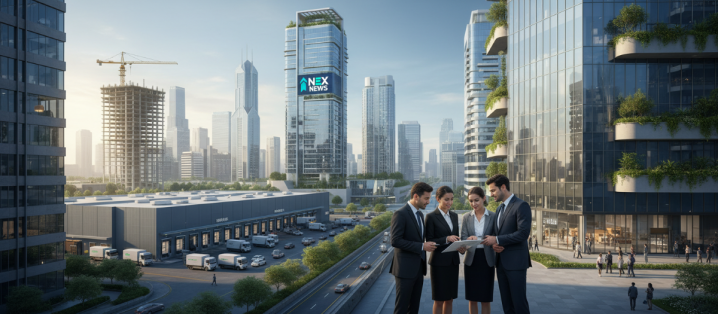
The Indian commercial real estate sector is poised for significant growth, driven by the expanding office and logistics landscape.
As the economy continues to evolve, the demand for modern office spaces and efficient logistics networks is on the rise, fueled by India's growing GDP.
With GDP growth projections indicating a steady increase, the office and logistics sectors are expected to outperform the housing sector by 2026.
Key Takeaways
- India's office and logistics sectors are poised for significant growth.
- The commercial real estate sector is driven by expanding office and logistics landscapes.
- GDP growth projections indicate a steady increase.
- Office and logistics sectors expected to outperform housing by 2026.
- Returns are projected to track nominal GDP growth of around 11%.
Market Overview: India's Real Estate Landscape in 2023
The Indian real estate sector in 2023 is characterized by a dynamic interplay between housing and commercial segments. As the economy continues to evolve, different sectors within the real estate market are responding to various macroeconomic factors.
Current Performance of Housing vs. Commercial Sectors
The housing sector has seen a mixed performance, with some areas experiencing a slowdown due to various regulatory and economic factors. In contrast, the commercial sector, including office spaces and logistics, has shown resilience driven by the growing demand for modern infrastructure.
A comparison of the two sectors reveals that commercial real estate is gaining traction, with increasing investment in office spaces and logistics facilities. This trend is indicative of a broader shift towards commercial and industrial real estate.
| Sector | 2022 Performance | 2023 Outlook |
|---|---|---|
| Housing | Moderate growth | Stable |
| Commercial | Strong demand | Positive growth |
| Logistics | Increasing investment | High growth |
Key Market Indicators and Trends
Key market indicators such as rental yields, occupancy rates, and new supply are crucial in understanding the current trends. The commercial sector is witnessing increasing rental yields due to high demand and limited supply in prime locations.
Market trends suggest a continued preference for Grade A office spaces and modern logistics facilities, driven by the needs of multinational corporations and e-commerce companies.
Office & Logistics to Outperform Housing in 2026; Returns to Track 11% GDP
With the Indian economy projected to maintain its growth trajectory, the office and logistics sectors are likely to outperform housing in 2026. This growth is driven by increasing demand for commercial and industrial spaces, fueled by India's expanding economy and the need for efficient supply chain networks.
Projected Growth Rates Across Sectors
The Indian real estate market is witnessing a shift in focus towards office and logistics spaces, driven by the growing need for modern, well-equipped facilities. The office sector is expected to see significant growth, with rental yields projected to increase by 8-10% by 2026. The logistics sector is also poised for growth, driven by the rise of e-commerce and the need for efficient supply chain management.
| Sector | 2023 Growth Rate | 2026 Projected Growth Rate |
|---|---|---|
| Office | 6% | 9% |
| Logistics | 7% | 10% |
| Housing | 5% | 6% |
Correlation Between Real Estate Returns and GDP Growth
The correlation between real estate returns and GDP growth is becoming increasingly evident. As India's GDP continues to grow, the demand for commercial and industrial real estate is expected to rise, driving returns in these sectors. 11% nominal GDP growth projection for 2026 is likely to have a positive impact on the real estate sector, with office and logistics expected to benefit the most.
The relationship between GDP growth and real estate returns is complex, but historical data suggests that as GDP grows, the demand for commercial and industrial spaces increases, driving up returns in these sectors.
Economic Factors Driving Commercial Real Estate Growth
Favorable macroeconomic conditions are anticipated to drive growth in India's commercial real estate. The country's economic outlook is robust, with various factors contributing to the expansion of the commercial real estate sector.
India's Macroeconomic Outlook
India's macroeconomic outlook is positive, with GDP growth projections indicating a continued upward trend. This growth is expected to drive demand for commercial real estate, particularly in the office and logistics sectors.
- Increasing foreign direct investment (FDI) in real estate
- Government initiatives to boost infrastructure development
- Rising demand for modern office spaces and logistics facilities
Impact of FDI and Global Investment
The influx of FDI and global investment is significantly impacting India's commercial real estate trends. Investors are attracted to India's growing economy and the potential for high returns in the commercial real estate sector.
- FDI inflows into the real estate sector have been increasing
- Global investors are looking at India's transportation logistics infrastructure
- The trend is expected to continue, driving growth in commercial real estate
GDP Growth Projections and Their Impact on Real Estate
GDP growth projections through 2026 are likely to have a profound impact on India's real estate landscape. As the economy expands, different sectors within real estate are expected to respond in varied ways.
Nominal GDP Growth Forecasts Through 2026
Forecasts indicate that India's nominal GDP is projected to grow at a rate of 11% through 2026. This growth is driven by various macroeconomic factors, including increased government spending and foreign investment.
Sectoral Performance Relative to Economic Growth
The performance of different real estate sectors will be closely tied to economic growth. The office and logistics sectors are expected to outperform housing, driven by increasing demand for commercial spaces and logistical infrastructure.
| Sector | Projected Growth Rate |
|---|---|
| Office | 12% |
| Logistics | 15% |
| Housing | 8% |
Office Space Market Analysis: Current State and Future Projections
India's office space market is on the cusp of a major transformation, influenced by evolving commercial real estate trends. As the economy continues to grow, the demand for office spaces is expected to rise, driven by the expansion of existing businesses and the entry of new companies.
Major Office Markets in India
The major office markets in India are primarily located in Tier 1 cities such as Mumbai, Delhi NCR, and Bangalore. These cities have been the hub for corporate activities and continue to attract significant investments in the office space sector.
Vacancy Rates and Absorption Trends
As of 2023, the vacancy rates in major office markets have seen a decline, indicating a healthy absorption trend. According to recent data, the absorption rate has been on the rise, driven by the increasing demand for quality office spaces.
| City | Vacancy Rate (%) | Absorption Rate (%) |
|---|---|---|
| Mumbai | 10 | 80 |
| Delhi NCR | 12 | 75 |
| Bangalore | 8 | 85 |
Rental Yield Projections for 2026
Looking ahead to 2026, rental yields for office spaces are expected to improve, driven by the growing demand and limited supply in prime locations. Experts predict that the rental yields could see an increase of up to 8-10% in major cities.
"The office space market in India is expected to witness significant growth, driven by the increasing demand for modern and flexible workspaces."
The future of India's office space market looks promising, with various factors contributing to its growth. As the economy continues to evolve, it is essential to keep a close eye on the trends and projections in the office space market.
Logistics and Warehouse Sector: The Rising Star
India's logistics sector is on the cusp of a revolution, driven by e-commerce and infrastructure development. The logistics and warehouse management sector is becoming increasingly vital for the country's economic growth, supporting various industries including manufacturing, retail, and e-commerce.
Growth Drivers in Logistics Real Estate
The growth of the logistics sector is primarily driven by the booming e-commerce industry, which demands efficient and modern logistics facilities. Additionally, government initiatives such as the Make in India campaign and investments in infrastructure development are contributing to the sector's growth.
- Increased demand for warehousing facilities due to e-commerce growth
- Government policies supporting logistics and infrastructure development
- Rising foreign direct investment in the logistics sector
Key Logistics Hubs and Their Performance
Major logistics hubs in India include cities like Gurgaon, Bangalore, and Mumbai. These cities offer strategic locations with access to major transportation networks, making them ideal for logistics and warehouse operations.
| Logistics Hub | Demand (sq. ft.) | Rental Yield (%) |
|---|---|---|
| Gurgaon | 10 million | 8-10 |
| Bangalore | 8 million | 7-9 |
| Mumbai | 12 million | 9-11 |
Transportation Logistics Infrastructure Development
The development of transportation logistics infrastructure is crucial for the growth of the logistics sector. Initiatives such as the Dedicated Freight Corridors and the expansion of port facilities are enhancing connectivity and efficiency in the logistics network.

As the logistics and warehouse sector continues to evolve, it is expected to play a pivotal role in India's economic growth, driven by technological advancements, infrastructure development, and increasing demand for efficient logistics services.
Supply Chain Optimization: Impact on Logistics Real Estate
Supply chain optimization is revolutionizing the logistics real estate landscape in India. As companies strive to improve efficiency and reduce costs, the demand for modern, well-located logistics facilities is increasing.
Modern Warehouse Requirements
The need for advanced warehouse facilities is growing due to the rise of e-commerce and changing consumer expectations. Modern warehouses must be equipped with state-of-the-art technology and infrastructure to support efficient logistics operations.
Automation and Robotics Integration
The integration of automation and robotics in warehouses is becoming increasingly important. This technology enhances efficiency, reduces labor costs, and improves accuracy in inventory management.
Sustainable Facility Design
Sustainable design is another critical aspect of modern warehouses. Incorporating green building practices not only reduces environmental impact but also leads to cost savings through energy efficiency.
Inventory Management Strategies Driving Facility Demand
Effective inventory management strategies are driving the demand for logistics facilities. Companies are adopting just-in-time inventory practices, which require warehouses that can handle rapid stock turnover and are located close to key markets.
- Advanced inventory tracking systems
- Strategic location planning
- Flexible warehouse space
By optimizing their supply chains, businesses can improve their overall logistics efficiency, reduce costs, and enhance customer satisfaction.
Residential Housing Market: Challenges and Opportunities
The Indian residential housing market is at a crossroads, with potential for growth hindered by several challenges. Despite the overall growth in the real estate sector, the residential housing market faces unique challenges that differentiate it from the commercial sectors.
Current Housing Market Performance
The current performance of the housing market is characterized by slow absorption rates and increasing inventory levels. According to recent data, the housing sector has seen a moderate growth rate, but it lags behind the commercial sectors in terms of investment and returns.
Factors Limiting Housing Growth Compared to Commercial Sectors
Several factors are limiting the growth of the residential housing market compared to commercial sectors. These include regulatory challenges, high inventory levels, and affordability issues. In contrast, commercial sectors like office and logistics are benefiting from GDP growth projections and commercial real estate trends that favor investment in these areas.
Understanding these dynamics is crucial for investors and developers looking to navigate the Indian real estate market effectively.
Investment Strategies for Commercial Real Estate in India
India's commercial real estate sector is poised for significant growth, driven by evolving investment strategies. As the economy continues to expand, investors are increasingly looking towards commercial real estate as a viable investment option.
REITs and Institutional Investment Trends
The introduction of Real Estate Investment Trusts (REITs) has revolutionized the commercial real estate landscape in India. REITs provide a structured investment platform, allowing individuals and institutions to invest in a diversified portfolio of properties. This has attracted significant institutional investment, with many global investors taking notice of India's growing commercial real estate market.
Institutional investment trends indicate a growing preference for office and logistics sectors, driven by their potential for high returns. The table below highlights the key trends in REITs and institutional investment in India's commercial real estate sector.
| Sector | REIT Investment | Institutional Investment |
|---|---|---|
| Office | 40% | 35% |
| Logistics | 30% | 25% |
| Retail | 30% | 40% |

Risk-Return Profile of Different Real Estate Sectors
The risk-return profile of different real estate sectors varies significantly. The office sector, for instance, offers stable returns but comes with higher risks due to market fluctuations. The logistics sector, on the other hand, is gaining traction due to the growth of e-commerce and the need for efficient supply chain management.
Investors must carefully evaluate the risk-return profile of each sector before making investment decisions. A diversified portfolio that includes a mix of office, logistics, and retail properties can help mitigate risks and maximize returns.
Regional Analysis: Top Performing Markets for Office and Logistics
As India's economy continues to grow, the demand for office and logistics spaces is expected to surge. This growth is not uniform across the country; certain regions are poised to outperform others due to their strategic advantages, infrastructure, and economic vitality.
Tier 1 Cities: Mumbai, Delhi NCR, Bangalore
Tier 1 cities such as Mumbai, Delhi NCR, and Bangalore are the hubs for office and logistics spaces. Mumbai, being the financial capital, has a high demand for office spaces, while Delhi NCR's vast geography and connectivity make it a logistics hub. Bangalore, known as the IT capital, drives the demand for modern office spaces. These cities are expected to continue their dominance in the commercial real estate market.
Emerging Markets: Pune, Hyderabad, Chennai
Pune, Hyderabad, and Chennai are emerging as significant players in the office and logistics sectors. Pune's proximity to Mumbai and its educational infrastructure make it an attractive destination for businesses. Hyderabad's IT sector is booming, and Chennai's strategic location on the east coast provides a unique advantage for logistics and trade. These cities offer a more cost-effective alternative to Tier 1 cities, driving their growth in the commercial real estate sector.
Industrial Property Market Analysis and Forecasts
The industrial property market in India is poised for significant growth driven by the expanding manufacturing sector and increasing demand for logistics facilities. As the economy continues to grow, the demand for industrial spaces is expected to rise, driven by both domestic and foreign investments.
Manufacturing Sector Impact on Industrial Real Estate
The manufacturing sector plays a crucial role in the demand for industrial real estate. Government initiatives such as 'Make in India' have attracted significant investments into the manufacturing sector, leading to an increased demand for industrial spaces. Industrial properties that cater to the needs of manufacturers, including modern facilities and strategic locations, are likely to see increased demand.
Last-Mile Delivery Facilities and Urban Logistics
The rise of e-commerce has led to an increased demand for last-mile delivery facilities. Urban logistics is becoming increasingly important as cities grow and demand for quick delivery services increases. This trend is driving the development of logistics facilities in urban areas, particularly in cities with high population densities.
Effective supply chain optimization and warehouse management are critical in meeting the demands of modern logistics. Companies are investing in advanced warehouse management systems to streamline their operations and improve delivery times.
Conclusion: Strategic Implications for Investors and Developers
As India's economy continues to grow, the office and logistics sectors are poised to outperform the housing market by 2026, with returns tracking nominal GDP growth projections. This shift presents strategic implications for investors and developers, who must adapt to emerging commercial real estate trends.
The projected 11% GDP growth rate is expected to drive demand for office and logistics spaces, driven by India's macroeconomic outlook and increasing foreign direct investment. Investors should focus on Tier 1 cities like Mumbai, Delhi NCR, and Bangalore, as well as emerging markets such as Pune, Hyderabad, and Chennai, to capitalize on the growth opportunities.
To maximize returns, developers must prioritize modernwarehouse requirements and inventory management strategies that drive facility demand. As the commercial real estate landscape evolves, understanding the correlation between real estate returns and GDP growth projections will be crucial for making informed investment decisions in the office & logistics sectors.