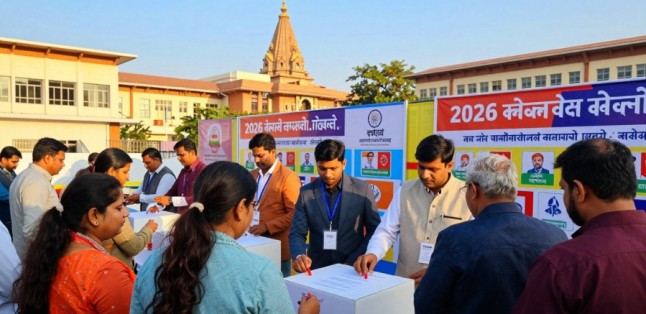
The upcoming general elections in India are poised to be a pivotal moment in the country's political landscape. Scheduled for 2026, these elections will determine the future governance and leadership of the nation.
As the electoral process in India unfolds, voters will have the opportunity to shape the country's future by choosing their representatives. The voting schedule, key candidates, and overall political climate are expected to be closely watched by both domestic and international observers.
Key Takeaways
- The 2026 general elections in India will play a crucial role in determining the country's future leadership.
- The electoral process is expected to be closely monitored by various stakeholders.
- Key candidates and their campaigns will be under scrutiny as the elections approach.
- The outcome of the elections will have significant implications for India's governance and policy direction.
- Voters' participation and engagement will be crucial in shaping the country's future.
The Democratic Spectacle: Overview of India Elections 2026
As the world watches, India prepares for its 2026 general elections, a democratic exercise of unprecedented scale. With over 900 million eligible voters, the electoral process is a complex and monumental task that underscores the country's commitment to democratic principles.
The significance of India's democratic process cannot be overstated. It is the largest democracy in the world, and its elections are a testament to the country's ability to organize and execute a massive logistical operation.
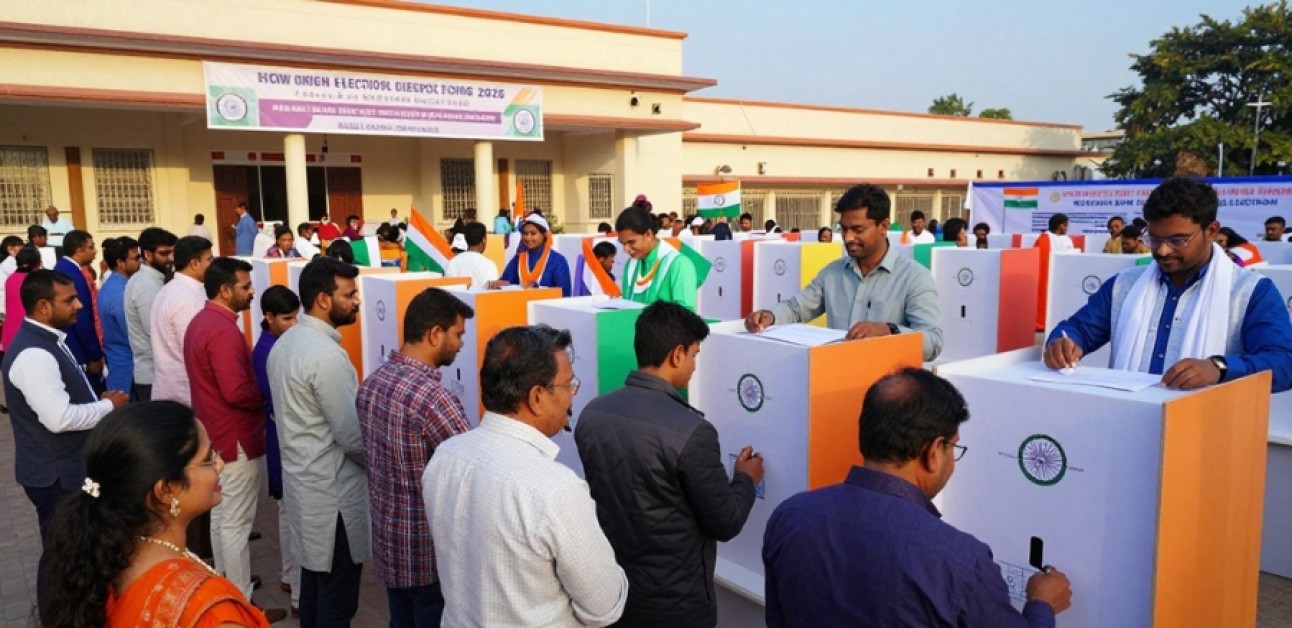
The World's Largest Democratic Exercise
India's 2026 general elections will witness a massive turnout, with voters from diverse backgrounds and regions participating in the democratic process. The elections will be a crucial test of the country's electoral machinery, with the Election Commission of India playing a pivotal role in ensuring free and fair polls.
The scale of the elections is staggering, with thousands of candidates contesting from various political parties. The major players include the Bharatiya Janata Party (BJP), the Indian National Congress (INC), and several regional parties that have a significant presence in their respective states.
Key Political Developments Since 2024
Since the 2024 elections, there have been significant political developments that are likely to influence the 2026 elections. The BJP has continued to strengthen its organizational structure, while the INC has been rebuilding its strategies to counter the BJP's dominance.
Regional parties have also been gaining momentum, forming alliances and coalitions to challenge the national parties. The table below highlights some of the key political developments since 2024:
| Party | Key Developments | Impact on 2026 Elections |
|---|---|---|
| BJP | Organizational restructuring, new leadership initiatives | Potential for increased voter appeal |
| INC | Rebuilding strategies, coalition building | Possible resurgence in voter support |
| Regional Parties | Alliance formations, policy realignments | Increased influence in regional strongholds |
The campaign news is filled with stories of alliances, defections, and new political entrants, making the 2026 elections a closely watched event.
Electoral Timeline and Voting Schedule
The Election Commission of India has announced a detailed electoral timeline for the 2026 general elections. This comprehensive schedule is crucial for understanding the phase-wise voting process across different states.
Phase-wise Voting Calendar Across States
The voting process will be conducted in multiple phases to ensure a smooth and organized election. The Election Commission has carefully planned the voting in India to accommodate the vast and diverse population.
| State | Voting Phase | Voting Date |
|---|---|---|
| Uttar Pradesh | Phase 1 | April 10, 2026 |
| Maharashtra | Phase 2 | April 17, 2026 |
| Gujarat | Phase 3 | April 24, 2026 |
Counting Process and Result Announcements
The counting of votes will take place on June 4, 2026, with the results being announced on the same day. The election updates will be provided in real-time, ensuring transparency throughout the electoral process in India.
Staying informed about the electoral timeline and voting schedule is vital for all stakeholders. The Election Commission's meticulous planning ensures the integrity of the electoral process.
India's Electoral System Explained for Global Audiences
Understanding India's electoral system is crucial for grasping the nuances of its democratic process. The system is based on the first-past-the-post model, where the candidate with the most votes wins the seat.
First-Past-the-Post System and Its Implications
The first-past-the-post (FPTP) system is straightforward: the candidate with the majority of votes in a constituency wins. This system can lead to a disproportionate representation if the winning candidate's vote share is not significantly high, potentially resulting in a hung parliament or a government without a clear majority.
Constituency Distribution and Parliamentary Representation
India is divided into 543 constituencies, each electing one member to the Lok Sabha, the lower house of Parliament. The distribution of these constituencies is based on the population of the states, ensuring that more populous states have greater representation.
The Election Commission's Role and Powers
The Election Commission of India (ECI) is an autonomous body responsible for administering and conducting free and fair elections. As
"the guardian of elections in India,"
the ECI ensures the integrity of the electoral process through its powers to regulate elections, including delimiting constituencies and maintaining electoral rolls.
| Key Players | Roles |
|---|---|
| Election Commission of India | Conducts and regulates elections |
| Political Parties | Contest elections and form governments |
| Candidates | Compete for parliamentary seats |
The electoral process in India is a complex interplay of various factors, including the electoral system, constituency distribution, and the role of the Election Commission. Understanding these elements is essential for appreciating the dynamics of Indian democracy.
Major Political Parties in the 2026 Electoral Race
As India's 2026 general elections approach, the country's diverse political landscape is coming into sharp focus. The electoral race is expected to be highly competitive, with several major political parties vying for power. The two national parties that have dominated Indian politics for decades are the Bharatiya Janata Party (BJP) and the Indian National Congress (INC), alongside various regional powerhouses that significantly influence national politics.
Bharatiya Janata Party (BJP): Leadership and Platform
The BJP, led by Prime Minister Narendra Modi, has been at the forefront of Indian politics since 2014. The party's platform is built around Hindutva ideology, economic nationalism, and development-oriented policies. The BJP's leadership has been instrumental in shaping the party's electoral strategy, with a focus on welfare schemes and infrastructure development. The party's ability to maintain its stronghold on key states like Uttar Pradesh and Gujarat will be crucial in determining its success in the 2026 elections.
Indian National Congress (INC): Rebuilding Strategies
The INC, India's oldest political party, has been rebuilding its strength after facing significant electoral setbacks in previous years. Under the leadership of Rahul Gandhi and Priyanka Gandhi Vadra, the party is focusing on reviving its grassroots connect and rejuvenating its organizational structure. The INC is also emphasizing welfare programs and social justice initiatives to regain its lost ground. The party's ability to form strategic alliances with regional parties will be critical in its quest to challenge the BJP's dominance.
Regional Powerhouses and Their National Influence
Regional parties play a crucial role in Indian politics, often holding the balance of power in coalition governments. These parties have a significant presence in specific states and can influence national politics through strategic alliances.
Eastern and Northeastern Parties
In Eastern India, parties like the Trinamool Congress (TMC) in West Bengal and the Janata Dal (United) in Bihar wield considerable influence. The TMC, led by Mamata Banerjee, has been a strong opponent of the BJP, while the Janata Dal (United) has been a key ally of the BJP in the past. In the Northeast, regional parties like the All India Trinamool Congress and the Nationalist Congress Party (NCP) have a significant presence.
Southern Political Dynamics
In Southern India, parties like the Dravida Munnetra Kazhagam (DMK) and the All India Anna Dravida Munnetra Kazhagam (AIADMK) in Tamil Nadu, and the Telugu Desam Party (TDP) in Andhra Pradesh, have a strong regional presence. These parties often play a crucial role in national politics, with the DMK and TDP having been key allies of the INC in the past.
Northern and Central India Parties
In Northern and Central India, parties like the Samajwadi Party (SP) and the Bahujan Samaj Party (BSP) in Uttar Pradesh, and the Shiv Sena in Maharashtra, have a significant presence. The SP and BSP have been key players in UP politics, while the Shiv Sena has been a crucial ally of the BJP in Maharashtra.
| Party | Leader | Key States |
|---|---|---|
| BJP | Narendra Modi | Uttar Pradesh, Gujarat, Maharashtra |
| INC | Rahul Gandhi, Priyanka Gandhi Vadra | Rajasthan, Punjab, Chhattisgarh |
| TMC | Mamata Banerjee | West Bengal |
| DMK | M.K. Stalin | Tamil Nadu |
| SP | Akhilesh Yadav | Uttar Pradesh |
The diverse range of political parties in India, each with its unique strengths and regional influences, will shape the outcome of the 2026 general elections. The ability of these parties to form alliances, mobilize voters, and address the concerns of the electorate will be crucial in determining the future of Indian politics.
Coalition Politics: Alliances Shaping the 2026 Elections
As India's 2026 elections approach, coalition politics is set to play a pivotal role in shaping the country's political landscape. The complex dynamics between various political parties will significantly influence the electoral outcome.
National Democratic Alliance (NDA) Composition and Strategy
The National Democratic Alliance, led by the Bharatiya Janata Party (BJP), has been a dominant force in Indian politics. The NDA's strategy for the 2026 elections involves strengthening its coalition by reaching out to regional parties and maintaining its base. Key allies include parties like the Janata Dal (United) and the Lok Janshakti Party. The NDA's campaign is likely to focus on economic development and national security, leveraging the government's achievements in these areas.
United Progressive Alliance (UPA) and Emerging Coalitions
The United Progressive Alliance, led by the Indian National Congress (INC), is working to rebuild its coalition by forging alliances with regional parties disillusioned with the NDA. The UPA's strategy includes highlighting issues like social welfare and employment, aiming to resonate with the common voter. Emerging coalitions and third-front alliances are also expected to play a crucial role, potentially altering the traditional two-coalition dynamics.
The 2026 elections will witness intense political maneuvering, with coalition politics at the forefront. Understanding these dynamics is crucial for grasping the potential outcomes of the elections.
Prime Ministerial Candidates and Party Leadership Profiles
The 2026 Indian general elections are shaping up to be a crucial contest, with prominent leaders vying for the top position. As the country prepares to elect its next government, understanding the profiles of key candidates is essential.
Incumbent Leadership and Their Electoral Record
The incumbent leadership has been actively campaigning across the country, highlighting their achievements and outlining their vision for India's future. The current Prime Minister has been praised for their economic reforms and efforts to strengthen India's global position. "Our government has worked tirelessly to improve the lives of Indians, and we are confident that our track record will speak for itself," said the Prime Minister during a recent rally.
The electoral record of the incumbent leadership is marked by significant policy initiatives, including efforts to boost infrastructure development and improve healthcare. However, they have also faced criticism on issues such as job creation and environmental protection.
Opposition Challengers and Rising Stars
The opposition parties have also put forward their candidates, challenging the incumbent leadership on various fronts. The opposition has been vocal about issues such as corruption, unemployment, and social inequality. "It's time for a change," said a prominent opposition leader. "We need a government that will work for the people, not just the privileged few."
Rising stars within the opposition parties are also making a name for themselves through their campaigning efforts. These young leaders are bringing fresh perspectives to the table, focusing on issues that resonate with younger voters, such as education, climate change, and digital governance.
As the election campaign heats up, the leadership profiles of these candidates will be under intense scrutiny. Their policies, track records, and leadership styles will be closely examined by voters as they make their decisions.
Battleground States That Will Decide the 2026 Outcome
The outcome of India's General Elections 2026 will be significantly influenced by several key battleground states. These states, with their substantial number of parliamentary seats, are crucial in determining the ruling party.
Uttar Pradesh: The 80-Seat Kingmaker
Uttar Pradesh, with its 80 parliamentary seats, is a critical battleground. Political parties are focusing their efforts here, as winning this state can significantly impact the overall election outcome. The state's diverse demographics and complex political landscape make it a challenging but crucial territory.
Maharashtra and Gujarat: Western Economic Powerhouses
Maharashtra and Gujarat are significant not only due to their economic prowess but also because of their substantial number of parliamentary seats. Maharashtra's 48 seats and Gujarat's 26 seats make them vital for any political party seeking to form the government.
Southern States and Their Distinct Political Calculations
The southern states, including Tamil Nadu, Karnataka, and Kerala, have their unique political dynamics. These states are crucial due to their significant number of parliamentary seats and distinct voter behaviors.
| State | Number of Seats | Political Significance |
|---|---|---|
| Uttar Pradesh | 80 | High |
| Maharashtra | 48 | High |
| Gujarat | 26 | Medium |
The battle for these battleground states will be fierce, with political parties employing various strategies to win the hearts and votes of the electorate.
Campaign Issues Dominating India Elections 2026
As India prepares for its 2026 general elections, several key issues are emerging to dominate the campaign trail. The political landscape is being shaped by a complex interplay of factors, including economic policies, national security concerns, and social welfare initiatives.
Economic Policies and Development Agendas
Economic policies are a major campaign issue, with political parties presenting their visions for India's future. The Bharatiya Janata Party (BJP) is focusing on its track record of economic reform, while the Indian National Congress (INC) is promising a more inclusive growth model. Other parties are also presenting their economic agendas, making it a crowded and competitive field.
| Party | Economic Focus | Key Promises |
|---|---|---|
| BJP | Economic Reform | Continued infrastructure development, tax reforms |
| INC | Inclusive Growth | Job creation programs, social welfare schemes |
| Regional Parties | State-specific Development | Focus on local industries, infrastructure projects |
National Security and Foreign Relations
National security is another critical issue, with parties debating their approaches to foreign policy and defense. The incumbent government's record on national security is being scrutinized by opposition parties, who are promising alternative approaches to handling security threats.
"National security is not just about defense; it's also about economic security and diplomatic relations."
Social Welfare Programs and Healthcare Initiatives
Social welfare programs and healthcare initiatives are also key campaign issues. Parties are promising various schemes to improve healthcare, education, and social welfare. The focus is on making these services more accessible and effective for the general population.
For instance, some parties are advocating for expanded healthcare coverage, while others are promising new education initiatives. These promises are being closely watched by voters who are looking for tangible improvements in their quality of life.
Digital Campaigning and Social Media Battlegrounds
The 2026 Indian general elections are witnessing a significant shift towards digital campaigning, with social media emerging as a crucial battleground. As political parties intensify their outreach efforts, technology-driven voter engagement strategies are becoming increasingly sophisticated.
Technology-Driven Voter Outreach Strategies
Political parties are leveraging social media platforms to connect with voters, share their manifestos, and counter opposition narratives. Data analytics and AI-powered tools are being used to target specific voter demographics, increasing the effectiveness of campaign messages. For instance, parties are using
"micro-targeting" techniques to tailor their messages to specific voter groups
Combating Misinformation and Election Integrity
The spread of misinformation on social media poses a significant challenge to the electoral process. To combat this, the Election Commission of India is implementing various measures, including fact-checking initiatives and digital literacy programs. By promoting transparency and accountability, these efforts aim to maintain the integrity of the electoral process.
As noted by a recent report,
"The use of technology in elections can both empower and undermine democratic processes, depending on how it is managed."
Thus, it is crucial for all stakeholders to work together to ensure that digital campaigning enhances the democratic process.
Voter Demographics and the Changing Electorate
As India's electoral landscape continues to evolve, the demographics of the voting population are undergoing a significant transformation. The country's voter base is becoming increasingly diverse, with various factors influencing voting patterns.
Youth Vote and First-Time Voters' Impact
The youth vote is emerging as a crucial factor in the 2026 elections. With a large number of first-time voters, this demographic is expected to play a significant role in shaping the electoral outcome. According to recent trends, young voters are more likely to be influenced by issues such as education, employment, and digital connectivity.
Urban vs. Rural Voting Pattern Analysis
Urban and rural voting patterns in India have traditionally differed, with urban areas tend to be more liberal and rural areas more conservative. However, recent trends suggest that this divide is narrowing, with issues such as economic development and social welfare becoming more prominent across both urban and rural areas.
| Region | Voting Pattern | Influencing Factors |
|---|---|---|
| Urban | More liberal | Education, employment, digital connectivity |
| Rural | More conservative | Economic development, social welfare |
| Overall | Shifting demographics | Youth vote, urbanization, digitalization |
Women Voters and Gender-Based Political Outreach
Women voters are becoming an increasingly important demographic in Indian elections. Political parties are now focusing on gender-based outreach programs, promising initiatives that cater to women's empowerment and welfare. This shift is expected to have a significant impact on the electoral outcome.
The changing demographics of the Indian electorate present both opportunities and challenges for political parties. Understanding these shifts is crucial for developing effective campaign strategies and ensuring representation for all segments of society.
Comparing 2026 with Previous General Elections
India's electoral landscape is ever-evolving, and comparing the 2026 elections with previous ones can reveal significant trends. The electoral process in India has been a subject of interest globally, with various factors influencing the outcomes.
Lessons from the 2024 Electoral Outcomes
The 2024 general elections in India provided several key takeaways that can be crucial for understanding the 2026 polls. The electoral outcomes highlighted the shifting voter preferences and the importance of coalition politics.
- The role of regional parties became more pronounced in 2024.
- Voter turnout saw a significant increase, indicating higher public engagement.
- The impact of social media on campaign strategies was more evident than ever.
These factors will likely continue to influence the 2026 elections, making it essential for political parties to adapt their strategies accordingly.
Long-term Voting Trend Analysis (1991-2026)
Analyzing voting trends over the past few decades reveals interesting patterns in Indian electoral behavior. Since 1991, there has been a noticeable shift in voting patterns, with increasing fragmentation and the rise of regional parties.
- The 1990s saw the emergence of coalition politics at the national level.
- The early 2000s witnessed a consolidation of votes around major national parties.
- In recent years, there has been a resurgence of regional parties and a more fragmented mandate.
Understanding these trends can help in predicting the outcome of the 2026 elections and the potential challenges that the winning coalition might face.
Electoral Reforms and Modernization Efforts
As India gears up for the 2026 general elections, the focus on electoral reforms and modernization is more pronounced than ever. The Election Commission of India is continually working to enhance the electoral process, ensuring it remains transparent, efficient, and inclusive.
Technological Advancements in Voting Systems
The introduction of electronic voting machines (EVMs) and voter-verified paper audit trails (VVPATs) has been a significant step forward. These technologies have improved the integrity and transparency of the voting process. Further advancements, such as exploring remote or online voting options, are being considered to increase voter participation.
Accessibility Improvements and Inclusive Voting Measures
Efforts to make voting more accessible include enhancing voting infrastructure for people with disabilities and implementing measures to facilitate voting for citizens living abroad. Inclusive voting measures are crucial for a robust democracy, ensuring that every eligible voter can cast their ballot.
The Election Commission's initiatives aim to strike a balance between tradition and innovation, ensuring that the electoral process in India remains robust and adaptable to the needs of its diverse population.
International Perspectives on India's Democratic Process
India's 2026 elections are poised to reshape not only the country's political landscape but also its global standing. The outcome of these elections will have significant implications for the global economy and geopolitics, particularly in the Indo-Pacific region.
Global Economic Implications
The result of the 2026 elections will influence India's economic policies, which in turn will affect global trade and investment. A stable government is likely to attract more foreign investment, boosting economic growth.
| Economic Indicator | Pre-Election | Post-Election (Projected) |
|---|---|---|
| Foreign Direct Investment | $40 Billion | $60 Billion |
| GDP Growth Rate | 6% | 7% |
Geopolitical Significance
The 2026 elections will also have geopolitical implications, especially in the Indo-Pacific region. India's role as a key player in regional security and trade will be influenced by the election outcome.
A stable government in India will strengthen its position in regional forums and enhance its cooperation with other nations.
Media Coverage and Election Reporting Landscape
With the 2026 Indian general elections on the horizon, the role of media in disseminating campaign news and election updates is more significant than ever. The media plays a crucial role in shaping public opinion and influencing voter perceptions.
Mainstream Media vs. Independent Digital Journalism
The media coverage of the 2026 elections will be characterized by a mix of mainstream media and independent digital journalism. Mainstream media outlets have a wide reach and are trusted sources of information, while independent digital journalism offers diverse perspectives and in-depth analysis. Key differences include:
- Reach and audience engagement
- Depth of analysis and investigative reporting
- Use of social media platforms for dissemination
International Media Focus on Indian Democracy
The international media will be closely watching the 2026 Indian general elections, analyzing their implications for global politics and economies. International coverage will focus on:
- The democratic process and electoral integrity
- The impact of election outcomes on global markets
- India's geopolitical role and its relations with other nations
Potential Challenges and Electoral Controversies
With the 2026 Indian general elections on the horizon, concerns regarding electoral integrity are coming to the forefront. The electoral process in India is complex and multifaceted, involving a vast number of voters and political parties.
Electoral Security and Voting Integrity Concerns
Electoral security is a significant concern, with the need to protect against misinformation, voter intimidation, and technological glitches during the voting process. Ensuring the integrity of Electronic Voting Machines (EVMs) and Voter Verifiable Paper Audit Trail (VVPAT) systems is crucial.
Efforts to enhance the security of the electoral process include rigorous testing of EVMs and VVPATs, as well as awareness campaigns to educate voters about the voting process.
Campaign Finance Transparency and Regulation Issues
Campaign finance transparency is another critical issue, with concerns about the influence of money power in elections. Ensuring that political parties disclose their funding sources and adhere to expenditure limits is essential for maintaining a level playing field.
The Election Commission of India has been working to improve transparency by implementing stricter regulations on campaign financing and expenditure reporting.
Conclusion: The Future of Indian Democracy
The 2026 India elections will be a pivotal moment in the country's democratic history, shaping the future of governance, leadership, and its global standing. As the world's largest democracy, India's electoral process is closely watched, and the outcome will have far-reaching implications.
The electoral process in India is complex, with multiple parties and alliances vying for power. The Bharatiya Janata Party (BJP) and the Indian National Congress (INC) are the two main national parties, with regional powerhouses playing a crucial role in shaping the outcome.
The future of Indian democracy depends on the ability of its leaders to address the pressing issues facing the country, including economic growth, national security, and social welfare. The 2026 elections will be a critical test of the country's democratic institutions and its people's commitment to the democratic process.
As India continues to evolve and grow, its democratic process will remain a vital component of its national identity. The india elections 2026 will be a significant milestone in this journey, shaping the future of indian democracy and its place in the world.