Music Streaming Business: Market Growth, Revenue Models, and Future Trends in Digital Audio
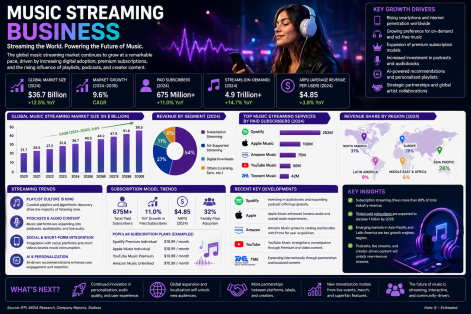
The global music streaming business continues to expand as consumers increasingly embrace on-demand digital audio services across smartphones, smart speakers, connected cars, and other internet-enabled devices. Advances in mobile connectivity, subscription-based services, artificial intelligence (AI), and personalized listening experiences have transformed how audiences discover, consume, and share music.
Streaming platforms have become central to the modern music ecosystem, creating new opportunities for artists, record labels, publishers, advertisers, and technology companies while reshaping traditional music distribution models.
Music Streaming Market Continues to Grow
The music streaming industry now includes a wide range of digital audio services, including:
-
On-demand music streaming
-
Podcast streaming
-
Audiobooks
-
Live audio content
-
Internet radio
-
Artist subscriptions
-
Music videos
-
Personalized playlists
-
Social audio features
-
High-resolution audio streaming
Consumers increasingly expect seamless access to millions of songs across multiple devices with personalized recommendations and offline listening options.
Key Growth Drivers
Subscription-Based Streaming
Paid subscription services remain a major revenue driver for the industry. Premium memberships typically provide ad-free listening, offline downloads, improved audio quality, and access across multiple devices.
Advertising-Supported Platforms
Free, ad-supported streaming services continue to attract millions of listeners while generating revenue through digital advertising, audio commercials, sponsored playlists, and branded content.
Podcast and Audio Content Expansion
Streaming platforms are investing heavily in podcasts, exclusive shows, creator partnerships, and spoken-word content to increase user engagement and diversify revenue streams.
Artificial Intelligence and Personalization
AI-powered recommendation engines analyze listening habits to suggest songs, playlists, albums, and artists based on individual preferences. Personalized experiences help improve user satisfaction and platform retention.
Connected Devices
Growth in smart speakers, smart TVs, wearables, connected vehicles, and voice assistants has expanded access to music streaming services beyond smartphones and computers.
Revenue Models
Music streaming companies generate revenue through multiple business models, including:
-
Monthly subscriptions
-
Digital advertising
-
Family and student plans
-
Premium audio upgrades
-
Podcast sponsorships
-
Brand partnerships
-
Affiliate marketing
-
Live event integrations
-
Merchandise sales
-
Creator monetization programs
Diversified revenue sources help platforms balance subscriber growth with long-term profitability.
Technology Transforming Music Streaming
Streaming providers continue to invest in technologies such as:
-
Artificial intelligence
-
Machine learning
-
Cloud computing
-
Audio compression
-
Recommendation algorithms
-
Voice recognition
-
Data analytics
-
Content delivery networks (CDNs)
-
Digital rights management (DRM)
-
Spatial and immersive audio technologies
These innovations improve streaming quality, content discovery, and operational efficiency while enhancing the listener experience.
Consumer Preferences Continue to Evolve
Modern listeners increasingly value:
-
Personalized playlists
-
Offline listening
-
High-quality audio
-
Cross-device synchronization
-
Podcast integration
-
Regional-language music
-
Smart speaker compatibility
-
Voice-controlled playback
-
Collaborative playlists
-
Affordable subscription options
These preferences are encouraging platforms to continuously enhance their product offerings.
Investment Trends
Investment activity across the music streaming ecosystem includes:
-
Audio streaming platforms
-
Podcast production companies
-
Music technology startups
-
AI-powered recommendation tools
-
Creator monetization platforms
-
Audio advertising technology
-
Digital rights management solutions
-
Music analytics providers
-
Live audio applications
-
Cloud infrastructure services
Strategic partnerships between technology companies, record labels, telecom operators, and media organizations continue to support market expansion.
Challenges Facing the Industry
Despite sustained growth, the sector faces several challenges.
Royalty Payments
Balancing artist compensation, licensing costs, and platform profitability remains a key issue across the music streaming ecosystem.
Intense Competition
Streaming platforms compete through exclusive content, pricing strategies, user experience, podcasts, and additional digital services to attract and retain subscribers.
Licensing Agreements
Negotiating global music rights across different markets requires ongoing collaboration with record labels, publishers, and rights holders.
Subscriber Retention
Platforms must continually improve recommendations, exclusive content, and user experiences to reduce customer churn.
Data Privacy and Security
Protecting user information and ensuring secure digital payment systems remain important priorities for streaming providers.
Future Outlook
The music streaming business is expected to continue growing as digital audio consumption expands globally.
Key trends likely to shape the industry include:
-
Greater adoption of AI-powered music discovery
-
Growth in podcast and audiobook streaming
-
Expansion of regional-language content
-
Higher adoption of high-resolution and spatial audio
-
Integration with connected vehicles and smart devices
-
Growth of creator-focused monetization tools
-
Interactive music experiences
-
Increased use of cloud-based audio technologies
-
Enhanced personalization through predictive analytics
-
Expansion into emerging markets
Companies that combine innovative technology, diverse content libraries, and flexible monetization strategies are expected to remain competitive in the evolving digital audio landscape.
Conclusion
The music streaming business has transformed the global music industry by providing consumers with instant access to vast content libraries while creating new revenue opportunities for artists, creators, and technology companies. Continued investment in subscriptions, podcasts, AI-powered personalization, and connected-device ecosystems is driving innovation across the sector.
Although challenges such as royalty structures, licensing costs, and increasing competition remain, the long-term outlook for the industry is positive. As digital audio consumption continues to grow, music streaming platforms are expected to remain at the center of the global entertainment economy.