Creator Economy Funding Trends: How Investment Is Shaping the Future of Digital Content Businesses
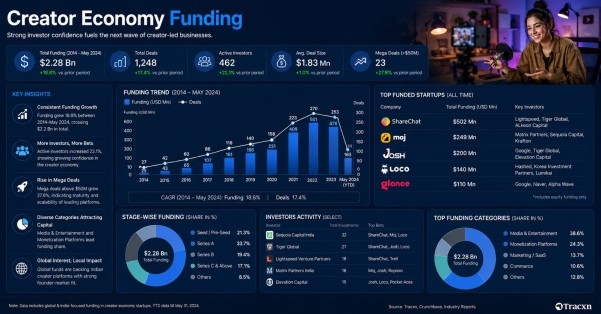
The creator economy continues to attract significant investor interest as digital content creators become influential businesses in their own right. Venture capital firms, private equity investors, technology companies, and media organizations are increasing investments in creator-focused platforms, monetization tools, artificial intelligence (AI), and digital infrastructure to support a rapidly expanding ecosystem.
From video creators and podcasters to educators, gamers, writers, and live streamers, the creator economy has evolved into a major segment of the global digital economy. Companies are investing in technologies that help creators build audiences, generate revenue, and manage their businesses more efficiently.
Creator Economy Continues to Expand
The creator economy includes individuals and businesses that generate revenue by producing digital content across platforms such as:
-
Video streaming
-
Social media
-
Podcasts
-
Newsletters
-
Online courses
-
Live streaming
-
Gaming
-
Digital communities
-
Blogs
-
Photography and design
Alongside creators, the ecosystem includes software providers, marketing platforms, payment companies, agencies, and analytics firms that support content creation and monetization.
Key Funding Trends
Investment in AI-Powered Creator Tools
Investors continue to back startups developing AI-driven solutions for content creation, editing, transcription, translation, image generation, video production, audience analytics, and workflow automation. These tools help creators improve productivity and scale content production.
Growth of Creator Monetization Platforms
Funding is increasingly flowing into platforms that enable creators to earn revenue through:
-
Paid subscriptions
-
Membership communities
-
Digital products
-
Live events
-
Brand partnerships
-
Affiliate marketing
-
Tipping and donations
-
Premium content
These diversified monetization models reduce reliance on a single income source.
Expansion of Creator Commerce
Creator-led commerce continues to attract investment as influencers launch their own brands, merchandise, online stores, and product collaborations. Social commerce and direct-to-consumer (D2C) strategies are becoming an important growth area.
Investment in Marketing Technology
Startups offering influencer marketing platforms, campaign management software, audience measurement, and creator analytics continue to receive funding as brands increase digital advertising budgets.
Creator Financial Services
Financial technology companies are introducing banking, payments, tax management, insurance, financing, and business management solutions tailored specifically for creators and digital entrepreneurs.
Technology Driving the Creator Economy
Investment is accelerating across technologies that support creators, including:
-
Artificial intelligence
-
Cloud-based content management
-
Video editing software
-
Live streaming infrastructure
-
Audience analytics
-
Creator relationship management (CRM)
-
Digital payment systems
-
Copyright protection tools
-
E-commerce integrations
-
Automation platforms
These technologies enable creators to improve efficiency while delivering higher-quality content to audiences.
Why Investors Are Interested
Several factors continue to support investment in the creator economy:
Growing Digital Audiences
Increasing internet access, smartphone adoption, and connected devices are expanding global audiences for digital content.
Diversified Revenue Models
Creators are generating income from multiple channels, including advertising, subscriptions, merchandise, sponsorships, licensing, and digital products.
Brand Marketing Shift
Businesses are allocating larger portions of their marketing budgets toward creator partnerships and influencer-led campaigns.
Scalable Digital Businesses
Creator-focused technology platforms often benefit from subscription-based business models and recurring revenue, making them attractive to investors.
Global Market Expansion
The creator economy continues to grow across emerging markets, creating opportunities for localized platforms, regional-language content, and new monetization services.
Challenges Facing the Sector
Despite strong investment activity, the creator economy faces several challenges.
Platform Dependence
Many creators rely heavily on third-party platforms, making them vulnerable to algorithm changes and policy updates.
Revenue Volatility
Advertising income and sponsorship opportunities can fluctuate with market conditions and audience engagement.
Content Saturation
Growing competition makes it increasingly difficult for creators to attract and retain audiences.
Intellectual Property Protection
Protecting original content from unauthorized use remains an ongoing concern.
Regulatory Developments
Governments continue to introduce regulations related to digital advertising, data privacy, consumer protection, and online content.
Future Outlook
The creator economy is expected to remain a major area of investment over the coming years as digital entrepreneurship expands globally.
Key trends likely to shape future funding include:
-
AI-powered creator assistants
-
Creator-focused financial services
-
Expansion of social commerce
-
Growth of subscription communities
-
Regional-language creator platforms
-
Interactive and live content
-
Creator education technologies
-
Advanced audience analytics
-
Cross-platform publishing tools
-
Business management software for creators
Investors are also expected to focus on startups that help creators build sustainable businesses through diversified revenue streams and stronger audience ownership.
Conclusion
The creator economy has evolved into a dynamic digital business ecosystem supported by growing investment from venture capital firms, technology companies, and media organizations. Funding continues to flow into AI-powered tools, monetization platforms, creator commerce, marketing technology, and financial services that enable creators to scale their businesses.
Although competition, platform dependence, and regulatory changes present challenges, the long-term outlook remains positive. As digital content consumption continues to rise worldwide, the creator economy is expected to remain an important driver of innovation, entrepreneurship, and the broader digital economy.