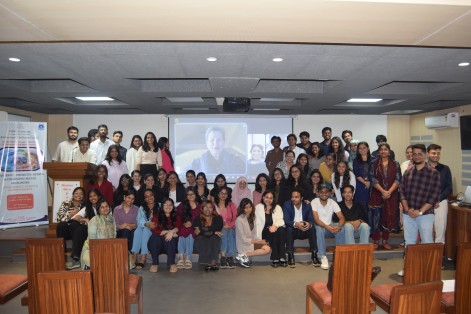
The Department of Mass Media at K.C. College is hosting the 12th International Media Summit on the 13th-14th of February at its Colaba campus. The two-day international academic conference is bringing together academicians, media professionals, researchers, and students to deliberate on how strategic communication is evolving within rapidly changing media ecologies shaped by digital platforms, data-driven systems, artificial intelligence, and algorithmically mediated information flows.
Centred on the theme “Strategic Communication and Changing Media Ecologies: Engagement, Ethics and Empowerment,” the summit foregrounds the growing complexity of contemporary communication environments. In an era marked by hyperconnectivity and participatory cultures, media consumption now spans multiple platforms including television, digital news portals, social media, influencer-driven content, and AI-generated media. These shifts have transformed communication from a largely one-way process to a dynamic, interactive exchange where audiences actively shape narratives. The summit explores how organisations, governments, and communities must continuously adapt their communication strategies while remaining anchored in ethical responsibility, credibility, and social impact.
The event is being held at the Mohini Hiro Punwani Auditorium and is organised under the aegis of HSNC University, a State Public University. Established in June 2020, the university has rapidly developed into a centre for excellence in academics, research, sports, and community service. Its support lends strong institutional and intellectual grounding to the summit, reinforcing its focus on interdisciplinary learning, critical inquiry, and public engagement.
The summit is featuring an eminent line-up of speakers from India and abroad, representing journalism, corporate communication, finance, cinema, academia, consulting, and broadcast media. Among the distinguished speakers is Nancy Snow, Emerita Full Professor of Communications at California State University, Fullerton, who is engaging participants in an interactive hybrid session on strategic narratives, public diplomacy, and global communication ethics. Her session examines how power, persuasion, and participation intersect in contemporary communication environments.
Another key speaker, Aditi Kamath, Assistant Manager at HDFC Mutual Fund, is leading a financial literacy and investor awareness session designed especially for media students. The session highlights the growing relevance of financial communication and responsible information dissemination in an age where audiences increasingly rely on digital platforms for economic and investment-related decisions.
The summit is also hosting Ameya Karve, Structured Finance Reporter with Bloomberg, who is discussing the role of storytelling in narrativising economic policy and financial reporting within a global media ecosystem. His session sheds light on how complex economic issues can be communicated effectively without compromising accuracy or ethical standards.
Additional sessions feature Sanjay Singh, senior journalist and Founder of Future Face Tech New Media, who is speaking on the intersections between traditional journalism and strategic communication in a rapidly digitising news environment. Swapna Pataskar, cinematographer and co-founder of Filmsmiths Productions, is examining the emerging visual ecology shaped by artificial intelligence, hyper-personalisation, and contemporary cinematic practices. Dr. Ruta Vyas, Director of Amadeus Consulting, is analysing strategic communication in organisational leadership, focusing on how communication can create win-win outcomes for institutions and stakeholders.
The programme also includes an interactive session with RJ Jeeturaaj from 98.3 Mirchi, Times Group, who is engaging students on the future of radio, audience engagement, and the implications of artificial intelligence for broadcast media. His session underscores how traditional media formats continue to reinvent themselves in response to technological change and shifting audience expectations.
The conference is structured around seven thematic tracks that reflect the breadth and depth of contemporary communication studies. These include crisis and reputation communication across media; corporate, brand, and organisational communication in a multi-platform world; political and public communication across traditional and digital media; digital, data-driven, and algorithmic communication; ethics and responsibility in changing media ecologies; cross-cultural and global communication across platforms; and the teaching and practice of strategic communication in evolving media environments. Collectively, these tracks address the shift from hierarchical, top-down communication models to more participatory and empowering frameworks that emphasise dialogue, trust, and accountability.
A significant academic component of the summit is the presentation of nearly 15 research papers by students, researchers, and academicians from institutions across the country. These research presentations engage with contemporary issues such as media ethics, misinformation, digital cultures, audience behaviour, crisis communication, and the social impact of media technologies. By providing a platform for evidence-based discussion, the summit encourages rigorous scholarly exchange and supports the development of new theoretical and practical insights in the field of communication.
Approximately 200 participants, including undergraduate and postgraduate students, educators, scholars, and media professionals, are attending the summit. The diversity of participation underline the relevance of the theme and reaffirm the summit’s role as an important platform for dialogue between academia and the media industry. Participants are engaging actively in discussions, interactive sessions, and networking opportunities, fostering meaningful exchange across disciplines and professional domains.
Beyond academic and professional engagement, the summit is also hosting an e-waste collection drive as part of its sustainability initiatives. This effort reflects the Department of Mass Media’s commitment to environmental responsibility and socially conscious institutional practices, reinforcing the idea that communication institutions must lead by example in addressing broader societal and ecological concerns.
With its blend of intellectual rigour, industry insights, student participation, and ethical focus, the 12th International Media Summit at K.C. College is unfolding as a dynamic forum for reflection and dialogue. The summit reaffirms the critical role of strategic communication in navigating complex media environments and shaping responsible, inclusive, and empowered communication practices for the future.