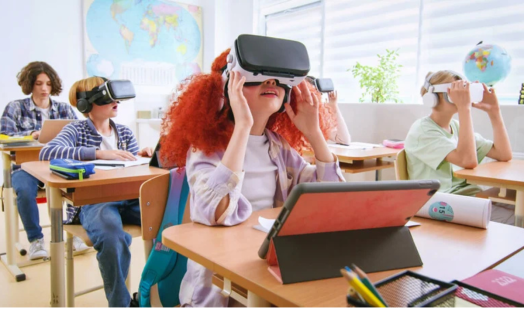
Metaverse schools are emerging as a bold experiment in the education sector, leveraging virtual reality, augmented reality, and blockchain technologies to create immersive learning environments. In 2025, the concept of attending school through a headset or digital avatar is no longer science fiction but a growing reality. These virtual classrooms offer interactive lessons, real-time collaboration, and gamified learning experiences, challenging traditional notions of education and prompting questions about whether they can ever replace physical schools.
Virtual classrooms in the metaverse allow students to engage with content in three-dimensional, interactive ways. Complex subjects such as science, engineering, and history can be explored through immersive simulations, virtual labs, and interactive environments. Students can manipulate molecules, explore historical cities, or experience scientific phenomena firsthand, creating an engaging and memorable learning experience that goes beyond textbooks and video lectures.
Collaboration and social interaction are central to metaverse schools. Avatars represent students in virtual spaces where they can communicate, work on projects, and participate in group activities. Teachers can provide real-time guidance, monitor participation, and tailor lessons to individual needs. This model fosters a sense of community and engagement similar to physical classrooms, while also allowing for flexible learning schedules and remote access.
Gamification and incentives are widely used in virtual classrooms to motivate students. Points, badges, and token-based rewards encourage participation, completion of assignments, and skill development. Blockchain technology ensures secure tracking of achievements and credentials, allowing students to build verifiable portfolios of skills and knowledge that may hold value beyond the metaverse school.
Despite the potential, metaverse schools face significant challenges. High costs of VR/AR hardware, internet connectivity issues, and technical literacy can limit access for some students. Additionally, concerns around screen time, social development, and physical activity remain critical considerations. Education experts emphasize that virtual classrooms should complement rather than fully replace real-world experiences, especially for younger children who benefit from face-to-face social learning.
Metaverse schools are also reshaping traditional educational models by integrating personalized learning. AI-driven tutors, adaptive content, and data analytics enable educators to tailor lessons to each student’s strengths and weaknesses. This level of customization is difficult to achieve in conventional classrooms and could improve learning outcomes while making education more inclusive and accessible.
Private institutions, EdTech startups, and governments are investing heavily in metaverse education infrastructure. Pilot programs in Asia, Europe, and North America are experimenting with hybrid approaches, combining virtual lessons with physical activities, creating flexible models that blend the advantages of both worlds. These initiatives indicate a long-term trend toward integrating immersive digital learning into mainstream education.
In conclusion, metaverse schools represent an evolving frontier in education, offering innovative ways to engage students, deliver personalized content, and simulate real-world experiences. While virtual classrooms are unlikely to completely replace physical schools in 2025, they provide a valuable complement, expanding access, creativity, and interactivity. The future of education will likely be a hybrid model, where metaverse learning coexists with traditional classrooms to provide students with richer, more adaptive learning experiences.