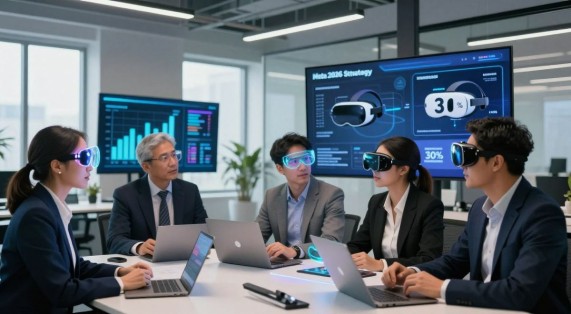
In a significant strategic shift, Meta is planning to reduce its metaverse budget by 30% in 2026.
This move is part of a broader restructuring effort, as the company pivots towards developing AI glasses and wearables.
The decision comes amid ongoing VR layoffs and a reevaluation of Meta's priorities.
Key Takeaways
- Meta plans to reduce its metaverse budget by 30% in 2026.
- The company is shifting its focus towards AI glasses and wearables.
- This strategic pivot is part of a broader restructuring effort.
- Ongoing VR layoffs are part of the company's reevaluation of priorities.
- Meta's 2026 strategy involves a significant change in its technological focus.
Meta's Strategic Pivot: Key Announcements and Timeline
Meta is making a significant shift in its strategic focus, announcing a substantial reduction in its metaverse budget for 2026. This move is part of a broader restructuring effort, aimed at reallocating resources to emerging technologies such as AI glasses and wearables.
The 30% Metaverse Budget Reduction Decision
The decision to cut the metaverse budget by 30% reflects Meta's efforts to optimize its investment portfolio. This reduction is expected to impact various aspects of Meta's metaverse development, including VR projects and related research initiatives. By scaling back its metaverse ambitions, Meta aims to redirect funds towards more promising areas, such as AI-powered wearable technology.
Timeline for Implementation Through 2026
The implementation of the budget reduction will be carried out in phases throughout 2026. Key milestones include the reallocation of resources, scaling back of certain VR projects, and increased investment in AI research and development. By the end of 2026, Meta expects to have fully transitioned its budget allocation, with a significant portion of its resources dedicated to AI glasses and wearable technology.
Meta's strategic pivot is expected to have far-reaching implications for its product lineup and research focus. As the company navigates this transition, it will be closely watched by industry analysts and competitors alike.
Meta cuts metaverse budget 30% for 2026, shifting focus to AI glasses & wearables
In a major strategic shift, Meta has announced a 30% cut in its metaverse budget for the year 2026. This decision marks a significant change in the company's investment priorities, redirecting resources towards AI glasses and wearable technology.
Breakdown of Current vs. Future Budget Allocation
The current budget allocation for Meta's metaverse division is substantial, reflecting the company's initial ambitious plans for virtual reality. However, with the 30% reduction, the future budget will be reallocated to focus on AI-driven products.
| Category | 2025 Allocation | 2026 Allocation |
|---|---|---|
| Metaverse Development | $X million | $Y million (70% of 2025) |
| AI Glasses & Wearables | $A million | $B million (increased) |
As shown in the table, the reduction in metaverse development funding is accompanied by an increase in the budget for AI glasses and wearables, highlighting Meta's strategic pivot.
Financial Implications of the Strategic Shift
The financial implications of this strategic shift are multifaceted. On one hand, reducing the metaverse budget could lead to cost savings. On the other hand, investing in AI glasses and wearables presents new opportunities for revenue generation.
Key financial implications include:
- Potential cost savings from reduced metaverse spending
- Increased expenditure on AI research and development
- New revenue streams from AI-driven wearable technology
https://www.youtube.com/watch?v=ViSADzcVmio
By reallocating its budget, Meta is positioning itself to capitalize on emerging trends in AI and wearable technology, potentially enhancing its financial health in the long term.
The Reality Labs Division: Past Performance and Current Challenges
Meta's foray into virtual reality through Reality Labs has been marked by significant financial losses since 2019. Reality Labs is Meta's division focused on developing virtual and augmented reality technologies, a key component of the company's metaverse strategy. Despite the ambitious goals, the division has struggled to achieve financial sustainability.
Reality Labs' Financial Losses Since 2019
Since its inception, Reality Labs has incurred substantial financial losses. The division's operating losses have been significant, with reports indicating losses of over $10 billion in recent years. These losses are attributed to the high costs of research and development, as well as the challenges in monetizing VR and AR technologies. As Mark Zuckerberg noted, "We're continuing to invest heavily in Reality Labs, and I expect this trend to continue in the near term."
The financial losses are a result of Meta's aggressive investment in Reality Labs to drive innovation in wearable technology and metaverse applications. This investment includes developing advanced VR and AR hardware, as well as creating immersive experiences for consumers and businesses.
Impact on Meta's Overall Financial Health
The financial performance of Reality Labs has a significant impact on Meta's overall financial health. Despite the losses in Reality Labs, Meta's core advertising business remains profitable, helping to offset some of the costs associated with Reality Labs. However, the continued losses in Reality Labs put pressure on Meta's overall profitability.
As Meta navigates these challenges, the company is exploring new avenues for revenue generation, including AI-powered wearable technology. The shift towards AI glasses and other wearable devices is expected to potentially offset some of the losses incurred by Reality Labs. As Meta's CEO emphasized, "Our focus on AI and wearable technology is crucial for our long-term success."
VR Layoffs: Impact on Meta's Workforce and Projects
In a major restructuring move, Meta has implemented significant layoffs in its VR division as it shifts focus to AI-powered technologies. This decision is a direct consequence of Meta's strategic pivot towards AI glasses and wearables, driven by the need to optimize resources and cut costs.

Scale and Scope of the Recent Layoffs
The layoffs at Meta's VR division have been substantial, affecting a large number of employees. The exact number of layoffs has not been disclosed, but sources indicate that it involves several hundred employees across various departments.
The scale of these layoffs underscores the significant changes happening within Meta as it adjusts its focus towards more promising technologies. The VR division, once considered a key area of growth, is now being downsized to accommodate the company's new strategic direction.
Affected Departments and Technologies
The layoffs have impacted various departments within Meta's VR division, including research and development, engineering, and content creation. Technologies related to virtual reality, such as VR hardware and software development, have been particularly affected.
A detailed breakdown of the affected departments and technologies is as follows:
| Department | Technologies Affected | Number of Employees Affected |
|---|---|---|
| Research and Development | VR Hardware and Software | 250 |
| Engineering | VR Content Creation Tools | 150 |
| Content Creation | VR Experiences and Games | 100 |
These changes reflect Meta's efforts to realign its resources with its new strategic priorities, focusing on AI glasses and wearable technology.
Meta's New Focus: AI Glasses and Wearable Technology
The tech giant Meta is now concentrating on developing AI glasses and wearable devices, signaling a new era in consumer technology. This strategic shift is part of Meta's broader effort to diversify its technological portfolio and capitalize on emerging trends in AI and wearable technology.
Ray-Ban Meta Smart Glasses and Next-Generation Products
Meta's foray into AI glasses is highlighted by its collaboration with Ray-Ban on the Ray-Ban Meta Smart Glasses. These glasses represent a significant step forward in wearable technology, combining style with advanced AI capabilities. The next-generation products are expected to build on this success, incorporating enhanced AI features and improved user interfaces.
- Advanced AI-powered cameras
- Enhanced audio features
- Improved battery life
AI Integration in Wearable Technology
The integration of AI in wearable technology is a key aspect of Meta's strategy. By leveraging AI, Meta aims to create devices that are not only functional but also intuitive and personalized. This involves using machine learning algorithms to analyze user data and provide tailored experiences.
Key benefits of AI integration:
- Personalized user experiences
- Enhanced device functionality
- Improved predictive capabilities
Competition with Apple Vision Pro and Other Market Players
Meta's entry into the AI glasses market positions it directly against competitors like Apple Vision Pro. The competition is expected to drive innovation, with companies vying to offer the most advanced and user-friendly devices. Meta's focus on AI integration and wearable technology is likely to be a key differentiator in this competitive landscape.
As the market for AI glasses and wearable technology continues to evolve, Meta's strategic shift is poised to play a significant role in shaping the future of consumer technology.
Zuckerberg's Vision: From Metaverse to AI-Powered Reality
Mark Zuckerberg's vision for Meta is undergoing a significant transformation, shifting focus from the metaverse to AI-powered reality. This change reflects a broader strategy adjustment, aligning with the company's evolving priorities and technological advancements.
Evolution of Meta's CEO Strategy
Under Mark Zuckerberg's leadership, Meta has been exploring various technological frontiers. Initially, the company focused on developing the metaverse, a virtual reality space. However, recent developments indicate a strategic pivot towards AI glasses and wearable technology. This shift is driven by advancements in AI and the growing demand for wearable devices.
The evolution of Meta's strategy is also influenced by the need to balance innovation with financial prudence. As the company allocates resources to new areas, it must ensure that these investments yield tangible returns. This balancing act is crucial in maintaining shareholder confidence while pursuing long-term technological goals.
Balancing Long-term Vision with Shareholder Expectations
Meta's transition to AI-powered reality presents both opportunities and challenges. On one hand, AI wearables offer significant potential for growth and innovation. On the other hand, this shift requires substantial investment, potentially impacting short-term financial performance.
To address these challenges, Mark Zuckerberg must strike a balance between long-term vision and shareholder expectations. This involves communicating the strategic rationale effectively and demonstrating the potential for future growth. By doing so, Meta can maintain investor confidence while driving forward its technological ambitions.
Developer Ecosystem and Content Creation Shifts
Meta's strategic shift towards AI glasses and wearables is poised to significantly impact the developer ecosystem and content creation landscape. As the company reallocates its resources, developers and content creators must adapt to the changing technological landscape.
Impact on VR/AR Developers and Partners
The reduction in metaverse budget by 30% is likely to affect VR/AR developers and partners who have been integral to Meta's metaverse ambitions. Developers will need to pivot their focus towards creating content and applications compatible with AI-driven wearable technology.
This shift may require significant investments in new technologies and skill sets. However, it also presents an opportunity for developers to explore new markets and create innovative experiences.
New Opportunities in AI Wearable App Development
The emphasis on AI glasses and wearables opens up new avenues for developers to create applications that leverage these technologies. Meta's investment in AI is expected to drive growth in this area, with potential applications in various industries, including healthcare, education, and entertainment.
Developers can capitalize on this trend by focusing on creating intuitive, AI-powered experiences that integrate seamlessly with wearable devices.
As the developer ecosystem evolves, Meta's commitment to wearable technology is likely to foster a new wave of innovation, enabling developers to push the boundaries of what is possible with AI-driven wearables.
Implications for Indian Tech Market and Consumers
The Indian tech industry is bracing for impact as Meta cuts its metaverse budget by 30% in 2026, pivoting towards AI glasses and wearables. This strategic shift is likely to have far-reaching implications for the Indian tech market and consumers.

Meta's Investment and Strategy in India
Meta has been actively investing in India, focusing on various initiatives to enhance its presence in the country's tech ecosystem. The company's investment strategy in India has been geared towards promoting innovation and developing new technologies. With the meta budget reduction in metaverse, it's likely that these investments will be redirected towards AI-powered wearables and other emerging technologies.
Potential for AI Glasses Adoption in Indian Market
The adoption of AI glasses in India is expected to gain momentum, driven by increasing consumer interest in wearable technology. Meta's Ray-Ban Meta Smart Glasses have already shown promise in the market. As the company continues to innovate and improve its AI-powered wearables, there's potential for significant growth in this segment. The meta cuts metaverse budget decision could accelerate this growth by allowing Meta to focus more resources on AI glasses and similar products.
Impact on Indian Tech Workforce and Development Centers
The shift in Meta's focus is likely to have implications for the Indian tech workforce, particularly in development centers focused on metaverse technologies. While some roles may be affected, the company's increased focus on AI-powered wearables could create new opportunities in areas such as AI development, software engineering, and wearable technology design. Indian development centers may need to adapt their skill sets to align with Meta's new strategic direction.
Conclusion: Balancing Innovation with Financial Prudence
Meta's strategic shift in its 2026 strategy marks a significant change in its approach to the metaverse, AI glasses, and wearable technology. By cutting its metaverse budget by 30%, the company is pivoting towards more promising areas, such as AI-powered reality.
This move is expected to have a positive impact on Meta's financial health, as it focuses on more innovative and cost-effective technologies. The development of AI glasses and wearable technology is likely to drive growth and open up new opportunities for the company.
As Meta navigates this transition, it will be crucial for the company to balance its innovative endeavors with financial prudence. By doing so, Meta can ensure a successful implementation of its meta 2026 strategy and maintain its competitive edge in the tech industry.