Wheels India Raises About ₹250 Crore Through QIP
Wheels India completed the institutional share sale after opening the qualified institutional placement to eligible investors.
The company raised approximately ₹250 crore through the issuance of equity shares to qualified institutional buyers.
Unlike a secondary-market transaction, money raised through a QIP flows directly to the issuing company, providing additional resources that can be deployed according to the purposes specified for the fundraising.
The transaction also increases the company's outstanding equity capital and consequently results in some dilution for existing shareholders.
SBI Mutual Fund Among Major Investors

SBI Mutual Fund emerged among the prominent institutional participants in the Wheels India QIP.
Participation by a large domestic mutual fund gives Wheels India another institutional shareholder while demonstrating demand for the offering from India's asset-management industry.
Mutual funds assess a range of factors when participating in QIPs, including company fundamentals, growth prospects, valuation and the intended deployment of new capital.
Institutional participation can also broaden the ownership structure of companies that historically have had relatively concentrated shareholding.
Aditya Birla Sun Life AMC Participates in Fundraise
Aditya Birla Sun Life Asset Management Company was also among the institutional investors allotted shares through the QIP.
Its participation alongside SBI Mutual Fund adds to the presence of established domestic asset managers in the transaction.
Qualified institutional placements are designed specifically to enable listed Indian companies to raise equity capital from eligible institutional investors without undertaking a conventional public offering.
For companies, the structure can provide a relatively efficient route to raising sizeable amounts of capital from professional investors.
Fresh Capital Strengthens Wheels India's Balance Sheet
The approximately ₹250 crore raised through the QIP provides Wheels India with additional financial flexibility.
Manufacturing businesses require continuing investment in equipment, product development, capacity, automation and working capital as customer requirements evolve.
Fresh equity can help finance these needs without increasing debt to the same extent as borrowing-based funding.
A stronger equity base can also provide additional flexibility when companies evaluate future expansion opportunities or navigate fluctuations in demand across different automotive and industrial markets.
Wheels India Has a Diversified Manufacturing Business
Wheels India is one of India's established automotive component manufacturers and is part of the TVS Group.
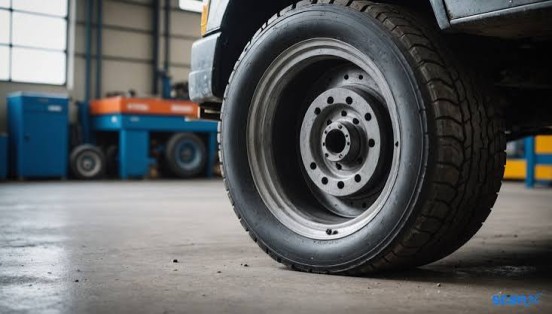
The company manufactures wheels for passenger vehicles, commercial vehicles, tractors and construction equipment, serving both Indian and international customers.
Its product portfolio has expanded beyond traditional steel wheels into areas including aluminium wheels, air-suspension systems and other engineering products.
This diversification provides exposure to several transportation and industrial segments rather than relying exclusively on a single category of vehicles.
Export Business Remains Important to Growth Strategy
International markets represent an important component of Wheels India's operations.
The company supplies products to customers across multiple geographies and has been expanding its presence in export-oriented manufacturing.
Indian automotive-component companies have increasingly pursued global opportunities as international manufacturers diversify sourcing and seek competitive engineering and production capabilities.
For Wheels India, further development of its export business can provide access to larger markets while reducing dependence on demand from India's domestic automotive industry alone.
Auto-Component Industry Continues to Invest in Capacity
India's automotive-component sector is undergoing significant changes as manufacturers prepare for electric vehicles, lightweight materials, changing emissions standards and more sophisticated vehicle platforms.
Suppliers are investing in manufacturing technology, engineering and new products to remain relevant as automakers redesign vehicles.
At the same time, India's position in global automotive supply chains has created opportunities for component manufacturers capable of meeting international quality and cost requirements.
Access to additional equity capital can help companies fund these investments while maintaining financial flexibility.
Why Companies Use Qualified Institutional Placements
A QIP allows a listed company to issue securities directly to qualified institutional buyers under India's capital-market regulations.
Compared with a conventional follow-on public offering, a QIP can often be executed within a shorter timeframe and is targeted specifically at institutional investors.
The mechanism has become a widely used fundraising route for listed Indian companies seeking growth capital, balance-sheet strengthening or funds for other permitted corporate purposes.
For investors, QIPs provide an opportunity to acquire sizeable positions directly from listed companies, generally at pricing determined under applicable regulatory rules.
QIP Expands Wheels India's Institutional Ownership
Beyond the capital raised, the transaction can also alter Wheels India's shareholder mix.
Allotting new shares to mutual funds and other qualified institutional buyers increases institutional participation in the company.
A broader institutional shareholder base can potentially improve market participation and liquidity, although the actual effect depends on trading activity and the longer-term investment decisions of the participating institutions.
The issuance of new shares also means existing shareholders own a slightly smaller percentage of the company unless they acquire additional shares separately.
Focus Shifts to Deployment of QIP Proceeds
With the QIP completed, investor attention is likely to turn toward how Wheels India deploys the approximately ₹250 crore raised.
Capital allocation will be important in determining the longer-term impact of the transaction on the company's manufacturing capabilities, financial position and growth.
Investors will also monitor demand across Wheels India's domestic and export markets, margins and future capital-expenditure requirements.
The participation of established institutional investors gives the company additional capital-market backing as it pursues its next phase of development.
Conclusion
Wheels India's completion of its approximately ₹250 crore qualified institutional placement represents an important capital-raising milestone for the automotive component manufacturer.
The transaction brought established institutional investors, including SBI Mutual Fund and Aditya Birla Sun Life AMC, into the offering while providing Wheels India with fresh equity capital.
The additional resources can strengthen the company's financial flexibility as it develops its manufacturing operations, expands its product portfolio and pursues opportunities in domestic and international markets.
Following completion of the QIP, the focus will now move to capital deployment and the contribution the new funding makes to Wheels India's longer-term growth strategy.