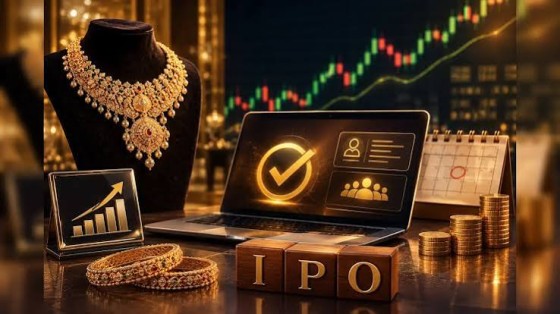
Shankesh Jewellers Shares List at 11% Premium Following ₹367 Crore IPO
Shankesh Jewellers Shares List at 11% Premium Following ₹367 Crore IPO
Shankesh Jewellers Ltd made a positive stock-market debut on August 25, 2026, with its shares listing at ₹103.30 on the NSE, an 11.08% premium over the IPO issue price of ₹93 per share. The stock opened at ₹102.20 on the BSE, representing a 9.89% premium. (Business Standard)
The listing significantly exceeded expectations indicated by the unofficial grey market immediately before the debut, where the stock had been signalling gains of only around 3%.
The stronger-than-anticipated opening comes after the company's ₹367.18 crore IPO was subscribed 2.80 times, reflecting moderate but sufficient investor demand across the three-day offering.
For Shankesh Jewellers, the listing marks its transition from a privately held jewellery manufacturer into a publicly traded company at a time when India's organised jewellery industry continues to expand.
Shankesh Jewellers Opens at ₹103.30 on NSE

The company's shares began trading on the NSE at ₹103.30.
Compared with the final issue price of ₹93, this translated into a listing gain of:
₹10.30 per share, or 11.08%.
On the BSE, Shankesh Jewellers opened at:
₹102.20 per share.
That represented a gain of ₹9.20, or approximately 9.89%, over the IPO price. (Business Standard)
Listing Beats Grey-Market Expectations
The market debut was considerably stronger than indicated by the grey market before listing.
Immediately ahead of the debut, the unofficial grey-market premium was around ₹2–₹2.75 per share, implying expected gains of only about 2%–3%.
Instead, the NSE listing delivered an 11.08% premium.
The difference demonstrates why grey-market premiums should be treated only as informal sentiment indicators rather than reliable forecasts of actual listing prices. (Business Standard)
IPO Was Priced at ₹88–₹93 Per Share
Shankesh Jewellers offered shares through a price band of:
₹88 to ₹93 per equity share.
The issue was ultimately priced at the upper end of the band.
Investors receiving allotments therefore acquired shares at ₹93 before the company's stock-market debut.
The positive listing immediately created paper gains for successful IPO investors.
IPO Size Stood at ₹367.18 Crore
The Shankesh Jewellers public offering was valued at approximately ₹367.18 crore.
It consisted of two components:
a fresh issue of approximately ₹274.18 crore, and
an offer for sale of approximately ₹93 crore by promoters.
The fresh issue involved up to 2.95 crore equity shares, while the offer-for-sale component included up to one crore shares. (Upstox)
Fresh Issue Represents Majority of IPO
Approximately three-quarters of the overall offering represented new capital being raised by Shankesh Jewellers.
This is important because fresh-issue proceeds enter the company.
By comparison, proceeds from the offer for sale go to the shareholders selling their existing shares.
The structure therefore combines growth capital for the company with partial promoter monetisation.
Company Will Use Funds to Reduce Debt
One of the principal objectives of the fresh issue is the repayment or prepayment of existing borrowings.
Reducing debt can lower:
interest expenses,
financial leverage,
and balance-sheet risk.
For a working-capital-intensive business such as jewellery manufacturing, a stronger balance sheet can provide greater flexibility for future expansion. (Upstox)
Working Capital Is Another Major Use of Funds
Shankesh Jewellers also plans to use part of the fresh IPO proceeds for working-capital requirements.
This is particularly important in the jewellery industry.
Manufacturers need significant amounts of capital to finance:
gold inventory,
raw materials,
production,
and customer receivables.
As revenue grows, working-capital requirements can increase substantially.
Gold Jewellery Businesses Are Capital Intensive
Gold has a high value relative to its physical size.
A manufacturer therefore needs considerable financial resources simply to maintain sufficient inventory for production.
If gold prices rise, the same quantity of raw material requires more working capital.
This makes liquidity and financing particularly important for jewellery companies.
Shankesh Jewellers Operates Primarily as B2B Manufacturer
Shankesh Jewellers is a Mumbai-based jewellery company focused primarily on the business-to-business market.
It manufactures handcrafted gold jewellery and supplies products to jewellery retailers and corporate customers.
Its portfolio includes jewellery produced in 22-karat and 18-karat gold.
This business model differs from consumer-facing jewellery retailers that operate extensive branded store networks.
Company Supplies Major Jewellery Businesses
Shankesh Jewellers' customer base includes established jewellery businesses operating across India.
Its clients have included companies such as:
Joyalukkas India,
P N Gadgil & Sons,
Kalyan Jewellers India,
and Novel Jewels.
Serving large jewellery retailers can provide substantial order volumes, although customer concentration can also create commercial risk if a major client reduces purchases.
B2B Model Reduces Retail Infrastructure Requirement
A wholesale jewellery manufacturer does not necessarily need hundreds of expensive consumer-facing stores.
Instead, it can focus resources on:
manufacturing,
design,
quality,
and retailer relationships.
This can create a different cost structure from vertically integrated jewellery chains.
However, B2B companies also have less direct control over the final consumer relationship.
Jewellery Manufacturing Depends on Design Capability
Gold jewellery is not purely a commodity business.
Design matters.
Consumer preferences vary according to:
region,
occasion,
and fashion.
Manufacturers therefore need to continuously develop new collections that retailers believe customers will purchase.
A strong design capability can differentiate one supplier from another.
Handcrafted Jewellery Requires Skilled Workforce
Shankesh Jewellers' focus on handcrafted products makes skilled artisans important to its manufacturing model.
Jewellery production can require specialised capabilities across:
design,
stone setting,
finishing,
and quality control.
Maintaining access to experienced craftspeople can therefore influence production capacity and product quality.
IPO Received 2.80 Times Subscription
The public offering received bids for approximately 7.74 crore shares against 2.76 crore shares available, translating into overall subscription of around 2.80 times by the end of the bidding period. (The Economic Times)
This represented healthy demand, although it was far below the extraordinary oversubscription levels seen in some heavily sought-after Indian IPOs.
The listing performance nevertheless exceeded pre-debut expectations.
Non-Institutional Investors Showed Strongest Demand
Non-institutional investors emerged as the strongest major subscription category.
The NII portion was subscribed approximately 5.68 times.
Retail investors subscribed around 2.42 times their allocated portion.
This indicates meaningful interest from both high-net-worth and individual investors.
Anchor Investors Contributed ₹110 Crore
Before the public issue opened, Shankesh Jewellers raised approximately ₹110.15 crore from anchor investors.
More than 1.18 crore shares were allocated to 14 anchor investors at ₹93 per share.
Anchor participation provides companies with institutional capital before the broader public subscription begins.
It can also establish an early valuation reference for the offering.
Listing Gain Creates Immediate Returns for Allottees
For investors allotted shares at ₹93, the NSE opening at ₹103.30 represented an immediate gain of ₹10.30 per share.
For example, an investor holding 160 shares would have seen the market value of that position rise by approximately:
₹1,648 at the NSE listing price, before taxes and transaction costs.
However, listing gains remain unrealised unless shares are sold.
Post-Listing Trading Matters More Than Opening Price
An IPO's opening trade is only one moment in a company's public-market history.
After listing, the stock begins responding to:
financial results,
gold prices,
business growth,
and overall market sentiment.
The listing premium therefore does not determine the company's long-term investment performance.
Jewellery Industry Is Becoming More Organised
India's jewellery industry has historically included a large number of independent and family-owned businesses.
The market is gradually becoming more organised.
Consumers increasingly purchase jewellery from established brands that provide:
standardised purity,
certification,
and formal invoices.
This transition can create opportunities throughout the organised jewellery supply chain.
Formalisation Benefits B2B Suppliers Too
The benefits are not limited to large retailers.
As organised jewellery chains expand, they need reliable manufacturers capable of supplying:
consistent quality,
large volumes,
and compliant products.
B2B manufacturers such as Shankesh Jewellers can potentially benefit from this trend.
Their growth becomes linked partly to the expansion of organised retail customers.
Gold Prices Remain Major Business Variable
Jewellery companies operate in an industry where the principal raw material can experience significant price volatility.
Higher gold prices can increase:
inventory values,
working-capital requirements,
and consumer purchase costs.
They can also influence demand as consumers adjust the quantity or weight of jewellery they purchase.
Managing gold-price exposure is therefore critical.
Gold Demand Is Linked to Indian Cultural Consumption
India remains one of the world's most important gold markets.
Jewellery demand is supported by:
weddings,
festivals,
and household savings behaviour.
These structural factors create a substantial domestic market.
However, demand can still fluctuate depending on gold prices and economic conditions.
Wedding Season Is Particularly Important
Indian jewellery demand often increases around wedding periods.
Gold remains an important component of wedding purchases across many regions.
Manufacturers and retailers therefore need to plan:
inventory,
designs,
and production
around seasonal demand cycles.
Strong execution during these periods can materially influence annual performance.
Festivals Also Influence Sales
Festivals such as:
Dhanteras,
Diwali,
and Akshaya Tritiya
are traditionally important jewellery-buying occasions.
Retailers frequently introduce new collections and promotional campaigns around these events.
B2B manufacturers need to supply inventory well before consumer demand actually appears in stores.
This creates seasonal working-capital requirements.
Gold Price Volatility Can Affect Consumer Behaviour
When gold prices rise sharply, consumers may respond by:
buying lighter jewellery,
delaying purchases,
or exchanging older jewellery.
Manufacturers therefore need flexible product portfolios.
Design innovation can help maintain affordability even when the underlying metal becomes more expensive.
Working Capital Will Be Critical After IPO
Because Shankesh Jewellers is using part of the IPO proceeds for working capital, investors should monitor how effectively this capital translates into additional revenue.
Working-capital investment creates value when it supports profitable sales growth.
If inventory or receivables increase faster than revenue, cash-flow efficiency can deteriorate.
The company's post-listing financial statements will therefore be important.
Debt Reduction Could Strengthen Profitability
Repaying borrowings can reduce interest costs.
Lower finance expenses can potentially improve net profit even without significant revenue growth.
A stronger balance sheet can also give the company greater flexibility during periods of gold-price volatility.
The magnitude of this benefit will depend on how much debt is ultimately repaid.
Public Listing Can Improve Corporate Visibility
Becoming publicly traded can strengthen Shankesh Jewellers' visibility among:
customers,
banks,
suppliers,
and potential employees.
Listed-company status also creates greater financial transparency.
For a B2B supplier, stronger institutional credibility can potentially support relationships with large organised retailers.
Listing Also Creates Greater Compliance Requirements
Public ownership brings additional responsibilities.
Shankesh Jewellers will now need to comply with exchange and securities-market requirements involving:
financial reporting,
corporate governance,
and material disclosures.
Management performance will be evaluated publicly every quarter.
This represents a significant organisational transition.
Investors Will Track Revenue Growth
After the excitement of listing fades, financial performance becomes the main driver of valuation.
Investors will monitor whether Shankesh Jewellers can expand sales while protecting margins.
Rapid revenue growth without sufficient profitability would not necessarily create shareholder value.
The quality of growth therefore matters as much as its pace.
Profit Margins Can Be Thin in Jewellery Manufacturing
Jewellery businesses often generate high reported revenue because gold itself is expensive.
But revenue size alone can be misleading.
Investors need to examine:
gross margins,
operating margins,
and return on capital.
A company processing large quantities of gold can report substantial sales while retaining a relatively small percentage as profit.
Cash Flow Is Equally Important
Accounting profit does not necessarily translate immediately into cash.
A growing manufacturer may need to hold more inventory and extend credit to customers.
That can consume operating cash.
Investors should therefore compare reported profit with operating cash flow over time.
Customer Concentration Is Worth Monitoring
B2B businesses can depend heavily on a limited number of major customers.
Large jewellery chains may account for meaningful portions of revenue.
This can create bargaining-power risk.
If a significant customer changes suppliers or negotiates lower prices, the manufacturer's performance can be affected.
Diversifying the customer base can reduce this exposure.
Retail Expansion Can Support Supplier Growth
India's large jewellery chains continue expanding into new cities.
Every additional store requires inventory.
This can increase orders for manufacturers supplying those chains.
Shankesh Jewellers therefore has indirect exposure to the organised retail expansion story without necessarily bearing the full cost of building consumer-facing stores.
Competition Remains Significant
India has a deep jewellery-manufacturing ecosystem.
Shankesh Jewellers competes with:
organised manufacturers,
regional suppliers,
and specialised workshops.
Customers can evaluate suppliers based on:
price,
design,
quality,
and reliability.
Maintaining differentiation will therefore be important.
Technology Is Changing Jewellery Manufacturing
Jewellery manufacturing increasingly combines craftsmanship with technology.
Computer-aided design can help develop complex products.
Digital systems can improve:
inventory tracking,
production planning,
and quality control.
Companies capable of combining skilled artisans with modern manufacturing systems may gain efficiency advantages.
Traceability Is Becoming More Important
Consumers and retailers increasingly care about:
purity,
sourcing,
and product authenticity.
Organised manufacturers need strong documentation and quality systems.
Greater traceability can strengthen relationships with large retailers that need to protect their own brand reputations.
IPO Market Remains Active
Shankesh Jewellers' listing comes during an active period for Indian primary markets.
Companies across:
manufacturing,
consumer businesses,
and services
continue tapping public markets for capital.
Investor demand has encouraged more privately held businesses to consider listings.
However, the performance of individual IPOs continues to vary significantly.
Listing Gains Should Not Be Confused With Business Quality
A stock can list at a premium because of short-term supply and demand.
That does not automatically mean the underlying company is attractively valued.
Similarly, a weak listing does not necessarily indicate a poor business.
Long-term performance depends on earnings and cash generation.
Investors therefore need to separate listing-day sentiment from fundamental analysis.
Market Capitalisation Becomes New Benchmark
Following listing, Shankesh Jewellers has a publicly observable market valuation.
That valuation will fluctuate continuously as investors reassess the company's:
growth,
risk,
and profitability.
Management now faces the challenge of delivering financial performance capable of supporting or expanding that valuation.
Promoter Execution Remains Important
The IPO introduces new public shareholders, but management and promoters remain central to the business.
Investors will watch:
capital allocation,
debt management,
customer diversification,
and corporate governance.
Public-market confidence can strengthen when management consistently delivers on commitments made during the IPO process.
Fresh Capital Needs to Generate Returns
The ₹274 crore-plus fresh issue represents a substantial injection of equity capital.
That money needs to produce economic returns.
Debt reduction can lower financial costs.
Working capital can support higher sales.
But ultimately, investors will evaluate whether the capital raises earnings and cash generation sufficiently to justify the dilution created by issuing new shares.
Conclusion
Shankesh Jewellers' market debut delivered a stronger-than-expected outcome for IPO investors, with the stock opening at ₹103.30 on the NSE, 11.08% above the ₹93 issue price, while the BSE listing at ₹102.20 represented a 9.89% premium. (Business Standard)
The performance comfortably exceeded grey-market expectations of only around 2%–3% immediately before listing.
The ₹367.18 crore IPO comprised approximately ₹274.18 crore of fresh shares and a ₹93 crore offer for sale, while overall investor demand reached 2.80 times the shares available. (Upstox)
The company now enters a more important phase.
IPO proceeds will help Shankesh Jewellers reduce borrowings and finance the working capital required by its gold-jewellery manufacturing business.
Its longer-term stock-market performance will depend on whether it can use that stronger balance sheet to expand profitably while managing gold-price volatility, customer concentration and the substantial capital requirements of jewellery manufacturing.
The 11% listing premium provides Shankesh Jewellers with a positive beginning as a listed company, but sustainable shareholder value will ultimately depend on earnings, cash flow and disciplined use of the capital raised through the IPO.