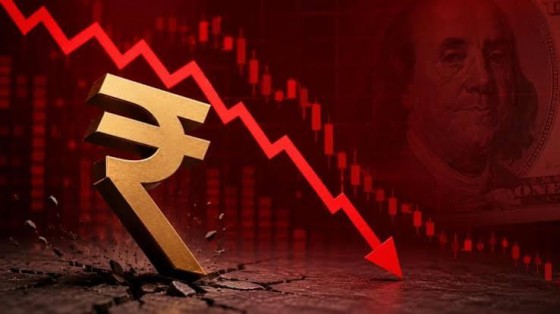
Rupee Falls Beyond ₹96 Against US Dollar
The Indian rupee weakened beyond ₹96 against the US dollar on September 29, touching its lowest level in about two months as a combination of rising crude oil prices, foreign portfolio outflows and elevated US bond yields weighed on the currency.
The rupee fell to around ₹96.15 per dollar during early trading, declining approximately 0.2% from the previous session.
The move represented another important test for the currency after the Reserve Bank of India had repeatedly intervened in foreign-exchange markets to limit sharp volatility.
However, the rupee subsequently recovered much of its intraday decline and ended the session near ₹95.98 per dollar.
Crude Oil Above $100 Adds Pressure

Elevated crude oil prices have emerged as one of the most significant external pressures on the rupee.
Brent crude climbed above $107 per barrel during the session, with prices briefly approaching $108 amid concerns about potential disruptions to Middle East energy supplies.
Higher oil prices have an outsized impact on India because the country imports the majority of the crude oil required by its economy.
When international oil prices increase, Indian refiners and other importers generally require more dollars to pay for energy purchases. Greater demand for dollars in the domestic foreign-exchange market can place downward pressure on the rupee.
Foreign Investors Withdraw $3.7 Billion in September
Foreign portfolio flows have added another source of pressure.
Foreign investors have pulled approximately $3.7 billion from Indian equities and bonds during September as higher oil prices, global uncertainty and rising yields alter investor appetite toward emerging-market assets.
Large portfolio outflows can weaken the rupee because overseas investors typically convert rupee-denominated proceeds into foreign currencies when withdrawing capital from India.
The pressure has been visible across asset classes, with Indian equities and bonds also facing selling during the period.
Higher US Yields Strengthen Dollar Pressure
The international interest-rate environment is also influencing the rupee.
Higher US nominal and real bond yields can make dollar-denominated assets relatively more attractive to global investors.
This can encourage capital to move away from emerging markets and toward US assets, particularly during periods of elevated geopolitical and economic uncertainty.
The combination of expensive crude oil and high US yields is particularly challenging for currencies belonging to major energy-importing economies.
As a result, movements in US Treasury yields and the dollar index remain important indicators for the near-term direction of the rupee.
RBI Intervention Helps Limit Rupee's Decline
The Reserve Bank of India appears to have continued intervening in the foreign-exchange market to limit excessive currency volatility.
Dollar sales by state-run banks have been observed during recent sessions and are widely viewed by market participants as being conducted on behalf of the central bank.
Such intervention increases the supply of dollars in the domestic market and can prevent abrupt depreciation of the rupee.
The impact became visible during September 29 trading. After weakening to approximately ₹96.15, the rupee recovered to close around ₹95.98 against the dollar.
The RBI generally does not seek to maintain a permanently fixed exchange rate but intervenes when necessary to manage excessive volatility and maintain orderly market conditions.
RBI's Forex Operations Also Affect Banking Liquidity
The central bank's foreign-exchange operations are having consequences beyond the currency market.
Recent RBI dollar sales and dollar-rupee swaps have withdrawn substantial rupee liquidity from India's banking system.
Estimates indicate that foreign-exchange operations have absorbed nearly $20 billion worth of excess rupee liquidity.
The RBI has used a combination of spot dollar sales, foreign-exchange swaps, bond sales and variable-rate reverse repo operations as it manages liquidity conditions.
These measures demonstrate how currency management and domestic banking-system liquidity can become increasingly interconnected during periods of significant global volatility.
Why Higher Oil Prices Matter for India's Economy
The impact of expensive crude oil extends beyond the foreign-exchange market.
A sustained increase in energy prices can raise India's import bill and potentially widen the current-account deficit.
Higher fuel and transportation costs can also feed into inflation and increase operating expenses for businesses across industries.
Industries including aviation, logistics, chemicals, paints, plastics and manufacturing can be particularly sensitive to movements in crude oil and related energy products.
Consequently, sustained oil prices above $100 per barrel could influence inflation expectations, corporate profitability and monetary-policy considerations in addition to the rupee.
Indian Equity and Bond Markets Face Pressure
The currency decline has coincided with broader weakness across Indian financial markets.
Rising crude prices have weighed on domestic equities because investors are assessing the potential impact of higher energy costs on economic growth, inflation and corporate earnings.
Foreign selling has further intensified pressure.
The combination of falling equities, portfolio outflows and rupee weakness can sometimes become mutually reinforcing as international investors reduce emerging-market exposure during periods of heightened uncertainty.
Bond markets are similarly sensitive to changes in inflation expectations, liquidity conditions and global yields.
Rupee's Intraday Recovery Shows RBI's Role
Although the rupee breached ₹96 during the session, its recovery before the close illustrates the significance of central-bank intervention and changing oil prices.
Brent crude retreated from its intraday peak after approaching $108 per barrel, helping ease some immediate pressure on the currency.
At the same time, likely RBI dollar sales limited the scale of depreciation.
The rupee consequently ended almost unchanged near ₹95.98 per dollar despite having traded significantly weaker earlier in the day.
This intraday movement highlights why the ₹96 level remains an important area being closely watched by currency traders.
What Could Determine the Rupee's Next Move?
The rupee's near-term direction is likely to depend heavily on global developments.
Crude oil remains one of the most important variables. Any easing of Middle East supply concerns and a sustained decline in oil prices could reduce pressure on India's currency.
Foreign portfolio flows will also remain important. A return of international capital to Indian equities and bonds could improve dollar availability and provide support to the rupee.
Conversely, continued foreign selling combined with elevated oil prices and high US yields could keep the currency under pressure.
The scale and timing of RBI intervention will also influence how rapidly the rupee adjusts to external market developments.
Conclusion
The rupee's move beyond ₹96 per dollar reflects the convergence of several external pressures on India's currency market.
Rising crude oil prices have increased concerns about India's import costs, while approximately $3.7 billion of foreign portfolio outflows during September have added to demand for dollars. Higher US yields have further complicated the environment for emerging-market currencies.
The rupee nevertheless recovered from its two-month intraday low near ₹96.15 to close around ₹95.98, supported by easing crude prices and likely RBI intervention.
With oil markets, foreign capital flows and geopolitical developments remaining volatile, the rupee is likely to remain sensitive to changes in global risk sentiment.