The Global Energy Earthquake of 2026: How the World Is Rewriting Its Fuel Future
When Gulf crude vanished overnight, $150 oil arrived — and with it, the collapse of every assumption the world had built its energy future upon. By NAINA | May 14, 2026 | Energy, Geopolitics, Global Economy
The Ground Shifted in March 2026. Nothing About Energy Will Be the Same Again.
There are moments in the history of commodity markets when a single set of data releases forces a fundamental recalibration of assumptions that had been quietly calcifying for years. The oil market has experienced several such moments — the 1973 Arab oil embargo, the Iranian Revolution of 1979, the Gulf War of 1990, the Russia-Ukraine supply rupture of 2022. Each one was disorienting in its immediate impact and clarifying in its longer-term structural consequences. What the March 2026 supply data revealed was different in character from all of them. It was not a disruption that analysts could contextualise within existing frameworks. It was a disruption that broke the frameworks themselves.
Global oil supply plummeted by 10.1 million barrels per day in March 2026, falling to 97 million barrels per day — the single largest monthly supply contraction ever recorded in the history of the modern petroleum industry. To place that number in its proper context: the 1973 Arab oil embargo removed approximately 4.3 million barrels per day from global markets at its peak. The Iranian Revolution disrupted approximately 5.6 million barrels per day. Russia's post-invasion output decline in 2022 reached a maximum of approximately 2 million barrels per day before adaptation and redirection partially compensated. The March 2026 event was nearly twice as large as any of these precedents and arrived with a speed that left the market, policymakers, and consumers with almost no adjustment window.
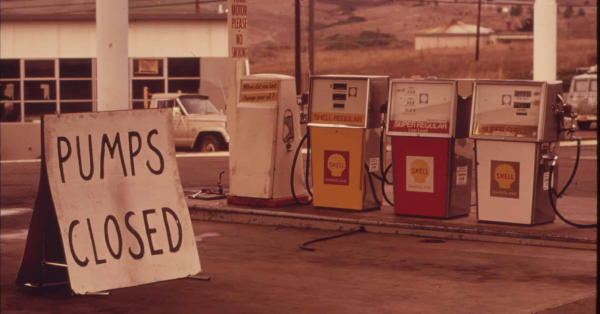
Physical crude oil prices surged to record levels near $150 per barrel within days of the supply data becoming undeniable to the market. Distillate products — diesel and jet fuel — moved even faster than crude, reflecting the acute physical scarcity of the specific crude grades and refinery configurations required to produce them in meaningful quantities. On March 31, 2026, the national average retail gasoline price in the United States reached $4 per gallon, a 30 percent surge from the levels that had prevailed at the start of the month and a political flashpoint that arrived at a moment of already fragile consumer confidence. Cumulative supply losses from Gulf producers had by then exceeded one billion barrels — a figure whose magnitude is difficult to absorb because it represents not just price volatility but the physical depletion of the buffer stocks, pipeline fill, and floating storage that provide the entire global energy system's capacity to absorb shock.
This piece examines what happened, why it happened, what its consequences are across global energy markets, economies, and geopolitics, and what the March 2026 shock means for the longer-term trajectory of a world that was already in the middle of the most consequential energy transition in history.
The Anatomy of the Largest Supply Disruption in Recorded History
Understanding the March 2026 oil supply collapse requires understanding both its immediate triggers and the structural vulnerabilities that made a disruption of this magnitude possible. The immediate trigger was a combination of geopolitical and operational events in the Gulf region that converged within a period of weeks rather than months, creating a compounding effect that no single-scenario risk model had captured with sufficient fidelity. The structural vulnerability was the decade-long underinvestment in upstream oil production capacity that had left the global supply system with less redundancy, less spare production capacity, and less geographic diversification than any honest assessment of energy security requirements would have endorsed.
The Gulf region accounts for approximately 30 percent of global oil production and an even higher percentage of the world's exportable surplus — the production that is available to flow to international markets rather than being consumed domestically. When production from Gulf facilities is disrupted, there is no comparable volume of alternative supply that can be mobilised on any short timeline. OPEC's spare capacity — the idle production capacity that the cartel maintains and can theoretically deploy on short notice to compensate for disruptions elsewhere — had been drawn down more aggressively in the preceding quarters than official communications had fully acknowledged, leaving the effective buffer against a major Gulf disruption considerably thinner than the headline capacity numbers suggested.
The 10.1 million barrel per day supply loss was not the product of a single event but of several overlapping disruptions that individually would have been manageable and collectively constituted an unprecedented emergency. Infrastructure damage to key export terminals removed hundreds of thousands of barrels per day of loading capacity. Production facility shutdowns in multiple Gulf producing nations, driven by a combination of physical damage and operational safety protocols requiring precautionary curtailments, removed additional volumes across different crude grades. Shipping disruptions in critical transit corridors added a logistics layer to the physical production losses, slowing the movement of the crude that was still being produced to the refineries that needed it. The cumulative effect was a supply hole whose size — 10.1 million barrels per day, sustained across the entirety of March — had no historical precedent and no ready solution.
The billion-barrel cumulative loss figure that emerged from the March data has a significance that goes beyond its immediate price implications. Oil markets operate with a global inventory buffer — the stocks held in commercial storage, strategic reserves, and in-transit cargoes — that typically provides the market with several weeks of demand coverage above what is needed for immediate operational requirements. This buffer is what allows temporary supply disruptions to be absorbed without immediate consumer-level impact. When cumulative supply losses reach one billion barrels, they have consumed a significant portion of that buffer at a global level, leaving the market structurally vulnerable to any further disruption and removing the shock absorption capacity that allows prices to remain stable through the normal volatility of a major producing region.
$150 Oil: How the Price Moved, What Drove It, and What It Means
The crude oil price response to the March 2026 supply data was rapid, decisive, and in its specific character revealing of the market's assessment of both the disruption's severity and its likely duration. Brent crude, the global benchmark, moved from approximately $82 per barrel at the start of March to levels approaching $150 per barrel by the month's end — a price trajectory that compressed in weeks what would normally represent years of gradual structural adjustment. The speed of the move was itself informative: it reflected not just algorithmic trading and speculative positioning but genuine physical tightness in the market for prompt crude delivery, confirmed by the extraordinary backwardation in the futures curve that saw near-term delivery prices trade at dramatic premiums to forward contracts.
The $150 level carries a specific psychological and economic significance. It represents the approximate level at which, in previous high-price cycles, demand destruction becomes a meaningful countervailing force — where high prices begin to change the economic calculations of energy-intensive industries, create political pressure for policy interventions including fuel subsidies or price caps, and incentivise the acceleration of fuel-switching and efficiency investments that reduce oil consumption. The 2008 oil price spike, which briefly touched $147 per barrel before the global financial crisis collapsed demand, demonstrated both the level at which demand destruction accelerates and the degree to which that level can be temporarily exceeded in a supply crisis with no short-term relief valve.
What distinguished the 2026 price spike from 2008 in one critical structural respect is the nature of the supply side's ability to respond. In 2008, the high prices eventually incentivised the investment in US shale production that would, over the following decade, add millions of barrels per day of new supply and fundamentally change the global oil market's supply dynamics. In 2026, the investment environment for upstream oil production has been materially altered by the energy transition narrative — by the combination of ESG-driven capital allocation constraints, the growing uncertainty about long-run oil demand, and the regulatory and social licence pressures that have reduced the pipeline of large-scale upstream investment projects. The supply response to $150 oil in 2026 will come, but it will come more slowly and from a narrower set of sources than the 2008 precedent would suggest.
The distillate market's response — with diesel and jet fuel prices rising even faster than crude — reflects the specific refining and logistical realities of the current disruption. Diesel is the fuel that moves the world's goods: trucks, ships, trains, and agricultural equipment all depend on it. Jet fuel keeps the global aviation system operational. When the crude grades most commonly processed into distillates — the medium and heavy sour crudes that characterise much of Gulf production — are removed from the market, the remaining crude supply tends to be lighter and sweeter, less suited to distillate production without specific refinery configuration adaptations that cannot be made quickly. The result is a simultaneous crude supply shock and a distillate supply shock that affects the real economy through two separate but reinforcing channels: higher energy input costs for industry and agriculture, and higher logistics costs for the movement of every physical product in the global supply chain.
The $4 Gallon: American Consumers, Political Pressure, and the Policy Response
The retail gasoline price crossing $4 per gallon in the United States on March 31, 2026 was not merely an economic data point. It was a political event whose consequences moved faster than any supply-side policy response could. American consumers have a sensitivity to gasoline prices that is structurally different from their relationship with most other consumer prices, reflecting the visibility of pump prices — displayed in large numerals on roadside signage across every community in the country — and the inelasticity of gasoline demand for a population whose geography, infrastructure design, and transportation habits make private vehicle use a practical necessity rather than a discretionary choice for the vast majority.
A 30 percent surge in gasoline prices within a single calendar month is, by any historical measure, an extreme consumer shock. The University of Michigan Consumer Sentiment Index, which has a well-documented inverse relationship with gasoline prices, was already tracking below trend in early 2026 as residual inflation anxieties persisted from the 2022 to 2024 cycle. The March gasoline price shock accelerated the sentiment deterioration with a speed that showed up in weekly tracking data before monthly surveys could capture it. Retail discretionary spending softened visibly in the final week of March, as consumers who could not reduce their fuel spending reduced their spending in other categories instead — a mechanical reallocation of household budgets that the Federal Reserve and economic forecasters were incorporating into their second-quarter GDP projections with appropriate urgency.
The White House's activation of Strategic Petroleum Reserve releases was both symbolically important and operationally limited. The SPR, which holds approximately 350 million barrels of crude oil in underground salt caverns in Texas and Louisiana, is designed precisely for supply emergency situations of this character. Previous releases — the coordinated IEA releases of 2011 following the Libyan disruption, and the Biden administration's unprecedented 180 million barrel release in 2022 — had provided meaningful price relief at the margin but had not been deployed against a disruption of anywhere near the current scale. Against a global supply deficit of 10.1 million barrels per day, even an aggressive SPR release rate of 1 to 1.5 million barrels per day provides approximately 10 to 15 percent offset at best, creating some price ceiling pressure but unable to substitute for the physical supply that has been removed from the market.
The political calculus around the SPR release also carried a longer-term energy security dimension that was being actively debated by officials who were simultaneously managing the immediate crisis and thinking about the reserve's strategic purpose. The SPR was partially depleted by the 2022 releases and had not been fully replenished — a strategic vulnerability that the March 2026 crisis exposed at the worst possible moment. Rebuilding SPR inventories to their full capacity of approximately 714 million barrels would require sustained purchasing at above-crisis prices or patient accumulation during a future period of market softness, neither of which was an attractive option in the current environment.
The Inflation Arithmetic: 0.8 Points That Central Banks Cannot Afford
The macroeconomic consequences of the March 2026 oil shock extend well beyond the immediate consumer pain of higher fuel prices. Energy is an input into virtually every economic activity — it powers manufacturing, heats and cools buildings, moves goods and people, and underpins the agricultural production that feeds the global population. When energy prices spike by the magnitude seen in March 2026, the inflationary pass-through into the broader economy is not a question of whether but of how much, how quickly, and through which channels.
The analyst consensus that emerged from the March 2026 data pointed to a sustained oil price above $100 per barrel adding approximately 0.8 percentage points to global consumer price inflation. This figure, while it might appear modest in isolation, has to be understood in the specific context of 2026's macroeconomic environment to appreciate its full significance. Central banks globally had spent four years and extraordinary political capital bringing inflation from multi-decade highs back toward their 2 percent targets. The Federal Reserve had cut rates by approximately 150 basis points from its peak. The ECB and the Bank of England were in various stages of their own easing cycles. The RBI had begun a cautious rate reduction programme. In each case, the implicit assumption underlying the easing trajectory was that the worst of the inflationary episode was behind the global economy and that the path toward the inflation target, while not perfectly smooth, was fundamentally intact.
The 0.8 percentage point addition to global inflation from sustained $100-plus oil prices does not sound catastrophic in isolation. But it arrives on top of services inflation that is still settling, food price pressures that the preceding La Nina weather pattern had already elevated, and in several emerging markets, currency depreciation pressures that a strong dollar energy price environment compounds. For the Federal Reserve, whose last published projections had placed full-year 2026 PCE inflation at approximately 2.3 percent, adding 0.8 points creates an inflation trajectory that breaches the psychological threshold of 3 percent and forces an immediate reassessment of the rate cut path that markets had priced with considerable confidence.
The stagflationary character of an oil supply shock — simultaneously raising inflation and depressing growth — creates the most uncomfortable policy environment a central bank can inhabit. Higher interest rates are the appropriate tool for demand-driven inflation, where the goal is to reduce spending sufficiently to bring price pressures down. They are not only ineffective against supply-side inflation caused by a physical shortage of energy — they cannot create more oil — but they actively worsen the growth side of the stagflationary equation by raising borrowing costs for businesses and consumers already absorbing higher energy costs. The policy response to a supply shock of this character has no clean solution. It requires a judgment about which evil is more dangerous — above-target inflation that risks unanchoring expectations, or tighter financial conditions that deepen the growth damage from the shock itself. Central banks that navigated the 2022 period with their credibility intact are now facing a test of equivalent difficulty from the opposite direction of the growth-inflation tradeoff.
OPEC, Supply Management, and the Fracture Lines Within the Cartel
The March 2026 supply crisis has exposed fracture lines within OPEC Plus that the organisation's carefully managed public communications had previously concealed. The cartel's function is supply management — coordinating production decisions among its members to maintain prices within a range that serves the collective interests of oil-dependent fiscal systems. When a significant portion of Gulf production is disrupted for reasons outside any member's voluntary control, the logic of production management is inverted: the question shifts from how to limit output to prevent oversupply, to how to maximise output from the undisrupted members to compensate for the disruption. The response to this inversion has revealed the limits of OPEC Plus cohesion in ways that have significant long-term implications for the cartel's effectiveness as a price management mechanism.
Saudi Arabia, which has consistently been the most committed advocate of production discipline and the member with the largest spare capacity buffer, moved swiftly to begin deploying additional output from its undisrupted fields in the weeks following the March disruption. But Saudi spare capacity — which had been estimated at approximately 2 million barrels per day in pre-crisis assessments — cannot fully compensate for a 10.1 million barrel per day supply hole, and the pace at which Saudi production can be ramped without compromising reservoir management and long-term field integrity is constrained by physical and technical realities that cannot be overridden by market price incentives alone.
The UAE and Kuwait, whose production facilities were less directly affected by the March disruption, similarly began production increases, but the combined additional output available from undisrupted OPEC members represents a fraction of the supply deficit. The non-OPEC response — from US shale producers, Brazil's deepwater fields, Norway's continental shelf, and other significant producing regions — will take longer to materialise and will be constrained by the upstream investment drought of the preceding years. The inconvenient arithmetic of the March 2026 crisis is that the global oil market's spare production capacity was not sufficient to compensate for a disruption of this magnitude, and rebuilding that capacity to pre-crisis levels will require time and capital that the market does not have in the quantities required to resolve the deficit on any near-term timeline.
The Ripple Effects: How $150 Oil Moves Through the Global Economy
The transmission of a $150 oil price through the global economy does not operate through a single channel but through dozens of interconnected pathways that collectively determine the distribution of winners and losers from the shock. Understanding those pathways is essential for investors, policymakers, and businesses attempting to navigate the post-March 2026 environment.
For oil-importing emerging economies, the current crisis represents a combination of pressures that is more severe than any single component would suggest in isolation. Higher oil import bills widen current account deficits, putting pressure on currencies that were already navigating the headwinds of dollar strength in an elevated US rate environment. Currency depreciation amplifies the domestic inflation impact of higher crude prices, since the cost of imported oil rises in local currency terms by more than the dollar price increase alone. Reduced foreign exchange reserves limit the capacity of central banks to defend currency stability through market intervention. And the fiscal pressure of potentially subsidising fuel prices to protect consumers from the full pass-through of the price spike further strains government balance sheets in economies where fiscal space is already constrained.
India's exposure to the March 2026 shock warrants specific examination. The country imports approximately 85 percent of its crude oil requirements, and the petroleum sector carries significant weight in India's import bill, current account, and domestic price indices. A move from $82 to near $150 per barrel represents a doubling of India's crude import cost on an annualised basis, adding hundreds of billions of dollars to the import bill and creating direct pressure on the rupee, India's fiscal deficit, and domestic inflation. The Indian government's policy response has involved partial absorption of the price increase through excise duty reductions, partial pass-through to consumers through fuel price increases, and intensive diplomatic engagement with Gulf producers and with alternative suppliers including Russia to secure discounted crude access. The domestic political economy of fuel price increases in India, where petrol and diesel prices are a visible and politically sensitive component of household costs, limits the degree to which the government can allow full market pass-through without bearing electoral consequences.
Aviation and shipping are among the sectors most immediately and severely affected by the distillate price spike that accompanied the crude oil surge. Jet fuel costs represent 20 to 30 percent of airline operating costs under normal price conditions and a substantially higher share at current price levels. Airlines have moved quickly to impose fuel surcharges on both passenger and cargo tickets, but the ability to pass through fuel cost increases depends on demand elasticity and competitive dynamics that vary by route and by carrier. Long-haul international routes, where fuel costs are highest as a proportion of total operating cost, have seen fare increases that are already affecting booking patterns in data available through April 2026. The shipping industry, which moves approximately 90 percent of world trade by volume, faces analogous pressures — bunker fuel costs determine a significant component of freight rates, and freight rate increases pass through into the cost of every traded good in the global economy.
The Energy Transition in a $150 Oil World: Accelerant or Distraction?
The March 2026 oil shock has introduced a fascinating and consequential tension into the global energy transition discourse. On one side of the argument, high oil prices are the most powerful market signal available for accelerating the adoption of oil-substituting technologies — electric vehicles, heat pumps, renewable electricity, and energy efficiency investments all become more economically attractive when oil is expensive, and the investment case for clean energy alternatives strengthens with every dollar that crude rises above the threshold of economic competitiveness. On the other side, supply crises of this character typically generate political pressure for responses that are antithetical to the energy transition — expanded domestic fossil fuel production, reduced regulatory barriers to upstream development, and government interventions that prioritise short-term energy affordability over long-term decarbonisation commitments.
The historical record on this tension is mixed. The 1973 oil shock produced both a significant acceleration of energy efficiency investment and nuclear power development in OECD countries and a political backlash against perceived energy vulnerability that shaped decades of energy security policy in ways that sometimes worked against rather than toward decarbonisation. The 2022 Russia-Ukraine energy shock in Europe similarly produced both an acceleration of renewable energy deployment — the REPowerEU programme explicitly targeted faster renewable buildout as an energy security measure as much as a climate measure — and a short-term return to coal-fired generation and the extension of nuclear power plant lifetimes that were inconsistent with the EU's stated decarbonisation timeline.
The March 2026 shock is likely to produce both dynamics simultaneously, with their relative balance determined by the political economy of individual countries rather than by any global coordination mechanism. In India, the immediate pressure is for energy security through diversification — accelerating domestic coal production to reduce import dependence, fast-tracking renewable energy deployment to reduce oil and gas import bills, and deepening the strategic oil reserve to reduce vulnerability to future Gulf disruptions. In the United States, the political pressure from $4 gasoline has already generated bipartisan calls for expanded domestic oil and gas production that sit awkwardly alongside the clean energy investment agenda of the Inflation Reduction Act. In Europe, the shock has reinforced the strategic case for energy independence through renewables while simultaneously creating short-term demand for LNG supply security that requires maintaining fossil fuel infrastructure investments that the EU's climate framework would otherwise phase out.
What the Analysts Are Saying: The $100-Plus Baseline and Its Implications
The forward price assessments that major energy research institutions published in the weeks following the March 2026 data represent the market's best current estimate of how long the elevated price environment will persist and what structural consequences it will have for the global economy. The emerging consensus among analysts at Goldman Sachs, Wood Mackenzie, S&P Global Commodity Insights, and the IEA is that oil prices above $100 per barrel are likely to be sustained for at least two to three quarters from the peak of the disruption, with the specific trajectory depending on the pace of Gulf production restoration, the aggressiveness of OPEC Plus spare capacity deployment, and the degree to which demand destruction at $150 prices self-corrects the market before supply-side responses materialise.
Goldman Sachs's commodity research team, whose energy price forecasting has been among the most accurate over multiple cycles, revised its Brent crude price forecast upward sharply following the March data, projecting a Q2 2026 average of $120 to $130 per barrel and a gradual moderation toward $100 to $110 per barrel by Q3 2026 as supply partially recovers and demand destruction accelerates. The bank's economic research team simultaneously revised its global GDP growth forecast downward by approximately 0.4 percentage points for full-year 2026 and its inflation forecast upward by approximately 0.6 to 0.8 percentage points — broadly consistent with the consensus 0.8 point inflation addition that the analyst community has coalesced around. These revisions are not merely technical adjustments. They represent a fundamental reassessment of the economic outlook for 2026 that will cascade through corporate earnings expectations, equity market valuations, and central bank rate path pricing over the coming months.
The longer-term price signal that the March 2026 shock is sending to the energy investment community may ultimately be more consequential than the immediate price level. If the sustained period of $100-plus oil prices holds for two to three quarters, it will represent the most powerful investment signal for upstream oil production capacity expansion that the market has generated since the 2011 to 2014 period. Whether that signal translates into the investment response that would traditionally be expected depends on whether the capital allocation constraints created by the energy transition narrative — ESG-driven investment mandates, uncertainty about long-run demand, regulatory risk — are overridden by the financial returns available at $100-plus oil. The evidence from the first weeks after the March shock suggests a more cautious investment response than previous high-price cycles generated, reflecting the structural change in how long-duration oil and gas investment is evaluated in the current capital market environment.
India's Strategic Response: Energy Diplomacy in a Crisis
India's response to the March 2026 oil shock has been a study in the pragmatic energy diplomacy that has characterised its approach to the global energy system across the post-Ukraine disruption period. The country's multi-alignment strategy — maintaining procurement relationships with Gulf producers, Russia, the United States, and other suppliers simultaneously — has provided a degree of supply diversification that purely single-source dependent importers cannot access, but it has not insulated India from the price impact of a disruption of this scale given the global nature of crude oil pricing.
The immediate response involved intensive government-to-government engagement with Gulf producing nations to accelerate delivery commitments under existing contracts and to explore the availability of incremental volumes from undisrupted producers. Petroleum Minister engagement with Saudi Aramco, ADNOC, and Kuwait Petroleum Corporation in the days following the March disruption sought to secure priority access to available supply volumes in a market where every major importing nation was simultaneously competing for the same limited availability. The outcomes of these engagements were partial — India secured some incremental Gulf volumes but at prices reflecting the prevailing market crisis, without the discounts that diplomatic relationships can sometimes generate in lower-stress market conditions.
The Russian crude discount that has been a significant feature of India's import strategy since 2022 was partially preserved through the crisis, but its value was compressed by the extraordinary surge in global benchmark prices. At $82 per barrel, a $15 to $20 per barrel discount on Russian crude represented approximately 18 to 25 percent cost savings. At $150 per barrel, even a $30 per barrel discount represents 20 percent savings, but the absolute cost of each barrel — even at a discount — has nearly doubled. The relief that Russian crude access provides to India's energy import bill is therefore meaningful in proportional terms but insufficient to offset the scale of the price increase in absolute terms.
The government's longer-term strategic response has incorporated the March 2026 shock as a forcing function for several energy security investments that had been planned but not urgently prioritised. Strategic petroleum reserve expansion — India currently holds approximately 5.33 million metric tonnes of strategic crude reserves at three underground facilities in Vishakhapatnam, Mangaluru, and Padur — is being accelerated with proposals to expand reserve capacity to 12 to 15 million metric tonnes. Domestic oil production enhancement, including the accelerated development of the ONGC and OIL fields that have been operating below their technical production potential, has moved up the policy priority ladder in ways that the lower oil price environment of the preceding years had not supported. And the acceleration of the domestic renewable energy deployment programme, explicitly framed as an energy security measure rather than solely a climate initiative, has received fresh policy urgency as the geopolitical and economic costs of oil dependence have been viscerally demonstrated.
The Market That Emerges: A New Energy Order Being Written in Real Time
The March 2026 oil shock is not just a crisis to be managed. It is a structural event that will accelerate the reorganisation of the global energy order in ways that were already underway but that have been compressed by the disruption into a shorter and more intense transition period. The billion-barrel supply loss from Gulf producers, the $150 crude price, the 30 percent surge in US gasoline prices, and the 0.8 percentage point inflation addition are not just data points. They are the empirical evidence base for a new energy security doctrine that every major importing nation is now writing with a urgency that the previous decade's relatively comfortable oil price environment did not generate.
The new doctrine, visible in the emergency policy responses of governments from Washington to New Delhi to Tokyo, has three consistent elements. First, energy supply diversification — geographic, modal, and fuel type — is being elevated from a desirable policy objective to an essential security requirement that justifies the public investment and regulatory intervention that its full realisation demands. Second, domestic energy production capacity, including both fossil fuel production that can be deployed quickly and renewable energy capacity that reduces long-run import dependence, is being treated as a strategic asset whose value extends beyond its direct economic returns to include the security premium of reduced external vulnerability. Third, strategic reserves and emergency supply cooperation frameworks are being reinforced with a seriousness that peacetime energy policy rarely generates — because the March 2026 experience has demonstrated, with a definitiveness that no scenario analysis could have provided, what it actually costs when the buffer runs out.
The energy transition does not stop because of the March 2026 shock. If anything, it accelerates in the specific dimension of reducing oil dependence for applications where substitution is already economically viable or nearly so. But it also becomes more complicated — more politically contested, more unevenly paced across countries with different energy endowments and fiscal capacities, and more influenced by security considerations that pure climate economics does not capture. The world that is rewriting its fuel future in 2026 is doing so under conditions of genuine crisis, with urgency that was previously missing and with a clarity about the costs of energy vulnerability that no amount of scenario modelling could have provided as effectively as the experience of living through it.
History Will Record March 2026 as the Month the Energy World Changed
The largest oil supply disruption in history, crude prices near $150 per barrel, US pump prices crossing $4 per gallon in a single month, cumulative Gulf supply losses exceeding a billion barrels, and the prospect of 0.8 percentage points of additional global inflation landing on economies still recovering from the previous inflationary cycle — taken individually, any one of these developments would constitute a significant energy market event. Taken together, they constitute an energy earthquake whose aftershocks will reshape geopolitical relationships, investment strategies, industrial competitive positions, and the pace of the clean energy transition for years.
The question that this analysis cannot definitively answer — because it depends on decisions not yet made and events not yet determined — is whether the March 2026 shock will prove to be the catalyst for a genuinely accelerated energy transition, as high oil prices increase the economic attractiveness of alternatives and the security costs of dependence become undeniably visible, or whether it will generate a reactive return to fossil fuel investment that extends oil's central role in the global energy system beyond the timelines that transition scenarios project. The historical evidence suggests both dynamics will occur, with their relative weight determined by the policy choices made in the months and years immediately following the shock.
What history will record about March 2026 is that it was the month the world stopped debating the energy transition in the abstract and began experiencing its necessity in the most concrete and economically immediate terms available. The fuel future is being rewritten, not in conference rooms or climate summits, but in the scramble for available crude cargoes, in the policy emergency sessions of governments facing $4 gasoline and 0.8 points of inflation they cannot afford, and in the investment calculations of companies that suddenly have both the incentive and the urgency to build the energy infrastructure that the transition requires. The earthquake has happened. What the world builds on the new ground will define the energy order for a generation.