Karur Stampede Tragedy During Vijay’s Rally
A devastating crowd crush unfolded on 27 September 2025 during a political rally in Karur, Tamil Nadu, organized by actor-turned-politician Vijay and his party Tamilaga Vettri Kazhagam (TVK). Reports now indicate that at least 41 people have died and dozens more have been seriously injured in what has become one of the most tragic political rally disasters in recent memory.
What Happened: Timeline & Contributing Factors
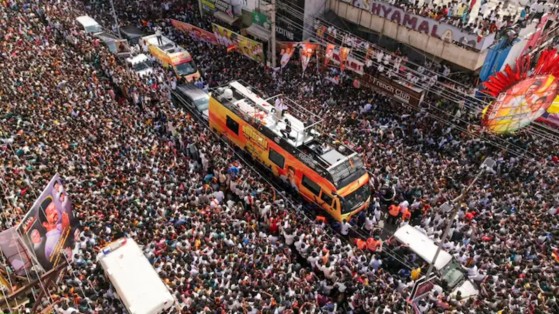
The rally was held in Veluswamypuram, along the Karur–Erode highway, and began drawing large crowds well ahead of the scheduled time. The venue’s capacity was reportedly limited; permission was granted for around 10,000 attendees, but eyewitnesses and reports suggest that the actual numbers far exceeded that through the day.
Vijay’s arrival was delayed by several hours, during which time tension built among the waiting crowds. In the oppressive heat, many people reportedly fainted or became disoriented, creating unstable zones in the crowd. When his campaign vehicle finally drew near, portions of the crowd surged toward it—many seeking water, space, or a better view—and pressure points formed near barricades, a generator shed, and broadcast equipment. The situation spiraled rapidly: individuals were knocked down, pinned, and trampled in waves.
Casualties & Injuries
Among the dead are women, men, and children. Estimates of injuries vary, with over 80 people believed to have been hurt in the crush. Some of the injured are in critical condition, and hospitals in Karur and neighboring districts are working under pressure to treat them.
Immediate Response & Rescue
Emergency services were deployed swiftly. Medical teams, ambulances, and disaster response units arrived to ferry the injured to hospitals. The Karur district administration established helplines and coordinated with neighboring districts to procure manpower and resources. State leadership also intervened: Tamil Nadu Chief Minister M.K. Stalin visited Karur to oversee relief and announced compensation for the bereaved.
Legal cases have been registered against senior TVK leaders for negligence, crowd mismanagement, and exceeding permitted crowd size. The party has petitioned the Madras High Court seeking an independent or CBI investigation into the incident, alleging misgovernance and conspiratorial elements.
Accountability, Criticism & Politics
In the aftermath, criticism has mounted over the planning, logistics, and safety measures—or lack thereof. Some observers argue that the tragedy was foreseeable: internal documents and interviews suggest that Vijay’s team was aware of “fan frenzy” risks well before his political plunge but may not have translated them into adequate crowd protocols.
Opposition figures have blamed both the party and security forces for lapses. AIADMK leader Edappadi K. Palaniswami contended inadequate police protection could have prevented the stampede. Posters demanding Vijay’s arrest have gone up in Karur, reflecting public anger and grief.
In response, Vijay has expressed deep sorrow, called the incident “unbearable,” pledged support to families, and asked for an impartial probe. He has also alleged political conspiracy behind the tragedy.
Lessons & the Way Forward
The Karur tragedy underscores an urgent need for stronger crowd safety regulations in large public events, especially politically charged rallies. Some key takeaways:
-
Accurate capacity planning: Authorities must enforce strict limits, with buffer zones and emergency exits.
-
Real-time monitoring: Crowd density sensors, CCTV, and controlled ingress/egress pathways are essential.
-
Contingency protocols: Delays, heat, dehydration, and surges must be anticipated.
-
Trained marshals & coordination: Event organizers must ensure collaboration with police, medical teams, and local bodies.
-
Transparent accountability: Investigations must be impartial, with punishments for negligence.
Conclusion
The Karur stampede is a heartbreaking reminder of how quickly public enthusiasm can turn fatal when infrastructure, planning, and safety protocols fail. Over 40 lives were lost, countless families devastated, and a political campaign turned into a crisis. As investigations unfold and grief lingers, the lessons from Karur must guide how India stages public events in future—with care, foresight, and respect for human life.