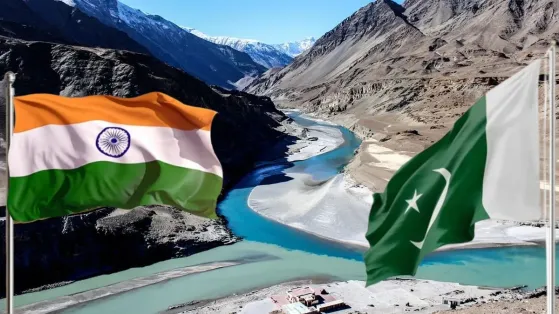
India Halts the Flow: The Suspension of the Indus Waters Treaty and Its Explosive Impact
In an unprecedented geopolitical move, India has officially suspended the Indus Waters Treaty, a landmark agreement signed in 1960 that has governed the distribution of the Indus river system’s waters between India and Pakistan for over six decades. This decision marks a significant shift in regional diplomacy and could have far-reaching consequences not only for bilateral relations but also for millions who depend on these waters daily.
A Treaty Born From Conflict
Brokered by the World Bank in the aftermath of partition, the Indus Waters Treaty was hailed as one of the most successful examples of water-sharing diplomacy. Under its terms, India was allocated the waters of the eastern rivers — Ravi, Beas, and Sutlej — while Pakistan received the waters of the western rivers — Indus, Jhelum, and Chenab. India was required to provide Pakistan with vital hydrological data for river flow forecasting, essential for planning irrigation and hydropower.
The Turning Point
India’s suspension of the treaty comes amidst growing tensions between the two nuclear-armed neighbors. Officials in New Delhi argue that Pakistan’s continued sponsorship of cross-border terrorism and its stance on Kashmir make the treaty unsustainable. The current Indian administration has chosen to freeze cooperation and withhold the crucial water flow data that Pakistan depends on to manage its agriculture and hydropower operations.
The Silent Threat to Pakistan
This suspension has left Pakistan vulnerable. The country’s agriculture sector, which heavily relies on timely water flow data to manage irrigation cycles, faces uncertainty and potential crop failure. Furthermore, hydropower projects on the Jhelum and Chenab rivers could stall, worsening Pakistan's already fragile energy situation. Analysts warn that a water crisis could compound the economic hardships already plaguing the nation.
International Concern Grows
The World Bank, which served as a guarantor of the treaty, has yet to issue a formal statement. However, global diplomatic circles are abuzz, as the suspension of a water treaty in one of the most volatile regions of the world raises fears of escalating hostilities. The international community is now watching closely, concerned that this could set a dangerous precedent for other transboundary water conflicts around the world.
India’s Strategic Message
For India, this isn’t just about water — it’s about leverage. By invoking its rights to modify cooperation under the treaty, India is sending a clear diplomatic message: regional peace cannot be expected while terrorism and political instability continue unchecked. In the eyes of Indian strategists, water — once a symbol of cooperation — is now a tool of statecraft.
A Crisis or an Opportunity?
While tensions are high, some analysts believe this could serve as a catalyst for renegotiation. Could the suspension bring both countries back to the table for a modernized water-sharing arrangement that reflects today’s political and climate realities? Or will it push the region further toward a confrontation that no one can afford?
Conclusion
The suspension of the Indus Waters Treaty is a turning point in South Asian geopolitics. What was once a symbol of unlikely cooperation in a divided region now stands frozen — its future uncertain, its implications profound. With rivers as the lifeblood of civilization, the next few weeks could determine whether this crisis becomes a flood of conflict or a channel for new dialogue.