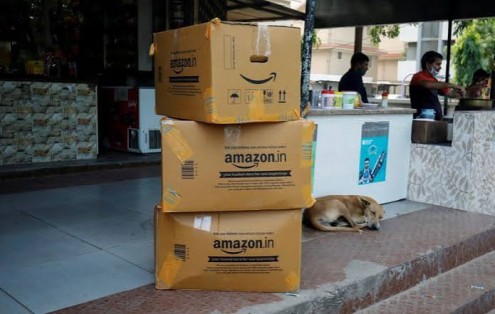
India Eases Foreign Investment Rules for E-Commerce Exports, Opening New Route for Amazon
India has eased foreign investment rules governing e-commerce exports, creating a new pathway for global companies, including Amazon, to expand export-oriented operations from the country. The policy change is expected to strengthen India's position as a global sourcing and export hub while encouraging greater investment in logistics, warehousing, technology, and supply chain infrastructure.
The move aligns with the government's broader objective of promoting exports, supporting domestic manufacturers and MSMEs, and integrating Indian businesses into global value chains.
New Policy Framework for Export-Focused E-Commerce

The revised foreign investment framework provides greater operational flexibility for companies engaged in export-oriented e-commerce activities.
The updated approach aims to:
- Promote cross-border e-commerce exports
- Encourage foreign investment
- Support Indian manufacturers and MSMEs
- Expand export opportunities for sellers
- Strengthen logistics infrastructure
- Improve supply chain efficiency
- Enhance India's global trade competitiveness
The changes are expected to benefit both international e-commerce companies and domestic exporters.
Opportunities for Global E-Commerce Companies
The revised rules open additional opportunities for multinational companies to expand export operations from India.
Potential benefits include:
- Larger export sourcing networks
- Improved supply chain integration
- Expansion of fulfilment infrastructure
- Increased investment in technology
- Better support for Indian sellers
- Greater access to international customers
- Improved export efficiency
Companies with established logistics and digital commerce capabilities are expected to evaluate expansion opportunities under the revised framework.
Benefits for Indian Businesses and MSMEs
The policy is designed to increase participation by Indian businesses in global e-commerce.
Key advantages include:
- Easier access to international markets
- Higher export opportunities
- Greater product visibility
- Improved digital commerce capabilities
- Better logistics support
- Increased demand for locally manufactured products
- Stronger integration into global supply chains
MSMEs could particularly benefit from broader market access through international e-commerce platforms.
Impact on the E-Commerce Ecosystem
The revised investment rules are expected to encourage broader development across India's digital commerce ecosystem.
Areas likely to benefit include:
- Warehousing
- Fulfilment centres
- Logistics services
- Digital payment systems
- Export technology platforms
- Supply chain management
- Cross-border trade services
Additional investment could also generate employment opportunities across logistics, technology, manufacturing, and retail support services.
Challenges and Considerations
Despite the positive outlook, businesses will continue to monitor several factors.
These include:
- Regulatory compliance
- Customs procedures
- Global trade conditions
- Currency fluctuations
- International competition
- Export documentation
- Supply chain costs
Companies will need to align their strategies with evolving trade regulations while maintaining operational efficiency.
What Businesses and Investors Should Watch
Industry participants are expected to monitor:
- Implementation of the revised FDI framework
- Growth in e-commerce exports
- Foreign investment announcements
- Expansion of fulfilment infrastructure
- Participation by Indian MSMEs
- Cross-border trade volumes
- Logistics sector investment
- Global demand for Indian products
These developments will indicate how effectively the policy supports India's export ambitions.
Outlook
The easing of foreign investment rules for e-commerce exports is expected to strengthen India's position as a preferred global sourcing destination. Continued policy support, expanding digital infrastructure, and growing participation from domestic manufacturers and international platforms are likely to accelerate export growth and attract additional long-term investment into the country's e-commerce ecosystem.
Conclusion
India's decision to ease foreign investment rules for e-commerce exports marks an important step in promoting export-led growth. By providing greater flexibility for international companies and creating new opportunities for Indian businesses, the policy has the potential to strengthen global supply chains, expand export capacity, and reinforce India's role in international digital commerce.