By Naina, 28th May 2026
The aerospace manufacturing and private space industries have entered a period of structural transformation that has no precedent in the history of either sector. For most of the modern era, aerospace manufacturing operated as one of the most stable and predictable categories of advanced industrial activity, dominated by a small number of established manufacturers operating within well-understood competitive dynamics, long product cycles and the broader operational architecture that had been progressively refined since the dawn of the jet age. The space industry, for its part, operated almost entirely as a government-funded activity built around national-security applications, scientific exploration and a limited set of commercial telecommunications use cases. Both descriptions have become progressively inadequate to capture the operational reality of 2026. The global aerospace market has reached approximately 356.93 billion US dollars in 2026, growing from 340.04 billion in 2025 at a compound annual rate of 5 percent. Commercial aviation backlogs now exceed 14,000 aircraft, equivalent to roughly a decade of production at current rates. The global space industry is on track to conduct over 250 orbital launches in 2026, building on the record-breaking cadence of 2024 and 2025, with the broader space economy continuing its rapid expansion toward the multi-trillion-dollar scale that multiple research firms project for the next decade.
What sits beneath these aggregate figures is a deeper transformation in how aircraft and spacecraft are designed, manufactured, financed and operated. The combination of unprecedented demand for commercial aircraft, persistent supply-chain constraints limiting production output, the dramatic collapse in the cost of access to space, the rise of credible private space companies across multiple geographies, the integration of advanced manufacturing technologies into both aerospace and space production and the broader strategic significance of aerospace and space capability to national economic and security positioning has produced a sector whose trajectory through the next decade will reshape both commercial aviation and the broader human relationship with space.
The decisions being made now, in the operational planning of major aerospace manufacturers, in the strategic positioning of private space companies, in the technology investments transforming both sectors and in the broader policy frameworks supporting aerospace and space development globally, will define the architecture of these industries for the next generation.
The Commercial Aerospace Paradox
The defining characteristic of commercial aerospace in 2026 is the paradox of strong markets and uncertain production. Global demand for air travel remains robust. The International Air Transport Association projects that global passenger traffic will reach a record 5.2 billion passengers in 2026, growing approximately 4.4 to 4.9 percent from 2025. Airlines continue to order jetliners at extraordinary rates. By the end of 2025, Boeing collected 1,167 gross orders, led by 591 orders for the 737 and a rebound in demand for the widebody 787 with 381 orders. This past year, for the first time since 2018, Boeing surpassed Airbus, which collected 1,000 gross orders, with A320neo family single-aisle jets accounting for 656 orders followed by 193 twin-aisle A350 orders. The combined Airbus and Boeing backlog has reached approximately 15,461 commercial aircraft.
The production side of the equation has been considerably more challenging. Overall deliveries expanded in 2025 by double digits in value, but much of this was driven by Boeing's recovery from its 53-day strike in 2024, although the company also successfully increased its monthly output rates. The persistent supply-chain constraints, the workforce challenges and the broader operational difficulties of scaling aircraft production have produced a situation in which demand dramatically outstrips supply. Airlines face delays that could cost the industry approximately 11 billion US dollars in 2025 alone, driven by production bottlenecks, supply-chain fragility and workforce constraints. The narrowbody segment dominates the projections, with narrowbody aircraft representing approximately 75 percent of the projected 21,000-plus global deliveries through 2035.
The competitive dynamics between Boeing and Airbus have remained the central feature of the commercial aerospace landscape. Boeing's recovery through 2025, including its return to order leadership and its plans to expand 787 Dreamliner production in 2026 before further expansion in 2027, has reflected the broader stabilisation of a company that had absorbed significant operational and reputational challenges through the preceding years. The acquisition of Spirit AeroSystems, intended to strengthen Boeing's market position by incorporating Spirit's expertise in fuselage and wing structures, streamlining the supply chain and improving production quality, has illustrated the broader vertical-integration strategy that Boeing has pursued. Airbus, meanwhile, revised its 2026 A220 production target downward from 14 aircraft per month to 12, reflecting a softer order environment and program backlog realities, even as the company maintained its broader delivery leadership.
The broader aftermarket and maintenance, repair and overhaul segment has emerged as one of the most consequential dimensions of the commercial aerospace recovery. Global commercial aerospace is on track for a 12 percent revenue increase, positioning the industry to enter 2026 on a strong footing. The projected 25 percent rise in aircraft deliveries and sustained aftermarket demand have powered this rebound. Executives expect maintenance, repair and overhaul demand to mount over the next two years, with spending projected to increase 14 percent year-over-year. The Aviation Week Commercial Fleet and MRO Forecast projects that more than 42,000 commercial engines will require servicing over the broader forecast period, reflecting the enormous installed base of aircraft requiring ongoing maintenance.
The Manufacturing Technology Transformation
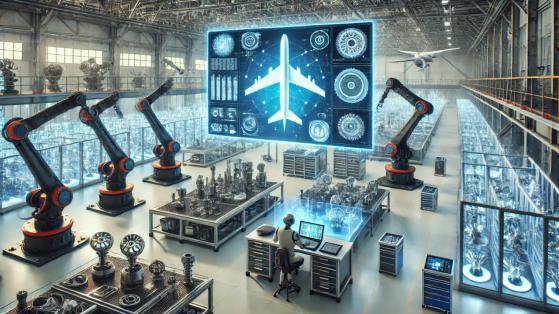
The aerospace manufacturing sector has been undergoing a significant technology transformation that has progressively reshaped how aircraft are designed and built. The integration of digital twins, additive manufacturing, advanced composites, artificial intelligence-driven design optimisation, robotic automation and the broader range of Industry 4.0 technologies into aerospace production has produced operational capability that earlier generations of aircraft manufacturing could not approach. The combination of these technologies has begun to address the persistent production challenges that have constrained aerospace output, even as the full benefits remain to be realised across the broader industry.
The additive manufacturing dimension has been particularly consequential. The application of 3D printing to aerospace component production has progressively expanded from prototyping into production of flight-critical components, with significant implications for both production cost and design flexibility. The ability to produce complex geometries that traditional manufacturing cannot achieve, to reduce part counts through consolidated designs and to manufacture components on demand has transformed specific categories of aerospace production. The integration of additive manufacturing into both commercial aerospace and the broader space industry has been one of the most consequential manufacturing developments of the present cycle.
The digital twin dimension has similarly transformed aerospace operations. The creation of dynamic virtual replicas of individual aircraft, engines and components, synchronised in real time through sensor data, has produced asset-management capability that earlier generations of aviation maintenance could not approach. Boeing, Airbus and the major aerospace component suppliers have built product digital twins that follow individual aircraft through their full operational lives, integrating design data, manufacturing data, maintenance records and operational performance data into unified asset-management systems. The implications for both production quality and operational safety have been substantial.
The supply-chain dimension has emerged as the principal constraint on aerospace production. The contaminated powdered metal issues that affected high-pressure turbine and compressor disks, the broader supply-chain fragility that has limited component availability and the workforce constraints that have affected production capacity have collectively produced the bottlenecks that have constrained aerospace output. The strategic response, including the vertical integration that Boeing has pursued through the Spirit AeroSystems acquisition, the broader investment in supply-chain resilience and the integration of advanced manufacturing technologies, has begun to address these constraints, but the supply-chain challenge remains the central operational issue facing commercial aerospace.
The Private Space Revolution
The private space industry has undergone a transformation that few external observers anticipated even a decade ago. The combination of dramatically reduced launch costs, the maturation of reusable launch technology, the rise of credible private space companies across multiple geographies and the broader commercial expansion of space activity has produced an industry whose trajectory has fundamentally reshaped the global relationship with space. The global space launch services market alone is projected to reach approximately 70.56 billion US dollars by 2035, with the broader space economy continuing its expansion toward the multi-trillion-dollar scale that multiple research firms project.
SpaceX has remained the dominant force in the commercial transformation of space access. The company continues to dominate the global launch sector, accounting for roughly 40 percent of global launches and conducting 80 to 100-plus missions in 2026. The continued development of Starship, the next-generation fully reusable launch system, has been one of the most consequential developments of the present cycle. The success or delay of Starship carries implications well beyond SpaceX's own roadmap, affecting exploration timelines, institutional confidence and downstream industrial planning across the broader space industry. The company's Falcon 9 has become the global workhorse for satellite deployment, and the company's broader operational dominance has reshaped the competitive dynamics of the entire launch industry.
The competitive response has accelerated significantly. Blue Origin has progressed its New Glenn rocket toward operational maturity, with its first sustained flights determining whether heavy-lift diversification becomes credible. The company's Blue Moon Mark 1 Pathfinder mission, expected to fly on a New Glenn rocket, has illustrated the broader expansion of Blue Origin's operational capability. Rocket Lab has entered 2026 with the pivotal milestone of advancing its Neutron vehicle toward first-flight readiness and securing institutional customers ahead of operational debut, testing whether the company can transition from a reliable small-launch provider into a credible medium-lift, defence-aligned competitor. United Launch Alliance has continued scaling its Vulcan vehicle for national-security missions. Relativity Space has advanced its Terran R development with an emphasis on schedule discipline and capital control.
The European launch ecosystem has continued to develop. Arianespace and Avio have worked to demonstrate sustained cadence with Ariane 6 and Vega. Emerging launchers including Isar Aerospace, PLD Space, MaiaSpace, RFA and Latitude have approached maiden or early operational flights, with 2026 representing a binary year for these companies as they attempt to transition from test articles to credible commercial providers. The Chinese launch ecosystem has reinforced a parallel model combining high cadence with strong state backing, with firms including LandSpace and Galactic Energy introducing reusable systems while legacy Long March vehicles maintain steady throughput. The broader proliferation of credible launch providers across multiple geographies has produced a more competitive and more diverse launch market than the industry has previously possessed.
The Indian Space Ascendance
India's space sector has emerged as one of the most consequential dimensions of the broader private space transformation. The combination of the Indian Space Research Organisation's continued institutional leadership, the rapid build-out of more than 300 private space companies, the comprehensive policy framework provided by the Indian Space Policy and the IN-SPACe institution, and the broader strategic positioning of the country has produced a space ecosystem that has captured significant international attention. The year 2026 is positioned to solidify India's global stature through breakthroughs across multiple dimensions of space capability.
The Gaganyaan human spaceflight programme has anchored India's 2026 space agenda. Building on the success of Shubhanshu Shukla's maiden journey to the International Space Station as part of the Axiom-4 commercial mission in 2025, during which the astronaut spent 18 days at the orbital laboratory conducting micro-gravity experiments, India is set to take its first steps toward indigenous human spaceflight. The Gaganyaan programme has three uncrewed test flights scheduled for 2026, possibly culminating in a crewed flight as early as 2027. The strategic significance of demonstrating indigenous human spaceflight capability, both for national prestige and for the broader development of Indian space capability, has been substantial.
The Indian private space companies have built credible global positioning. Skyroot Aerospace, based in Hyderabad and founded in 2018, which made history in 2022 by launching Vikram-S as India's first privately developed rocket, has continued to advance toward the orbital debut of its Vikram-1 vehicle. Agnikul Cosmos, incubated at IIT-Madras, plans to launch reusable rockets and to convert the upper stages of its rockets into functional satellites with an eye on reducing costs, with the company's 3D-printed engines representing one of the most consequential Indian space technology developments of 2026. Pixxel has continued to advance its hyperspectral constellation, building on its established position as one of the most internationally significant Indian space companies. Digantara Industries has manifested at least eight SCOT satellites for 2026 on SpaceX, with the remaining seven scheduled for 2027, reflecting the broader integration of Indian space companies into global launch supply chains.
ISRO itself has continued to advance multiple consequential programmes. The agency plans to launch the TDS-01 satellite to demonstrate technologies including the High Thrust Electric Propulsion System, quantum key distribution and indigenous travelling wave tube amplifiers. The High Thrust Electric Propulsion System will enable ISRO to launch all-electric satellites in future, making satellites lighter and reducing dependence on chemical fuels, a significant advance given that a four-tonne communication satellite currently carries more than two tonnes of liquid fuel used to fire thrusters to steer the satellite in space. The PSLV-N1 mission, advancing India's quantum technology capability, has illustrated the broader expansion of Indian space technology ambition. The combination of these programmes has positioned India as one of the most consequential participants in the broader global space transformation.
The strategic significance of the Indian space ascendance extends well beyond the immediate technological achievements. The Indian space economy, valued at approximately 8.4 billion US dollars in 2022, is on track for the government's target of 44 billion dollars by 2030, which would capture approximately eight to ten percent of the global space market. The combination of ISRO's institutional leadership, the rapid expansion of private space capability and the broader strategic positioning of the country has positioned India to capture a share of the global space economy that materially exceeds its previous participation. The development of dedicated private launch pads, the broader expansion of space infrastructure and the continued maturation of the Indian space regulatory framework will be central to capturing this opportunity.
The Defence and Sovereign Dimension
The defence and sovereign requirements of aerospace and space have emerged as one of the most consequential demand categories in the present cycle. United States defence spending is planned to increase by roughly 15 percent in fiscal year 2026, with significant implications for both aerospace manufacturing and space capability. The Asia-Pacific region, holding an estimated share of 21.8 percent of the global aerospace and defence market in 2026, exhibits the fastest growth, fuelled by increasing defence budgets, strategic modernisation programmes and a rising focus on domestic aerospace manufacturing capabilities. Countries including China, India, Japan, South Korea and Australia have actively expanded their aerospace and defence sectors with major government initiatives aimed at self-reliance and technological innovation.
The strategic imperative driving this spending is the recognition that both aerospace and space have become contested domains of national security. The integration of advanced aerospace capability into national defence, the development of military space capability including reconnaissance, communication and increasingly defensive space systems, and the broader strategic competition between major powers have produced demand for both aerospace manufacturing and space capability that has elevated these sectors to the centre of national strategic planning. Policy reforms encouraging foreign direct investment and technology transfers have catalysed the entry of multinational companies including Boeing, Airbus and BAE Systems into joint ventures with domestic firms across multiple geographies.
The Indian defence aerospace sector has been particularly consequential. The combination of the Strategic Partnership Model, the Defence Industrial Corridors, the iDEX initiative supporting defence-focused startups, and the broader expansion of both public-sector and private-sector defence aerospace capability has produced one of the most rapidly developing defence aerospace ecosystems globally. Hindustan Aeronautics Limited, the broader public-sector defence aerospace infrastructure and the rising private-sector participation including Tata Advanced Systems, Mahindra Defence Systems and Larsen and Toubro have collectively built capability that earlier generations of Indian defence policy could not have produced.
The Risks and the Frictions
Several risks warrant clear recognition. The first is the production-scaling challenge. The persistent gap between aerospace demand and production capacity, driven by supply-chain constraints, workforce challenges and the broader operational difficulties of scaling complex manufacturing, represents the central operational challenge facing commercial aerospace. The resolution of this challenge will determine the pace at which the substantial order backlog can be converted into delivered aircraft and realised revenue. The strategic response, including supply-chain investment, vertical integration and the integration of advanced manufacturing technologies, has begun to address this challenge, but the production-scaling difficulty remains significant.
The second risk is the capital-intensity challenge. Both aerospace manufacturing and the private space industry require enormous capital investment, with long development cycles, significant technical risk and uncertain return timelines. The space industry in particular has seen significant rationalisation, with early signals suggesting that access to orbit alone is no longer sufficient and that execution, scale and financial durability matter increasingly for the private space companies. The continued availability of capital to support the development of both aerospace and space capability, particularly through periods of broader market uncertainty, will be central to the trajectory of both sectors.
The third risk is the technical-execution challenge. Both aerospace manufacturing and the private space industry operate at the frontier of engineering complexity, with significant technical risks that can produce schedule delays, cost overruns and operational failures. The history of both sectors includes significant examples of technical difficulties that have affected major programmes. The continued management of technical risk, including the integration of advanced engineering capability and the broader operational discipline that complex aerospace and space programmes require, will be central to the success of both sectors.
The fourth risk is the regulatory and geopolitical dimension. Both aerospace and space operate within complex regulatory frameworks that govern safety, environmental impact, spectrum allocation, orbital coordination and the broader range of operational considerations. The increasing congestion of orbital space, the rising strategic competition in space, the broader geopolitical dynamics affecting aerospace trade and the continued evolution of the regulatory frameworks governing both sectors will all shape the operating environment through the rest of the decade.
The Direction of Travel
The aerospace manufacturing and private space industries have entered a period of structural transformation that will reshape both sectors for the next generation. The combination of unprecedented commercial aerospace demand, the persistent production challenges that have constrained aerospace output, the dramatic transformation of space access through reusable launch technology, the rise of credible private space companies across multiple geographies, the integration of advanced manufacturing technologies into both sectors and the broader strategic significance of aerospace and space capability to national positioning has produced an operating environment whose implications extend well beyond the immediate sectoral activities.
For India specifically, the present moment is particularly consequential. The country's combination of ISRO's institutional leadership, the rapid expansion of private space capability, the growing defence aerospace ecosystem, the supportive policy framework and the broader strategic positioning has produced conditions that are unusually favourable for sustained sectoral expansion. The Indian space economy trajectory toward 44 billion US dollars by 2030, the continued advance of Indian private space companies, the demonstration of indigenous human spaceflight capability through the Gaganyaan programme and the broader expansion of Indian aerospace and space capability represent some of the most consequential developments in the country's technological history.
The longer-term implications extend beyond the immediate sectoral activities. The transformation of aerospace manufacturing through advanced production technologies will progressively address the production challenges that have constrained the industry, expanding the capacity to meet the substantial demand that continues to accumulate. The transformation of the space industry through reusable launch technology and the rise of private space capability will continue to expand the range of activities that can be profitably conducted in space, opening categories of economic activity that earlier generations could not contemplate. The integration of both sectors into the broader strategic positioning of major economies will continue to elevate their significance well beyond their immediate commercial scale.
The decisions being made now, in the operational planning of major aerospace manufacturers, in the strategic positioning of private space companies, in the technology investments transforming both sectors and in the broader policy frameworks supporting aerospace and space development, will define the architecture of these industries for the next generation. Aerospace manufacturing and the private space industry are no longer stable, predictable sectors operating within well-understood competitive dynamics. They have become two of the most dynamic and most strategically consequential categories of advanced industrial and technological activity. The transformation has begun. The structural change is real. The implications, for commercial aviation, for the human relationship with space, for national strategic positioning and for the broader trajectory of advanced industrial capability, will continue to develop through the rest of the present decade and beyond.
The companies, the industries and the economies that have built the institutional capability to participate effectively in both aerospace manufacturing and the private space industry will be the principal beneficiaries of the transformation. The work of building that capability continues, and the next chapter of both sectors is being written, in real time, in the production lines of the major aerospace manufacturers, in the launch operations of the private space companies, in the research facilities developing the next generation of aerospace and space technology, and in the strategic planning of the governments that have recognised the consequential significance of both sectors. The aerospace and space industries of 2030 will operate at scales, at capabilities and at levels of commercial and strategic significance that earlier generations could not have approached. The architecture of that future is being built now, aircraft by aircraft, rocket by rocket, satellite by satellite, in one of the most consequential transformations of advanced industrial and technological capability of the present generation.