BRICS Leaders Back Greater Developing-Economy Representation at IMF and World Bank as New Delhi Summit Advances Reform Agenda
BRICS leaders have renewed their push for greater representation of emerging markets and developing economies at the International Monetary Fund and World Bank, backing changes to quotas, voting power, shareholding and leadership selection as the New Delhi Summit advances the grouping's broader global-governance reform agenda.
The position was incorporated into the New Delhi Declaration adopted on September 12, 2026, with BRICS arguing that the governance of the Bretton Woods institutions should better reflect the transformation of the global economy since their establishment.
The grouping called for the voice and representation of emerging markets and developing economies to correspond more closely with their relative economic weight, while also seeking greater regional diversity in senior leadership at the IMF and World Bank.
On the IMF, BRICS backed implementation of the quota increases agreed under the 16th General Review of Quotas and called for meaningful quota realignment under the upcoming 17th General Review of Quotas.
At the World Bank, the grouping reiterated that shareholding reform should correct what it considers the historic underrepresentation of developing countries.
New Delhi Declaration Puts Financial Governance Reform on Agenda

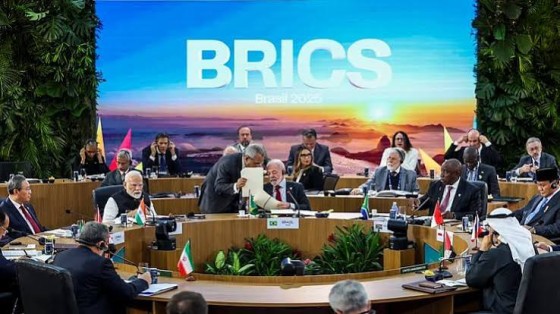
The 18th BRICS Summit, hosted by India in New Delhi on September 12–13, has placed reform of multilateral institutions among its central priorities.
The New Delhi Declaration argues that the existing architecture of international governance needs to adapt to contemporary economic realities.
For international financial institutions, BRICS wants governance to become more:
representative,
transparent,
accountable,
inclusive,
and responsive.
The declaration specifically identifies the IMF and World Bank as institutions where the representation of developing economies needs to increase.
BRICS Says Economic Weight Should Translate Into Greater Representation
The central argument behind the reform proposal is the growing contribution of emerging markets and developing economies to global output and economic growth.
BRICS says this shift has not been adequately reflected in the governance structures of major international financial institutions.
The grouping therefore wants representation at the Bretton Woods institutions to better correspond with countries' relative positions in the global economy.
This includes not only voting power but also participation in institutional leadership and decision-making.
IMF Quota Reform Becomes Central Demand
The IMF's quota system is particularly important because quotas influence several aspects of a country's relationship with the institution.
They affect:
financial contributions,
voting power,
access to IMF financing,
and allocations of Special Drawing Rights.
BRICS has therefore made quota realignment a central component of its IMF reform agenda.
The grouping argues that a meaningful change in quotas is necessary if the institution is to better reflect the structure of the modern global economy.
BRICS Wants 16th IMF Quota Increase Implemented
The New Delhi Declaration urged the quota increases agreed under the:
16th General Review of Quotas
to enter into effect without further delay.
The review approved an increase in overall IMF quota resources but did not itself deliver the larger redistribution of quota shares sought by many emerging economies.
For BRICS, increasing the IMF's total resources is useful, but the more politically significant issue remains how those quotas are distributed among members.
That question is expected to become central during the 17th review.
17th IMF Review Expected to Address Realignment
BRICS called for approaches toward a:
meaningful quota realignment
under the IMF's 17th General Review of Quotas to be developed as early as possible.
The grouping wants the process to increase the quota and voting shares of emerging markets and developing economies.
It also said reform should not come at the expense of other developing countries.
The objective is therefore to redistribute representation in a way that better reflects changes in the global economy while protecting the interests of poorer economies.
Poorest IMF Members Should Be Protected
BRICS also emphasised that any new IMF quota formula should protect the quota shares of the institution's poorest members.
This is an important element of the proposal.
A redistribution based purely on economic size could potentially reduce the relative influence of smaller developing economies.
BRICS is instead advocating a formula that increases the representation of larger emerging economies while safeguarding vulnerable and low-income members.
Voluntary Contributions Should Not Determine Voting Power
The declaration also argued that voluntary financial contributions to the IMF should not influence:
quota allocation,
governance representation,
or voting power.
This reflects a broader BRICS preference for institutional governance based on transparent and agreed rules rather than the ability of individual countries to provide additional financial resources outside the core quota system.
The grouping continues to support a strong and adequately resourced IMF, but wants its governance to remain centred on the quota framework.
World Bank Shareholding Reform Also Gains Support
BRICS leaders made a parallel argument regarding the:
World Bank Group.
The New Delhi Declaration reaffirmed that the World Bank's shareholding structure should better represent developing economies.
BRICS described the 2025 World Bank Shareholding Review as an important mechanism for strengthening the institution's legitimacy and effectiveness.
The grouping wants the review process to produce a shareholding realignment that addresses what it considers the historic underrepresentation of developing countries.
World Bank Shares Influence Institutional Voice
Shareholding at the World Bank is important because it influences the distribution of voting power among member countries.
BRICS argues that the existing structure does not fully reflect the increased economic significance of emerging and developing economies.
A larger shareholding allocation could provide those countries with greater influence over decisions involving:
development financing,
institutional priorities,
capital allocation,
and governance.
The reform debate is therefore about both financial participation and decision-making authority.
Leadership Selection Is Another Reform Priority
BRICS is not limiting its proposals to voting shares.
The grouping also called for more:
merit-based, inclusive and transparent leadership-selection processes
at the IMF and World Bank.
It wants those processes to increase regional diversity and improve representation of emerging markets and developing economies in senior leadership positions.
The proposal reflects longstanding concerns that the leadership of major international financial institutions has historically been concentrated among advanced economies.
Developing Economies Seek Larger Role in Global Decisions
The IMF and World Bank demands sit within a broader BRICS call for greater representation of emerging markets, developing countries and least-developed economies across international institutions.
The New Delhi Declaration specifically emphasises countries from:
Africa,
Asia,
Latin America,
and the Caribbean.
BRICS argues that global institutions need to evolve if they are to maintain legitimacy as the distribution of economic activity becomes increasingly multipolar.
Expanded BRICS Increases Economic Weight
The reform push comes as BRICS itself has expanded substantially beyond its original membership.
The grouping now represents a large share of the world's:
population,
economic output,
trade,
energy consumption,
and developing-market activity.
That expansion has strengthened BRICS' argument that emerging economies should have a larger role in shaping the international financial architecture.
However, institutional reforms at the IMF and World Bank require broader agreement beyond BRICS members, meaning the New Delhi position represents a negotiating agenda rather than an immediate governance change.
India Makes Global South Representation a Chairship Priority
The reform agenda aligns closely with India's priorities during its 2026 BRICS Chairship.
India has framed its presidency around:
Building for Resilience, Innovation, Cooperation and Sustainability.
A major component of that agenda has been strengthening the role of the Global South in international decision-making.
India has consistently argued that multilateral institutions need to reflect contemporary economic realities rather than governance structures created for an earlier global order.
The New Delhi Summit provides a platform for translating that position into a collective BRICS negotiating stance.
Finance Ministers Prepared Ground for Leaders' Declaration
The leaders' position builds on work undertaken by BRICS finance ministers and central bank governors ahead of the summit.
Officials meeting during India's chairship had already called for stronger emerging-market representation at the IMF and World Bank.
They also discussed:
cross-border payments,
local-currency settlements,
development finance,
financial stability,
taxation,
and infrastructure investment.
The New Delhi Declaration elevates several of those finance-track priorities to the leaders' level.
BRICS Also Advances Cross-Border Payments Agenda
Financial governance reform is only one part of the grouping's economic agenda.
BRICS members are also examining ways to make cross-border payments:
faster,
cheaper,
more transparent,
and more interoperable.
Work is being conducted through the BRICS Cross-Border Payments Initiative and related mechanisms.
The objective is to improve connectivity between existing payment and messaging systems rather than impose a single payment architecture on every member.
Local-Currency Settlements Remain Voluntary
BRICS has also continued discussions around greater use of national currencies in trade and investment.
The grouping has acknowledged that there is:
no one-size-fits-all approach
to local-currency settlement.
Any expansion is expected to reflect individual countries' regulatory frameworks, market conditions and national priorities.
Importantly, the current agenda should not be confused with the creation of a common BRICS currency.
The finance-track discussions have focused on payment connectivity and voluntary national-currency use rather than establishing a unified currency.
New Development Bank Remains Part of Financial Architecture
The BRICS-backed New Development Bank remains another component of the grouping's financial cooperation strategy.
The New Delhi Declaration supported further expansion of NDB membership and faster consideration of applications from interested BRICS countries in accordance with the bank's policies.
BRICS also welcomed the launch of a new BRICS-NDB Knowledge Portal under India's chairship.
The portal is intended to bring together development experiences, policy practices and lessons from NDB-financed projects across member economies.
India Establishes BRICS Task Force on Growth and Development
India's chairship has also introduced a:
BRICS Task Force on Growth and Development.
The platform is intended to allow members to discuss growth models and development challenges relevant to BRICS and other emerging and developing economies.
Its work includes questions involving:
development-finance architecture,
digital transformation,
artificial intelligence,
structural reform,
and climate finance.
This gives the institutional reform agenda a broader development-policy dimension beyond IMF quotas and World Bank voting shares.
Reform Push Reflects Changing Global Economy
The fundamental economic argument behind the BRICS position is straightforward.
When the Bretton Woods institutions were created in the 1940s, today's major emerging economies represented a substantially smaller portion of global economic activity.
The distribution of:
manufacturing,
trade,
capital,
consumption,
and economic growth
has since changed significantly.
BRICS argues that institutional representation has not adjusted sufficiently to that transformation.
Reform Would Require Wider International Agreement
Despite the strength of the New Delhi language, BRICS cannot independently change IMF quotas or World Bank shareholding.
Both institutions have governance processes involving a much broader membership.
Meaningful reform therefore requires negotiation with advanced economies and other developing countries.
The 17th IMF quota review will be particularly important because it creates a formal opportunity to debate changes in members' relative quota shares.
The World Bank's shareholding review provides a parallel channel for negotiating changes at that institution.
Representation Debate Is About Institutional Legitimacy
For BRICS, the issue extends beyond gaining additional votes for its own members.
The grouping presents greater developing-country representation as necessary to maintain the legitimacy of international institutions.
If countries responsible for a growing share of global economic activity believe they lack adequate influence, confidence in existing governance structures can weaken.
BRICS therefore argues that reforming existing institutions can strengthen rather than undermine multilateralism.
New Delhi Summit Turns Reform Into Collective Position
The New Delhi Declaration gives the reform agenda political backing from BRICS leaders at a time of growing fragmentation in global trade and finance.
The grouping is simultaneously advocating reform of existing institutions and developing its own mechanisms for:
development finance,
payment cooperation,
economic policy coordination,
and knowledge sharing.
The combination suggests that BRICS is pursuing a dual strategy: seeking greater influence within established institutions while expanding practical financial cooperation among its members.
Conclusion
BRICS leaders have used the New Delhi Summit to strengthen their collective demand for a larger developing-economy role in the IMF, World Bank and broader international financial architecture.
The New Delhi Declaration calls for the governance of the Bretton Woods institutions to better reflect changes in the global economy, including greater representation and voting influence for emerging markets and developing economies.
At the IMF, BRICS wants the quota increase under the 16th General Review of Quotas implemented without further delay and meaningful redistribution of quota and voting shares pursued through the 17th review. The grouping has also stressed that reform should protect poorer developing economies.
At the World Bank, BRICS is backing a shareholding realignment that addresses the historic underrepresentation of developing countries, while calling for more transparent and geographically diverse leadership at both institutions.
The New Delhi position does not itself change IMF or World Bank governance. Those reforms require negotiations involving the institutions' wider memberships. But by embedding the proposals in its leaders' declaration, the expanded BRICS grouping has made international financial governance reform a central element of its economic agenda and a major test of whether the growing weight of developing economies can translate into greater influence over global financial decision-making.