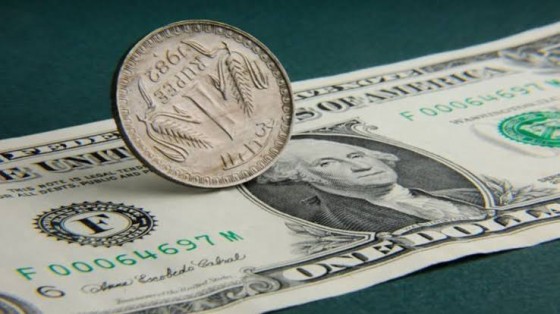
India’s Forex Reserves Jump $12.42 Billion to Record $729.33 Billion
India’s foreign exchange reserves surged $12.42 billion to an all-time high of $729.33 billion in the week ended August 21, strengthening the country’s external financial buffer as foreign currency assets and gold holdings recorded substantial increases.
Data released by the Reserve Bank of India on August 28 showed total reserves rising from $716.91 billion in the previous reporting week to $729.33 billion.
The latest increase marks the eighth consecutive week of expansion, with India's reserve stockpile rising by approximately $63 billion over that period.
The new level surpasses the previous record of approximately $728.49 billion, reached in the week ended February 27, 2026.
Foreign currency assets accounted for most of the latest weekly increase, rising $9.48 billion, while the value of gold reserves climbed another $2.80 billion.
The accumulation also follows a series of measures introduced to attract overseas dollar inflows, including concessional hedging arrangements linked to foreign-currency deposits and overseas borrowings.
Forex Reserves Reach Record $729.33 Billion
India's total foreign exchange reserves stood at:
$729.328 billion
for the week ended August 21.
That represented a weekly increase of:
$12.422 billion.
The previous week's reserves stood at:
$716.907 billion.
They had already increased by approximately:
$9.905 billion
during that reporting period.
Two consecutive weeks of substantial gains have therefore added more than $22 billion to India's reserve position.
India Surpasses Previous February Record
The latest increase takes India's forex reserves beyond their previous all-time high.
The earlier record was approximately:
$728.494 billion
in the week ended February 27, 2026.
Reserves subsequently declined as geopolitical tensions increased and the rupee came under pressure.
The RBI intervened in the foreign-exchange market through dollar sales during periods of currency volatility.
The recovery to a new record demonstrates how rapidly the reserve position has strengthened since then.
Reserves Have Increased for Eight Consecutive Weeks
The latest RBI data extends an unusually strong accumulation period.
India's foreign exchange reserves have now increased for:
eight consecutive weeks.
Over that period, the reserve stockpile has expanded by approximately:
$63 billion.
This sustained increase is more significant than a single week's movement because it indicates a broader accumulation trend.
The expansion has been supported by substantial dollar inflows as well as valuation changes in reserve assets.
Foreign Currency Assets Rise $9.48 Billion
Foreign currency assets remain the largest component of India's reserves.
During the week ended August 21, FCAs increased by:
$9.482 billion
to:
$591.333 billion.
That means foreign currency assets accounted for more than three-quarters of the overall weekly increase in reserves.
These assets include holdings denominated in currencies other than the US dollar.
FCA Movements Reflect More Than Dollar Purchases
Changes in foreign currency assets do not necessarily represent only direct purchases or sales of dollars by the RBI.
India's reserves contain assets denominated in currencies such as:
the euro,
British pound,
Japanese yen,
and other international currencies.
The RBI reports the overall reserve position in US dollars.
Consequently, changes in exchange rates between the dollar and other reserve currencies can increase or decrease the reported value of foreign currency assets even when the underlying quantity of those assets remains unchanged.
This is known as a valuation effect.
Gold Reserves Increase $2.80 Billion
Gold provided another major contribution to the weekly increase.
The value of India's gold reserves rose by:
$2.801 billion
to:
$114.218 billion.
Gold has become an increasingly important component of central-bank reserves globally.
It provides diversification away from conventional foreign-currency assets and can serve as a store of value during periods of:
geopolitical uncertainty,
currency volatility,
inflation concerns,
and financial-market stress.
Movements in international gold prices can therefore significantly affect the dollar value of India's reserve stockpile.
Gold Now Represents a Significant Reserve Component
At approximately $114.22 billion, gold represents a substantial portion of India's overall foreign exchange reserves.
The RBI has gradually increased the role of gold within its reserve portfolio over the longer term.
Central banks generally hold reserves across multiple asset classes to avoid excessive dependence on any single currency or instrument.
Gold provides diversification because its price can behave differently from government bonds and foreign currencies during periods of market stress.
Special Drawing Rights Rise to $18.85 Billion
India's Special Drawing Rights with the International Monetary Fund also increased during the reporting week.
SDRs rose by:
$112 million
to:
$18.852 billion.
Special Drawing Rights are international reserve assets created by the IMF.
Their value is based on a basket of major global currencies.
SDRs can supplement member countries' official reserves and provide another source of international liquidity.
IMF Reserve Position Reaches $4.93 Billion
India's reserve position with the International Monetary Fund increased by:
$26 million
to:
$4.925 billion.
Although this represents a relatively small component of India's overall reserves, it forms part of the country's total internationally recognised reserve assets.
India's $729.33 billion reserve stockpile therefore consists broadly of:
$591.33 billion in foreign currency assets
$114.22 billion in gold
$18.85 billion in SDRs
and
$4.93 billion in its IMF reserve position.
RBI Measures Have Attracted Large Dollar Inflows
The rapid increase in reserves has been supported by measures introduced in June to strengthen India's balance of payments and attract foreign currency.
These measures included discounted hedging arrangements for overseas borrowings by state-owned companies and banks.
The RBI also introduced a concessional arrangement encouraging banks to mobilise foreign-currency deposits from overseas Indians.
The measures reduced some of the currency-hedging costs normally associated with raising foreign-currency funds.
That made overseas deposits more attractive to banks and depositors.
Nearly $73 Billion Mobilised Under Special Measures
The scale of the inflows has been substantial.
Between June 5 and August 21, the RBI received nearly:
$73 billion
under the relevant schemes.
Approximately:
$65 billion
came from non-resident Indian deposits.
This influx has played an important role in rebuilding India's foreign-exchange reserves.
The strong response also demonstrates how financial incentives can influence the timing and scale of cross-border deposit flows.
FCNR(B) Deposits Have Played a Central Role
Foreign Currency Non-Resident Bank deposits, commonly known as FCNR(B) deposits, allow non-resident Indians to hold deposits with Indian banks in specified foreign currencies.
Because the deposit is denominated in foreign currency, the depositor avoids direct rupee exchange-rate exposure on the principal.
Banks receiving these funds can convert or swap the foreign currency through arrangements with the RBI.
During periods when India wants to encourage foreign-currency inflows, the central bank can alter swap economics to make such deposits more attractive to the banking system.
Banks Accelerated Deposit Mobilisation Before Window Closure
Banks reportedly intensified efforts to raise NRI deposits as the concessional swap window approached its scheduled closure.
The facility is due to close at the end of August.
That created an incentive for banks to mobilise foreign-currency deposits while the favourable terms remained available.
The resulting inflows contributed to the rapid increase in India's reserve stockpile during recent weeks.
The scale of the response was sufficiently strong for the RBI to bring forward the closure of one deposit-hedging facility.
Higher Reserves Strengthen India's External Buffer
Foreign exchange reserves perform several critical economic functions.
They provide the country with access to international liquidity during periods of financial stress.
Large reserves can help India:
pay for imports,
meet external obligations,
manage disorderly currency movements,
respond to sudden capital outflows,
and maintain confidence in the country's external finances.
This becomes particularly important during periods of global volatility.
Reserves Can Help Manage Rupee Volatility
One of the RBI's most visible uses of foreign exchange reserves is intervention in the currency market.
If the rupee experiences abrupt downward pressure, the central bank can sell dollars and purchase rupees.
That increases dollar availability in the market and can help moderate disorderly currency movements.
Conversely, when large foreign inflows push the rupee sharply higher, the RBI can purchase dollars.
Those purchases can add to foreign exchange reserves.
The objective is generally not to defend a permanently fixed exchange rate but to reduce excessive volatility.
RBI Dollar Purchases Contributed to the Latest Increase
Part of the latest reserve accumulation appears to reflect RBI dollar purchases associated with strong foreign-currency inflows.
When banks mobilise large volumes of overseas deposits, those dollars can enter India's financial system.
If the RBI absorbs part of the inflow, its foreign assets increase.
That can simultaneously prevent excessive appreciation pressure on the rupee.
The central bank therefore has to balance reserve accumulation against domestic liquidity and currency-market conditions.
Reserve Accumulation Can Affect Banking-System Liquidity
When the RBI buys foreign currency, it generally provides rupees in exchange.
This can inject domestic liquidity into the financial system.
If those liquidity effects become excessive, the central bank may need to absorb funds through monetary-policy operations.
Foreign-exchange intervention and domestic liquidity management are therefore closely connected.
Large capital inflows can create benefits through stronger reserves while simultaneously complicating monetary-policy implementation.
Strong Reserves Reduce Vulnerability to External Shocks
India is deeply integrated into global trade and financial markets.
That creates opportunities but also exposure to external shocks.
Potential risks include:
sharp increases in crude oil prices,
global financial-market stress,
geopolitical conflict,
foreign portfolio outflows,
strong dollar cycles,
and disruptions to international capital markets.
A large reserve buffer gives policymakers more flexibility when responding to such events.
Oil Prices Make Reserve Adequacy Particularly Important
India imports a substantial proportion of the crude oil it consumes.
Energy imports therefore create persistent demand for foreign currency.
If oil prices rise sharply, India's import bill can increase significantly.
That can pressure:
the current account,
inflation,
the rupee,
and overall external financing requirements.
Large foreign-exchange reserves provide additional protection against such shocks.
Record Reserves Do Not Eliminate Currency Risk
A record reserve level does not mean the rupee cannot weaken.
Currency movements are influenced by multiple factors, including:
interest-rate differentials,
trade balances,
foreign investment flows,
oil prices,
inflation,
global risk appetite,
and the strength of the US dollar.
The RBI can use reserves to smooth excessive volatility, but sustained intervention against fundamental market forces can consume reserves rapidly.
The size of the stockpile therefore provides flexibility rather than an absolute defence of any particular exchange rate.
The February Experience Demonstrated This Dynamic
India's reserve trajectory earlier in 2026 provides a useful example.
Reserves reached the previous record of $728.49 billion in February.
Geopolitical tensions then intensified.
The rupee faced pressure, and the RBI intervened through dollar sales.
Reserves declined during the subsequent period.
The latest recovery illustrates how reserve levels can rise and fall significantly depending on external conditions and central-bank intervention.
Higher Reserves Can Support Investor Confidence
International investors closely monitor reserve adequacy when evaluating emerging markets.
Large reserves can signal that a country possesses sufficient foreign-currency liquidity to manage:
external debt,
imports,
capital outflows,
and financial shocks.
This can strengthen confidence among:
foreign portfolio investors,
international lenders,
rating agencies,
and multinational companies.
Reserve adequacy is therefore an important component of broader macroeconomic credibility.
Quality and Cost of Inflows Also Matter
The headline reserve number is not the only consideration.
How reserves are accumulated also matters.
Foreign direct investment, portfolio flows, external borrowing and foreign-currency deposits have different economic characteristics.
Some forms of capital are relatively stable.
Others can reverse quickly.
Deposit-based inflows can also involve financial costs, particularly when the central bank provides favourable hedging or swap arrangements.
The economic value of reserve accumulation therefore needs to be assessed alongside the cost and durability of the underlying inflows.
Concessional Hedging Is Not Cost-Free
The recent schemes have successfully attracted large amounts of foreign currency.
However, concessional hedging arrangements transfer part of the exchange-rate risk or hedging cost to the RBI.
That can make foreign-currency deposits more attractive to banks and overseas customers.
But it also means the reserve accumulation has an associated financial cost.
Policymakers must therefore determine whether the additional external buffer justifies those costs.
During periods of heightened global uncertainty, the value of stronger reserves can be particularly significant.
India's Reserve Position Has Strengthened Rapidly
The latest data demonstrate the scale of the improvement.
Total reserves are now approximately:
$38.22 billion higher than at the end of March 2026.
They are also roughly:
$38.61 billion above their level a year earlier.
This provides a broader perspective than the $12.42 billion weekly increase alone.
India has rebuilt a substantial external buffer despite periods of geopolitical and currency-market volatility during the year.
The Next Question Is Whether Record Levels Are Sustained
With the special deposit and swap measures approaching their end, attention will turn to whether reserves remain near record levels.
Future movements will depend on factors including:
capital inflows,
foreign portfolio investment,
foreign direct investment,
trade flows,
oil prices,
currency valuation changes,
gold prices,
and RBI intervention.
The pace of accumulation seen during the last eight weeks may therefore not continue indefinitely.
The more important question is whether India can maintain a sufficiently large buffer through changing global financial conditions.
Conclusion
India's foreign exchange reserves surged $12.422 billion to a record $729.328 billion in the week ended August 21, surpassing the previous all-time high reached in February 2026.
Foreign currency assets provided the largest contribution, increasing $9.482 billion to $591.333 billion, while gold reserves climbed $2.801 billion to $114.218 billion.
Special Drawing Rights increased to $18.852 billion, while India's IMF reserve position rose to $4.925 billion.
The record follows eight consecutive weeks of reserve accumulation and substantial foreign-currency inflows generated partly through RBI measures designed to attract overseas deposits and borrowings.
For India, the significance extends beyond reaching a new numerical milestone.
A reserve stockpile above $729 billion provides policymakers with a substantial buffer against currency volatility, capital outflows, geopolitical shocks and changes in global financial conditions.
The next challenge will be maintaining that external strength as temporary incentive schemes wind down and global markets continue to evolve.