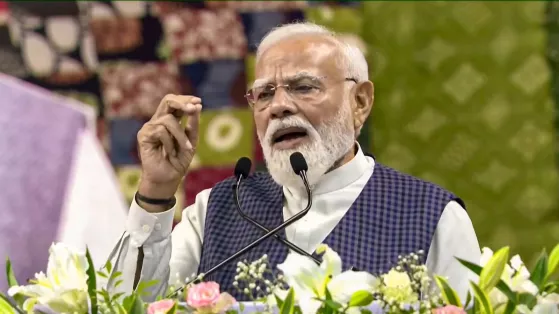
PM Modi's Indonesia–Australia–New Zealand Diplomatic Tour Begins Today
The six-day, three-nation tour spanning Jakarta, Melbourne, and Auckland — including a landmark first Indian PM visit to New Zealand in 40 years — underscores India's deepening Indo-Pacific and Act East engagement.
By Naina, 6th July 2026
Prime Minister Narendra Modi began a six-day diplomatic tour of Indonesia, Australia, and New Zealand on 6 July 2026, in a significant push to deepen India's strategic and economic engagement across the Indo-Pacific. The three-nation visit, running until 11 July, will take the prime minister to Jakarta, Melbourne, and Auckland in succession, for bilateral talks with the leaders of all three countries, engagements with business leaders, and addresses to the Indian diaspora. In his departure statement, Modi said the tour would strengthen India's Act East policy, its maritime vision for the Indian Ocean, and its commitment to a free, open, and inclusive Indo-Pacific. The visit reflects India's growing focus on the eastern Indian Ocean and the wider region amid an evolving geopolitical landscape.
The tour carries particular significance, including the first state visit by an Indian prime minister to New Zealand in four decades. Across the three legs, the emphasis spans trade, investment, defence, technology, and cultural ties, with dedicated business engagements and the review of recently concluded and progressing economic agreements. For India, deepening partnerships with these key regional players is central to its strategy in a region of rising economic and strategic importance. The visit follows a series of diplomatic engagements with island nations and other regional partners. Here is what is on the agenda across Indonesia, Australia, and New Zealand, and why the tour matters for India's Indo-Pacific ambitions.
The Tour Overview
The six-day tour is a concentrated diplomatic push. Beginning on 6 July, the prime minister will visit Indonesia, Australia, and New Zealand in sequence, concluding on 11 July, covering Jakarta, Melbourne, and Auckland. The government has framed the visit as advancing India's Act East policy, its maritime doctrine for security and growth across the Indian Ocean region, and its vision of a free, open, and inclusive Indo-Pacific. Officials described the tour as a diplomatic outreach aimed at reinforcing India's strategic, economic, and maritime engagement across the region. Coming amid a shifting geopolitical environment, the visit underscores India's intent to strengthen ties with key partners in the eastern Indian Ocean and the broader Indo-Pacific.
The Indonesia Leg
The tour opens in Indonesia. Visiting from 6 to 8 July at the invitation of President Prabowo Subianto, the prime minister will hold bilateral discussions and review progress in the partnership, in what marks his fourth visit to the country and his first bilateral trip since the two nations elevated their ties to a comprehensive strategic partnership. In Jakarta, he will address a large gathering of the Indian diaspora. Reflecting the deep historical and cultural bonds between the two nations, the prime minister will also visit a prominent ancient temple complex, a UNESCO World Heritage site. Indonesia, a major economy and a key maritime neighbour, is central to India's engagement with Southeast Asia and the Indo-Pacific.
The Australia Leg
The Australian leg centres on a leaders' summit. Travelling to Melbourne from 8 to 10 July at the invitation of Prime Minister Anthony Albanese, the prime minister will participate in an annual India-Australia leaders' summit, hold bilateral discussions, and call on the Governor-General. A key economic engagement is a CEOs forum, where he will address top business leaders from both countries, underscoring the trade and investment dimension of the relationship. He will also address the large Indian community, a strong pillar of India-Australia ties. Australia, which describes India as a critical economic partner and one of the world's fastest-growing major economies, shares a comprehensive strategic partnership with India spanning trade, defence, security, and technology.
The New Zealand Leg
The tour concludes with a historic visit to New Zealand. Travelling to Auckland from 10 to 11 July at the invitation of Prime Minister Christopher Luxon, the prime minister will make the first state visit by an Indian prime minister to the country in nearly four decades, a landmark in the bilateral relationship. Talks are expected to review the entire scope of ties, which have advanced significantly in recent years, including progress on a recently concluded free trade agreement between the two nations. Cooperation in agriculture, education, and technology is also on the agenda. The visit signals India's intent to build a stronger, more comprehensive partnership with New Zealand after decades of limited high-level engagement.
The Economic Agenda
Economics is a central thread of the tour. In Australia, the prime minister's participation in a CEOs forum highlights the focus on expanding trade, investment, and business ties between the two economies. In New Zealand, the recently concluded free trade agreement, which offers access to India's vast market of over 1.4 billion people, is expected to feature prominently, with the pact anticipated to boost exports, create jobs, and support growth. Across the tour, cooperation in technology, agriculture, and other sectors reflects India's effort to translate strategic partnerships into concrete economic outcomes. As the world's fourth-largest and fastest-growing major economy, India is positioning itself as an increasingly attractive economic partner across the region.
The Strategic Significance
The tour advances India's Indo-Pacific strategy. It reflects a growing focus on the eastern Indian Ocean and the wider Indo-Pacific, a region of intensifying strategic and economic importance. India's Act East policy and its maritime vision aim to deepen engagement with Southeast Asia and the Pacific, and the visit strengthens ties with three key regional partners, two of which, Australia and Indonesia, are significant Indo-Pacific players. Australia is also a partner in wider regional groupings focused on the Indo-Pacific. By engaging these nations on strategic, maritime, and economic fronts, India seeks to bolster its role in shaping a stable, open regional order, aligning the tour with its broader foreign-policy and security objectives in the region.
The Diaspora Factor
The Indian diaspora is a recurring theme. In all three countries, the prime minister will engage with Indian communities, which the government describes as a key pillar of India's relationships with these nations. Diaspora addresses are scheduled in Jakarta and Melbourne, with a large community reception planned in Australia, home to one of the country's largest Indian-origin populations. The diaspora serves as a bridge between India and these nations, contributing to economic, cultural, and people-to-people ties. Engaging these communities is a consistent feature of the prime minister's foreign visits, reinforcing connections that support broader bilateral relationships and projecting India's soft power and global connections across the Indo-Pacific region.
The Road Ahead
The three-nation tour marks a significant step in India's Indo-Pacific engagement, blending strategic diplomacy with economic and cultural outreach. The outcomes, spanning bilateral agreements, business ties, and the symbolic first visit to New Zealand in four decades, will shape India's relationships with these key regional partners in the years ahead. As India deepens its focus on the eastern Indian Ocean and the wider region, such high-level engagements are central to its strategy of building partnerships in a fast-evolving geopolitical landscape. The visit's success will be measured by the concrete cooperation it advances in trade, technology, defence, and maritime security, reinforcing India's growing role as an Indo-Pacific power.
Frequently Asked Questions
Where is PM Modi travelling on his diplomatic tour?
Prime Minister Modi is on a six-day tour of Indonesia, Australia, and New Zealand from 6 to 11 July 2026, visiting Jakarta, Melbourne, and Auckland for bilateral talks, business engagements, and addresses to the Indian diaspora.
What is significant about the New Zealand visit?
It marks the first state visit by an Indian prime minister to New Zealand in nearly four decades, a landmark in bilateral ties. Talks are expected to review progress on a recently concluded India-New Zealand free trade agreement.
What is on the agenda in Indonesia?
In Indonesia, from 6 to 8 July, the prime minister will hold bilateral talks with President Prabowo Subianto, review the strategic partnership, address the Indian diaspora in Jakarta, and visit a prominent ancient UNESCO World Heritage temple complex.
What will the Australia leg involve?
In Melbourne, from 8 to 10 July, the prime minister will attend an India-Australia leaders' summit, hold bilateral talks, address a CEOs forum of business leaders, call on the Governor-General, and engage the large Indian community.
Why does the tour matter strategically?
The tour advances India's Act East policy, maritime vision, and Indo-Pacific engagement, strengthening ties with three key regional partners across trade, defence, technology, and maritime cooperation amid an evolving geopolitical landscape.