The latest economic growth report for 2025 has been released, showcasing remarkable highlights that underscore the country's robust performance. India's GDP grew 7.8% year over year in the April to June quarter, a sharp improvement from the same period last year.
This significant surge is driven by various factors, including domestic consumption, government spending, and investment activity. As the fourth-largest economy in 2025, the country is poised for continued growth, with forecasts suggesting it will become the third-largest economy by 2028.
Key Takeaways
- The GDP growth rate has seen a significant surge.
- Domestic consumption and government spending are key drivers.
- Investment activity has contributed to the robust performance.
- India is poised to become the third-largest economy by 2028.
- The report highlights a sharp improvement from the previous year's growth.
The Current State of India's Economy in 2025
As we step into 2025, India's economy is showcasing a robust growth trajectory, driven by various macroeconomic fundamentals. The country's economic performance is being closely watched by analysts and investors alike, given its significance in the global economy.
GDP Growth Rate Overview
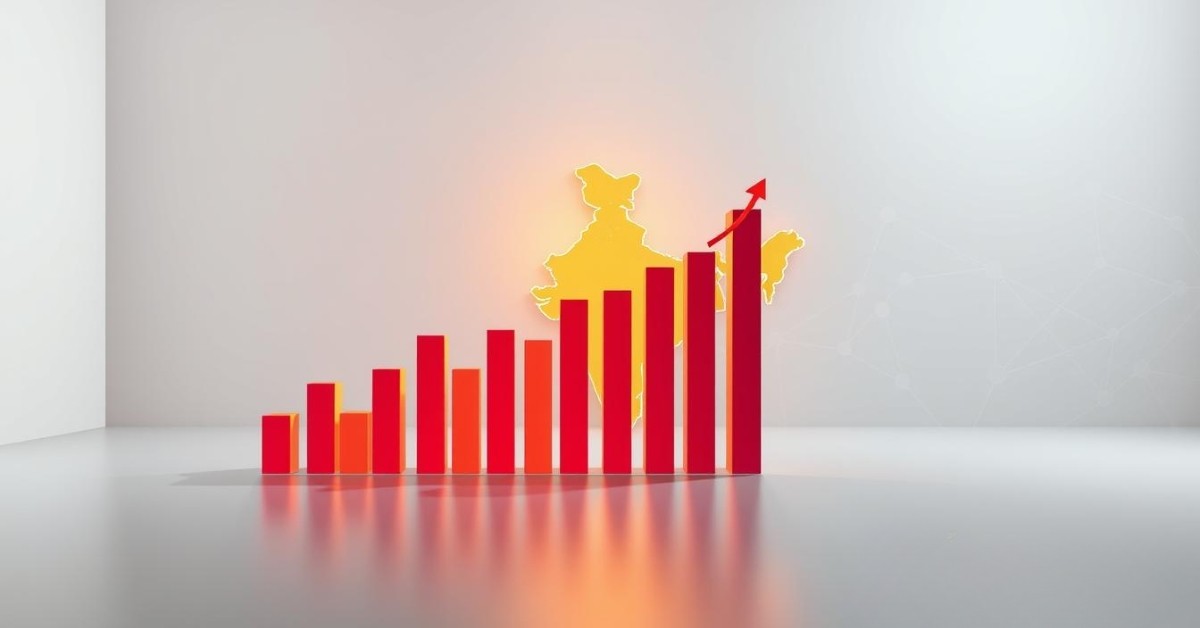
According to Deloitte's projections, India's baseline economic growth is expected to be between 6.7% to 6.9% for the current fiscal year, and 6.5% to 6.9% for the following fiscal year. This growth is supported by factors such as direct income tax exemptions, continued Goods and Services Tax (GST) reforms, an accommodative monetary policy, and a possible trade deal with the United States.
Key Economic Indicators at a Glance
Key economic indicators such as private consumption, government spending, and investment activity have all contributed to India's growth story. Private consumption has been a significant driver, with a rise in disposable incomes and consumer spending. Government spending on infrastructure projects has also played a crucial role in boosting economic activity. Furthermore, investment activity has seen an uptick, driven by both domestic and foreign investments.
The combination of these factors has resulted in a favorable economic environment, positioning India as a prominent player in emerging markets growth.
India Economic Growth 2025: Exceeding Global Expectations
India's economic growth in 2025 has been nothing short of remarkable, with the country exceeding global expectations. The latest data indicates a strong recovery, driven by various factors including domestic consumption and investment activity.
Comparison with Previous Year's Performance
In comparison to the previous year, India's economic growth in 2025 has shown a significant improvement. The GDP growth rate has surged, indicating a robust recovery from the muted growth observed in the previous year.
The table below highlights the key economic indicators for 2025 in comparison to the previous year:
| Economic Indicator | 2024 | 2025 |
|---|---|---|
| GDP Growth Rate | 6.5% | 7.8% |
| Domestic Consumption | 5.2% | 6.8% |
| Investment Activity | 4.8% | 7.2% |
Beating Analyst Forecasts
India's economic growth in 2025 has not only met but exceeded analyst forecasts. The country's GDP grew 7.8% year over year in the April to June quarter, surpassing market expectations.
This impressive growth is a testament to the resilience and determination of the Indian economy. As the country continues to drive growth through various initiatives, it is likely to remain a major player in the global economy.
Major Drivers Behind India's Economic Surge
India's economic surge in 2025 can be attributed to several key factors that have collectively driven growth across various sectors. The country's economic prospects have improved significantly due to a combination of domestic and international factors.
Domestic Consumption Patterns
Domestic consumption has seen a notable increase, driven by tax cuts that have boosted disposable incomes. Private consumption rose by 7%, indicating a significant shift in consumer behavior and confidence. This surge in consumption has been a major driver of India's economic growth.
Investment Climate Improvements
Investment activity remained healthy, with gross fixed capital formation rising by 7.8%. This growth was largely driven by a significant uptick in government capital expenditure. Improvements in the investment climate have encouraged both domestic and foreign investments, contributing to the overall economic surge.
Export Performance
India's export performance has also been a key driver of economic growth, with various sectors contributing to the country's growth sectors. The government's focus on improving infrastructure and reducing trade barriers has helped boost exports, making India a more competitive player in the global market.
Sectoral Growth Analysis
As India's economy continues to expand in 2025, a closer look at sectoral growth reveals substantial investment potential. The diverse sectors have contributed significantly to the country's economic growth, presenting various investment opportunities in India.
Manufacturing Sector Performance
The manufacturing sector has shown a significant performance, with a growth rate of 7.7%. This growth is a positive indicator for the overall economy, suggesting increased production and consumption activities. The expansion in manufacturing has been driven by government initiatives and improved infrastructure.
Services Sector Expansion
The services sector remains the key growth engine, expanding 9.3%, the fastest in two years. This growth has been driven by strong momentum in trade, financial services, and public administration. The services sector continues to be a significant contributor to India's GDP, offering numerous investment opportunities.
Agricultural Output and Rural Economy
The agricultural sector has also shown positive trends, supported by favorable monsoon conditions. The early monsoon has benefited the construction sector, which moderated to 7.6%. The rural economy is expected to gain from increased agricultural output, enhancing rural income trends.
Infrastructure Development Impact
Infrastructure development has played a crucial role in India's economic growth. Improved infrastructure has facilitated the growth of various sectors, including manufacturing and services. The continued investment in infrastructure is expected to provide lucrative investment opportunities in the coming years.
| Sector | Growth Rate (%) | Key Drivers |
|---|---|---|
| Manufacturing | 7.7 | Government initiatives, improved infrastructure |
| Services | 9.3 | Trade, financial services, public administration |
| Agriculture | - | Favorable monsoon conditions |
| Construction | 7.6 | Early monsoon |
The sectoral growth analysis highlights the diverse opportunities available for investment in India. With continued government support and infrastructure development, the outlook for India's economy remains positive.
Digital Economy and Technology Sector Contributions
As India continues to embrace digitalization, its economy is benefiting from the rapid expansion of the technology sector. This growth is multifaceted, with significant contributions from various sub-sectors.
IT Services and Software Exports
India's IT sector is expected to grow at a CAGR of approximately 9% through 2030, driven by software services, digital platforms, and emerging technologies like artificial intelligence. This growth is not only enhancing economic productivity but also positioning India as a global leader in IT services and software exports.
Digital Payments and Fintech Revolution
The fintech revolution is transforming India's financial landscape, with digital payments becoming increasingly popular. This shift is driven by advancements in technology, increased smartphone penetration, and government initiatives promoting digital transactions.
E-commerce and Online Services Growth
E-commerce is another area experiencing rapid growth, driven by changing consumer behaviors and technological advancements. The rise of online services is not only contributing to economic growth but also creating new opportunities for businesses and consumers alike.
The combined effect of these sub-sectors is significantly contributing to India's economic growth in 2025, making the digital economy a crucial component of the country's overall economic strategy.
Emerging Industries Driving Future Growth
Emerging industries are set to play a pivotal role in shaping India's economic future. These sectors are not only expected to drive growth but also contribute significantly to India's GDP forecast for the coming years.
Renewable Energy Sector Expansion
The renewable energy sector in India is experiencing rapid expansion, driven by government initiatives and substantial investments. With a focus on sustainability, India aims to increase its renewable energy capacity, reducing dependence on fossil fuels and mitigating environmental impacts. This shift is expected to create new job opportunities and stimulate economic growth in related industries.
Electric Vehicle Manufacturing Ecosystem
The electric vehicle (EV) manufacturing ecosystem is another emerging industry poised for significant growth in India. Government support through policies and incentives, coupled with increasing consumer demand for eco-friendly transportation, is driving this growth. The expansion of the EV ecosystem is expected to not only boost manufacturing output but also lead to the development of related infrastructure, such as charging stations.
Space Economy and Defense Manufacturing
India's space economy and defense manufacturing sectors are also emerging as key drivers of future growth. With advancements in technology and increased government investment, these sectors are expected to contribute substantially to India's economy. The growth in space economy and defense manufacturing will not only enhance India's global standing but also create new opportunities for innovation and employment.
These emerging industries are crucial for India's economic resilience and future potential, aligning with the country's GDP forecast and contributing to its position as a global economic player.
Regional Economic Development Across India
India's economic progress is being driven by a combination of high-performing states and rapidly growing tier-2 and tier-3 cities. This diverse economic landscape is a key factor in the country's overall growth trajectory.
High-Performing States and Economic Corridors
States like Maharashtra, Gujarat, and Tamil Nadu are on track to reach a GDP of USD 1 trillion each by 2035, highlighting their role as engines of India's economic progress. These states have been successful in creating conducive business environments, investing in infrastructure, and promoting industries that drive growth.
- Maharashtra: Led by Mumbai, the financial capital of India, Maharashtra continues to be a hub for financial services, IT, and manufacturing.
- Gujarat: Known for its industrial prowess, Gujarat has attracted significant investments in sectors like petrochemicals, pharmaceuticals, and automotive manufacturing.
- Tamil Nadu: With a strong focus on manufacturing and IT, Tamil Nadu has emerged as a preferred destination for investments, particularly in the automotive and electronics sectors.
Tier-2 and Tier-3 Cities Economic Contribution
Tier-2 and tier-3 cities are increasingly contributing to India's economic growth, driven by increasing investment and infrastructure development. Cities like Pune, Ahmedabad, and Coimbatore are witnessing significant economic activity across various sectors.
The growth in these cities is attributed to improved connectivity, government initiatives, and the availability of a skilled workforce. As a result, they are becoming important contributors to India's emerging markets growth and overall economic trends.
Foreign Direct Investment and International Partnerships
India's economic landscape in 2025 is poised for significant transformation, driven by a surge in foreign direct investment (FDI) and strategic international partnerships. The government's initiatives to improve the business environment have made India an attractive destination for foreign investors.
Sector-wise FDI Inflows
The distribution of FDI across various sectors is a key indicator of India's economic priorities. In 2025, sectors such as manufacturing, technology, and renewable energy are expected to witness significant FDI inflows. These sectors are not only crucial for economic growth but also align with India's long-term development goals.
- Manufacturing sector FDI is driven by initiatives like 'Make in India'.
- Technology sector investments are focused on innovation and digital infrastructure.
- Renewable energy FDI supports India's commitment to sustainable development.
Major Investing Countries
Countries like the United States, Singapore, and Japan are among the top investors in India. These nations are drawn to India's growing market and its strategic location for exports. The investment from these countries is expected to bring in not just capital but also technology and management expertise.
- The United States is a significant investor, particularly in the technology sector.
- Singapore's investments are prominent in financial services and infrastructure.
- Japan is focusing on manufacturing and infrastructure development.
Strategic Economic Partnerships
India is strengthening its economic ties through strategic partnerships with various countries. These partnerships are aimed at enhancing trade, investment, and technological collaboration. For instance, partnerships with countries like Australia and the UAE are expected to boost India's economic prospects.
The focus on creating a favorable investment climate, coupled with India's vast market potential, is set to drive economic growth in 2025. As foreign direct investment and international partnerships continue to grow, India's economic prospects are looking increasingly positive.
Government Policies and Economic Reforms
Recent government policies have been designed to stimulate economic growth and attract investment opportunities in India. These policies have been instrumental in creating a favorable business environment, which has contributed significantly to the country's economic surge in 2025.
Recent Policy Initiatives
The government has introduced several policy initiatives aimed at boosting various growth sectors in India. These include measures to promote domestic manufacturing, enhance infrastructure, and support the digital economy. Such initiatives have not only improved the business climate but also attracted significant foreign investment.
Tax Structure Reforms
Tax structure reforms have been a key component of the government's economic reform agenda. By simplifying tax laws and reducing corporate tax rates, the government has made India a more attractive destination for investors. These reforms have also led to increased tax revenues, supporting public expenditure on infrastructure and social programs.
Ease of Doing Business Improvements
Improvements in the ease of doing business have been another critical area of focus. The government has implemented various measures to simplify regulatory compliance, reduce bureaucratic hurdles, and enhance transparency. As a result, India has climbed the ranks in the World Bank's Ease of Doing Business Index, making it more competitive globally.
These government policies and economic reforms have collectively contributed to India's robust economic performance in 2025. By continuing to refine and implement such policies, India is well-positioned to sustain its growth momentum and attract further investment.
Employment Generation and Labor Market Dynamics
India's labor market has witnessed a significant transformation in 2025, driven by robust job creation across various sectors. This positive trend is largely attributed to government initiatives and increased investment, which have collectively contributed to a favorable employment landscape.
Job Creation Statistics Across Sectors
The job creation statistics across different sectors in India have shown a promising outlook. According to recent data, the manufacturing sector has emerged as a significant job creator, driven by government initiatives such as the "Make in India" campaign. The services sector, including IT and IT-enabled services, has also continued to be a major employment generator.
| Sector | Job Creation (in thousands) |
|---|---|
| Manufacturing | 500 |
| Services | 700 |
| Agriculture | 300 |
Skill Development and Workforce Readiness
Skill development has been a critical focus area to enhance workforce readiness. Government programs such as the Skill India Mission have been instrumental in providing training and certification to millions of individuals. Industry partnerships have also played a crucial role in aligning skill development programs with market needs.
"The Skill India Mission has been a game-changer in creating a skilled workforce that is ready to meet the demands of the modern economy."
As a result, the workforce has become more adaptable and competitive, contributing to the overall growth of the economy.
India's Position in Global Economic Rankings
With a robust economic growth trajectory, India is making significant strides in global economic rankings. The country's GDP forecast for 2025 indicates a strong upward trend, positioning it as one of the leading economies globally.
Comparison with Other Emerging Markets
India's economic performance is particularly noteworthy when compared to other emerging markets. The country's strategic economic reforms and favorable investment climate have contributed to its outperformance. Key indicators such as GDP growth rate, industrial production, and services sector expansion highlight India's competitive edge.
In comparison to other emerging economies, India's growth is more diversified, with significant contributions from both manufacturing and services sectors.
India's Growing Influence in Global Economy
India's growing influence in the global economy is evident from its increasing participation in international trade and its role in global economic governance. The country's economic growth in 2025 is expected to have a positive impact on global trade, given its significant share in international commerce.
As India continues to ascend in global economic rankings, its voice in international economic forums is becoming more pronounced, enabling it to play a crucial role in shaping global economic policies.
Inflation Management and Monetary Policy
As India continues to experience emerging markets growth, managing inflation has become a critical aspect of its economic strategy. The Reserve Bank of India has maintained a strategic approach to monetary policy, balancing inflation management and economic growth.
Consumer Price Index Trends
The Consumer Price Index (CPI) has been a key indicator of inflation in India. In 2025, CPI trends have shown a moderate increase, largely due to supply chain disruptions and global commodity price fluctuations. However, the overall inflation rate has remained within the RBI's target range, thanks to effective monetary policy measures.
Reserve Bank of India's Strategic Approach
The RBI has adopted a forward-looking approach to monetary policy, using a combination of interest rates and liquidity management tools to control inflation. As stated by the RBI Governor, "Our monetary policy framework is designed to maintain price stability while supporting economic growth." This approach has been crucial in maintaining investor confidence and stabilizing the currency.
The RBI's strategic approach has also involved close monitoring of global economic trends and emerging risks, allowing for timely adjustments to monetary policy. This proactive stance has been instrumental in keeping inflation in check, thereby supporting India's emerging markets growth.
Impact of Economic Growth on Standard of Living
The robust economic growth in India has translated into a better standard of living for both urban and rural populations. As the economy continues to expand, various sectors are contributing to this positive trend.
Urban and Rural Income Trends
Urban and rural income trends have shown a significant increase, driven by government initiatives and an improving business environment. Rural incomes have risen due to enhanced agricultural productivity and government subsidies, while urban incomes have benefited from the growth of the services and manufacturing sectors.
Poverty Reduction and Middle Class Expansion
The economic growth has led to a notable reduction in poverty and an expansion of the middle class. Government programs aimed at financial inclusion and social welfare have played a crucial role in this development. As a result, more people have access to better education, healthcare, and other essential services.
Overall, the impact of economic growth on the standard of living in India has been positive, with both urban and rural areas benefiting from the economic trends and predictions for 2025.
Challenges to Sustained Economic Growth
India's economic growth story in 2025 is marked by both achievements and challenges that need to be addressed for sustained development. Despite robust economic growth, India faces several challenges, including structural economic challenges, global economic uncertainties, and environmental and sustainability concerns.
Structural Economic Challenges
India's economy is confronted with structural challenges such as inadequate infrastructure, bureaucratic inefficiencies, and a complex regulatory environment. These challenges can hinder the ease of doing business and deter investment. Reforms aimed at simplifying regulations and improving infrastructure are crucial to overcoming these obstacles.
Global Economic Uncertainties
Global economic uncertainties, including trade tensions and fluctuations in global commodity prices, can impact India's economic growth. The country's reliance on exports and foreign investment makes it vulnerable to global economic shifts. Diversifying the economy and strengthening domestic consumption can help mitigate these risks.
Environmental and Sustainability Concerns
Environmental degradation and sustainability concerns are significant challenges for India's economic growth. The need to balance economic development with environmental protection is pressing. Investing in renewable energy and implementing sustainable practices can help address these concerns.
| Challenge | Description | Potential Solution |
|---|---|---|
| Structural Economic Challenges | Inadequate infrastructure, bureaucratic inefficiencies | Reforms, infrastructure improvement |
| Global Economic Uncertainties | Trade tensions, commodity price fluctuations | Diversifying economy, strengthening domestic consumption |
| Environmental and Sustainability Concerns | Environmental degradation | Investing in renewable energy, sustainable practices |
Economic Forecasts for 2026 and Beyond
As we look towards 2026 and beyond, India's economy is expected to continue its upward trajectory, fueled by strategic investments and policy reforms. The country's economic growth story is being driven by a combination of government initiatives, improving business environment, and increasing investment opportunities.
Short-term Projections
In the short term, India's economy is projected to grow at a robust pace, driven by domestic consumption and infrastructure development. The government's focus on improving the ease of doing business and implementing structural reforms is expected to attract more foreign investment.
A detailed analysis of the short-term projections is presented in the table below:
| Economic Indicator | 2025 Projection | 2026 Forecast |
|---|---|---|
| GDP Growth Rate | 7.2% | 7.5% |
| Inflation Rate | 4.5% | 4.2% |
| Investment Inflows | $50 Billion | $60 Billion |
Long-term Growth Trajectory
Looking ahead, India's long-term growth trajectory appears promising, with the potential to become one of the world's leading economies. The government's commitment to sustainable development and digital economy initiatives is expected to drive growth in emerging sectors.
Key sectors such as renewable energy, electric vehicles, and digital payments are poised for significant growth, presenting lucrative investment opportunities. A comprehensive market analysis will be crucial for investors looking to tap into India's growth story.
Conclusion: India's Economic Resilience and Future Potential
India's economic growth in 2025 has been remarkable, driven by robust macroeconomic fundamentals and government initiatives. The country's economy has demonstrated resilience, with various sectors contributing to its growth.
The India economic growth 2025 report highlights the significant role of domestic consumption, investment climate improvements, and export performance. The digital economy, technology sector, and emerging industries have also been key drivers of this growth.
With a strong foundation in place, India's economy is poised for continued growth. The government's focus on ease of doing business, tax structure reforms, and infrastructure development will further enhance the country's economic prospects.
As India navigates the complexities of global economic uncertainties, its economic resilience and future potential remain promising. The country's growing influence in the global economy is a testament to its emerging status as a major economic power.