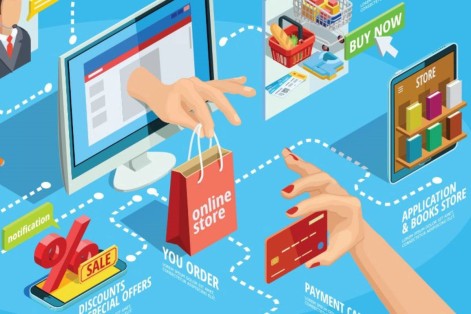
Top Strategies to Increase Online Sales for Your Ecommerce Store in 2025
The ecommerce space in 2025 is more competitive—and more opportunity-packed—than ever before. With billions of people shopping online and advanced technology shaping consumer behavior, standing out and scaling up requires more than just good products.
Here are the top proven strategies to help you increase online sales and optimize your ecommerce store for sustainable growth in 2025.
1. Embrace AI-Powered Personalization
AI is not optional anymore—it’s the engine of customer experience in 2025.
-
Use AI tools to analyze customer behavior and deliver personalized product recommendations.
-
Dynamic homepages and custom offers based on user data increase conversion rates by up to 35%.
-
Leverage tools like Shopify Magic, Adobe Sensei, and Segment to automate this.
Customers expect to feel seen—AI makes it possible at scale.
2. Optimize for Mobile-First and Voice Search
Over 74% of ecommerce traffic now comes from mobile. Make sure your store is:
-
Mobile-responsive and lightning-fast
-
Includes voice search optimization (long-tail keywords and natural phrases)
-
Has a smooth mobile checkout experience with minimal steps
In 2025, your mobile store isn't a secondary channel—it’s your front door.
3. Leverage Social Commerce and Influencers
Shopping is now social. Platforms like Instagram, TikTok, and YouTube offer in-app shopping integrations.
-
Use shoppable posts and livestream selling to drive impulse purchases.
-
Collaborate with micro and nano influencers who have trusted niche audiences.
-
Run UGC campaigns (user-generated content) to build trust and social proof.
Social commerce is expected to cross $1.2 trillion globally by the end of 2025.
4. Offer Flexible and Instant Payment Options
The checkout page is where sales are won or lost.
-
Integrate BNPL (Buy Now Pay Later) services like Afterpay or Klarna.
-
Accept UPI, digital wallets, crypto, and all major credit systems.
-
Display trust badges and security assurances prominently.
Make checkout feel like a formality—not a friction point.
5. Use Retargeting and Email Automation
Most visitors won’t buy on their first visit. Use automated retargeting to bring them back:
-
Cart abandonment emails with incentives
-
Win-back campaigns for dormant customers
-
Segmented email flows based on past purchases, behavior, or location
Tools like Klaviyo, Omnisend, and Mailchimp make this easy—and profitable.
6. Focus on Speed and UX
A slow site = lost sales. In 2025, users expect pages to load in under 2 seconds.
-
Use tools like Google PageSpeed Insights to test performance.
-
Compress images, use lazy loading, and upgrade your hosting if needed.
-
Simplify navigation and reduce friction in every click.
Every second delay in load time = 7% drop in conversions.
7. Expand with Omnichannel Selling
Don’t limit your store to one platform. Be where your customers are:
-
Sell on Amazon, Flipkart, Etsy, and eBay alongside your own site
-
Use centralized inventory management tools like Zoho Commerce or Sellbrite
-
Offer in-store pickup, pop-up shops, or even AR try-on features
More channels = more eyes = more sales.
8. Invest in High-Quality Visual Content
In ecommerce, product visuals sell more than words.
-
Use 360° product views and AR integration for virtual try-ons
-
Include product videos, unboxing clips, and lifestyle imagery
-
Encourage customers to upload their own reviews and photos
Good visuals build trust, clarity, and conversion.
9. Offer Loyalty Programs and Subscription Models
Retaining customers is cheaper than acquiring new ones.
-
Launch a points-based loyalty program
-
Offer subscriptions for recurring products (skincare, coffee, etc.)
-
Use gamification (spin-the-wheel, tiered rewards) to keep engagement high
Loyal customers are 5X more likely to repurchase and refer.
10. Use Real-Time Analytics and A/B Testing
Don’t just guess—test and optimize continuously.
-
Use tools like Google Analytics 4, Hotjar, Crazy Egg, and VWO
-
Run A/B tests on headlines, buttons, product pages, and checkout flow
-
Monitor metrics like bounce rate, cart abandonment, and lifetime value
Data is the difference between average stores and top performers.
Conclusion: Winning Ecommerce in 2025
In a market flooded with options, the winners are those who:
-
Understand their customers deeply
-
Move fast with the right tools
-
Deliver seamless, personalized, and value-driven experiences
In 2025, ecommerce isn’t just about selling—it’s about building a smart, scalable brand that customers return to again and again.
Optimize. Personalize. Automate. Scale.
That’s the formula to increase online sales this year and beyond.