Why India Is Ready for Scientific Aromatherapy
As India’s wellness market grapples with trust, regulation, and rising lifestyle health concerns, a science-led approach to aromatherapy—long established in Europe—offers lessons on how natural therapeutics can be both credible and effective.
For many Indian consumers today, “natural wellness” has become a confusing landscape—crowded with bold claims, loosely regulated products, and a distrust of both over-medication and under-validated alternatives. Yet this tension between Nature and science is not new. Europe faced a similar crossroads several decades ago, and its response offers an instructive lesson for India today.
Aromatherapy: A Discipline Rooted in Science
Aromatherapy is the therapeutic use of essential oils—highly concentrated plant extracts—to support physical and emotional well-being through measurable physiological effects. Today, aromatherapy is recognised within healthcare systems as a scientifically grounded discipline with a long history of clinical application. The term “aromatherapy” was coined in 1937 by French chemist René-Maurice Gattefossé, whose research demonstrated the therapeutic effects of essential oils on wound healing. This work was later expanded by physicians and pharmacists across France, Belgium, US and Switzerland, where essential oils were studied not as fragrances, but as bioactive compounds. These findings have since been documented across thousands of peer-reviewed scientific publications.
By the latter half of the 20th century, European aromatherapy had evolved into a regulated, evidence-led discipline. Essential oils were chemically profiled, dosed precisely, and prescribed by trained professionals. In countries such as France and Belgium, aromatherapy became integrated into pharmacies, hospitals, and medical education—positioned as a scientifically validated complement to conventional care.
India Today: A Familiar Crossroads
India now finds itself at a similar moment. Lifestyle disorders, pollution-aggravated respiratory issues, stress-related conditions, and dependence on symptomatic relief are rising sharply. At the same time, consumer interest in natural remedies is accelerating, yet buyers are met with offerings that lack consistent scientific validation, robust quality control, and credible educational support.
Europe’s experience suggests that the solution lies not in choosing between “effective” and “natural,” but in integrating the two. What transformed aromatherapy in Europe was the application of chemistry, pharmacology, safety standards, and clinical discipline to natural substances—a gap that still exists in India’s wellness market today.
Pūraroma: Right Idea, Right Time
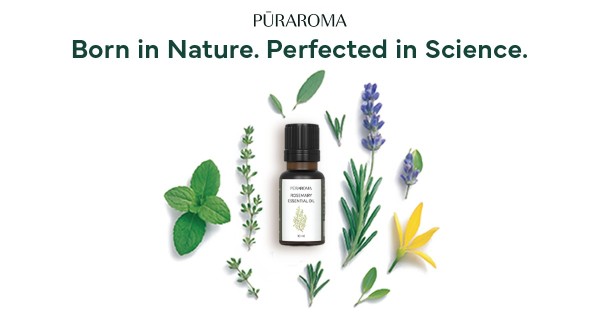
It is in this context that Pūraroma has emerged—not as a lifestyle brand, but as a science-driven natural therapeutics company built for the Indian market.
Founded by Indian and Belgian entrepreneurs, Pūraroma was created to bring scientifically validated aromatherapy to everyday health needs in India, with a foundation built on transparency, scientific rigour, and efficiency.
At the core of Pūraroma’s formulation philosophy is European scientific aromatherapy: the use of chemotyped essential oils, validated formulations, and safety-led product design. Products are developed by a Belgian scientist specifically for Indian conditions, addressing common concerns such as respiratory discomfort, allergies, stress, headaches, and muscular pain.
A Team Bridging Europe and India
Pūraroma’s credibility is reinforced by its founding team, which brings together complementary expertise across engineering, healthcare, operations, and organisational development.
Dr. Dominique Baudoux, a Belgian pharmacist and globally recognised authority in medical aromatherapy, brings decades of clinical practice and research experience, having previously built one of Europe’s most successful aromatherapy companies supplying tens of thousands of pharmacies worldwide. He is also a well renowned author of over 50 books on Scientific Aromatherapy.
Uday Arora, an engineer and entrepreneur with prior experience at Amazon, built and successfully exited a medical company in Luxembourg, gaining deep exposure to European healthcare systems and scalable business models. Varun Gupta, an engineer and alumnus of IIM Indore, has led senior technology and operations roles across India and the US, driving execution and operational scale. Varun leads technology and operations at Puraroma. Neeti Chokhani, formerly with the Tata Group, and founder of a specialised HR training and leadership coaching firm in Mumbai, currently leads marketing and HR; contributing irreplaceable organisational and people-centric expertise.
The team enjoys the support of several experienced medical professionals amongst whom Dr. N C Arora and Dr. Eric Van den Abbeele.
International Recognition, Local Relevance
Pūraroma’s inclusion in the economic mission led by Her Royal Highness Princess Astrid of Belgium underscores the seriousness of the initiative. Such missions highlight companies that represent long-term bilateral value creation, placing Pūraroma within a broader framework of Indo-Belgian collaboration in healthcare and innovation.
The Road Ahead
India’s wellness market does not need more aspirational lifestyle products—it needs trustworthy brands. That trust can only be built through transparency, education, and scientific discipline. Europe learned this lesson over decades of research and regulation.
Pūraroma’s emergence suggests that India may not need to wait as long.
By highlighting aromatherapy’s scientific roots—and aligning nature with evidence rather than rhetoric—the company signals not just the arrival of a new brand, but the early shaping of a more mature, credible natural wellness ecosystem in India.
Learn more on: www.puraroma.com