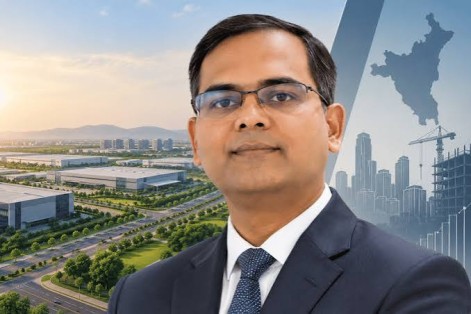
Reliance MET City Appoints Manish Jaiswal as CEO to Lead Integrated Industrial and Urban Development Business
Reliance MET City has appointed real-estate executive Manish Jaiswal as Chief Executive Officer, placing the former Eldeco Group CEO in charge of the next phase of growth at Reliance Industries' large integrated industrial and urban development in Jhajjar, Haryana.
The appointment was announced on September 14, 2026 by Model Economic Township Limited, or METL, the wholly owned subsidiary of Reliance Industries developing Reliance MET City.
Jaiswal will lead the platform's overall business and growth strategy, covering industrial, residential and commercial development, while also being responsible for attracting new investments and enterprises, strengthening the development pipeline and expanding the township's integrated ecosystem across asset classes.
He will additionally oversee strategic partnerships and broader business-expansion initiatives as MET City seeks to establish itself as a major industrial, commercial and urban destination within the National Capital Region.
Jaiswal brings more than 20 years of real-estate experience and joins Reliance MET City after serving as CEO of Eldeco Group. He previously led Tribeca Developers, where he was associated with Trump-branded real-estate projects in India.
Manish Jaiswal Takes Charge of Reliance MET City

The leadership appointment comes as Reliance MET City moves from primarily establishing large-scale infrastructure and attracting industrial enterprises toward developing a broader integrated urban ecosystem.
In his new role, Jaiswal's responsibilities will span several interconnected areas of the business, including development, investment attraction, business acquisition, revenue growth and strategic partnerships.
The mandate gives him responsibility not simply for property development but for the overall economic expansion of the township.
Reliance MET City Whole-Time Director Shrivallabh Goyal said Jaiswal's experience in development, strategic partnerships, revenue generation and branded real estate makes him well suited to lead the platform through its next stage of expansion.
Former Eldeco Group CEO Brings Two Decades of Experience
Before joining Reliance MET City, Jaiswal served as:
CEO of Eldeco Group.
At Eldeco, he was responsible for growing the company's multi-city development platform across North India.
His experience spans business strategy, real-estate development, revenue growth, sales and marketing, land transactions, fundraising and strategic partnerships.
That combination is particularly relevant to Reliance MET City because the project requires coordination across industrial land, residential development, commercial infrastructure and large-scale investment attraction.
Jaiswal Previously Led Tribeca Developers
Jaiswal has also served as CEO of:
Tribeca Developers.
During his tenure there, he was associated with the development of Trump-branded real-estate projects in India.
The experience gives him exposure to branded and premium real estate in addition to large-scale development and land transactions.
Reliance MET City is expected to require a similar combination of development expertise and commercial positioning as its residential and commercial components expand alongside the existing industrial ecosystem.
Reliance MET City Spans 8,250 Acres in Haryana
Reliance MET City is being developed across approximately:
8,250 acres
in Jhajjar district, Haryana.
The project combines industrial, residential and commercial development within a single master-planned environment.
Its location near Gurugram places it within the wider Delhi-NCR economic region while providing large-scale land availability for industrial and urban development.
MET City has been designed as a long-term economic hub rather than a conventional standalone industrial park.
More Than 650 Companies Have Established Presence
The development has attracted more than:
650 companies from 12 countries,
according to the company.
These include Indian businesses as well as international companies operating across multiple manufacturing and industrial sectors.
Around 150 companies are operational, while approximately 300 are under construction, reflecting the continuing buildout of the industrial ecosystem.
The city currently supports more than 40,000 direct jobs, according to MET City.
The scale of existing corporate participation gives Jaiswal an established industrial base from which to expand the township's next phase.
Industrial Development Remains Core Anchor
Industrial development has historically been the principal economic anchor of Reliance MET City.
The project offers infrastructure designed for manufacturing and industrial businesses, including power, water, roads and connectivity.
Companies operating or establishing facilities within the development span sectors such as:
automotive and auto components,
electronics,
medical devices,
consumer products,
footwear,
engineering,
metal products,
and other manufacturing categories.
The next phase involves deepening this industrial ecosystem while developing complementary residential and commercial infrastructure around it.
Japanese Industrial Township Strengthens International Positioning
Reliance MET City also includes a dedicated:
Japanese Industrial Township.
The cluster houses Japanese companies including Panasonic, Denso, Nihon Kohden, Tsuzuki India, Sanko Gosei and Svam Toyal.
The Japanese Industrial Township gives MET City an important international dimension and demonstrates its ability to attract manufacturing investment from overseas companies.
Expanding such relationships will form part of the broader investment-attraction opportunity under the new CEO.
Jaiswal Will Focus on New Investments and Businesses
A central part of Jaiswal's mandate will be attracting:
new investments and enterprises.
For a development of MET City's scale, industrial land sales alone are not sufficient to create a sustainable urban ecosystem.
The project needs a continuous pipeline of companies capable of generating:
employment,
supply-chain activity,
commercial demand,
and residential requirements.
Bringing additional domestic and international companies into the township can therefore support growth across multiple asset classes simultaneously.
Residential Development Becomes Increasingly Important
As employment within MET City expands, residential development becomes strategically more important.
The township is designed around an integrated work-live concept, with residential areas planned alongside employment centres.
MET City already has more than 3,000 residential customers within its ecosystem.
Further industrial expansion could increase demand for housing from employees, managers, entrepreneurs and other professionals working in or around the development.
Jaiswal's experience in residential real estate is therefore likely to become increasingly relevant as the city matures.
Commercial Development Is Another Growth Pillar
Commercial development represents the third major component of Reliance MET City's strategy.
A large employment and residential population creates demand for:
retail,
offices,
banking,
food and beverage,
healthcare,
education,
and other services.
MET City already includes commercial formats intended to support businesses, workers and residents.
As occupancy rises, expanding these facilities could create a more self-contained urban environment and diversify the project's revenue base beyond industrial land development.
Infrastructure Has Been Built for Large-Scale Expansion
Reliance MET City has invested in significant trunk infrastructure to support long-term development.
According to the company, completed infrastructure includes a:
220 kV GIS substation,
100 MLD water-treatment plant,
integrated command-and-control centre,
wide internal road network,
and landscaping infrastructure.
The project also uses technology-enabled utility systems intended to support industrial and urban operations.
Having core infrastructure already in place can shorten the time required for incoming companies to establish facilities.
Connectivity Is Central to MET City's Investment Proposition
Reliance MET City's location is one of its principal commercial advantages.
The development is positioned near major road, rail and freight infrastructure serving Delhi-NCR.
Its connectivity includes access to the Kundli-Manesar-Palwal Expressway, while proximity to Gurugram and Delhi's Indira Gandhi International Airport provides access to a major corporate and transportation hub.
The nearby freight infrastructure also supports manufacturing companies that need efficient movement of raw materials and finished goods.
For industrial investors, logistics connectivity can be as important as land and utility infrastructure.
MET City Is Part of Reliance Industries' Broader Development Platform
Model Economic Township Limited is a:
100% subsidiary of Reliance Industries Limited.
That ownership gives MET City the backing of one of India's largest corporate groups while allowing the township to operate as a specialised development platform.
The project differs from Reliance Industries' core businesses in energy, retail, telecommunications and digital services, but it complements the group's broader exposure to India's industrial and infrastructure development.
MET City is positioned as a long-duration platform built around manufacturing investment, employment creation and urbanisation.
Leadership Change Comes at Expansion Stage
Jaiswal's appointment is significant because MET City has already reached meaningful scale.
The initial challenge for a greenfield industrial township is establishing infrastructure and convincing anchor companies to invest.
With hundreds of companies now present, the next challenge is different.
Management must increase:
business density,
operational companies,
employment,
residential occupancy,
commercial activity,
and investment velocity.
That transition requires a broader real-estate and business-development approach, which helps explain the appointment of an executive with experience across multiple property segments.
Focus Shifts Toward an Integrated Economic Destination
Reliance MET City describes its ambition as building a globally competitive:
commercial hub and urban destination.
This indicates that the project's long-term strategy extends beyond industrial plots.
Industrial businesses create the initial economic engine, but an integrated city requires a wider ecosystem around those businesses.
That includes housing, retail, services, recreation and commercial infrastructure.
Jaiswal's role will therefore involve connecting these different components rather than managing them as independent real-estate businesses.
Sustainability Is Part of Township Positioning
MET City has received an:
IGBC Platinum certification
for its smart-city development.
Sustainability is becoming increasingly relevant to industrial-location decisions, particularly for multinational companies with environmental targets across their global supply chains.
Infrastructure supporting water management, energy efficiency and planned urban development can therefore influence investment decisions alongside traditional considerations such as cost and logistics.
As MET City attracts additional international manufacturers, environmental infrastructure could become an increasingly important competitive factor.
New CEO Will Need to Accelerate Development Pipeline
One of Jaiswal's explicit responsibilities is strengthening the:
development pipeline.
For an 8,250-acre project, development is necessarily phased over many years.
The challenge is determining when and where to deploy capital across industrial, residential and commercial components while ensuring that infrastructure expansion keeps pace with demand.
A stronger development pipeline can increase visibility into future monetisation, but disciplined phasing will remain important because large township projects require significant upfront investment.
Employment Growth Can Support Urban Demand
The more than 40,000 direct jobs already associated with MET City create an important base for the urban side of the project.
As more industrial units become operational, employment can increase further.
That creates secondary demand for:
housing,
retail,
transportation,
food services,
education,
healthcare,
and other local services.
This multiplier effect is one of the central economic arguments behind integrated industrial townships.
Rather than functioning as isolated factories, they can develop into employment-led urban centres.
Conclusion
Reliance MET City's appointment of Manish Jaiswal as CEO comes as the 8,250-acre Jhajjar development enters a broader phase of industrial, residential and commercial expansion.
Jaiswal brings more than 20 years of real-estate experience, including leadership roles at Eldeco Group and Tribeca Developers, and will oversee the platform's overall business and growth strategy.
His mandate includes attracting new investments and companies, strengthening the development pipeline, expanding strategic partnerships and accelerating development across multiple asset classes.
Reliance MET City already has more than 650 companies from 12 countries, with around 150 operational businesses, approximately 300 companies under construction and more than 40,000 direct jobs.
The next stage will be about converting that industrial base into a more complete economic and urban ecosystem.
For Jaiswal, the central challenge will be to maintain industrial investment momentum while scaling residential and commercial development around the employment base already created, positioning Reliance MET City as a major integrated business and urban destination in the National Capital Region.