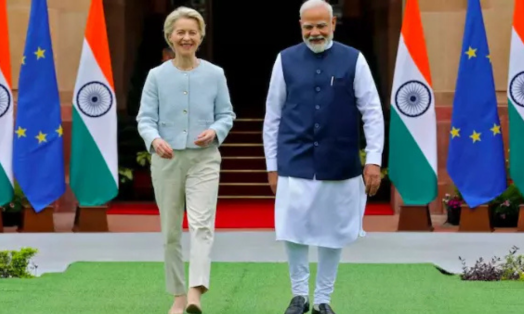
India and the European Union have moved into the decisive and final phase of negotiations for a comprehensive free-trade agreement, marking one of the most significant global trade developments of 2025. After months of diplomatic rounds and technical discussions, both sides are now pushing to close the remaining gaps in tariff structures, market access rules, and regulatory frameworks.
A successful India–EU Free Trade Agreement (FTA) would unlock one of the world’s largest economic partnerships. The EU is already among India’s biggest trading partners, and both regions see enormous potential in expanding cooperation in goods, services, technology, clean energy, investment, and digital trade. With global supply chains shifting and geopolitical competition increasing, both sides view the FTA as strategically essential.
The final phase of negotiations is now focused on sensitive issues such as tariff reductions on automobiles, agricultural goods, textiles, and industrial machinery. India is seeking greater access for its skilled professionals and IT services, while the EU is aiming for stronger investment protections, sustainability standards, and greater ease for European companies to operate in India.
Digital trade has also become a major point of interest. As India tightens data-protection policies and builds its own digital public infrastructure, the EU wants clarity on cross-border data flows, digital taxation, and cybersecurity standards. Both sides are working toward a balanced framework that protects users while supporting business innovation.
Another key area of discussion is sustainability. The EU has been advocating for environment-friendly trade practices, emissions standards, and green-technology cooperation. India, meanwhile, has emphasized the need for flexibility so that its industries can transition without undue burden.
If concluded, the FTA is expected to boost bilateral trade significantly, create millions of jobs, lower consumer prices, and strengthen India’s position within global supply chains. Analysts believe the agreement could become one of the most impactful economic partnerships of the decade.
With both sides eager to finalize the deal, the coming weeks will be crucial. A successful agreement would not only reshape India–EU economic relations but also send a strong message to the world about the importance of cooperation in an increasingly fragmented global economy.