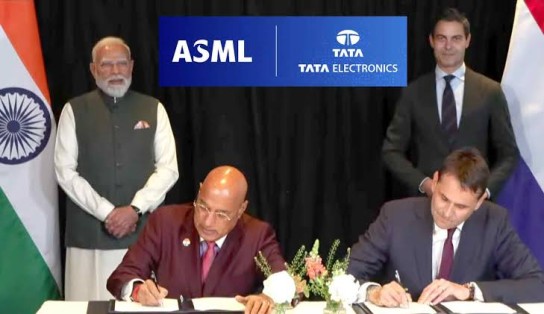
ASML Signs Semiconductor Partnership With Tata Electronics
ASML has entered into a semiconductor partnership with Tata Electronics, marking another significant step in India's efforts to develop a globally competitive semiconductor manufacturing ecosystem. The collaboration is expected to strengthen technology capabilities, support advanced chip production and contribute to the country's long-term objective of building a resilient electronics manufacturing supply chain.
The partnership reflects growing international confidence in India's semiconductor ambitions as both government and industry continue investing in domestic chip manufacturing and related infrastructure.
Partnership Supports India's Semiconductor Vision

The collaboration aligns with India's broader strategy to establish itself as a major global semiconductor manufacturing hub.
Key objectives include:
-
Strengthening semiconductor capabilities
-
Expanding domestic manufacturing
-
Supporting advanced technology adoption
-
Building local supply chains
-
Developing skilled talent
-
Encouraging technology collaboration
-
Enhancing industrial competitiveness
-
Reducing import dependence
The partnership is expected to complement ongoing investments across India's semiconductor ecosystem.
ASML Brings Global Semiconductor Expertise
ASML is one of the world's leading suppliers of semiconductor manufacturing equipment.
Its expertise includes:
-
Advanced lithography systems
-
Chip manufacturing technology
-
Precision engineering
-
Semiconductor process innovation
-
Research and development
-
Manufacturing solutions
-
Equipment servicing
-
Technical support
Its technologies play a critical role in the production of advanced semiconductor devices.
Tata Electronics Expands Manufacturing Capabilities
The agreement supports Tata Electronics' long-term plans to strengthen its presence in semiconductor manufacturing.
Key focus areas include:
-
Semiconductor fabrication
-
Electronics manufacturing
-
Technology partnerships
-
Supply chain development
-
Manufacturing excellence
-
Process optimisation
-
Skilled workforce development
-
Operational efficiency
The company continues to expand investments across India's electronics and semiconductor value chain.
Strengthening India's Semiconductor Supply Chain
Developing a domestic semiconductor ecosystem requires collaboration across multiple industries.
Important components include:
-
Equipment suppliers
-
Chip manufacturers
-
Material providers
-
Packaging facilities
-
Testing services
-
Research institutions
-
Design companies
-
Skilled workforce
Partnerships between global technology leaders and domestic manufacturers help accelerate ecosystem development.
Technology Collaboration Drives Innovation
Knowledge sharing remains an important element of semiconductor industry growth.
Potential areas of collaboration include:
-
Manufacturing best practices
-
Process engineering
-
Equipment optimisation
-
Workforce training
-
Technical support
-
Operational excellence
-
Innovation initiatives
-
Quality standards
Technology partnerships can help improve manufacturing efficiency and competitiveness.
Strategic Importance for India's Electronics Industry
Semiconductors are essential components across numerous industries.
Major end-use sectors include:
-
Consumer electronics
-
Smartphones
-
Automobiles
-
Telecommunications
-
Industrial automation
-
Healthcare equipment
-
Artificial intelligence
-
Data centres
A stronger domestic semiconductor industry can improve supply-chain resilience and support future industrial growth.
Government Initiatives Continue to Support Growth
India has introduced multiple initiatives to encourage semiconductor manufacturing and electronics production.
Policy priorities include:
-
Manufacturing incentives
-
Infrastructure development
-
Investment promotion
-
Skill development
-
Research support
-
Supply chain localisation
-
Innovation ecosystem
-
International collaboration
Public and private sector investments continue to accelerate the development of the domestic semiconductor industry.
Risks to Monitor
Despite strong long-term opportunities, several challenges remain.
These include:
-
High capital investment requirements
-
Technology complexity
-
Global competition
-
Supply chain disruptions
-
Skilled talent availability
-
Regulatory approvals
-
Project execution timelines
-
Demand fluctuations
-
Geopolitical risks
-
Rapid technological change
Successfully addressing these factors will be important for long-term competitiveness.
What Investors Should Watch
Investors should monitor:
-
Project implementation progress
-
Manufacturing capacity expansion
-
Technology deployment
-
Government policy support
-
Capital expenditure plans
-
Industry partnerships
-
Supply chain development
-
Revenue growth
-
Operational milestones
-
Global semiconductor demand
These indicators will help assess the long-term impact of the partnership on India's semiconductor industry.
Outlook
The partnership between ASML and Tata Electronics highlights the growing momentum behind India's semiconductor ambitions. As investments in fabrication facilities, equipment and technical capabilities continue, collaborations with global technology leaders are expected to play an important role in strengthening the country's position within the global semiconductor supply chain.
If executed successfully, the partnership could contribute to increased domestic manufacturing capacity, improved technological capabilities and greater long-term competitiveness for India's electronics sector.
Conclusion
ASML's semiconductor partnership with Tata Electronics represents another milestone in India's journey to become a significant player in the global semiconductor industry. By combining advanced manufacturing technology with expanding domestic production capabilities, the collaboration supports India's long-term industrial strategy and strengthens the foundation for future growth.
As semiconductor demand continues to rise worldwide, partnerships between global technology companies and Indian manufacturers are expected to play a crucial role in building a resilient and competitive semiconductor ecosystem.