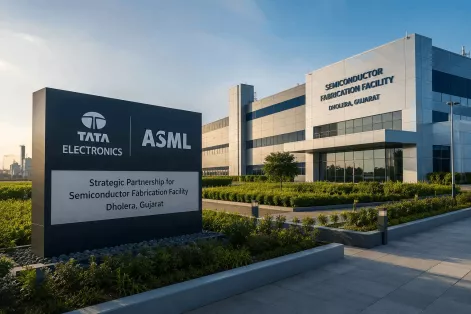
ASML and Tata Electronics Sign Strategic Semiconductor Partnership to Strengthen India's Chip Ecosystem
ASML and Tata Electronics have signed a strategic partnership aimed at advancing India's semiconductor manufacturing capabilities and supporting the country's long-term ambition of becoming a global hub for chip production. The collaboration brings together ASML's expertise in advanced semiconductor equipment with Tata Electronics' expanding investments in semiconductor manufacturing and electronics infrastructure.
The partnership represents another significant step in India's efforts to build a resilient domestic semiconductor ecosystem while attracting global technology leaders to participate in the country's growing electronics manufacturing sector.
Strategic Importance of the Partnership

The collaboration is designed to strengthen India's semiconductor value chain through technology cooperation and industry development.
Key objectives include:
- Supporting domestic semiconductor manufacturing
- Expanding advanced chip production capabilities
- Strengthening India's electronics ecosystem
- Encouraging technology collaboration
- Developing a skilled semiconductor workforce
- Enhancing supply chain resilience
- Supporting long-term manufacturing growth
The partnership aligns with India's broader strategy of reducing dependence on imported semiconductor technologies.
Why Semiconductors Are Critical
Semiconductors are essential components used in nearly every modern digital device and industrial application.
They power products such as:
- Smartphones
- Personal computers
- Electric vehicles
- Artificial intelligence systems
- Data centres
- Industrial automation equipment
- Telecommunications infrastructure
- Consumer electronics
Rising global demand for chips has made semiconductor manufacturing a strategic priority for economies worldwide.
Benefits for India's Semiconductor Industry
The partnership is expected to accelerate the development of India's semiconductor ecosystem.
Potential benefits include:
- Increased manufacturing capacity
- Technology transfer and expertise
- Greater foreign investment
- Expansion of high-skilled employment
- Improved domestic supply chains
- Enhanced global competitiveness
- Faster industry development
These advantages could help establish India as a key destination for semiconductor manufacturing over the long term.
Economic and Business Impact
A stronger semiconductor industry can create opportunities across multiple sectors of the economy.
Industries likely to benefit include:
- Electronics manufacturing
- Automotive
- Telecommunications
- Artificial intelligence
- Cloud computing
- Consumer technology
- Defence electronics
- Healthcare technology
The partnership could also encourage additional investments from global semiconductor companies exploring manufacturing opportunities in India.
Challenges Ahead
Building a globally competitive semiconductor industry requires sustained investment and long-term planning.
Key challenges include:
- High capital investment requirements
- Access to advanced manufacturing technology
- Skilled workforce development
- Infrastructure readiness
- Supply chain integration
- Global competition
- Rapid technological advancements
Addressing these challenges will be essential for the long-term success of India's semiconductor ambitions.
What Businesses and Investors Should Watch
Industry participants are expected to monitor:
- Progress of Tata Electronics' semiconductor projects
- ASML's technology collaboration initiatives
- Government semiconductor incentives
- New investment announcements
- Manufacturing capacity expansion
- Talent development programmes
- Global semiconductor demand
- Supply chain partnerships
These developments will help determine the pace of India's emergence as a semiconductor manufacturing hub.
Outlook
India's semiconductor sector is expected to attract sustained investment as strategic partnerships, supportive government policies, and rising global demand for chips continue to drive industry growth. The collaboration between ASML and Tata Electronics is likely to strengthen domestic manufacturing capabilities while positioning India as an increasingly important participant in the global semiconductor supply chain.
Conclusion
The strategic partnership between ASML and Tata Electronics marks a significant milestone in India's semiconductor journey. By combining world-class semiconductor technology with India's growing manufacturing ecosystem, the collaboration is expected to accelerate domestic chip production, strengthen supply chains, create high-value employment, and reinforce the country's long-term vision of becoming a global semiconductor manufacturing destination.