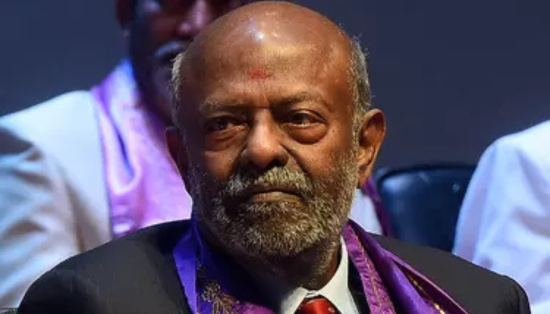
Shiv Nadar – The Visionary Who Built HCL into a Global Tech Empire
Few names in Indian business command as much respect as Shiv Nadar, the founder of HCL Technologies and one of the architects of India’s IT revolution. A true visionary, Nadar transformed a small hardware start-up into one of the world’s leading technology companies. His story is not just about building a successful enterprise—it is about foresight, perseverance, and the belief that technology could change lives and empower a nation.
Early Years
Shiv Nadar was born on July 14, 1945, in Moolaipozhi, a small coastal village near Tiruchendur in Tamil Nadu, India. He was the only son of Sivasubramania Nadar and Vamasundari Devi. His family, though modest, placed immense importance on education, discipline, and values—qualities that would shape Nadar’s approach to business and life.
He began his schooling at Town Higher Secondary School in Kumbakonam and later studied at Elango Corporation Higher Secondary School in Madurai. A bright and curious student, Nadar was fascinated by science and mathematics. His early exposure to problem-solving and logic prepared him for the world of technology, which was still in its infancy in India at the time.
He pursued his higher education at PSG College of Technology, Coimbatore, where he earned a degree in Electrical and Electronics Engineering. This was a turning point in his life. The education he received at PSG gave him not only technical skills but also an entrepreneurial mindset—a readiness to innovate and take risks.
The Early Career – Seeds of Ambition
After completing his studies, Shiv Nadar began his professional career at Cooper Engineering, a company in Pune. He then moved to Delhi Cloth Mills (DCM), where he worked in the company’s computing division. At DCM, Nadar met a group of talented engineers—Ajai Chowdhry, Arjun Malhotra, Subhash Arora, and Yogesh Vaidya—who would later become his partners in creating one of India’s most iconic IT enterprises.
During the 1970s, computers were almost unheard of in India. The import of hardware was restricted, and access to foreign technology was limited. However, Nadar and his colleagues saw an opportunity in the growing global demand for computer systems and software. They dreamed of building a technology company that could make India self-reliant in computing.
The Birth of HCL
In 1976, with an initial investment of just ₹187,000, Shiv Nadar and his team left their comfortable jobs at DCM and founded Hindustan Computers Limited (HCL). The vision was audacious—to design and manufacture computers in India, at a time when even owning one was a luxury.
The early days were tough. India’s bureaucratic red tape and lack of infrastructure posed serious challenges. But Nadar’s conviction was unwavering. He believed that India’s future lay in technology and that the country could not remain dependent on foreign imports.
In 1978, HCL created India’s first indigenous computer, the HCL 8C, a pioneering step that predated IBM’s entry into the personal computer market. This marked the beginning of India’s journey toward technological independence.
Rise of a Global IT Powerhouse
Throughout the 1980s and 1990s, under Nadar’s visionary leadership, HCL transitioned from a hardware manufacturing company to a global IT services and software powerhouse. Nadar had the foresight to see the shift happening in the technology industry—from hardware to software and services.
In 1991, as India liberalized its economy, HCL embraced global markets with renewed vigor. It expanded into software exports, IT consulting, and infrastructure services. The creation of HCL Technologies as a separate entity in 1999 allowed the company to focus entirely on IT services.
Under his direction, HCL became known for its innovation, customer-centric approach, and employee-first philosophy. Nadar encouraged a culture of openness and innovation, believing that empowering employees was the key to long-term success. His leadership style emphasized trust, transparency, and accountability—principles that became the foundation of HCL’s growth.
By the 2000s, HCL Technologies had evolved into one of India’s top IT firms, competing globally with giants like Infosys, Wipro, and TCS. The company’s global footprint spanned over 50 countries, serving clients across industries including healthcare, finance, manufacturing, and education.
Leadership Philosophy
Shiv Nadar’s leadership philosophy revolves around empowerment and vision. He has often said that his greatest achievement is not building a company but creating a culture that values learning and innovation.
He believed in hiring people smarter than himself and giving them the freedom to experiment and fail. His management mantra, “employees first, customers second,” later popularized by HCL’s CEO Vineet Nayar, stemmed directly from Nadar’s belief that happy, empowered employees would naturally deliver exceptional value to clients.
Nadar was not only a technologist but also a thinker who understood the socio-economic power of technology. He saw IT not just as an industry but as a tool to transform India—economically and intellectually.
Philanthropy and Education – The Shiv Nadar Foundation
As HCL grew, Nadar’s focus shifted toward giving back to society. In 1994, he established the Shiv Nadar Foundation, one of India’s most respected philanthropic institutions. The foundation’s mission is to empower individuals through education and bridge the gap between privilege and opportunity.
His first major initiative was the establishment of the SSN College of Engineering (Sri Sivasubramaniya Nadar College) in Chennai, named after his father. The institution quickly became one of India’s top private engineering colleges, combining academic excellence with innovation-driven education.
The foundation later launched several ambitious educational ventures, including:
-
Shiv Nadar University (SNU) in Greater Noida, a multidisciplinary research-driven university.
-
Vidyagyan Schools, which provide free, high-quality education to meritorious rural students.
-
Kiran Nadar Museum of Art, established by his wife Kiran Nadar, promoting Indian art and culture globally.
Through these initiatives, Shiv Nadar redefined philanthropy in India, demonstrating that education is the most powerful means of social transformation.
Awards and Recognition
Shiv Nadar’s contributions to business, technology, and education have been recognized with numerous awards and honors. In 2008, he was awarded the Padma Bhushan, India’s third-highest civilian award, for his contribution to trade and industry.
He has also been named among Forbes’ Most Powerful People in India and featured in global rankings of influential business leaders. Beyond awards, Nadar’s true legacy lies in the millions of lives his vision has touched—through both technology and education.
Challenges and Adaptation
Nadar’s journey was not without challenges. The rapidly changing technology landscape required constant adaptation. From the hardware slump in the late 1980s to the Y2K boom and the dot-com crash, HCL faced several critical moments. But Nadar’s ability to anticipate trends and pivot the company kept HCL ahead of the curve.
His humility, combined with strategic foresight, enabled HCL to evolve continuously. Even after stepping down as CEO, he remained deeply involved in mentoring leaders and shaping the company’s long-term direction.
Legacy and Impact
Shiv Nadar’s legacy goes far beyond the success of HCL. He symbolizes India’s emergence as a global technology leader. He not only built a company but helped build an industry that put India on the world map. His life’s work represents the power of vision, perseverance, and purpose.
Under his guidance, HCL grew from a startup in a Delhi garage to a multi-billion-dollar global enterprise employing over 200,000 people. Beyond business, his contribution to education through the Shiv Nadar Foundation has impacted generations, fostering intellectual capital and innovation across the nation.
Conclusion
Shiv Nadar’s journey is the story of modern India—an inspiring narrative of transformation through innovation, knowledge, and determination. From a small village in Tamil Nadu to the global stage, he redefined what it means to be a visionary leader.
He believed that technology could empower society, that education could change destinies, and that success must always be shared with those less privileged. Today, as the founder of HCL and one of India’s greatest philanthropists, Shiv Nadar’s name stands for integrity, innovation, and impact.
He remains an enduring symbol of how dreams, when guided by purpose and compassion, can reshape a nation’s future.