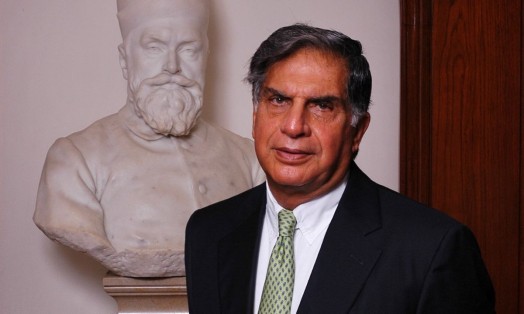
Full Name
Ratan Naval Tata
Date & Place of Birth
Born December 28, 1937, in Bombay, British India (now Mumbai, Maharashtra).
Age
87 years old (as of 2025).
Nationality
Indian.
Profession / Title
Chairman Emeritus, Tata Sons & Tata Group; Industrialist; Philanthropist.
Fame & Recognition
Ratan Tata is celebrated as one of India’s most visionary business leaders, responsible for transforming the Tata Group into a global powerhouse. Known for his humility, integrity, and ethical leadership, he oversaw historic acquisitions such as Jaguar Land Rover and Corus Steel, while expanding Tata’s footprint to over 100 countries.
Net Worth
While Ratan Tata himself has modest personal wealth (estimated under $1 billion), the Tata Group’s philanthropic trusts — which he oversees — control holdings worth over $100 billion.
Early Life & Family Background
Ratan Tata was born into the illustrious Tata family, founders of the Tata Group, one of India’s oldest and most respected conglomerates. His parents, Naval Tata and Sooni Tata, separated when he was 10 years old. He and his younger brother, Noel Tata, were raised by their grandmother, Lady Navajbai Tata, at Tata Palace in Mumbai.
Growing up, Ratan Tata experienced both privilege and personal challenges. Despite his family’s status, he developed a strong sense of discipline and empathy early on — traits that would later define his leadership style.
Education
Ratan Tata attended Campion School in Mumbai until Class 8 and later Cathedral and John Connon School. He then moved to the United States, where he graduated from Riverdale Country School in New York City in 1955.
He went on to earn a B.S. in Architecture with structural engineering from Cornell University in 1962. He also completed the Advanced Management Program at Harvard Business School in 1975.
Career Beginnings
Ratan Tata joined the Tata Group in 1961 at Tata Steel in Jamshedpur, where he worked on the shop floor, shoveling limestone and handling blast furnaces. This hands-on start gave him a deep understanding of operations and worker relations.
In 1971, he was appointed Director-in-Charge of National Radio & Electronics (NELCO), a struggling Tata company. Though he was unable to fully turn it around due to economic downturns, he gained valuable crisis-management experience.
Rise to Leadership
In 1991, Ratan Tata succeeded J.R.D. Tata as Chairman of Tata Sons. Many initially doubted his ability to lead, but within a decade he had transformed the Tata Group into a modern, globally competitive enterprise.
Major Business Expansions & Achievements
Under Ratan Tata’s leadership:
-
Global Acquisitions: Acquired Tetley Tea (UK), Corus Steel (Netherlands/UK), and Jaguar Land Rover (UK), placing Tata Group on the global stage.
-
Innovation: Launched the Tata Nano, the world’s cheapest car, aimed at making automobile ownership accessible to millions.
-
Diversification: Expanded into IT (TCS became a global leader), hospitality (Taj Hotels), chemicals, aerospace, and consumer goods.
-
Revenue Growth: Tata Group revenues grew over 40 times during his tenure; net profits rose by over 50 times.
Industry Impact
Ratan Tata reshaped the image of Indian business abroad, proving that Indian companies could acquire and manage Western brands successfully. His emphasis on quality, ethics, and long-term sustainability became a benchmark for corporate India.
Global Collaborations
He fostered partnerships with:
-
Boeing and Lockheed Martin in aerospace.
-
Starbucks in retail (Tata Starbucks joint venture).
-
Numerous global research and development collaborations.
Wealth & Assets
While personally not among the richest industrialists, Ratan Tata has access to and oversees:
-
Tata Trusts, which own 66% of Tata Sons.
-
Luxury properties including Tata House in Colaba and a sea-facing home in Mumbai.
-
Vintage cars and an interest in modern automobiles.
Personal Life
Ratan Tata is famously unmarried. In interviews, he has mentioned that he came close to marriage several times but circumstances prevented it. He is known for his love of architecture, cars, and animals — particularly dogs, which he often shelters and supports.
Philanthropy
Through Tata Trusts, Ratan Tata has directed billions of dollars towards:
-
Education (scholarships, institutions like IISc & TISS).
-
Healthcare (cancer hospitals, rural clinics).
-
Rural development and water conservation.
-
Disaster relief (2004 tsunami, 2013 Uttarakhand floods, COVID-19 relief).
The Trusts’ philanthropic reach impacts millions annually.
Awards & Honours
-
Padma Bhushan (2000) and Padma Vibhushan (2008) — India’s top civilian awards.
-
Carnegie Medal of Philanthropy.
-
Honorary degrees from Harvard, Cornell, and Cambridge.
-
Featured in Time’s 100 Most Influential People list.
Controversies & Criticism
Ratan Tata has generally maintained a controversy-free image, but faced:
-
Criticism over the Tata Nano’s safety and marketing strategy.
-
Public disputes during the removal of Cyrus Mistry as Tata Sons chairman.
Despite these, his reputation for integrity remains largely intact.
Famous Quotes
“I don’t believe in taking right decisions. I take decisions and then make them right.”
“Ups and downs in life are very important to keep us going; a straight line even in an ECG means we are not alive.”
Recent Developments
-
Continues to mentor startups and young entrepreneurs.
-
Active on Instagram, sharing messages on kindness, leadership, and innovation.
-
Supports animal welfare initiatives and promotes ethical business practices.
-
Tata Group is making major moves into green energy, EVs, and semiconductors.
Legacy
Ratan Tata’s legacy goes beyond business profits. He symbolizes ethical leadership, philanthropy at scale, and national pride. His ability to combine global ambition with deep-rooted values ensures he will remain an enduring figure in India’s business history.
FAQ
Q1: What is Ratan Tata’s net worth in 2025?
A1: Personally under $1 billion; Tata Trusts control over $100 billion in assets.
Q2: Did Ratan Tata ever marry?
A2: No, though he came close on a few occasions.
Q3: What is Ratan Tata’s biggest business deal?
A3: Acquisition of Jaguar Land Rover in 2008.
Q4: Is Ratan Tata involved in philanthropy?
A4: Yes, through Tata Trusts, focusing on education, healthcare, and rural development.
Q5: When did Ratan Tata retire as Chairman?
A5: 2012, succeeded by Cyrus Mistry.