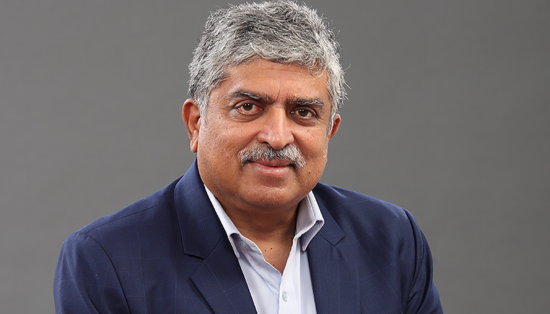
Nandan Nilekani – The Visionary Behind Infosys and India’s Digital Revolution
Nandan Nilekani stands as one of India’s most influential technocrats and entrepreneurs, a man whose vision bridged the gap between technology and governance. As the co-founder of Infosys and the architect of the Aadhaar program, Nilekani’s contributions extend beyond business into the social and digital fabric of India. His story is one of innovation, leadership, and an unwavering belief in technology’s power to transform lives.
Early Years
Born on June 2, 1955, in Sirsi, a small town in Karnataka, Nandan Nilekani grew up in a middle-class Konkani-speaking family. His father, Durga Prasad Nilekani, was a textile manager, and his mother, Durga Nilekani, was a homemaker. The family frequently moved across towns due to his father’s job, which exposed young Nandan to diverse communities and cultures.
Nilekani’s education began at Bishop Cotton Boys’ School in Bangalore, and later he attended St. Joseph’s High School. A brilliant student with a keen interest in mathematics and science, he set his sights on the Indian Institute of Technology (IIT). In 1973, he secured admission to IIT Bombay, where he pursued electrical engineering. During his IIT days, Nilekani not only excelled academically but also developed an entrepreneurial spirit and a passion for problem-solving. His time at IIT shaped his analytical mindset and introduced him to peers who shared his enthusiasm for technology.
Birth of Infosys
After graduating in 1978, Nilekani joined Patni Computer Systems in Pune. It was here that he met Narayan Murthy, who would become his mentor and future co-founder. The late 1970s and early 1980s marked the dawn of India’s IT revolution, and Nilekani, along with Murthy and five other engineers — Kris Gopalakrishnan, S.D. Shibulal, K. Dinesh, Ashok Arora, and N.S. Raghavan — decided to take a bold step.
In 1981, with just ₹10,000 in capital, they founded Infosys in Pune. The goal was simple yet revolutionary — to build a company that would deliver world-class software services from India. Nilekani and his colleagues envisioned a future where Indian talent could compete globally in technology and innovation.
The early years were challenging. India’s restrictive economy and lack of infrastructure made international operations difficult. The team worked tirelessly, coding during the day and managing client communications at night due to time zone differences. Yet, through perseverance and foresight, Infosys began to gain recognition for its reliability, transparency, and ethical business practices.
Rise to Leadership
Nandan Nilekani’s leadership journey within Infosys was marked by innovation and people-centric thinking. As the company expanded, he played a key role in creating Infosys’ Global Delivery Model, which became an industry standard for offshore IT services. This model allowed Infosys to deliver cost-effective solutions to global clients while maintaining high quality — a concept that reshaped the IT outsourcing industry.
In 2002, Nilekani took over as CEO and Managing Director of Infosys, succeeding Narayan Murthy. Under his leadership, Infosys’ revenues grew from $500 million to over $3 billion, and its global reputation soared. Nilekani emphasized corporate governance, transparency, and the development of a strong employee culture. He believed that success was not just about profits but about creating long-term value and trust.
During this period, Nilekani also oversaw Infosys’ expansion into new markets and the development of innovative platforms. His ability to blend business acumen with human insight earned him global recognition. In 2006, Time magazine named him among the 100 most influential people in the world, acknowledging his role in shaping the global IT landscape.
Challenges and Transition
After serving as CEO, Nilekani transitioned to the role of Co-Chairman in 2007. He began focusing on broader issues — governance, digital identity, and public policy. His deep belief in the transformative power of technology drew him toward the public sector.
In 2009, then-Prime Minister Dr. Manmohan Singh appointed Nandan Nilekani as the Chairman of the Unique Identification Authority of India (UIDAI). This marked a turning point in his career, as he shifted from corporate leadership to national service. Nilekani’s mission was to provide every Indian resident with a unique digital identity — a daunting task that required innovation, collaboration, and immense determination.
Aadhaar and Digital India
Under Nilekani’s leadership, the Aadhaar project became one of the largest biometric identification systems in the world. The initiative aimed to eliminate duplication, streamline government welfare programs, and bring transparency to public distribution systems. By assigning each citizen a unique 12-digit number linked to their biometric and demographic data, Nilekani helped revolutionize how India delivered services to its citizens.
Despite facing criticism and privacy debates, Nilekani remained committed to the project’s larger goal — empowering millions who lacked formal identification. Aadhaar became a foundation for India’s digital infrastructure, enabling platforms like UPI (Unified Payments Interface) and Digital India to thrive. Today, Aadhaar stands as a symbol of technological transformation that has impacted over a billion lives.
Political Foray and Return to Infosys
In 2014, Nilekani briefly entered politics, contesting the Lok Sabha elections from the Bangalore South constituency on an Indian National Congress ticket. Although he lost the election, he continued to engage in public policy and digital governance initiatives.
In 2017, amid internal challenges and leadership transitions at Infosys, Nilekani returned as the Non-Executive Chairman to stabilize the company. His return was seen as a unifying move, restoring investor confidence and reaffirming Infosys’ commitment to ethical and visionary leadership.
Legacy and Impact
Nandan Nilekani’s legacy transcends the corporate world. He has authored insightful books, including “Imagining India”, which explores the nation’s future through technology, innovation, and reform. His contributions to digital inclusion, economic empowerment, and ethical leadership have earned him numerous accolades and honorary doctorates.
Beyond business, Nilekani and his wife Rohini Nilekani, a noted philanthropist, have devoted substantial resources to education, water conservation, and social innovation through their foundation. Their belief in giving back to society has inspired a new generation of Indian entrepreneurs.
Lessons from Nandan Nilekani
Nilekani’s journey offers invaluable lessons:
-
Vision can transform not just companies, but nations.
-
Technology, when used ethically, can bridge social divides.
-
True leadership lies in empowering others and building sustainable systems.
-
Failure is temporary, but perseverance defines success.
Conclusion
From co-founding Infosys in a modest apartment to shaping India’s digital identity, Nandan Nilekani has lived a life dedicated to innovation, nation-building, and integrity. He stands as a testament to how one individual’s vision can ignite change on a global scale. Nilekani’s story is not just about technology — it is about transformation, trust, and the belief that progress must include everyone.